
Global Ocular Inflammation Treatment Market
 |
Author:
David J
|
Pages:
245
|
Author:
David J
|
Pages:
245
Global Ocular Inflammation Treatment Market Size, Share, By Treatment Type (Corticosteroids, Antibiotics, Analgesics, Antivirals, Antifungals), By Indication (Uveitis, Conjunctivitis, Scleritis, Keratitis), By Cause (Trauma & Injury, Autoimmune Diseases), By Route of Administration (Topical, Oral, Injectable), and By Region (North America, Europe, Asia-Pacific, Latin America, Middle East & Africa), Analysis and Forecast 2026-2035
CAGR
4.92%
REVENUE 2025
USD Billion 9.96
FORECAST 2035
USD Billion 16.1
REPORT COVERAGE
Global
Market Snapshot
- Global Ocular Inflammation Treatment Market Size (2025): USD 9.96 Billion
- Projected Global Ocular Inflammation Treatment Market Size (2035): USD 16.1 Billion
- Global Ocular Inflammation Treatment Market Compound Annual Growth Rate (CAGR): 4.92%
- Largest Regional Market: North America
- Fastest Growing Region: Asia-Pacific
- Market 3rd Largest Region: Europe
- Base Year: 2025
- Historical Period: 2021–2024
- Forecast Period: 2026–2035
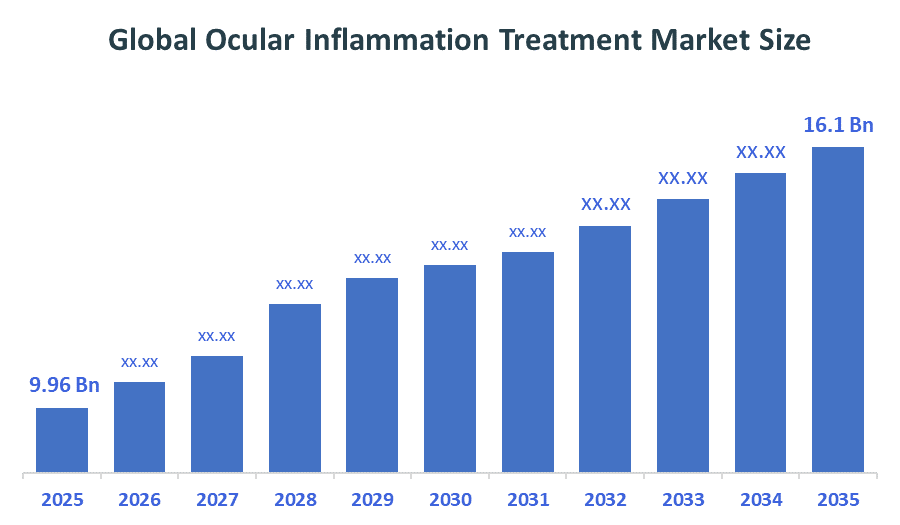
According to Decision Advisors, the Global Ocular Inflammation Treatment Market Size is expected to grow from USD 9.96billion in 2025 to USD 16.1billion by 2035, at a CAGR of 4.92% during the forecast period 2026-2035. The global ocular inflammation treatment market is projected to grow significantly over the next decade, driven by an aging population, rising incidences of ocular diseases, increased environmental issues, advancements in treatment, and improved diagnosis & awareness.
Market Overview/ Introduction
The global market for ocular inflammation treatments is all about finding ways to manage painful swelling in the eye. Whether it’s caused by an injury, an infection, or an autoimmune issue like uveitis, these therapies are designed to calm the inflammation and protect vision. The industry is growing fast for a few simple reasons: our population is aging, more people are being diagnosed with eye conditions, and there’s a much higher awareness of why early treatment matters. The real excitement in the field right now is coming from "smart" medical tech things like targeted drug delivery, personalized medicine, and advanced biologics. As healthcare improves in developing nations and research keeps pushing boundaries, we can expect to see some major breakthroughs in how we treat these conditions in the coming years.
- In May 2024, the World Health Organization launched the SPECS 2030 initiative, aimed at improving access to eye care services, strengthening workforce capacity, and enhancing research. This supports early diagnosis and treatment of ocular conditions, including inflammation-related disorders.
- The WHO Eye Care, Vision Impairment and Blindness Programme (ongoing 2023–2026) supports integrated, people-centered eye care systems globally. It focuses on prevention, treatment, and improving access, which indirectly drives demand for ocular inflammation therapies.
- The Government of India’s National Programme for Control of Blindness and Visual Impairment (NPCB&VI) (ongoing, strengthened 2023–2025) promotes diagnosis and treatment of eye diseases through public healthcare systems, improving access to therapies including inflammatory eye treatments
Notable Insights: -
- North America is anticipated to hold the largest share of approximately 40% in the ocular inflammation treatment market over the forecast period.
- Asia Pacific is expected to grow at a rapid CAGR of approximately 7.2% in the ocular inflammation treatment market during the forecast period.
- The corticosteroids segment dominated the market in 2025, approximately 45%, and is projected to grow at a substantial CAGR during the forecast period.
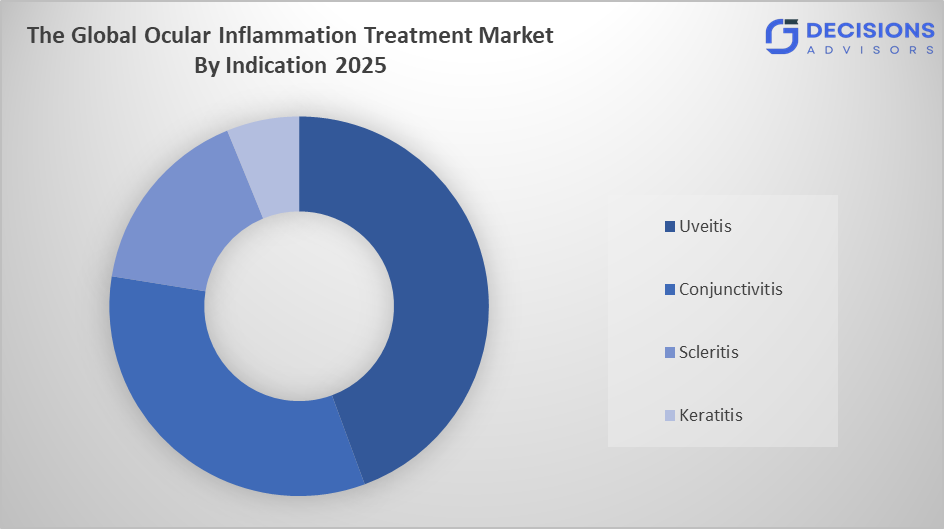
- The uveitis segment dominated the market in 2025, approximately 35%, and is projected to grow at a substantial CAGR during the forecast period.
- The autoimmune diseases segment dominated the market in 2025, approximately 60%, and is projected to grow at a substantial CAGR during the forecast period.
- The topical segment dominated the market in 2025, approximately 55%, and is projected to grow at a substantial CAGR during the forecast period.
- The compound annual growth rate of the Global Ocular inflammation treatment market is 4.92%.
- The market is likely to achieve a valuation of USD 16.1Billion by 2035.
What is role of technology in grooming the market?
Technology plays a transformative role in grooming the global ocular inflammation treatment market by enhancing diagnosis, drug delivery, and patient outcomes. Advanced imaging technologies such as optical coherence tomography (OCT) and fundus photography enable early and precise detection of inflammatory eye conditions, improving treatment accuracy. Innovations in drug delivery systems, including sustained-release implants and nanotechnology-based formulations, ensure targeted therapy with reduced side effects and improved patient compliance. Biologics and targeted therapies, supported by advancements in biotechnology, are offering more effective treatment options for chronic conditions like uveitis. Additionally, teleophthalmology and AI-driven diagnostic tools are expanding access to care, especially in remote areas. Digital health platforms and electronic health records further streamline patient management, enabling personalized treatment approaches and better monitoring of disease progression.
Market Drivers
The treatment market for global ocular inflammation shows growth because the rising number of ocular infections and inflammatory diseases, such as uveitis, allergic conjunctivitis, and dry eye syndrome, needs effective treatment solutions. The increasing elderly population demonstrates a higher risk of developing chronic eye diseases that involve inflammatory conditions. People develop "dry eye" symptoms because they spend extended periods in polluted environments while using screens. The market experiences growth because new biologics, targeted therapies, and specialized drug delivery systems, which include nano-formulations, receive development and approval. People who understand vision care, together with those who diagnose severe uveitis conditions at early stages, create increased market demand.
Restrain
The global ocular inflammation treatment market faces restraints due to high treatment costs, limited accessibility in developing regions, and potential side effects of corticosteroids and biologics. Inadequate awareness and delayed diagnosis further hinder growth. Additionally, strict regulatory requirements and lengthy approval timelines slow the introduction of innovative therapies, impacting overall market expansion.
Competitive Analysis:
The report offers the appropriate analysis of the key organizations/companies involved within the global ocular inflammation treatment market, along with a comparative evaluation primarily based on their product offerings, business overviews, geographic presence, enterprise strategies, segment market share, and SWOT analysis. The report also provides an elaborative analysis focusing on the current news and developments of the companies, which includes product development, innovations, joint ventures, partnerships, mergers & acquisitions, strategic alliances, and others. This allows for the evaluation of the overall competition within the market.
Top Companies in Global Ocular Inflammation Treatment Market
- BioDelivery Sciences International
- Camurus AB
- Carlina Technologies
- Cerulean Pharma Inc.
- Nano Green Sciences Inc.
- NanoNutra
- NanoSphere Health Sciences
- Eos Biosciences Inc.
- PolyMicrospheres
- GAT Food Essentials
- Evonik Industries AG
- BASF SE
Government Initiatives
|
Country |
Key Government Initiatives |
|
US |
The National Eye Institute under NIH continues to fund advanced ophthalmology research, including inflammatory eye diseases and drug delivery innovations. It supports clinical trials, biologics, and nano-based therapies to improve treatment outcomes and reduce vision loss burden. |
|
Europe |
The European Union continues funding ophthalmology and inflammatory eye disease research through Horizon Europe and regulatory frameworks promoting advanced therapies, including nanomedicine-based drug delivery. These initiatives improve clinical adoption, safety standards, and commercialization of innovative ocular treatments. |
|
India |
The Government of India supports ophthalmic research through national health programs and scientific bodies promoting eye care innovation, clinical research, and affordable treatment access. Increasing investments in eye health infrastructure and R&D contribute to better management of inflammatory eye diseases. |
Study on the Supply, Demand, Distribution, and Market Environment of the Ocular Inflammation Treatment Market
The global ocular inflammation treatment market demonstrates a balanced yet evolving dynamic across supply, demand, distribution, and market environment. Supply is driven by pharmaceutical companies producing corticosteroids, immunosuppressants, and biologics, supported by advanced manufacturing and consistent availability of active pharmaceutical ingredients (APIs). Raw materials such as steroid compounds, polymer carriers for drug delivery, and biologic cultures play a critical role, with supply chains influenced by regulatory standards and sourcing costs. Demand is rising due to the increasing prevalence of uveitis, conjunctivitis, and autoimmune eye disorders, along with aging populations. Distribution is facilitated through hospital pharmacies, retail pharmacies, and expanding online channels, improving accessibility. The market environment is shaped by technological advancements, strong R&D investments, and regulatory frameworks, although pricing pressures and safety concerns continue to influence overall growth and competitive positioning.
Price Analysis and Consumer Behaviour Analysis
Price analysis and consumer behavior in the global ocular inflammation treatment market reflect a complex interplay between therapy cost, accessibility, and patient preferences. Pricing varies significantly by drug class, with corticosteroids being relatively affordable, while advanced biologics and monoclonal antibodies are expensive due to high R&D and production costs. Premium pricing of innovative therapies often limits adoption in low- and middle-income regions, increasing reliance on conventional treatments. Consumer behavior is largely influenced by disease severity, physician recommendations, and affordability, with patients preferring effective, fast-acting therapies with minimal side effects. Chronic conditions like uveitis drive long-term treatment demand, encouraging adherence to sustained therapies. Additionally, growing awareness, improved access to ophthalmic care, and preference for convenient delivery forms such as eye drops and implants are shaping purchasing patterns globally.
Market Segmentation
The Ocular Inflammation Treatment Market share is classified into treatment type, indication, cause, and route of administration
- The corticosteroids segment dominated the market in 2025, approximately 45%, and is projected to grow at a substantial CAGR during the forecast period.
Based on the treatment type, the ocular inflammation treatment market is divided into corticosteroids, antibiotics, analgesics, antivirals, and antifungals. Among these, the corticosteroids segment dominated the market in 2025, approximately 45%, and is projected to grow at a substantial CAGR during the forecast period. The corticosteroids segment dominated due to its strong anti-inflammatory efficacy, rapid symptom relief, and broad clinical applicability across conditions such as uveitis and conjunctivitis. Their widespread availability, multiple formulations (eye drops, injections), and physician preference further support high adoption and sustained market growth.
- The uveitis segment dominated the market in 2025, approximately 35%, and is projected to grow at a substantial CAGR during the forecast period.
Based on the indication, the ocular inflammation treatment market is divided into uveitis, conjunctivitis, scleritis, and keratitis. Among these, the uveitis segment dominated the market in 2025, approximately 35%, and is projected to grow at a substantial CAGR during the forecast period. The growth of the uveitis segment is growing due to its high prevalence, chronic nature, and potential to cause severe vision loss if untreated. Increasing awareness, improved diagnostic capabilities, and rising adoption of advanced therapies such as biologics and corticosteroids are driving sustained demand and significant growth in this segment.
- The autoimmune diseases segment dominated the market in 2025, approximately 60%, and is projected to grow at a substantial CAGR during the forecast period.
Based on the cause, the ocular inflammation treatment market is divided into trauma & injury and autoimmune diseases. Among these, the autoimmune diseases segment dominated the market in 2025, approximately 60%, and is projected to grow at a substantial CAGR during the forecast period. The growth of the autoimmune diseases segment is growing due to the strong association between autoimmune disorders and chronic eye inflammation, particularly conditions like uveitis. The rising global incidence of autoimmune conditions, need for long-term management, and increasing use of targeted therapies and immunosuppressants are driving sustained demand and segment growth.
- The topical segment dominated the market in 2025, approximately 55%, and is projected to grow at a substantial CAGR during the forecast period.
Based on the route of administration, the ocular inflammation treatment market is divided into topical, oral, and injectable. Among these, the topical segment dominated the market in 2025, approximately 55%, and is projected to grow at a substantial CAGR during the forecast period. The growth of the topical segment is growing due to its ease of administration, rapid localized action, and reduced systemic side effects. Widely used formulations such as eye drops are preferred for conditions like conjunctivitis and uveitis, driving high patient compliance and sustained market demand.
Strategies to Implement for Growth of the Market in Non-Leading Regions
To drive growth in non-leading regions of the global ocular inflammation treatment market, companies should focus on improving affordability, accessibility, and awareness. Adopting tiered pricing strategies and promoting cost-effective generics can enhance market penetration in price-sensitive regions. Expanding local manufacturing and strengthening supply chains can reduce costs and ensure consistent availability of treatments. Strategic partnerships with regional healthcare providers and governments can support distribution and reimbursement frameworks. Increasing investment in awareness campaigns and early diagnosis programs can boost demand by addressing underdiagnosed conditions. Additionally, leveraging teleophthalmology and mobile health platforms can expand access to specialist care in remote areas. Companies should also tailor product offerings to regional needs and regulatory environments, while investing in training healthcare professionals to improve treatment adoption and patient outcomes.
Regional Segment Analysis of the Ocular Inflammation Treatment Market
- North America (U.S., Canada, Mexico)
- Europe (Germany, France, U.K., Italy, Spain, Rest of Europe)
- Asia-Pacific (China, Japan, India, Rest of APAC)
- South America (Brazil and the Rest of South America)
- The Middle East and Africa (UAE, South Africa, Rest of MEA)
North America is anticipated to hold the largest share of approximately 40% the ocular inflammation treatment market over the forecast period.
North America is anticipated to hold the largest share of approximately 40% the ocular inflammation treatment market over the forecast period. The dominance of this region is primarily driven by the advanced healthcare infrastructure, high disease awareness, and strong presence of leading pharmaceutical companies. Rising prevalence of conditions such as uveitis, favourable reimbursement policies, and increased adoption of innovative therapies further drive regional market growth.
Asia Pacific is expected to grow at a rapid CAGR of approximately 7.2% in the ocular inflammation treatment market during the forecast period.
Asia Pacific is expected to grow at a rapid CAGR of approximately 7.2% in the ocular inflammation treatment market during the forecast period. This growth is driven by rising healthcare expenditure, improving access to eye care services, and increasing awareness of eye disorders. A growing patient pool with conditions like conjunctivitis and uveitis, along with expanding pharmaceutical presence, supports strong market expansion.
Europe is the 3rd largest region to grow in the ocular inflammation treatment market during the period.
Europe is the third-largest region in the ocular inflammation treatment market, supported by well-established healthcare systems, increasing prevalence of eye disorders such as uveitis, and strong government support for research and innovation. Additionally, rising aging population and access to advanced therapies contribute to steady regional market growth.
Future Market Trends in Global Ocular Inflammation Treatment Market: -
1. Shift toward biologics and targeted therapies
A major future trend is the increasing adoption of biologics and precision immunotherapies for ocular inflammation. These therapies target specific inflammatory pathways, offering higher efficacy and fewer systemic side effects compared to traditional corticosteroids. Growing R&D and clinical trials are accelerating innovation in monoclonal antibodies and immunomodulators, improving long-term disease management and driving premium market growth.
2. Rising adoption of advanced drug delivery systems
Sustained-release implants, intravitreal injections, and nanotechnology-based delivery systems are becoming key trends. These technologies improve drug bioavailability, reduce dosing frequency, and enhance patient compliance. Increasing demand for convenient and effective treatment options is pushing pharmaceutical companies to invest in innovative delivery platforms, especially for chronic conditions like uveitis.
3. Expansion in emerging markets with improved healthcare access
Emerging economies are expected to witness strong growth due to improving healthcare infrastructure, rising awareness, and increasing diagnosis rates. Large underserved populations and growing government support for ophthalmic care are creating new opportunities. Additionally, the rising prevalence of autoimmune and age-related eye disorders will further boost demand in these regions.
Recent Development
- In August 2024, ongoing clinical research highlighted the development of steroid-sparing and localized anti-inflammatory therapies to reduce long-term reliance on Prednisolone, addressing safety concerns and driving innovation in the global ocular inflammation treatment market.
- In May 2023, ENTOD Pharmaceuticals launched CYCLOTEARS in India, an eye drop for inflammatory dry eye disease utilizing a self-emulsifying drug delivery system (SEDDS), representing a novel advancement in ocular drug delivery and contributing to innovation in the global ocular inflammation treatment market.
- In April 2023, Sun Pharmaceutical Industries launched CEQUA in India, a novel treatment for Dry Eye Disease with inflammation. It is the first dry eye therapy in India utilizing nanomicellar (NCELL) technology, enhancing drug delivery and supporting innovation in the global ocular inflammation treatment market.
How is Recent Developments Helping the Market?
Recent developments are significantly accelerating growth in the global ocular inflammation treatment market by improving therapeutic effectiveness, safety, and patient outcomes. Advances in biologics, such as anti-TNF and interleukin inhibitors, are enabling targeted treatment of inflammation at the molecular level, particularly in conditions like uveitis. Innovations in sustained-release drug delivery systems, including intravitreal implants, are enhancing drug efficacy while reducing dosing frequency. Additionally, emerging therapies such as monoclonal antibodies and JAK/TYK2 inhibitors are expanding treatment options for refractory cases. Research in nanotechnology and gene therapy is further revolutionizing the field by improving drug penetration and offering long-term solutions. Continuous clinical trials and pipeline advancements are strengthening the market by introducing safer, more personalized, and highly effective treatment approaches.
Market Segment
This study forecasts revenue at global, regional, and country levels from 2020 to 2035. Decision Advisors has segmented the global ocular inflammation treatment market based on the below-mentioned segments:
Global Ocular Inflammation Treatment Market, By Treatment Type
- Corticosteroids
- Antibiotics
- Analgesics
- Antivirals
- Antifungals
Global Ocular Inflammation Treatment Market, By Indication
- Uveitis
- Conjunctivitis
- Scleritis
- Keratitis
Global Ocular Inflammation Treatment Market, By Cause
- Trauma & Injury
- Autoimmune Diseases
Global Ocular Inflammation Treatment Market, By Route of Administration
- Topical
- Oral
- Injectable
Global Ocular Inflammation Treatment Market, By Regional Analysis
- North America
- US
- Canada
- Mexico
- Europe
- Germany
- UK
- France
- Italy
- Spain
- Russia
- Rest of Europe
- Asia Pacific
- China
- Japan
- India
- South Korea
- Australia
- Rest of Asia Pacific
- South America
- Brazil
- Argentina
- Rest of South America
- Middle East & Africa
- UAE
- Saudi Arabia
- Qatar
- South Africa
- Rest of the Middle East & Africa
Frequently Asked Questions (FAQ)
Q How does environmental pollution impact the ocular inflammation treatment market?
A. Environmental pollution, including air pollutants, allergens, and chemical irritants, significantly increases the incidence of eye inflammation conditions such as conjunctivitis and dry eye syndrome. Prolonged exposure to polluted environments leads to chronic irritation and inflammation, thereby increasing demand for anti-inflammatory treatments, eye drops, and advanced therapies, ultimately driving market growth globally.
Q. What role do biologics play in the evolution of ocular inflammation treatment?
A. Biologics are transforming ocular inflammation treatment by targeting specific immune pathways responsible for inflammation. Unlike traditional therapies, they provide more precise and long-lasting effects, especially in chronic conditions like uveitis. Their ability to reduce systemic side effects and improve patient outcomes is driving their adoption and reshaping the competitive landscape.
Q. How is the aging population influencing market demand?
A The growing elderly population is a major factor increasing the prevalence of ocular inflammatory conditions. Age-related immune changes and higher susceptibility to infections and autoimmune diseases lead to increased cases of uveitis and dry eye disease. This demographic shift is significantly boosting long-term demand for effective and safe treatment options.
Q. What challenges do emerging markets face in adopting advanced ocular therapies?
A. Emerging markets often face challenges such as limited healthcare infrastructure, high cost of advanced therapies, and lack of awareness about early diagnosis. Additionally, regulatory hurdles and limited availability of specialized ophthalmologists restrict access to innovative treatments, slowing adoption despite a large patient population and growing n
Check Licence
Choose the plan that fits you best: Single User, Multi-User, or Enterprise solutions tailored for your needs.
We Have You Covered
- 24/7 Analyst Support
- Clients Across the Globe
- Tailored Insights
- Technology Tracking
- Competitive Intelligence
- Custom Research
- Syndicated Market Studies
- Market Overview
- Market Segmentation
- Growth Drivers
- Market Opportunities
- Regulatory Insights
- Innovation & Sustainability
Report Details
| Scope | Global |
| Pages | 245 |
| Delivery | PDF & Excel via Email |
| Language | English |
| Release | Apr 2026 |
| Access | Download from this page |