
Global Opioid Withdrawal Syndrome Market
 |
Pages:
240
|
Pages:
240
Global Opioid Withdrawal Syndrome Market, By Treatment Type (Medication-Assisted Treatment, Non-Medication Therapies) By Drug Class (Methadone, Buprenorphine, Clonidine, Naltrexone, Others) By Withdrawal Type (Mild Withdrawal, Moderate Withdrawal, Severe Withdrawal) By End User (Hospitals & Clinics, Rehabilitation Centers, Home Care Settings) and By Region (North America, Europe, Asia-Pacific, Latin America, Middle East, and Africa), Analysis and Forecast 2025 ? 2035
REPORT COVERAGE
Global
Market Snapshot
- Market Size (2025): USD 1.73 Billion
- Projected Market Size (2035): USD 4.63 Billion
- Compound Annual Growth Rate (CAGR): 10.35%
- Largest Regional Market: North America
- Fastest Growing Region: Asia Pacific
- 3rd Largest Region: Europe
- Base Year: 2025
- Historical Period: 2021–2024
- Forecast Period: 2025–2035
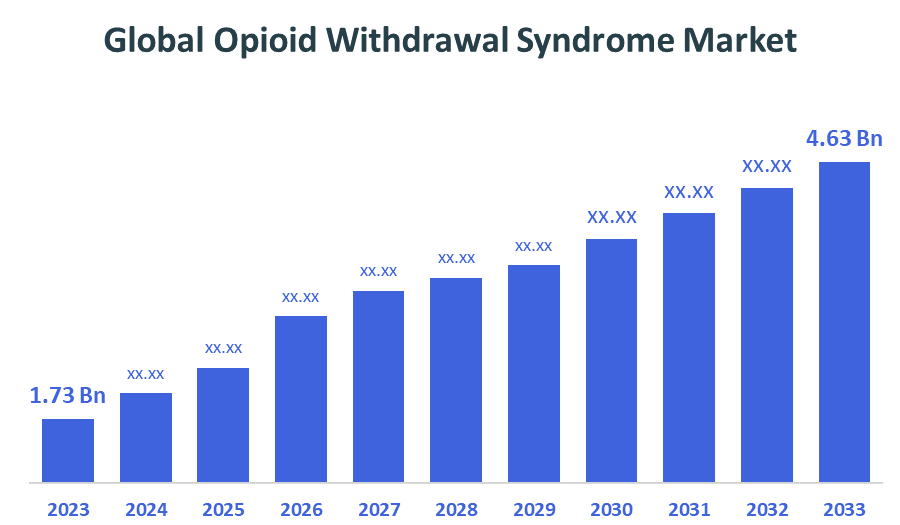
According to Decision Advisors, the Global Opioid Withdrawal Syndrome Market Size is expected to grow from USD 1.73 billion in 2025 to USD 4.63 billion by 2035, at a CAGR of 10.35% during the forecast period 2025-2035. Global opioid withdrawal syndrome market is driven by rising opioid use disorder prevalence, increasing adoption of medication-assisted treatments, expanded access through telehealth, regulatory support like X?Waiver elimination, and growing demand for long-acting injectables and non-opioid supportive therapies.
Market Overview/ Introduction
The global opioid withdrawal syndrome (OWS) market encompasses therapies and interventions aimed at managing the acute physical and psychological symptoms experienced during cessation of opioid use. OWS is defined as a clinical condition characterized by anxiety, muscle aches, nausea, insomnia, and other withdrawal symptoms following abrupt reduction or discontinuation of opioid drugs. The market scope includes medication-assisted treatments (MAT) such as buprenorphine and methadone, non-opioid supportive therapies like lofexidine, hospital- and clinic-based detox programs, and emerging long-acting injectable formulations designed to improve patient adherence and outcomes. Key end users include hospitals, rehabilitation centers, and outpatient care facilities, with treatments increasingly supported by telehealth platforms and insurance coverage. Regulatory reforms, such as the removal of prescribing barriers in the U.S., are enhancing accessibility. Future opportunities lie in the development of next-generation long-acting injectables, non-opioid alternatives, and digital therapeutics, alongside expansion into emerging markets with growing awareness of opioid withdrawal management, enabling significant market growth and improved patient care globally.
- The Permanent Telehealth Flexibilities for OUD Treatment is a scheme that allows practitioners to prescribe buprenorphine and other MAT medications via video or phone without in-person visits, improving access, treatment adherence, and patient outcomes for OWS across the United States.
- The Waiver Elimination under the MAT Act removes the X-Waiver requirement, enabling millions of DEA-registered providers to prescribe buprenorphine and manage OWS, decentralizing care and expanding treatment availability nationwide.
Notable Insights: -
- North America holds the largest regional market share, approximately 60% in the global opioid withdrawal syndrome market.
- Asia Pacific is the fastest growing region, approximately 15% in the global opioid withdrawal syndrome market.
- Europe holds the 3rd largest regional market share, approximately 30% in the global opioid withdrawal syndrome market.
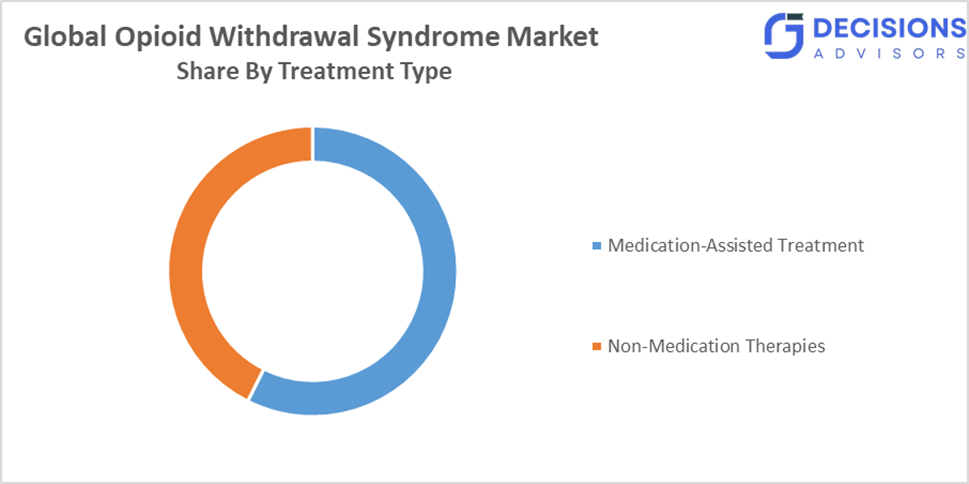
- By Treatment Type, the Medication-Assisted Treatment segment is the dominating accounting for over 57% of the global market share in 2025.
- By Drug Class, the Buprenorphine segment is the dominating accounting for over 34% of the global market share in 2025.
- By Withdrawal Type, the Moderate Withdrawal segment is the dominating accounting for over 41% of the global market share in 2025.
- By End User, the Hospitals & Clinics segment is the dominating accounting for over 48% of the global market share in 2025.
- The compound annual growth rate of the global opioid withdrawal syndrome market is 10.35%.
- The market is likely to achieve a valuation of USD 4.63 billion by 2035.
What is role of technology in grooming the market?
Technology is playing a pivotal role in enhancing treatment efficacy, patient adherence, and market growth for the global opioid withdrawal syndrome market. Innovations in long-acting injectable formulations and extended-release drug delivery systems reduce dosing frequency, lower relapse risk, and improve patient compliance. Digital health platforms and mobile apps support remote monitoring, telemedicine consultations, and adherence tracking, enabling healthcare providers to manage withdrawal treatment more effectively. Advanced non-opioid therapeutic technologies such as sublingual films and controlled-release devices provide safer alternatives for symptom management. Collectively, these technological advancements expand treatment accessibility, optimize clinical outcomes, and accelerate adoption of medication-assisted therapies, driving sustained growth in the global OWS market.
How is Recent Developments Helping the Market?
Recent developments such as long-acting formulation adoption, clinical validation, and real-world evidence generation are supporting the growth of the global opioid withdrawal syndrome market. In 2025–2026, extended-release buprenorphine injectables and non-opioid therapies gained wider adoption, improving treatment adherence and reducing relapse rates. The demand for long-acting and convenient treatment options is rising, particularly in North America and Europe, boosting overall market value. Additionally, real-world evidence and clinical trial outcomes are encouraging healthcare providers and payers to expand access to medication-assisted treatment programs. Regulatory approvals, guideline endorsements, and reimbursement coverage are further accelerating market growth, while innovative delivery technologies and patient-centric protocols are enhancing clinical outcomes and expanding the total addressable market.
Market Drivers
The global opioid withdrawal syndrome market is being driven by the widespread adoption of long-acting injectable buprenorphine and other MAT therapies, which improve adherence and clinical outcomes. Expansion of outpatient and hospital-based treatment centers, coupled with telehealth-enabled prescribing, has increased accessibility. Rising investment in non-opioid withdrawal therapies, including lofexidine and emerging pipeline candidates, is creating new treatment options. Regulatory reforms, such as the elimination of the X?Waiver in the U.S., and growing insurance coverage have lowered barriers to care. Together, these clinical, technological, and policy advancements are accelerating demand and shaping the growth trajectory of the OWS market.
Restrain
The global opioid withdrawal syndrome market faces restraints from limited patient awareness in emerging regions, high treatment costs for long-acting injectables, stringent regulatory requirements in certain countries, and the risk of diversion or misuse of MAT drugs. Additionally, stigma around opioid use and withdrawal may reduce treatment adoption in some populations.
Competitive Analysis:
The report offers the appropriate analysis of the key organizations/companies involved within the global opioid withdrawal syndrome market, along with a comparative evaluation primarily based on their product of offering, business overviews, geographic presence, enterprise strategies, segment market share, and SWOT analysis. The report also provides an elaborative analysis focusing on the current news and developments of the companies, which includes product development, innovations, joint ventures, partnerships, mergers & acquisitions, strategic alliances, and others. This allows for the evaluation of the overall competition within the market.
Top Companies in Global Opioid Withdrawal Syndrome Market
- Indivior Pharmaceuticals, Inc.
- Camurus AB
- Alkermes plc
- US WorldMeds (USWM)
- Hikma Pharmaceuticals PLC
- Others
Government Initiatives
|
Country |
Key Government Initiatives |
|
US |
The SUPPORT for Patients and Communities Act enhances infrastructure by broadening access to opioid withdrawal treatments, telehealth services, and recovery programs, improving treatment adherence and patient outcomes across the country. |
|
EU |
Establishment of the European Union Drugs Agency (EUDA) coordinates standardized opioid withdrawal protocols, early warning systems, and cross-border support, ensuring consistent, evidence-based OWS treatment across member states. |
Market Segmentation
The global opioid withdrawal syndrome market share is classified into type, drug class, withdrawal type, and end user
- The Medication-Assisted Treatment segment dominated the market in 2025, and is projected to grow at a substantial CAGR of approximately 57.4% during the forecast period.
Based on treatment type, the global opioid withdrawal syndrome market is divided into Medication-Assisted Treatment and Non-Medication Therapies. Among these, the Medication-Assisted Treatment segment dominated the market in 2025, and is projected to grow at a substantial CAGR of approximately 57.4% during the forecast period. This is driven by increasing adoption of MAT protocols in hospitals and rehab centers, clinical guideline endorsements, and growing insurance coverage supporting pharmacological interventions.
- The Buprenorphine segment dominated the market in 2025, and is projected to grow at a substantial CAGR of approximately 34.6% during the forecast period.
Based on drug class, the global opioid withdrawal syndrome market is divided into Methadone, Buprenorphine, Clonidine, Naltrexone, and Others. Among these, the Buprenorphine segment dominated the market in 2025, and is projected to grow at a substantial CAGR of approximately 34.6% during the forecast period. Its dominance is due to high efficacy in outpatient detox programs, regulatory approvals, and increasing prescriptions across North America and Europe.
- The Moderate Withdrawal segment dominated the market in 2025, and is projected to grow at a substantial CAGR of approximately 41.2% during the forecast period.
Based on withdrawal type, the global opioid withdrawal syndrome market is divided into Mild Withdrawal, Moderate Withdrawal, and Severe Withdrawal. Among these, the Moderate Withdrawal segment dominated the market in 2025, and is projected to grow at a substantial CAGR of approximately 41.2% during the forecast period. The dominance arises from the prevalence of patients experiencing moderate symptoms that require supervised clinical care and pharmacological support.
- The Hospitals & Clinics segment dominated the market in 2025, and is projected to grow at a substantial CAGR of approximately 11.62% during the forecast period.
Based on end user, the global opioid withdrawal syndrome market is divided into Hospitals & Clinics, Rehabilitation Centers, and Home Care Settings. Among these, the Hospitals & Clinics segment dominated the market in 2025, and is projected to grow at a substantial CAGR of approximately 48.62% during the forecast period. Hospitals continue to be the primary site for medically supervised withdrawal and pharmacotherapy administration, driving consistent demand for treatments and monitoring services.
What is the Reason of the Region Dominance?
The dominance of North America is due to the high prevalence of opioid use disorder, advanced healthcare infrastructure, strong insurance coverage, widespread adoption of medication-assisted treatment (MAT), and early uptake of innovative pharmacological interventions, with the U.S. contributing the majority of regional revenue. Asia Pacific’s rapid growth is driven by rising awareness of opioid withdrawal treatments, expanding healthcare facilities, increasing patient populations, government initiatives, and improved access to hospital- and clinic-based programs, particularly in China and India. Europe’s position as the third largest region is supported by established healthcare systems, strong adoption of MAT, high patient awareness, robust insurance coverage, and demand for specialized rehabilitation services in Germany, France, and the UK.
Strategies to Implement for Growth of the Market in Non-Leading Regions
The growth of the global opioid withdrawal syndrome market in non-leading regions can be accelerated by strengthening healthcare infrastructure and improving access to hospitals and clinics offering withdrawal management programs. The implementation of awareness campaigns and training for healthcare professionals on medication-assisted treatment (MAT) protocols can enhance early diagnosis and patient engagement. Introducing affordable and locally adapted long-acting injectables and non-opioid therapies will increase adoption. Telemedicine and digital health platforms can provide remote monitoring and support, while partnerships with governments, NGOs, and insurance providers can facilitate reimbursement coverage, broaden accessibility, and ultimately drive treatment uptake, compliance, and sustained market expansion.
Regional Segment Analysis of the Opioid Withdrawal Syndrome Market
- North America (U.S., Canada, Mexico)
- Europe (Germany, France, U.K., Italy, Spain, Rest of Europe)
- Asia-Pacific (China, Japan, India, Rest of APAC)
- South America (Brazil and the Rest of South America)
- The Middle East and Africa (UAE, South Africa, Rest of MEA)
North America is anticipated to hold the largest share of the global opioid withdrawal syndrome market over the predicted timeframe. This market is accounting for approximately 60% of the total market share. The dominance of this region is driven by the high prevalence of opioid use disorder, advanced healthcare infrastructure, widespread adoption of medication-assisted treatment protocols, strong insurance coverage, and early adoption of innovative pharmacological interventions. The United States represents the majority of the regional revenue, supported by extensive clinical programs and government initiatives targeting opioid withdrawal management.
Asia pacific is expected to grow at a rapid CAGR in the global opioid Withdrawal Syndrome market during the forecast period. Asia Pacific is dominating, accounting for over 15% of the global market share in 2025. The rapid growth is fueled by rising awareness of opioid withdrawal treatments, expanding healthcare infrastructure, increasing patient populations, government initiatives, and improving accessibility of hospital- and clinic-based treatment programs in China and India.
Europe is the 3rd largest region in the global opioid withdrawal syndrome market. The region’s market share is approximately 30%, driven by strong adoption of medication-assisted treatment programs, established healthcare systems, and significant demand for specialized rehabilitation services. Countries such as Germany, France, and the UK contribute heavily due to advanced clinical guidelines, high patient awareness, and robust insurance coverage, supporting sustained market growth.
Future Market Trends in Global Opioid Withdrawal Syndrome Market:-
- Continued Adoption of Long?Acting and Extended?Release Therapeutics
Pharmaceutical innovation is shifting treatment paradigms toward long?acting and extended?release formulations, such as weekly or monthly buprenorphine injectables, which enhance patient adherence, reduce relapse risk, and optimize clinical outcomes across care settings.
- Expansion of Telehealth and Digital Health Solutions
Telemedicine and digital health platforms are increasingly integrated into OWS management, enabling remote consultations, real?time monitoring, and patient engagement tools. This trend is improving access to care, particularly in underserved and rural regions, while reducing barriers associated with traditional clinic visits.
- Growth of Non?Opioid Supportive and Adjunctive Therapies
There is rising clinical and commercial interest in non?opioid supportive treatments and novel symptom management agents. These therapies broaden the treatment portfolio, address safety and tolerance concerns, and support comprehensive care pathways beyond conventional opioid?based protocols.
Recent Development
- In February 2025, Indivior received FDA label changes for SUBLOCADE (extended?release buprenorphine) injection, allowing rapid initiation after one hour of observation and alternative subcutaneous injection sites (abdomen, thigh, buttock, upper arm), enhancing treatment flexibility and improving patient adherence in moderate?to?severe opioid use disorder.
- In March 2026, BioXcel Therapeutics announced positive Phase?2 topline results for BXCL501, showing significant reductions in opioid withdrawal symptoms compared with lofexidine and placebo during methadone taper, with a more convenient dosing profile and favorable tolerability, supporting its potential as an emerging withdrawal therapy.
- In November 2025, Indivior presented real?world evidence at AMCP Nexus 2025, demonstrating adherence to monthly injectable buprenorphine (SUBLOCADE) led to lower relapse rates and reduced healthcare resource use among Medicaid and commercially insured patients, highlighting the clinical and economic benefits of long?acting MAT
Market Segment
This study forecasts revenue at global, regional, and country levels from 2020 to 2035. Decision Advisor has segmented the global opioid withdrawal syndrome market based on the below-mentioned segments:
Global Opioid Withdrawal Syndrome Market, By Treatment Type
- Medication-Assisted Treatment (MAT)
- Non-Medication Therapies
Global Opioid Withdrawal Syndrome Market, By Drug Class
- Methadone
- Buprenorphine
- Clonidine
- Naltrexone
- Others
Global Opioid Withdrawal Syndrome Market, By Withdrawal Type
- Mild Withdrawal
- Moderate Withdrawal
- Severe Withdrawal
Global Opioid Withdrawal Syndrome Market, By End User
- Hospitals & Clinics
- Rehabilitation Centers
- Home Care Settings
Global Opioid Withdrawal Syndrome Market, By Regional Analysis
- North America
- US
- Canada
- Mexico
- Europe
- Germany
- UK
- France
- Italy
- Spain
- Russia
- Rest of Europe
- Asia Pacific
- China
- Japan
- India
- South Korea
- Australia
- Rest of Asia Pacific
- South America
- Brazil
- Argentina
- Rest of South America
- Middle East & Africa
- UAE
- Saudi Arabia
- Qatar
- South Africa
- Rest of the Middle East & Africa
Frequently Asked Questions (FAQ)
Q: Are there any ongoing international collaborations for opioid withdrawal research outside the U.S. and EU?
A: Yes, several Asia-Pacific and Latin American countries are collaborating with global pharmaceutical companies and academic research institutes to conduct clinical trials, share knowledge, and implement best practices for opioid withdrawal management and treatment optimization.
Q: What role do private insurance companies play in supporting opioid withdrawal syndrome treatment in emerging markets?
A: Private insurance providers are increasingly offering coverage for medication-assisted treatment, telehealth consultations, and outpatient care, though the extent of coverage varies across countries, often influenced by local regulations, healthcare infrastructure, and the availability of qualified providers.
Q: How is wearable technology being utilized to monitor patients undergoing opioid withdrawal?
A: Wearable devices are employed to monitor patients’ vital signs, sleep cycles, stress indicators, and physical activity levels, enabling healthcare professionals to detect early withdrawal complications and remotely adjust treatment plans for improved patient outcomes.
Q: Are there any predictive analytics tools being developed for opioid withdrawal relapse prevention?
A: Yes, AI-driven predictive analytics tools are being developed to evaluate relapse risk by analyzing patient history, adherence to medication, behavioral patterns, and physiological responses, allowing clinicians to personalize treatment and proactively prevent relapse episodes.
Check Licence
Choose the plan that fits you best: Single User, Multi-User, or Enterprise solutions tailored for your needs.
We Have You Covered
- 24/7 Analyst Support
- Clients Across the Globe
- Tailored Insights
- Technology Tracking
- Competitive Intelligence
- Custom Research
- Syndicated Market Studies
- Market Overview
- Market Segmentation
- Growth Drivers
- Market Opportunities
- Regulatory Insights
- Innovation & Sustainability
Report Details
| Scope | Global |
| Pages | 240 |
| Delivery | PDF & Excel via Email |
| Language | English |
| Release | Mar 2026 |
| Access | Download from this page |