
Global Oral Antidiabetic Drug Market
 |
Author:
David J
|
Pages:
200
|
Author:
David J
|
Pages:
200
Global Oral Antidiabetic Drug Market Size, Share By Drug Class (Biguanides, Sulfonylureas, DPP-4 Inhibitors, SGLT2 Inhibitors, Thiazolidinediones, Alpha-Glucosidase Inhibitors, and Others), By Diabetes Type (Type 2 Diabetes, Type 1 Diabetes, Prediabetes, and Others), By Distribution Channel (Hospital Pharmacies, Retail Pharmacies, Online Pharmacies, and Others), and By Region (North America, Europe, Asia-Pacific, Latin America, Middle East & Africa), Analysis and Forecast 2026-2035
CAGR
4.44%
REVENUE 2025
USD Billion 51.9
FORECAST 2035
USD Billion 80.1
REPORT COVERAGE
Global
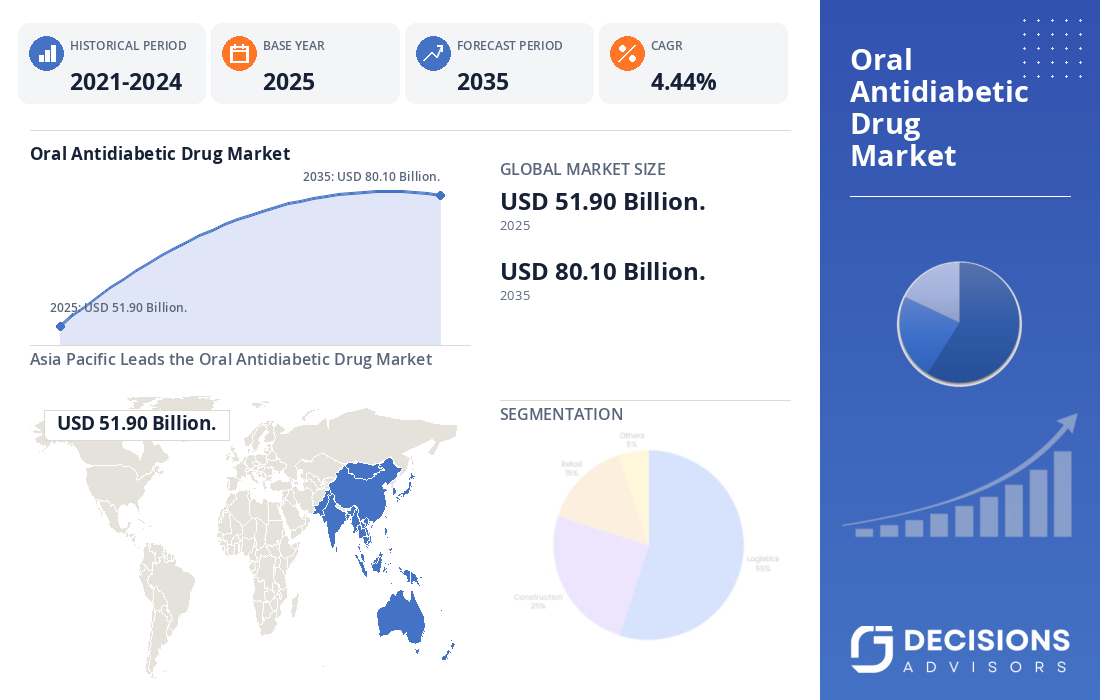
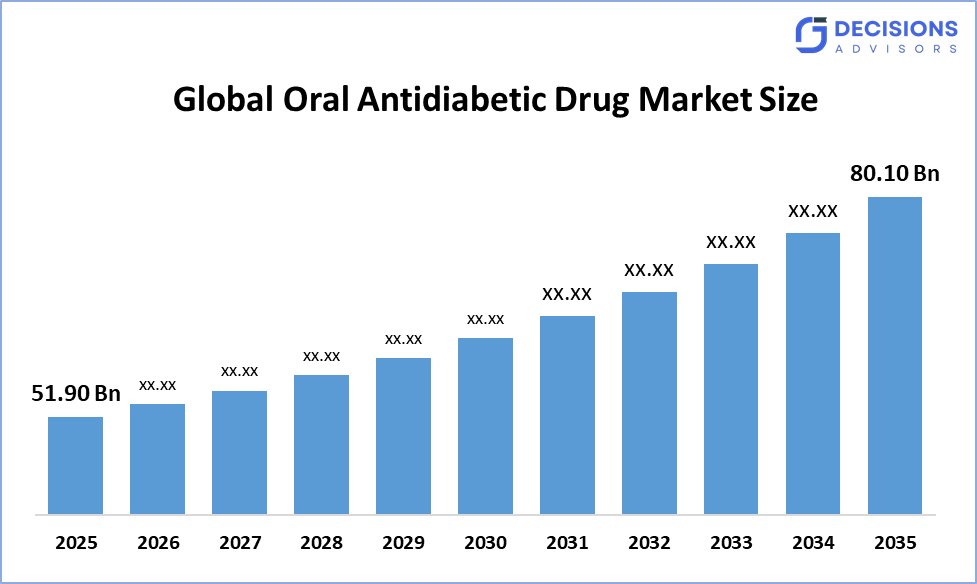
The Global Oral Antidiabetic Drug Market Size is predicted to grow from USD 51.90 Billion in 2025 and is likely to reach around USD 80.10 Billion by 2035, with a CAGR of 4.44%. According to Decision Advisors, the increasing global diabetes burden, expanding diagnosis and treatment coverage, demand for convenient oral therapies, and advances in next-generation oral GLP-1 medicines are supporting market growth. The Type 2 Diabetes segment dominates demand because oral glucose-lowering medicines are extensively used in long-term type 2 diabetes management.
Market Snapshot
- Global Oral Antidiabetic Drug Market Size (2025): USD 51.90 Billion.
- Projected Global Oral Antidiabetic Drug Market Size (2035): USD 80.10 Billion.
- Global Oral Antidiabetic Drug Market CAGR: 4.44%.
- Largest Regional Market: Asia Pacific
- 2nd Largest Region: North America
- Fastest Growing Region: Asia Pacific
- Base Year: 2025
- Historical Period: 2021-2024
- Market Forecast Period: 2026-2035
Market Overview/ Introduction
The Global Oral Antidiabetic Drug Market includes pharmaceutical medicines administered orally to control blood glucose, particularly in patients with type 2 diabetes. Major therapeutic categories include biguanides, sulfonylureas, DPP-4 inhibitors, SGLT2 inhibitors, thiazolidinediones and alpha-glucosidase inhibitors. The market is expanding as diabetes prevalence increases, diagnosis improves and healthcare systems expand access to chronic disease treatment. According to the World Health Organization, approximately 830 million people worldwide were living with diabetes in 2022, highlighting the substantial long-term treatment requirement. Oral therapies remain important because tablets provide convenient administration for long-term disease management and are generally easier for many patients to incorporate into daily treatment routines than injectable medicines. At the same time, the competitive landscape is shifting toward therapies with cardiovascular, renal and weight-management benefits. Companies such as Novo Nordisk, Eli Lilly, Merck & Co., AstraZeneca, Boehringer Ingelheim and Sanofi are investing in diabetes portfolios, while emerging oral GLP-1 therapies are creating a new area of competition.
- United States, The CDC's National Diabetes Prevention Program supports evidence-based interventions designed to prevent or delay type 2 diabetes, strengthening the broader diabetes-care ecosystem.
- Japan, National health-promotion programs emphasize prevention and management of lifestyle-related diseases, including diabetes.
- China, National diabetes prevention and control programs emphasize awareness, early detection, standardized treatment and improved primary-care management.
Notable Insights: -
- Asia-Pacific is anticipated to hold approximately 36% share of the Global Oral Antidiabetic Drug Market over the predicted timeframe.
- North America is expected to hold approximately 29% share during the forecast period because of high diagnosis rates, established healthcare systems and rapid adoption of innovative therapies.
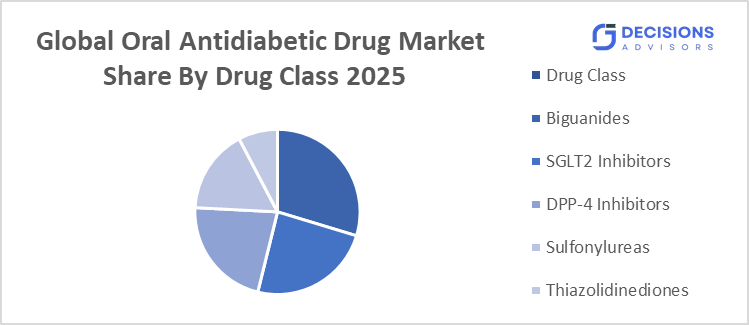
- By Drug Class, the Biguanides segment dominated the market and holds approximately 26.8% share in 2025 and is projected to grow at a steady CAGR during the forecast period.
- By Diabetes Type, the Type 2 Diabetes segment dominated the market and holds approximately 93.6% share in 2025 and is projected to grow at a substantial CAGR during the forecast period.
- By Distribution Channel, Retail Pharmacies accounted for approximately 56.7% share in 2025, supported by their widespread availability and recurring prescriptions for chronic diabetes management.
- Novo Nordisk's Rybelsus generated DKK 22.09 billion in 2025 sales, demonstrating the commercial significance of oral GLP-1 treatment.
- The compound annual growth rate of the Global Oral Antidiabetic Drug Market is 4.44%.
- The market is likely to achieve a valuation of USD 80.10 Billion by 2035.
Market Drivers
The increasing prevalence of diabetes represents the fundamental demand driver for oral antidiabetic medicines. WHO data indicate that global diabetes prevalence among adults increased substantially over recent decades, with the largest treatment gaps occurring in low- and middle-income countries. Rising obesity, sedentary lifestyles, population ageing, urbanization and changing dietary patterns are increasing the number of people requiring glucose-lowering treatment. More widespread screening and diagnosis are also converting previously untreated patients into potential therapy users. Pharmaceutical innovation is another major growth factor. SGLT2 inhibitors and DPP-4 inhibitors have expanded oral treatment options, while oral GLP-1 medicines are creating an important new category. In 2026, Eli Lilly reported positive Phase 3 results for oral orforglipron, including superior A1C control and weight reduction versus oral semaglutide in the ACHIEVE-3 study.
Restrain
The market faces several restraints, including generic price pressure, reimbursement limitations, treatment adherence challenges and regulatory complexity. Established drugs such as metformin and several sulfonylureas face intense generic competition, limiting revenue growth despite high prescription volumes. Newer therapies can have substantially higher development and manufacturing costs, while adverse-event profiles and patient-specific contraindications can influence treatment selection.
Competitive Analysis:
The report offers the appropriate analysis of the key organizations/companies involved within the global oral antidiabetic drug market, along with a comparative evaluation primarily based on their product offerings, business overviews, geographic presence, enterprise strategies, segment market share, and SWOT analysis. The report also provides an elaborative analysis focusing on the current news and developments of the companies, which includes product development, innovations, joint ventures, partnerships, mergers & acquisitions, strategic alliances, and others. This allows for the evaluation of the overall competition within the market.
Top Companies in the Global Oral Antidiabetic Drug Market
- Novo Nordisk A/S
- Eli Lilly and Company
- Merck & Co., Inc.
- AstraZeneca PLC
- Boehringer Ingelheim International GmbH
- Sanofi S.A.
- Bristol Myers Squibb Company
- Takeda Pharmaceutical Company Limited
- Novartis AG
- Johnson & Johnson.
Government Initiatives
|
Country |
Key Government Initiatives |
|
United States |
The National Diabetes Prevention Program supports evidence-based lifestyle interventions aimed at preventing or delaying type 2 diabetes and improving long-term diabetes outcomes |
|
Japan |
National health-promotion policies emphasize prevention and control of lifestyle-related diseases, including diabetes, while encouraging early diagnosis and healthier lifestyles |
|
China |
National diabetes prevention and control programs emphasize prevention, screening, standardized treatment, patient education and strengthening diabetes management through primary healthcare |
Market Segmentation
The global oral antidiabetic drug market share is classified into drug class, diabetes type and distribution channel.
- The Biguanides segment dominated the market and holds approximately 26.8% share in 2025 and is projected to grow at a steady CAGR during the forecast period.
Based on drug class, the Global oral antidiabetic drug market is divided into biguanides, sulfonylureas, DPP-4 Inhibitors, SGLT2 inhibitors, thiazolidinediones, alpha-glucosidase inhibitors, and others. Among these, Biguanides dominate because metformin remains one of the most established oral treatments for type 2 diabetes. Its affordability, extensive availability and long clinical history support substantial prescription volumes. Metformin is also frequently used as a foundation for combination treatment with newer drug classes. Although newer therapies are growing rapidly, the large installed patient base and generic accessibility of metformin maintain the segment's leading position.
- The Type 2 Diabetes segment accounted for the largest share of approximately 93.6% in 2025 and is anticipated to grow at a significant CAGR during the forecast period.
Based on diabetes type, the market is divided into Type 2 Diabetes, Type 1 Diabetes, Prediabetes, and Others. Type 2 diabetes dominates because oral antidiabetic medicines are principally used for managing insulin resistance and inadequate insulin production associated with type 2 disease. Increasing obesity, population ageing and lifestyle changes continue to expand the global type 2 patient population. WHO identifies type 2 diabetes as the most common form of diabetes and reports that diabetes prevalence has increased substantially across countries.
- The Retail Pharmacies segment accounted for the largest share of approximately 56.7% in 2025 and is anticipated to grow at a significant CAGR during the forecast period.
Based on distribution channel, the market is divided into Hospital Pharmacies, Retail Pharmacies, Online Pharmacies, and Others. Retail pharmacies dominate because diabetes is a chronic condition requiring recurring prescriptions and continuous medication access. Their broad geographic presence makes them convenient for patients receiving long-term oral therapy. Retail channels are particularly important in markets where chronic medicines are routinely dispensed outside hospitals. Online pharmacies are expected to gain share as digital prescriptions, home delivery and online medication platforms become more widely accepted.
Regional Segment Analysis of the Global Oral Antidiabetic Drug Market
- North America (U.S., Canada, Mexico)?
- Europe (Germany, U.K., France, Italy, Spain, Netherlands, Rest of Europe).
- Asia-Pacific (China, Japan, India, Australia, South Korea, Rest of Asia-Pacific).
- South America (Brazil, Argentina, Rest of South America).
- Middle East & Africa (UAE, Saudi Arabia, South Africa, Rest of MEA).
Asia Pacific is anticipated to hold approximately 36% share of the Global Oral Antidiabetic Drug Market over the predicted timeframe.
Asia-Pacific represents the largest regional opportunity because of its large diabetes population, increasing diagnosis, expanding healthcare infrastructure and growing pharmaceutical accessibility. China and India are particularly important because of their large populations and increasing prevalence of metabolic disorders. Japan and South Korea contribute through advanced healthcare systems, strong pharmaceutical industries and high adoption of innovative medicines. The region also has substantial unmet treatment demand; WHO's South-East Asia data highlight significant numbers of adults living with diabetes who remain undiagnosed or untreated.
North America is expected to grow at a rapid CAGR in the Global Oral Antidiabetic Drug Market, holding approximately 29% of the share during the forecast period.
North America benefits from high diabetes diagnosis rates, advanced healthcare infrastructure, strong pharmaceutical R&D and comparatively rapid adoption of innovative therapies. The United States represents the largest contributor, supported by extensive clinical research and a large commercial pharmaceutical market. The emergence of oral GLP-1 therapies is expected to strengthen regional competition. Eli Lilly's orforglipron program and Novo Nordisk's oral semaglutide franchise are particularly important developments in this market.
Europe is expected to hold approximately 24% share of the Global Oral Antidiabetic Drug Market during the forecast period.
Europe has a mature diabetes-care infrastructure supported by national healthcare systems, established pharmaceutical distribution networks and extensive clinical research. Germany, France, the United Kingdom, Italy and Spain are important markets because of their large patient populations and healthcare expenditure. The region is also an important commercial and research market for GLP-1 therapies. Novo Nordisk's 2025 results show substantial international demand for its diabetes portfolio, although its traditional GLP-1 diabetes products are experiencing portfolio shifts toward newer therapies.
Future Market Trends in Global Oral Antidiabetic Drug Market: -
-
- Expansion of Oral GLP-1 Therapies
Oral GLP-1 therapies are expected to become one of the most significant innovation areas in the market. These medicines offer the potential to provide strong glycemic and weight-management effects through tablet administration. Eli Lilly's orforglipron has demonstrated strong Phase 3 results, while Novo Nordisk continues to develop its oral semaglutide franchise.
-
- Growth of Combination Therapies
Combination therapies are becoming increasingly important as physicians seek stronger glycemic control through complementary mechanisms. Combinations involving metformin, SGLT2 inhibitors and DPP-4 inhibitors can simplify treatment and support therapeutic intensification. Fixed-dose combinations are likely to gain importance in both developed and emerging markets.
-
- Greater Focus on Cardio-Renal Outcomes
Diabetes treatment is increasingly being evaluated beyond glucose reduction. SGLT2 inhibitors and newer metabolic therapies have strengthened the focus on cardiovascular and kidney outcomes. Future product development is therefore likely to emphasize therapies that simultaneously address glucose control and major diabetes-associated complications.
-
- Personalized and Digitally Supported Diabetes Care
Digital glucose monitoring, electronic health records, telemedicine and connected health platforms are supporting more individualized diabetes management. Integration of treatment data with clinical decision-making can help physicians adjust medication regimens according to patient response. This trend is expected to increase demand for therapies that can be easily integrated into long-term personalized treatment plans.
Recent Development
- In February 2026, Novo Nordisk published its 2025 annual report, reporting Rybelsus sales of DKK 22.09 billion and continued investment in its diabetes portfolio
- In April 2026, Eli Lilly announced positive Phase 3 ACHIEVE-4 results for oral Foundayo (orforglipron), reporting non-inferiority against insulin glargine and plans to submit the therapy for type 2 diabetes to the U.S. FDA
- In June 2026, Eli Lilly announced detailed Phase 3 ACHIEVE results showing that oral Foundayo delivered superior A1C control and weight loss versus oral semaglutide in ACHIEVE-3
Market Segment
This study forecasts revenue at global, regional, and country levels from 2021 to 2035. Decision Advisors has segmented the global oral antidiabetic drug market based on the below-mentioned segment:
Global Oral Antidiabetic Drug Market, By Drug Class.
- Biguanides
- Sulfonylureas
- DPP-4 Inhibitors
- SGLT2 Inhibitors
- Thiazolidinediones
- Alpha-Glucosidase Inhibitors
- Others.
Global Oral Antidiabetic Drug Market, By Diabetes Type.
- Type 2 Diabetes
- Type 1 Diabetes
- Prediabetes
- Others.
Global Oral Antidiabetic Drug Market, By Distribution Channel.
- Hospital Pharmacies
- Retail Pharmacies
- Online Pharmacies
- Others.
Global Oral Antidiabetic Drug Market, By Regional Analysis.
- North America
- US
- Canada
- Mexico
- Europe
- Germany
- UK
- France
- Italy
- Spain
- Russia
- Rest of Europe
- Asia Pacific
- China
- Japan
- India
- South Korea
- Australia
- Rest of Asia Pacific
- South America
- Brazil
- Argentina
- Rest of South America
- Middle East & Africa
- UAE
- Saudi Arabia
- Qatar
- South Africa
- Rest of the Middle East & Africa
Frequently Asked Questions (FAQ)
Q. What is driving the Global Oral Antidiabetic Drug Market?
A. The market is primarily driven by the increasing prevalence of diabetes, rising obesity, ageing populations, improved diagnosis and expanding access to chronic disease treatment. Innovation in oral GLP-1 therapies and increasing demand for convenient long-term treatment are additional growth factors. WHO estimates that around 830 million people worldwide were living with diabetes in 2022.
Q. Which drug class dominates the Global Oral Antidiabetic Drug Market?
A. Biguanides represent the largest individual drug-class segment, primarily because metformin remains an established, affordable and widely available therapy for type 2 diabetes. SGLT2 inhibitors, DPP-4 inhibitors and newer oral GLP-1 therapies are gaining strategic importance.
Q. Why are oral GLP-1 drugs important for the future of the market?
A. Oral GLP-1 medicines provide a potentially convenient alternative to injectable therapies while targeting both glycemic control and weight management. Eli Lilly's Phase 3 orforglipron results and Novo Nordisk's established Rybelsus franchise indicate that oral GLP-1 therapy is becoming an increasingly important competitive segment.
Q. Which region is expected to dominate the Global Oral Antidiabetic Drug Market?
A. Asia-Pacific is expected to remain the largest regional market because of its large diabetes population, expanding healthcare infrastructure and increasing access to treatment. China, India and Japan are expected to remain major contributors.
Check Licence
Choose the plan that fits you best: Single User, Multi-User, or Enterprise solutions tailored for your needs.
We Have You Covered
- 24/7 Analyst Support
- Clients Across the Globe
- Tailored Insights
- Technology Tracking
- Competitive Intelligence
- Custom Research
- Syndicated Market Studies
- Market Overview
- Market Segmentation
- Growth Drivers
- Market Opportunities
- Regulatory Insights
- Innovation & Sustainability
Report Details
| Scope | Global |
| Pages | 200 |
| Delivery | PDF & Excel via Email |
| Language | English |
| Release | Aug 2026 |
| Access | Download from this page |