
Global Oral Proteins & Peptides Market
 |
Author:
David J
|
Pages:
210
|
Author:
David J
|
Pages:
210
Global Oral Proteins & Peptides Market Size, Share, By Product Type (GLP-1 Receptor Agonists, Calcitonin, Parathyroid Hormone), By Distribution Channel (Hospital Pharmacies, Retail Pharmacies, Online Pharmacies), By End Use (Hospitals, Clinics, Home Care), and By Region (North America, Europe, Asia-Pacific, Latin America, Middle East & Africa), Analysis and Forecast 2026?2035
CAGR
16.54%
REVENUE 2025
USD Billion 9.51
FORECAST 2035
USD Billion 43.93
REPORT COVERAGE
Global
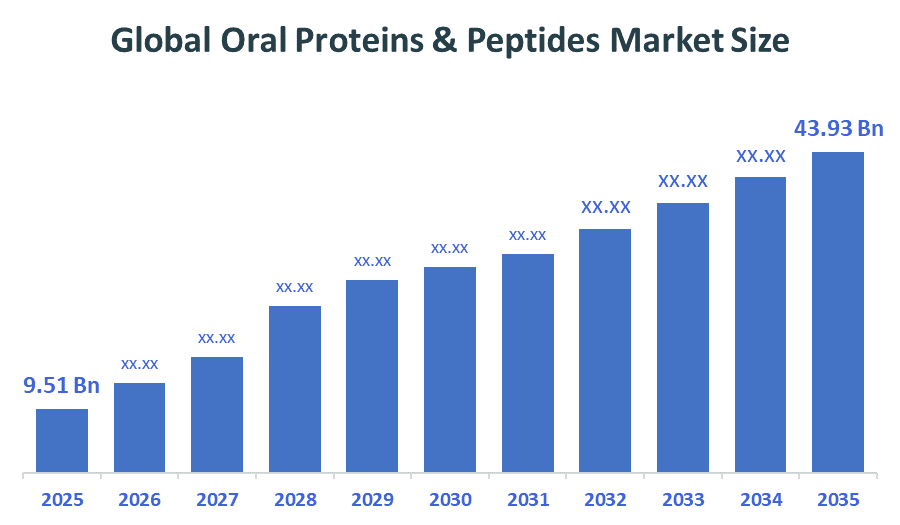
The Global Oral Proteins & Peptides Market Size is forecast to grow from USD 9.51 Billion in 2025 to approximately USD 43.93 Billion by 2035. According to Decision Advisors, a detailed research report on the Oral proteins & peptides market indicates that Oral GLP-1 therapies dominate the market, accounting for approximately 55% of the total share globally. Novo Nordisk the market with an estimated 55.3% global market share. The company reported a 2025 revenue of approximately USD 45-47 billion, making it one of the most influential forces shaping industry trends and overall market growth.
Market Snapshot
- Global Oral Proteins & Peptides Market Size (2025): USD 9.51 Billion
- Projected Global Oral Proteins & Peptides Market Size (2035): USD 43.93 Billion
- Global Oral Proteins & Peptides Market Compound Annual Growth Rate (CAGR): 16.54%
- Largest Regional Market: North America
- Fastest Growing Region: Asia-Pacific
- 2nd Largest Region: Europe
- Base Year: 2025
- Historical Period: 2021–2024
- Forecast Period: 2026–2035
Market Overview/ Introduction
The global oral proteins and peptides market refers to the industry focused on developing and commercializing protein- and peptide-based therapeutics designed for oral administration rather than injections. Oral proteins and peptides are biologically active molecules formulated to survive the gastrointestinal tract and achieve systemic or localized therapeutic effects. The market is expanding due to increasing demand for non-invasive treatments, especially for chronic diseases like diabetes and metabolic disorders. Future opportunities lie in advanced drug delivery technologies, nanocarriers, and expanding applications in oncology and rare diseases. Growth is further driven by rising R&D investments, improving bioavailability solutions, patient preference for convenience, and increasing healthcare access in emerging markets, which collectively support broader adoption and innovation.
- The CARB-X initiative, backed by governments such as the U.S., U.K., and Germany, funds early-stage R&D for innovative biologics and peptide-based therapies. It accelerates development pipelines and supports novel drug platforms, indirectly boosting peptide therapeutics and oral biologics innovation globally.
- The Global Health Innovative Technology Fund, supported by the Government of Japan, finances collaborative R&D for advanced drugs, including peptide-based therapies. It promotes international partnerships and innovation, enhancing biologics development that contributes to oral peptide drug advancement.
Notable Insights: -
- North America is anticipated to hold the largest share of approximately 42% in the Oral proteins & peptides market over the forecast period.
- Asia Pacific is expected to grow at a rapid CAGR of approximately 9.5% in the Oral proteins & peptides market during the forecast period.
- The GLP-1 receptor agonists treatment segment dominated the market in 2025, approximately 48%, and is projected to grow at a substantial CAGR during the forecast period.
- The hospital pharmacies segment dominated the market in 2025, approximately 45%, and is projected to grow at a substantial CAGR during the forecast period.
- The hospitals segment dominated the market in 2025, approximately 52%, and is projected to grow at a substantial CAGR during the forecast period.
- The compound annual growth rate of the Global Oral proteins & peptides market is 16.54%.
- The market is likely to achieve a valuation of USD 43.93 Billion by 2035.
What is role of technology in grooming the market?
Technology plays a transformative role in shaping the global oral proteins and peptides market by addressing key challenges such as stability, absorption, and bioavailability. Advanced drug delivery systems, including nanoparticle carriers, liposomes, and permeation enhancers, protect peptides from enzymatic degradation in the gastrointestinal tract and enable efficient absorption. Innovations in formulation technologies, such as enteric coatings and microencapsulation, further improve targeted delivery. Additionally, artificial intelligence and machine learning are accelerating peptide design, optimizing molecular structures, and predicting clinical outcomes, thereby reducing development time and costs. Biotechnological advancements and recombinant DNA techniques are also enhancing large-scale production efficiency. Digital health tools and smart drug delivery monitoring systems are improving patient adherence. Collectively, these technological advancements are making oral peptide therapies more effective, accessible, and commercially viable across global markets.
Market Drivers
The global oral proteins and peptides market is driven by the rising prevalence of chronic diseases such as diabetes, obesity, and gastrointestinal disorders, which require long-term treatment. Increasing patient preference for non-invasive drug delivery over injections significantly boosts demand by improving adherence and convenience. Advancements in drug delivery technologies, including permeation enhancers and carrier systems, are enhancing oral bioavailability and therapeutic effectiveness. Additionally, growing investments in research and development, expanding clinical pipelines, and strategic collaborations among pharmaceutical companies are accelerating innovation. Supportive regulatory progress and increasing healthcare awareness in emerging markets further contribute to the expansion and adoption of oral peptide-based therapies globally.
Restrain
The global oral proteins and peptides market faces restraints due to poor bioavailability caused by enzymatic degradation in the gastrointestinal tract. High development and production costs, complex formulation requirements, and stringent regulatory approvals further limit growth. Additionally, limited clinical success rates and stability challenges continue to hinder widespread commercialization and adoption.
Competitive Analysis:
The report offers the appropriate analysis of the key organizations/companies involved within the global oral proteins & peptides market, along with a comparative evaluation primarily based on their product offerings, business overviews, geographic presence, enterprise strategies, segment market share, and SWOT analysis. The report also provides an elaborative analysis focusing on the current news and developments of the companies, which includes product development, innovations, joint ventures, partnerships, mergers & acquisitions, strategic alliances, and others. This allows for the evaluation of the overall competition within the market.
Top Companies in Global Oral proteins & peptides market
- Novo Nordisk A/S
- AbbVie Inc.
- Pfizer Inc.
- Merck & Co., Inc.
- Johnson & Johnson
- AstraZeneca PLC
- Eli Lilly and Company
- Sanofi S.A.
- Biocon Limited
- Entera Bio Ltd.
- Oramed Pharmaceuticals Inc.
- Zealand Pharma A/S
Government Initiatives
|
Country |
Key Government Initiatives |
|
US |
The Centers for Disease Control and Prevention and Food and Drug Administration have supported the adoption of oral peptide therapies through chronic disease programs and regulatory approvals such as oral GLP-1 drugs for diabetes. These initiatives promote non-invasive biologics, improve patient compliance, and accelerate innovation in oral drug delivery technologies. |
|
UK |
The Medicines and Healthcare products Regulatory Agency and National Health Service encourage biologics innovation through funding, early access schemes, and support for advanced drug delivery systems. Policies emphasize shifting from injectable to oral therapies for chronic diseases, improving accessibility and long-term patient adherence. |
|
China |
The National Medical Products Administration has strengthened regulatory pathways for biologics and peptide drugs, including fast-track approvals and stricter quality standards. Government initiatives focus on domestic innovation, hospital-based adoption, and expansion of oral biologics manufacturing capabilities to meet rising chronic disease demand. |
Study on the Supply, Demand, Distribution, and Market Environment of the Oral proteins & peptides market
The global oral proteins and peptides market is characterized by a complex and evolving supply chain, strong demand drivers, and a dynamic distribution ecosystem. On the supply side, the market relies on specialized raw material suppliers, advanced biologics manufacturing, and pharmaceutical companies that develop and commercialize oral formulations using sophisticated technologies. Demand is primarily driven by the rising prevalence of chronic diseases such as diabetes and gastrointestinal disorders, along with increasing preference for non-invasive therapies that improve patient compliance. Distribution channels include hospitals, specialty clinics, and retail and online pharmacies, ensuring wider accessibility across regions. The market environment is highly competitive, supported by strong R&D investments, strategic collaborations, and regulatory frameworks. However, challenges such as bioavailability issues, high production costs, and stringent approvals continue to influence market dynamics and growth potential globally.
Price Analysis and Consumer Behaviour Analysis
Price dynamics in the global oral proteins and peptides market remain relatively high due to complex formulation technologies, specialized delivery systems, and extensive R&D investments. However, increasing competition, biosimilar development, and scaling of manufacturing are gradually improving affordability. In emerging markets, pricing sensitivity is significant, encouraging companies to adopt flexible pricing and reimbursement strategies. From a consumer behavior perspective, there is a strong shift toward preference for non-invasive, convenient therapies over injectable alternatives, particularly among chronic disease patients. Higher adherence rates, ease of administration, and reduced clinical visits are key decision drivers. Additionally, rising health awareness, expanding middle-class populations, and improved access to healthcare are influencing demand, while trust in advanced biologics continues to grow with increasing clinical success and physician endorsement.
Market Segmentation
The Oral proteins & peptides market share is classified into product type, distribution channel, and end user.
- The GLP-1 receptor agonists segment dominated the market in 2025, approximately 48%, and is projected to grow at a substantial CAGR during the forecast period.
Based on the product type, the oral proteins & peptides market is divided into GLP-1 receptor agonists, calcitonin, and parathyroid hormone. Among these, the GLP-1 receptor agonists segment dominated the market in 2025, with approximately 48, and is projected to grow at a substantial CAGR during the forecast period. The growth of the GLP-1 receptor agonists segment is driven by their strong effectiveness in managing type 2 diabetes and obesity. Their growing adoption in oral formulations, rising global disease prevalence, and proven clinical outcomes drive demand. Continuous innovation and approvals further strengthen their dominant position in the market.
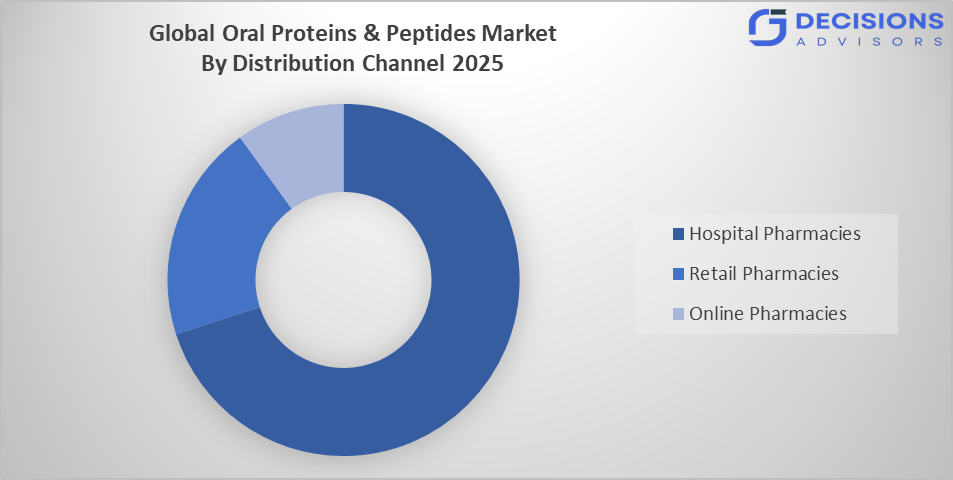
- The hospital pharmacies segment dominated the market in 2025, approximately 45%, and is projected to grow at a substantial CAGR during the forecast period.
Based on the distribution channel, the oral proteins & peptides market is divided into hospital pharmacies, retail pharmacies, and online pharmacies. Among these, the hospital pharmacies segment dominated the market in 2025, approximately 45%, and is projected to grow at a substantial CAGR during the forecast period. The hospital pharmacies segment dominated due to oral peptide therapies often requiring physician supervision, especially during early adoption. Hospitals ensure proper prescription, monitoring, and patient education. Strong infrastructure, availability of advanced therapeutics, and trust in hospital-based dispensing significantly contribute to higher patient reliance and market share.
- The hospitals segment dominated the market in 2025, approximately 52%, and is projected to grow at a substantial CAGR during the forecast period.
Based on the end user, the oral proteins & peptides market is divided into hospitals, clinics, and home care. Among these, the hospitals segment dominated the market in 2025, approximately 52%, and is projected to grow at a substantial CAGR during the forecast period. The growth of the hospitals segment is due to their central role in diagnosis, treatment initiation, and management of chronic diseases. Availability of specialists, advanced treatment facilities, and higher patient inflow support demand. Additionally, hospitals are primary centers for adopting new oral peptide therapies, boosting their overall share.
Strategies to Implement for Growth of the Market in Non-Leading Regions
To drive growth in non-leading regions, companies in the global oral proteins and peptides market should focus on improving accessibility, affordability, and local relevance. Strategic partnerships with regional pharmaceutical firms and healthcare providers can strengthen distribution networks and regulatory navigation. Investing in localized manufacturing and supply chains helps reduce costs and ensures consistent availability. Pricing strategies such as tiered pricing and patient assistance programs can expand adoption in price-sensitive markets. Additionally, increasing awareness through physician education and patient outreach programs is crucial to build trust in oral biologics. Companies should also prioritize regulatory alignment and faster approvals by collaborating with local authorities. Expanding clinical trials in emerging markets and leveraging digital health platforms can further enhance market penetration, ensuring broader access to innovative, non-invasive therapies.
Regional Segment Analysis of the Oral proteins & peptides market
- North America (U.S., Canada, Mexico)
- Europe (Germany, France, U.K., Italy, Spain, Rest of Europe)
- Asia-Pacific (China, Japan, India, Rest of APAC)
- South America (Brazil and the Rest of South America)
- The Middle East and Africa (UAE, South Africa, Rest of MEA)
North America is anticipated to hold the largest share of approximately 42% the oral proteins & peptides market over the forecast period.
North America is anticipated to hold the largest share of approximately 42% the oral proteins & peptides market over the forecast period. The dominance of this region is driven by rising healthcare expenditure, increasing chronic disease burden, and an expanding middle-class population. Improving healthcare infrastructure, growing awareness of advanced therapies, and government support for biotechnology innovation are accelerating the adoption of oral peptide drugs, particularly in countries like China, India, and Japan.
Asia Pacific is expected to grow at a rapid CAGR of approximately 9.5% in the oral proteins & peptides market during the forecast period.
Asia Pacific is expected to grow at a rapid CAGR of approximately 9.5% in the oral proteins & peptides market during the forecast period. This growth is fueled by rising healthcare expenditure, increasing chronic disease burden, and an expanding middle-class population. Improving healthcare infrastructure, growing awareness of advanced therapies, and government support for biotechnology innovation are accelerating the adoption of oral peptide drugs, particularly in countries like China, India, and Japan.
Europe is the 2nd largest region to grow in the oral proteins & peptides market during the period.
Europe represents the second-largest region in the global oral proteins & peptides market, supported by strong healthcare systems, rising prevalence of chronic diseases, and increasing demand for non-invasive therapies. Favorable regulatory frameworks, growing adoption of advanced biologics, and presence of key pharmaceutical players drive steady growth across countries like Germany, France, and the UK.
Future Market Trends in Global Oral proteins & peptides market: -
1. Oral Biologics Expansion
The shift from injectable to oral biologics will accelerate as advanced delivery systems improve peptide stability and absorption. This trend is driven by patient preference for non-invasive therapies and better adherence rates, especially in chronic conditions like diabetes, obesity, and hormonal disorders, boosting demand and long-term treatment compliance globally.
2. Nanotechnology Integration
Nanocarriers and microencapsulation technologies will play a key role in enhancing bioavailability and targeted delivery of oral proteins and peptides. These innovations protect molecules from enzymatic degradation in the gastrointestinal tract, enabling more effective therapies and expanding applications across oncology, metabolic, and rare diseases with improved therapeutic outcomes.
3. AI-Driven Drug Development
Artificial intelligence will streamline peptide design, optimization, and clinical development, reducing time and cost. AI enables better prediction of molecular stability and absorption, increasing success rates in oral formulations. This trend is supported by rising R&D investments and collaborations, accelerating innovation and commercialization in the global oral proteins and peptides market.
Recent Development
- In February 2026, Novo Nordisk partnered with Vivtex Corporation to develop next-generation oral biologic medicines for obesity and diabetes. The collaboration, valued at up to $2.1 billion, aimed to advance oral peptide delivery technologies, strengthening innovation in the global oral proteins and peptides market.
- In December 2025, the U.S. Food and Drug Administration approved Novo Nordisk’s Wegovy oral semaglutide, the first GLP-1 pill for weight loss in adults. The therapy expanded oral biologics innovation, with broad U.S. availability beginning in early 2026, supporting growth in the global oral proteins and peptides market.
- In March 2025, clinical trial data highlighted progress in oral GLP-1/glucagon co-agonist therapies for obesity, showing significant weight-loss potential in early studies. These investigational treatments, though not commercially launched, strengthened innovation in oral peptide drug development, supporting future growth of the global oral proteins and peptides market.
How is Recent Developments Helping the Market?
Recent developments are significantly accelerating growth in the global oral proteins and peptides market by overcoming traditional delivery challenges and improving therapeutic effectiveness. Innovations in drug delivery technologies—such as lipid-based carriers, enzyme inhibitors, and permeation enhancers-have enhanced bioavailability and stability of oral formulations. Additionally, breakthroughs like oral semaglutide and emerging GLP-1 oral therapies have transformed treatment approaches for diabetes and obesity, increasing patient compliance by replacing injections. Growing R&D investments, strategic collaborations, and the integration of AI in drug discovery are further driving pipeline expansion. These advancements, along with a strong clinical pipeline and rising demand for non-invasive therapies, are collectively enhancing market adoption and fueling rapid global expansion.
Market Segment
This study forecasts revenue at global, regional, and country levels from 2020 to 2035. Decision Advisors has segmented the Oral proteins & peptides market based on the below-mentioned segments:
Global Oral proteins & peptides market, By Product Type
- Insulin
- GLP-1 Receptor Agonists
- Calcitonin
- Parathyroid Hormone
Global Oral proteins & peptides market, By Distribution Channel
- Hospital Pharmacies
- Retail Pharmacies
- Online Pharmacies
Global Oral proteins & peptides market, By End User
- Hospitals
- Clinics
- Home Care
Global Oral proteins & peptides market, By Regional Analysis
- North America
- US
- Canada
- Mexico
- Europe
- Germany
- UK
- France
- Italy
- Spain
- Russia
- Rest of Europe
- Asia Pacific
- China
- Japan
- India
- South Korea
- Australia
- Rest of Asia Pacific
- South America
- Brazil
- Argentina
- Rest of South America
- Middle East & Africa
- UAE
- Saudi Arabia
- Qatar
- South Africa
- Rest of the Middle East & Africa
Frequently Asked Questions (FAQ)
Q. What are the key challenges in developing oral protein and peptide drugs?
A. The primary challenges include degradation of proteins in the gastrointestinal tract, low permeability across intestinal membranes, and inconsistent absorption rates. Overcoming these requires advanced formulation strategies such as enzyme inhibitors, permeation enhancers, and protective delivery systems, which increase development complexity and cost.
Q. How are partnerships influencing innovation in the oral peptides market?
A. Strategic collaborations between pharmaceutical companies and biotech firms are accelerating innovation by combining expertise in drug discovery and delivery technologies. These partnerships help reduce development timelines, improve success rates in clinical trials, and enable commercialization of advanced oral biologics for chronic diseases.
Q. Which therapeutic areas beyond diabetes are expected to drive future demand?
A. Beyond diabetes and obesity, therapeutic areas such as oncology, osteoporosis, gastrointestinal disorders, and rare hormonal diseases are expected to drive demand. Increasing research into peptide-based therapies for targeted treatment is expanding the scope of oral formulations across multiple disease segments.
Q. How does patient adherence impact market growth?
A. Patient adherence significantly boosts market growth, as oral therapies are more convenient compared to injections. Improved compliance leads to better treatment outcomes, increased prescription rates, and long-term therapy continuation, making oral peptide drugs more attractive to both patients and healthcare providers.
Check Licence
Choose the plan that fits you best: Single User, Multi-User, or Enterprise solutions tailored for your needs.
We Have You Covered
- 24/7 Analyst Support
- Clients Across the Globe
- Tailored Insights
- Technology Tracking
- Competitive Intelligence
- Custom Research
- Syndicated Market Studies
- Market Overview
- Market Segmentation
- Growth Drivers
- Market Opportunities
- Regulatory Insights
- Innovation & Sustainability
Report Details
| Scope | Global |
| Pages | 210 |
| Delivery | PDF & Excel via Email |
| Language | English |
| Release | Apr 2026 |
| Access | Download from this page |