
Global Oxygen Conserving Devices Market
 |
Pages:
235
|
Pages:
235
Global Oxygen Conserving Devices Market Size, Share, By Product Type (Oxygen Conserver and Oxygen Conserver Parts & Accessories), By Indication (Chronic Bronchitis, Emphysema, Sleep Apnea, and Others), End User (Hospitals, Homecare, and Others) and By Region (North America, Europe, Asia-Pacific, Latin America, Middle East, and Africa), Analysis and Forecast 2025 - 2035
REPORT COVERAGE
Global
Market Snapshot
- Market Size (2025): USD 1.86 Billion
- Projected Market Size (2035): USD 6.25 Billion
- Compound Annual Growth Rate (CAGR): 12.89%
- Largest Regional Market: North America
- Fastest Growing Region: Asia-Pacific
- 3rd Largest Region: Europe
- Base Year: 2025
- Historical Period: 2021–2024
- Forecast Period: 2025–2035
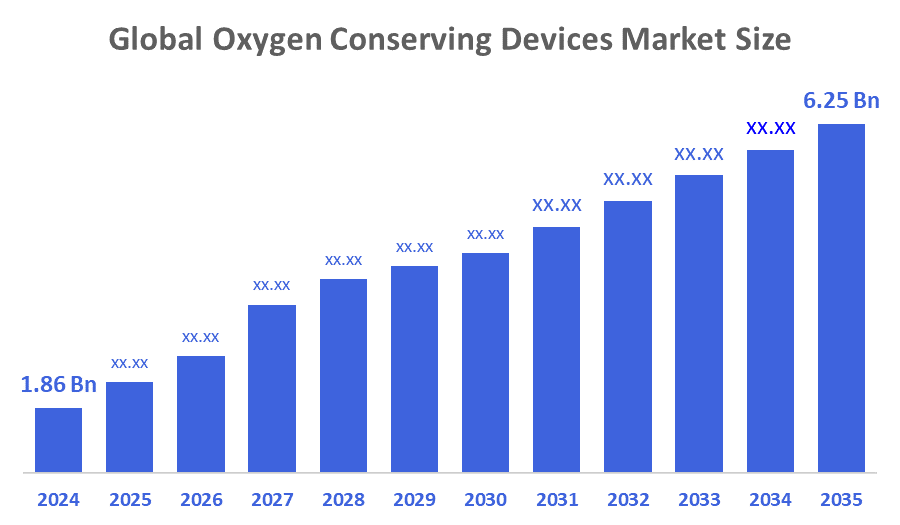
According to Decision Advisors, The Global Oxygen Conserving Devices Market Size is expected to Grow from USD 1.86 Billion in 2025 to USD 6.25 Billion by 2035, at a CAGR of 12.89% during the forecast period 2025-2035. It is driven by growing occurrence of chronic respiratory conditions (COPD, asthma), an elderly demographic requiring long-term oxygen therapy, and heightened need for portable, effective, home-based healthcare options.
Market Overview/ Introduction
The global market for oxygen-conserving devices encompasses the sector dedicated to creating, manufacturing, and supplying devices intended to make the most efficient use of oxygen for patients who need supplemental oxygen therapy. These devices, such as pulse-dose regulators and conserving cannulas, optimize oxygen delivery by releasing it mainly during inhalation, which minimizes waste and prolongs the duration of oxygen supplies. The market features pneumatic, electronic, and liquid oxygen conservers, which are widely used in portable cylinders for home care and emergency medical services. The market is moving toward personalized care, featuring smart devices that can adapt to a patient's breathing pattern in real time to enhance oxygen use and improve quality of life.
- Post-COVID-19, governments have introduced oxygen stewardship initiatives to train healthcare workers in efficient medical oxygen use, reduce wastage, and improve supply management, thereby supporting adoption of oxygen conserving devices in healthcare systems globally.
- The World Health Organization and partners have expanded oxygen infrastructure through modular PSA plant initiatives, improving access in low- and middle-income countries and driving demand for efficient oxygen delivery and conserving devices globally.
- In Ontario, the Assistive Devices Program supports home oxygen therapy by covering up to 75% of equipment costs, improving patient access and driving demand for oxygen conserving devices in the global market.
Notable Insights: -
- North America holds the largest regional market share in the oxygen conserving devices.
- Asia Pacific is the fastest growing region in the Oxygen Conserving Devices at share of approximately 19.9%.
- By product type, the oxygen conserver segment held a dominant position with 33.6% in terms of market share in 2025.
- By end user, homecare segment is the dominating accounting for over 58%% of the global market share in 2025.
- The compound annual growth rate of the oxygen conserving devices is 12.89%.
- The market is likely to achieve a valuation of USD 6.25 billion by 2035.
What is role of technology in grooming the market?
Technology plays a crucial role in shaping the global oxygen conserving devices market by improving efficiency, precision, and patient comfort. Advanced features such as pulse-dose delivery systems, automated oxygen titration, and smart sensors enable optimized oxygen usage and reduced wastage. Integration with digital health platforms and remote monitoring allows clinicians to track patient oxygen levels in real time, enhancing treatment outcomes. Innovations in lightweight materials and battery technology have led to more portable and user-friendly devices, supporting home-based care. Additionally, the use of artificial intelligence and data analytics is helping personalize oxygen therapy, while energy-efficient designs are lowering operational costs, making oxygen conserving devices more accessible and scalable globally.
How is Recent Developments Helping the Market?
Recent developments are significantly boosting the global oxygen conserving devices market by enhancing efficiency, accessibility, and patient outcomes. Innovations such as automated oxygen titration systems, smart monitoring integration, and energy-efficient portable concentrators are improving oxygen utilization and reducing wastage. Strategic partnerships and investments by leading companies are expanding global distribution networks, particularly in emerging markets. Government initiatives and policies focused on strengthening oxygen infrastructure and pandemic preparedness are further accelerating adoption. Additionally, the growing emphasis on home-based care has encouraged the development of compact, user-friendly devices. These advancements collectively support improved patient compliance, cost-effectiveness, and scalability of oxygen therapy solutions, thereby driving sustained market growth worldwide.
Market Drivers
Key driving factors in the global oxygen conserving devices market include the rising prevalence of respiratory diseases such as chronic obstructive pulmonary disease and asthma, driven by increasing air pollution, smoking habits, and occupational hazards. The rapidly growing geriatric population, which is more prone to chronic respiratory conditions, further fuels demand. Additionally, the shift toward home-based healthcare and long-term oxygen therapy is boosting the adoption of portable and user-friendly oxygen conserving devices. Technological advancements, including lightweight designs, pulse-dose delivery systems, and energy-efficient concentrators, are enhancing patient convenience and device efficiency. Expanding healthcare infrastructure, particularly in emerging economies, and supportive government initiatives focused on improving oxygen accessibility and pandemic preparedness are also significantly contributing to sustained market growth worldwide.
Restrain
The global oxygen conserving devices market faces restraints such as high device and maintenance costs, limited awareness and training, dependence on reliable power infrastructure, stringent regulatory approvals, device complexity affecting patient compliance, and supply chain disruptions impacting availability and adoption rates.
Competitive Analysis:
The report offers the appropriate analysis of the key organizations/companies involved within the Oxygen Conserving Devices market, along with a comparative evaluation primarily based on their product of offering, business overviews, geographic presence, enterprise strategies, segment market share, and SWOT analysis. The report also provides an elaborative analysis focusing on the current news and developments of the companies, which includes product development, innovations, joint ventures, partnerships, mergers & acquisitions, strategic alliances, and others. This allows for the evaluation of the overall competition within the market.
Top Companies in Global Oxygen Conserving Devices Market
Government Initiatives
|
Country |
Key Government Initiatives |
|
UK |
Following 2023 WHO resolutions, governments are developing national medical oxygen plans, integrating oxygen systems into pandemic preparedness and health strategies, driving demand and supporting over 10 % growth in the global oxygen conserving devices market. |
|
US |
Governments are promoting home-based healthcare to reduce hospital costs, increasing demand for portable oxygen concentrators and lightweight oxygen conserving devices, supporting over 11 % growth in the global oxygen conserving devices market. |
|
China |
Rising government spending on healthcare infrastructure, particularly in public hospitals and rural clinics, is driving large-scale procurement of stationary and portable oxygen concentrators, strengthening demand and supporting expansion of the global oxygen conserving devices market. |
Market Segmentation
The oxygen conserving devices market share is classified into product type, indication, and end user.
- The oxygen conserver segment dominated the market in 2025, and is projected to grow at a substantial CAGR of approximately 33.6% during the forecast period.
Based on the product type, the oxygen conserving devices market is divided into oxygen conserver and oxygen conserver parts & accessories. Among these, the oxygen conserver segment dominated the market in 2025, and is projected to grow at a substantial CAGR of approximately 33.6% during the forecast period. This segment is propelled by oxygen conservers, especially electronic and pneumatic ones, are made to deliver oxygen solely during inhalation. This can cut down on oxygen waste by as much as 50% in comparison with continuous flow devices. This results in a high preference for them by both physicians and patients due to their efficiency.
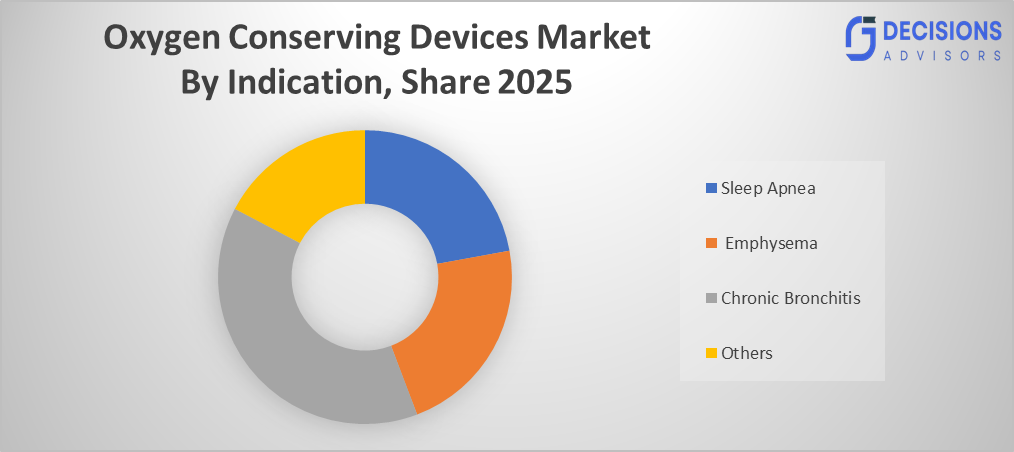
- The chronic bronchitis segment accounted for the largest share in 2025, and is anticipated to grow at a significant CAGR of approximately 34 % during the forecast period.
Based on the indication, the oxygen conserving devices market is divided into chronic bronchitis, emphysema, sleep apnea, and others. Among these, the chronic bronchitis segment accounted for the largest share in 2025, and is anticipated to grow at a significant CAGR of approximately 34 % during the forecast period. This segment is fueled by Chronic bronchitis, which is a key part of COPD, occurs very frequently around the world, especially in the United States and in developing countries. It leads to chronic hypoxemia (reduced oxygen levels), necessitating prolonged supplemental oxygen therapy to enhance patient mobility and quality of life.
- The homecare segment dominated the market in 2025, and is projected to grow at a substantial CAGR of 58% during the forecast period.
Based on the end user, the oxygen conserving devices market is divided into hospitals, homecare, and others. Among these, the homecare segment dominated the market in 2025, and is projected to grow at a substantial CAGR of 58% during the forecast period. It is because the patients favor the convenience of home over extended hospitalizations. With the help of modern portable oxygen-conserving devices (POCs), patients can receive continuous oxygen while engaging in daily activities and leading active lifestyles.
Strategies to Implement for Growth of the Market in Non-Leading Regions
Growth in the oxygen conserving devices market in non-leading regions can be driven through a combination of affordability, accessibility, and awareness-focused strategies, including developing low-cost and locally manufactured devices to suit price-sensitive populations, expanding distribution networks into rural and semi-urban areas, and increasing awareness through public health campaigns and healthcare professional training. Collaborations with governments and NGOs for subsidies and large-scale healthcare programs can further accelerate adoption, while promoting home healthcare solutions and integrating telemedicine-enabled smart devices can enhance usability and monitoring. Additionally, forming local partnerships, simplifying regulatory pathways, strengthening after-sales service infrastructure, targeting high-burden respiratory disease populations, and introducing flexible financing or rental models will help overcome economic and infrastructural barriers, ultimately enabling deeper market penetration and sustainable growth in emerging regions.
Regional Segment Analysis of the Oxygen Conserving Devices Market
- North America (U.S., Canada, Mexico)
- Europe (Germany, France, U.K., Italy, Spain, Rest of Europe)
- Asia-Pacific (China, Japan, India, Rest of APAC)
- South America (Brazil and the Rest of South America)
- The Middle East and Africa (UAE, South Africa, Rest of MEA)
North America is anticipated to hold the largest share of the oxygen conserving devices market over the predicted timeframe. The region is dominating because the chronic obstructive pulmonary disease (COPD), emphysema, and chronic bronchitis are particularly prevalent in the region, especially in the U.S. In 2023, the number of people in the U.S. affected by chronic lung diseases exceeded 34 million, contributing to the demand for long-term oxygen therapy. North America, especially the U.S., serves as an innovation hub with significant adoption of advanced, lightweight, and smart oxygen-conserving devices, such as electro-mechanical pulsing devices.
For Instance, In October 2024, Inogen, Inc. launched the Inogen Rove 4 Portable Oxygen Concentrator, offering lightweight design, multiple flow settings, and long battery life, enhancing portability and comfort for homecare users within the oxygen conserving devices market.
Asia Pacific is expected to grow at a rapid CAGR of 19.9% in the oxygen conserving devices market during the forecast period. It is fueled because of a surging prevalence of chronic respiratory diseases (COPD, asthma), a large and aging population, and significantly increasing healthcare investments. Expanding home healthcare, rising pollution-induced breathing issues, and technological advancements in portable, efficient devices are driving adoption. The incidence of chronic obstructive pulmonary disease (COPD) and asthma has risen due to escalating air pollution and the expanding elderly demographic in nations such as China, India, and Japan. Accessibility has been enhanced through considerable government and private investments in hospitals and medical technology, leading to increased demand for advanced, economical, and intelligent oxygen delivery systems.
For Instance, In February 2024, Getinge launched the Servo?c ventilator in India, featuring advanced CO? monitoring and modular components, enhancing ICU respiratory care, workflow efficiency, and patient management, though it falls outside the oxygen conserving devices market.
Europe is the 3rd largest region to grow in the oxygen conserving devices market at a CAGR of 30% during the forecast period. The region is propelled by the high occurrence of COPD/respiratory illnesses, an elderly demographic, and a pronounced inclination towards home healthcare. Further impetus to growth is provided by high healthcare expenditure, a rising uptake of disposable devices, and swift progress in portable, lightweight oxygen technologies. A strong trend toward home-based healthcare necessitates the use of portable and efficient oxygen-conserving devices to take the place of traditional, unwieldy tanks. Innovations in oxygenators, like smart sensors and pulse dose delivery systems, improve efficiency and patient mobility, thereby increasing market adoption.
Future Market Trends in Oxygen Conserving Devices: -
- Integration of AI and Smart Technology: Future OCDs will utilize artificial intelligence for tailored, instantaneous oxygen monitoring and delivery enhancement, along with remote diagnostics.
- Portable and Wearable Designs: There is an increasing demand for lightweight, compact devices that enhance patient mobility and independence, with the possibility of being integrated into wearable sensors (such as smartwatches).
- Telehealth and Remote Monitoring: The growing integration with cellular and Bluetooth technology enables clinicians to monitor, troubleshoot, and modify patient oxygen therapy from a distance, thereby improving care quality.
- High-Efficiency Pulse-Dose Technology: Continuous flow systems are being replaced by advanced, precise sensors (dose-on-demand), which greatly reduce oxygen waste and prolong the battery life of portable units.
Recent Development
- In March?2024, Drive DeVilbiss Healthcare and Sanrai International launched the PulmO2?10?L oxygen concentrator, designed for global and low?resource markets and offering up to 64?% greater energy efficiency than traditional models.
- In February?2024, OxyNov introduced the FreeO? device in Canada, an automated oxygen delivery system that intelligently adjusts flow, enhancing therapy efficiency and reducing oxygen waste, contributing to advancements in the global oxygen conserving devices market.
- In February?2025, Inogen acquired a 9.9?% stake in Yuwell to strengthen its APAC presence, expanding access to oxygen therapy devices and contributing to the global market’s projected 12?% growth in portable oxygen solutions.
Market Segment
This study forecasts revenue at global, regional, and country levels from 2020 to 2035. Decision Advisor has segmented the oxygen conserving devices market based on the below-mentioned segments:
Global Oxygen Conserving Devices Market, By Product Type
- Oxygen Conserver
- Oxygen Conserver Parts & Accessories
Global Oxygen Conserving Devices Market, By Indication
- Chronic Bronchitis
- Emphysema
- Sleep Apnea
- Others
Global Oxygen Conserving Devices Market, By End User
- Hospitals
- Homecare
- Others
Global Oxygen Conserving Devices Market, By Regional Analysis
- North America
- US
- Canada
- Mexico
- Europe
- Germany
- UK
- France
- Italy
- Spain
- Russia
- Rest of Europe
- Asia Pacific
- China
- Japan
- India
- South Korea
- Australia
- Rest of Asia Pacific
- South America
- Brazil
- Argentina
- Rest of South America
- Middle East & Africa
- UAE
- Saudi Arabia
- Qatar
- South Africa
- Rest of the Middle East & Africa
Frequently Asked Questions (FAQ)
1. How are oxygen conserving devices improving long-term therapy efficiency for chronic patients?
A. Oxygen conserving devices optimize oxygen delivery by releasing it only during inhalation, reducing wastage and extending cylinder life, which improves therapy efficiency and lowers overall treatment costs for chronic respiratory patients.
2. Why are emerging economies becoming key growth hubs for this market?
A. Rising healthcare investments, improving infrastructure, growing awareness of respiratory diseases, and government initiatives to expand oxygen access are accelerating adoption of oxygen conserving devices in emerging regions.
3. How do technological advancements influence patient compliance?
A. Innovations such as lightweight designs, automated oxygen adjustment, and smart monitoring systems enhance ease of use and comfort, encouraging patients to adhere more consistently to prescribed oxygen therapy.
4. Why is the demand for portable oxygen solutions increasing globally?
A.The shift toward home-based care, rising elderly population, and need for mobility-friendly treatment options are driving demand for compact, portable oxygen conserving devices worldwide.
5. What challenges could limit the widespread adoption of these devices?
A. High device costs, limited awareness, infrastructure constraints, and regulatory hurdles may restrict adoption, particularly in low-resource settings despite growing demand.
Check Licence
Choose the plan that fits you best: Single User, Multi-User, or Enterprise solutions tailored for your needs.
We Have You Covered
- 24/7 Analyst Support
- Clients Across the Globe
- Tailored Insights
- Technology Tracking
- Competitive Intelligence
- Custom Research
- Syndicated Market Studies
- Market Overview
- Market Segmentation
- Growth Drivers
- Market Opportunities
- Regulatory Insights
- Innovation & Sustainability
Report Details
| Scope | Global |
| Pages | 235 |
| Delivery | PDF & Excel via Email |
| Language | English |
| Release | Mar 2026 |
| Access | Download from this page |