
Global Oxygen Therapy Devices Market
 |
Pages:
210
|
Pages:
210
Global Oxygen Therapy Devices Market Size, Share, By Type (Oxygen Concentrators, Portable Oxygen Concentrators, Liquid Oxygen Systems, Oxygen Devices, Oxygen Cylinders, Oxygen Accessories) By Applications (Chronic Obstructive Pulmonary Disease, Sleep Apnea, Cystic Fibrosis, Asthma, Respiratory Distress Syndrome) By Technology (Continuous Flow Technology, Pulse Dose Technology, Hybrid Oxygen Therapy) By End-User (Hospitals, Home Care Settings, Emergency Medical Services, Long-term Care Facilities) and By Region (North America, Europe, Asia-Pacific, Latin America, Middle East, and Africa), Analysis and Forecast 2025 ? 2035.
REPORT COVERAGE
Global
Market Snapshot
- Market Size (2025): USD 2.59 Billion
- Projected Market Size (2035): USD 5.02 Billion
- Compound Annual Growth Rate (CAGR): 6.84%
- Largest Regional Market: North America
- Fastest Growing Region: Asia-Pacific
- 3rd Largest Region: Europe
- Base Year: 2025
- Historical Period: 2021–2024
- Forecast Period: 2025–2035
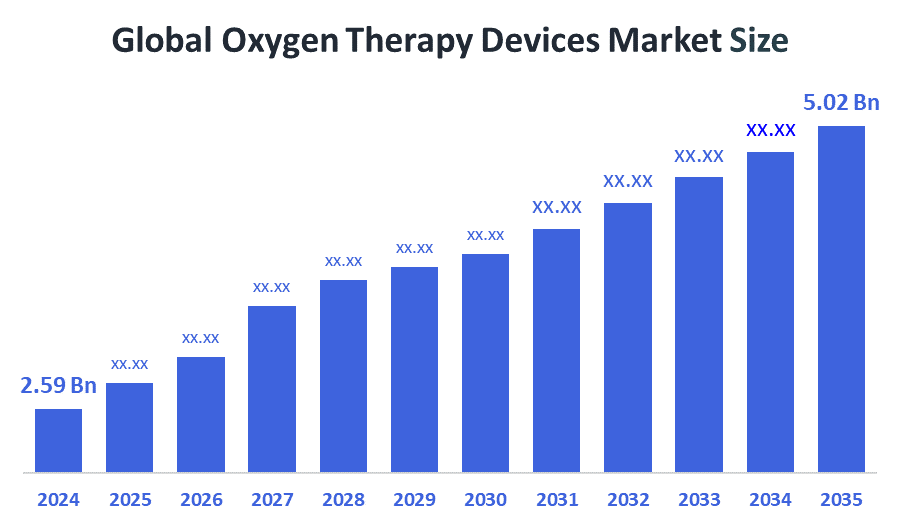
According to Decision Advisors, the Global Oxygen therapy devices market Size is expected to grow from USD 2.59 billion in 2025 to USD 5.02 billion by 2035, at a CAGR of 6.84% during the forecast period 2025-2035. The global oxygen therapy devices market is projected to grow significantly over the next decade due to surging prevalence of chronic respiratory diseases (COPD, pneumonia), cardiovascular conditions, emergency care needs, increasing awareness of respiratory care management, prevalence of respiratory diseases, and acute medical scenarios.
Market Overview/ Introduction
The global market for oxygen therapy devices refers to all medical equipment that consists of oxygen concentrators and cylinders, and liquid oxygen systems, together with their delivery accessories, which healthcare professionals use to provide additional oxygen to patients who have respiratory diseases such as COPD, asthma, and pneumonia. The market experiences ongoing expansion because respiratory diseases have become more common through increasing elderly populations and rising demand for home healthcare services. The direct impact of these developments enables hospitals to expand their oxygen therapy equipment while they establish oxygen production plants and strengthen their intensive care unit operations. Increased infrastructure development results in better oxygen supply distribution which enhances emergency response capabilities and strengthens healthcare systems, thus increasing the use of oxygen therapy equipment in hospitals and home healthcare settings.
- Amid COVID-19, the PM CARES Fund supported the installation of Pressure Swing Adsorption (PSA) oxygen plants nationwide. These plants were established in hospitals across states like Rajasthan and Delhi, strengthening oxygen availability, enhancing healthcare infrastructure, and supporting increased use of oxygen therapy devices in critical care and emergency treatment settings.
- Make in India encouraged local production of oxygen equipment and boosted R&D in respiratory devices. Indigenous innovations, including patented developments by the All India Institute of Medical Sciences, strengthened domestic manufacturing capabilities, reduced import dependence, and supported the growth of the oxygen therapy devices market in India.
Notable Insights: -
- North America holds the largest regional market share in the global oxygen therapy devices market.
- Asia Pacific is the fastest growing region in the global oxygen therapy devices market.
- By type, the portable oxygen concentrators segment held a dominant position in terms of market share in 2025.
- By application, chronic obstructive pulmonary disease was the most lucrative segment, is the dominating of the global market share in 2025.
- The compound annual growth rate of the global Oxygen therapy devices market is 6.84%.
- The market is likely to achieve a valuation of USD 5.02 billion by 2035.
What is role of technology in grooming the market?
The global oxygen therapy devices market operates under the influence of technology, which generates new developments and enhances operational efficiency and market acceptance. The combination of high-definition endoscopes and otoscopes and AI-assisted imaging systems serves as advanced diagnostic tools that enhance detection accuracy for ear, nose, and throat conditions while minimizing misdiagnoses and improving patient results. The combination of powered instruments and robotic-assisted systems and navigation platforms enables surgeons to perform precise procedures, which result in quicker patient recovery times, thus driving both patient preference and device market demand. AI-enabled devices, together with cochlear implants and bone-anchored hearing aids, provide hearing solutions that expand patient access through their ability to process sounds based on different situations. The combination of digital health integration, together with telemedicine and remote monitoring systems, provides emerging markets with improved access to healthcare services, which results in higher service utilization rates. Advanced ENT devices become more appealing to healthcare providers because automation and 3D-printed surgical tools and AI-driven planning technologies decrease costs while increasing operational efficiency, which leads to market growth.
Market Drivers
The oxygen therapy devices market is driven by various robust factors that include demand for long-term oxygen therapy is increasing due to the rising prevalence of respiratory disorders such asthma, pneumonia, and chronic obstructive pulmonary disease (COPD)The need for oxygen therapy is directly increased by an aging population's increased vulnerability to chronic respiratory problems. Patients may now manage their diseases outside of hospitals due to the growing popularity of portable, user-friendly oxygen concentrators and cylinders for in-home treatment. Long-term therapy use and early intervention are outcomes of improved awareness and diagnostic techniques for respiratory diseases. Growth in the market is influenced by rising healthcare costs and improved access to cutting-edge medical equipment in developing nations.
Restrain
The market for oxygen therapy devices will be restricted by high equipment costs, certain regions' restrictive reimbursement regulations, and low-income areas' lack of infrastructure. Widespread adoption is also hampered by maintenance issues and technical complexity, particularly in underdeveloped nations.
Competitive Analysis:
The report offers the appropriate analysis of the key organizations/companies involved within the Oxygen therapy devices market, along with a comparative evaluation primarily based on their product of offering, business overviews, geographic presence, enterprise strategies, segment market share, and SWOT analysis. The report also provides an elaborative analysis focusing on the current news and developments of the companies, which includes product development, innovations, joint ventures, partnerships, mergers & acquisitions, strategic alliances, and others. This allows for the evaluation of the overall competition within the market.
Top Companies in Global Oxygen Therapy Devices Market
- Philips Healthcare (Philips Respironics)
- ResMed Inc.
- Invacare Corporation
- Linde Healthcare (Linde plc)
- Chart Industries, Inc.
- Drägerwerk AG & Co. KGaA
- Fisher & Paykel Healthcare Limited
- Teleflex Incorporated
- Becton, Dickinson and Company (BD)
- Smiths Medical
- Inogen, Inc.
- DeVilbiss Healthcare (Drive DeVilbiss Healthcare)
Government Initiatives
|
Country |
Key Government Initiatives |
|
|
UK |
The UK government, through the MHRA, is implementing a major regulatory update in 2025–2026 to align with EU MDR standards. This includes new post-market surveillance (PMS) requirements effective June 2025 and a streamlined "international reliance" route that fast-tracks devices already approved by trusted regulators like the U.S. FDA. |
|
|
US |
In 2024–2025, the U.S. government (CMS) introduced legislation to remove supplemental oxygen from the "Competitive Bidding Program" (CBP) to prevent supply shortages and ensure better patient access. Simultaneously, new reimbursement rules for home oxygen equipment maintain a 36-month rental cap while mandating continued supplier support for up to 5 years. |
|
|
China |
|
Market Segmentation
The Oxygen therapy devices market share is classified into type, application, technology, and end-user
- The oxygen concentrators segment dominated the market in 2025 and is projected to grow at a substantial CAGR during the forecast period.
Based on the type, oxygen concentrators, portable oxygen concentrators, liquid oxygen systems, oxygen devices, oxygen cylinders, and oxygen accessories. Among these, the oxygen concentrators segment dominated the market in 2025 and is projected to grow at a substantial CAGR during the forecast period due to their suitability for long-term treatment of chronic respiratory diseases and increasing adoption in home healthcare settings. They offer continuous oxygen supply without the need for refilling, making them cost-effective and convenient. Technological advancements, especially in portable concentrators, further drive demand. However, oxygen cylinders remain widely used in hospitals and emergency care due to their immediate availability and reliability.
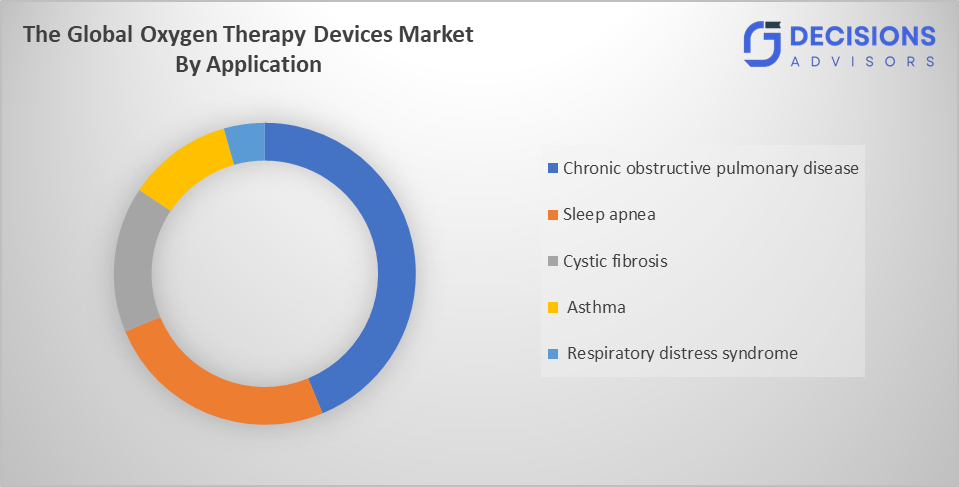
- The chronic obstructive pulmonary disease segment accounted for the largest share in 2025 and is anticipated to grow at a significant CAGR during the forecast period.
Based on the application, chronic obstructive pulmonary disease, sleep apnea, cystic fibrosis, asthma, and respiratory distress syndrome. Among these, the chronic obstructive pulmonary disease segment dominated the market in 2025 and is projected to grow at a substantial CAGR during the forecast period due to its high global prevalence and the need for long-term oxygen therapy in advanced stages. Sleep apnea is the second-largest segment, driven by increasing diagnosis rates, growing awareness, and the rising use of respiratory support therapies in moderate to severe cases.
The continuous flow technology segment dominated the market in 2025 and is projected to grow at a substantial CAGR during the forecast period.
Based on the technology, continuous flow technology, pulse dose technology, and hybrid oxygen therapy. Among these, the continuous flow technology segment dominated the market in 2025 and is projected to grow at a substantial CAGR during the forecast period because it provides a steady and reliable supply of oxygen, which is crucial for patients with severe respiratory conditions. Its consistent delivery ensures effective treatment in critical situations, making it commonly used across hospitals, intensive care units, and long-term care settings for uninterrupted respiratory support.
The hospitals segment dominated the market in 2025 and is projected to grow at a substantial CAGR during the forecast period.
Based on the end-user, hospitals, home care settings, emergency medical services, and long-term care facilities. Among these, the hospitals segment dominated the market in 2025 and is projected to grow at a substantial CAGR during the forecast period, fueled by the need to treat a large number of patients needing oxygen in emergencies, surgeries, and intensive care units. Their access to advanced respiratory equipment ensures continuous, effective treatment, making hospitals the central hub for both acute and critical respiratory care.
Strategies to Implement for Growth of the Market in Non-Leading Regions
To drive growth of the oxygen therapy devices market in non-leading regions, firms and policymakers must enhance healthcare infrastructure and boost device affordability by collaborating with governments and NGOs to subsidize expenses and refine reimbursement systems, ensuring oxygen concentrators and therapy solutions reach a larger patient base. Enhancing distribution networks and creating local service centers can boost after-sales support and increase device adoption in rural and marginalized regions. Customizing products to fit local requirements, like low-power or battery-operated concentrators for regions with unstable electricity, can address infrastructure challenges. Collaborations between the public and private sectors, along with investments in training healthcare professionals and increasing awareness of respiratory illnesses, will improve market entry, fostering sustained demand and improved health results
Regional Segment Analysis of the Oxygen Therapy Devices Market
- North America (U.S., Canada, Mexico)
- Europe (Germany, France, U.K., Italy, Spain, Rest of Europe)
- Asia-Pacific (China, Japan, India, Rest of APAC)
- South America (Brazil and the Rest of South America)
- The Middle East and Africa (UAE, South Africa, Rest of MEA)
North America is anticipated to hold the largest share of the oxygen therapy devices market over the predicted timeframe.
North America is projected to keep the largest portion of the worldwide oxygen therapy devices market throughout the forecast period because of various important factors. The area enjoys sophisticated healthcare facilities, a significant occurrence of chronic respiratory conditions like COPD and asthma, along with extensive availability of home healthcare and mobile oxygen equipment. Robust insurance coverage and reimbursement policies promote the use of oxygen therapy solutions, such as concentrators, cylinders, and high-flow systems. Moreover, the existence of key market participants such as Philips, ResMed, and Inogen, along with continuous technological advancements in smart and AI-driven devices, fosters ongoing market expansion. Increasing awareness of respiratory health and alignment with telehealth services strengthen North America’s market leadership.
Asia Pacific is expected to grow at a rapid CAGR in the oxygen therapy devices market during the forecast period. The oxygen therapy devices market in the Asia Pacific is expected to grow quickly during the forecast period, fueled by the increasing occurrence of respiratory conditions such as COPD, asthma, and complications following COVID-19. Enhancing healthcare infrastructure, boosting governmental efforts to facilitate access to medical devices, and rising awareness of home oxygen therapy are crucial factors for growth. Furthermore, the area's significant population and increasing disposable income facilitate greater adoption of both portable and stationary oxygen concentrators. Domestic production and collaborations with international firms also lower expenses and enhance accessibility, further driving market growth. These elements together lead to a significant CAGR for the Asia Pacific in the worldwide oxygen therapy devices market.
Europe is the 3rd largest region to grow in the oxygen therapy devices market during the region.
The European oxygen therapy devices market is expected to experience significant growth during the forecast period, supported by a strong healthcare infrastructure and the rising prevalence of chronic respiratory conditions such as COPD and sleep apnea. Increasing adoption of home-based and portable oxygen therapy systems, along with government policies, reimbursement programs, and public health initiatives, enhances accessibility and affordability. The presence of major manufacturers and ongoing technological innovations, including smart and high-flow oxygen devices, further drive market expansion, positioning Europe as a key regional market, ranking third globally in the oxygen therapy devices sector.
Future Market Trends in Global Oxygen Therapy Devices Market: -
1. Shift toward Home Healthcare & Portable Devices
The oxygen therapy devices market is increasingly shifting toward home healthcare and portable devices. Rising respiratory diseases and an aging population are driving demand for compact, easy-to-use oxygen concentrators. Patients prefer home-based care due to convenience and lower costs, leading to rapid growth in portable oxygen devices and reduced dependence on hospital-based oxygen therapy.
2. Integration of Smart Technologies (AI & IoT)
The oxygen therapy devices market is evolving with integration of AI and IoT technologies. Smart devices enable real-time monitoring, automated oxygen flow adjustment, and remote patient management. These innovations improve treatment accuracy, enhance patient compliance, and support telehealth, making oxygen therapy more efficient, personalized, and accessible across both hospital and home healthcare settings.
3. Rising Demand for Advanced & High-Flow Devices
The oxygen therapy devices market is witnessing rising demand for advanced and high-flow devices. These systems deliver precise, high-volume oxygen for patients with severe respiratory conditions. Increasing cases of chronic diseases and post-COVID complications are driving adoption, while improvements in portability and efficiency make these devices suitable for both hospital and home care use.
Recent Development
In February 2026, Danaher Corporation announced that it had acquired Masimo Corporation in a $9.9 billion deal to strengthen its diagnostics portfolio. The acquisition expanded capabilities in patient monitoring, including blood oxygen measurement technologies, supporting advancements in healthcare diagnostics and indirectly benefiting respiratory and oxygen therapy-related care systems.
In January 2025, a significant development occurred with the launch of new portable oxygen concentrators aimed at affordability and mobility. The VP-8 Lite was introduced as a lightweight, budget-friendly device for daily use, designed to be portable with extended battery life, improving accessibility and supporting wider adoption of oxygen therapy.
How is Recent Developments Helping the Market?
Recent developments are significantly strengthening the Oxygen therapy devices market by enhancing clinical outcomes, expanding treatment options, and improving patient access. Innovations in robotic?assisted surgery and image?guided navigation are making ENT procedures more precise, less invasive, and quicker to recover from, which increases adoption by surgeons and healthcare facilities. Advances in AI and machine learning are improving diagnostic accuracy in hearing and sinus disorders, enabling early detection and personalized treatment plans. The emergence of smart and connected hearing aids with Bluetooth and adaptive sound technology is driving demand among a broader patient population. Furthermore, the expansion of telehealth and mobile audiology tools is helping reach previously underserved regions, particularly in developing markets. Ongoing R&D collaborations between major manufacturers and academic centers are also accelerating product innovation, driving competitive differentiation and overall market growth.
Market Segment
This study forecasts revenue at global, regional, and country levels from 2020 to 2035. Decision Advisor has segmented the oxygen therapy devices market based on the below-mentioned segments:
Global Oxygen Therapy Devices Market, By Type
- Portable Oxygen Concentrators
- Liquid Oxygen Systems
- Oxygen Devices
- Oxygen Cylinders
- Oxygen Accessories
Global Oxygen Therapy Devices Market, By Applications
- Chronic Obstructive Pulmonary Disease
- Sleep Apnea
- Asthma
- Respiratory Distress Syndrome
- Cystic Fibrosis
Global Oxygen Therapy Devices Market, By Technology
- Continuous Flow Technology
- Pulse Dose Technology
- Hybrid Oxygen Therapy
Global Oxygen Therapy Devices Market, By End-User
- Hospitals
- Home Care Settings
- Emergency Medical Services
- Long-term Care Facilities
Global Oxygen Therapy Devices Market, By Regional Analysis
- North America
- US
- Canada
- Mexico
- Europe
- Germany
- UK
- France
- Italy
- Spain
- Russia
- Rest of Europe
- Asia Pacific
- China
- Japan
- India
- South Korea
- Australia
- Rest of Asia Pacific
- South America
- Brazil
- Argentina
- Rest of South America
- Middle East & Africa
- UAE
- Saudi Arabia
- Qatar
- South Africa
- Rest of the Middle East & Africa
Frequently Asked Questions (FAQ)
Q. What role do wearable oxygen therapy devices play in the market, and how are they shaping patient care?
A. Wearable oxygen therapy devices are emerging as a key trend, allowing patients to receive supplemental oxygen discreetly while remaining mobile. These devices improve patient compliance, reduce dependence on stationary systems, and enhance quality of life. Their compact design, battery operation, and connectivity features also enable real-time monitoring via mobile apps, encouraging adoption in both home and outpatient care settings, particularly for patients with chronic respiratory conditions.
Q. How is the increasing prevalence of post-COVID respiratory complications influencing the oxygen therapy devices market?
A. Post-COVID respiratory complications, including reduced lung function and persistent hypoxia, have significantly boosted demand for oxygen therapy devices. Patients recovering from severe COVID-19 often require long-term or home oxygen support, driving growth in portable oxygen concentrators and high-flow devices. This surge has encouraged manufacturers to innovate lightweight, energy-efficient, and smart-enabled devices that cater to patients needing ongoing oxygen therapy outside hospital environments.
Q. What impact is government regulation and certification having on the safety and adoption of oxygen therapy devices?
A Government regulations, such as FDA approval in the US, CE marking in Europe, and CDSCO regulations in India, ensure device safety, quality, and efficacy. Compliance with these standards builds trust among healthcare providers and patients, encouraging adoption. Regulatory oversight also promotes innovation, as manufacturers develop devices that meet safety and performance requirements while integrating features like AI-assisted flow control and remote monitoring.
Q. How are digital health and telemedicine contributing to the growth of the oxygen therapy devices market?
A. Integration with digital health platforms and telemedicine services allows patients to receive continuous monitoring of oxygen saturation and device usage remotely. This reduces hospital visits, enables early intervention for respiratory distress, and supports better clinical outcomes. Healthcare providers can adjust oxygen flow rates in real time, improving treatment personalization. The synergy between telehealth and oxygen therapy devices is especially impactful in rural or underserved regions, expanding market reach and accessibility.
Check Licence
Choose the plan that fits you best: Single User, Multi-User, or Enterprise solutions tailored for your needs.
We Have You Covered
- 24/7 Analyst Support
- Clients Across the Globe
- Tailored Insights
- Technology Tracking
- Competitive Intelligence
- Custom Research
- Syndicated Market Studies
- Market Overview
- Market Segmentation
- Growth Drivers
- Market Opportunities
- Regulatory Insights
- Innovation & Sustainability
Report Details
| Scope | Global |
| Pages | 210 |
| Delivery | PDF & Excel via Email |
| Language | English |
| Release | Mar 2026 |
| Access | Download from this page |