
Global Oxytocic Pharmaceuticals Market
 |
Author:
David J
|
Pages:
210
|
Author:
David J
|
Pages:
210
Global Oxytocic Pharmaceutical Market Size, Share, By Drug Type (Oxytocin, Ergometrine, Carbetocin, Misoprostol, Combination uterotonics), By Source Type (Synthetic Oxytocin Derivatives, Natural Oxytocin, Biotech-engineered uterotonics), By End Use (Hospitals, Maternity Clinics, Ambulatory Surgical Centers, Community Healthcare Centers, Homecare Settings), and By Region (North America, Europe, Asia-Pacific, Latin America, Middle East & Africa), Analysis and Forecast 2026?2035
CAGR
8.62%
REVENUE 2025
USD Million 105.52
FORECAST 2035
USD Million 241.29
REPORT COVERAGE
Global
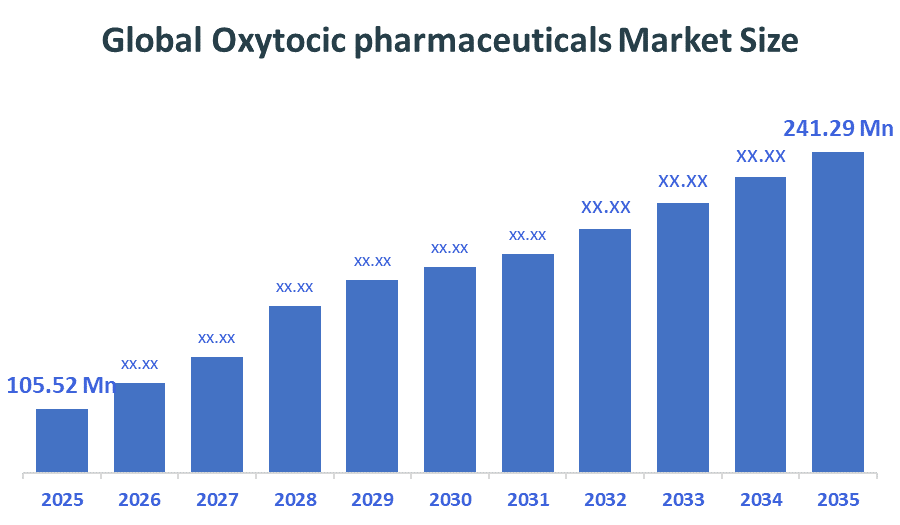
The Global Oxytocic pharmaceuticals market Size is forecast to grow from USD 105.52 Million in 2025 to approximately USD 241.29 Million by 2035. According to Decision Advisors, a detailed research report on the Oxytocic pharmaceuticals market indicates that synthetic oxytocin dominates the market, accounting for approximately 89% of the total share globally. Novo Nordisk the market with an estimated 15-18% global market share. The company reported a 2025 revenue of approximately USD 58-60 Billion, making it one of the most influential forces shaping industry trends and overall market growth.
Market Snapshot
- Global Oxytocic pharmaceuticals market Size (2025): USD 105.52 Million
- Projected Global Oxytocic pharmaceuticals market Size (2035): USD 241.29 Million
- Global Oxytocic pharmaceuticals market Compound Annual Growth Rate (CAGR): 8.62%
- Largest Regional Market: North America
- Fastest Growing Region: Asia-Pacific
- 2nd Largest Region: Europe
- Base Year: 2025
- Historical Period: 2021–2024
- Forecast Period: 2026–2035
Market Overview/ Introduction
The global oxytocic pharmaceuticals market refers to the sector involved in the development, production, and distribution of drugs that stimulate uterine contractions for managing labor and preventing postpartum hemorrhage. Oxytocic pharmaceuticals include medications such as Oxytocin and Misoprostol, widely used in obstetric care to ensure safe childbirth. The market holds strong future opportunities through innovations like heat-stable formulations, long-acting analogs, and improved drug delivery systems, particularly benefiting low-resource regions. Expansion in emerging economies and increasing collaborations with global health organizations further enhance growth potential. Market growth is driven by rising maternal health awareness, increasing institutional deliveries, supportive government policies, and ongoing technological advancements that improve drug accessibility, safety, and treatment outcomes across both developed and developing regions.
- The World Health Organization launched a global roadmap targeting postpartum hemorrhage, a leading cause of maternal mortality. It promotes wider use of uterotonic drugs, improved diagnostics, and rapid-response treatment systems. This initiative directly strengthens demand and accessibility of oxytocic pharmaceuticals globally.
- UNICEF supports governments in delivering essential maternal healthcare services, including safe childbirth and postpartum care. The program emphasizes access to lifesaving medicines and trained healthcare workers, increasing adoption of oxytocic drugs in low- and middle-income countries while improving overall healthcare infrastructure.
Notable Insights: -
- North America is anticipated to hold the largest share of approximately 40% in the Oxytocic pharmaceuticals market over the forecast period.
- Asia Pacific is expected to grow at a rapid CAGR of approximately 9.5% in the Oxytocic pharmaceuticals market during the forecast period.
- The misoprostol treatment segment dominated the market in 2025, approximately 38%, and is projected to grow at a substantial CAGR during the forecast period.
- The synthetic oxytocin derivatives segment dominated the market in 2025, approximately 65%, and is projected to grow at a substantial CAGR during the forecast period.
- The hospitals segment dominated the market in 2025, approximately 60%, and is projected to grow at a substantial CAGR during the forecast period.
- The compound annual growth rate of the Global Oxytocic pharmaceuticals market is 8.62%.
- The market is likely to achieve a valuation of USD 241.29 Million by 2035.
What is role of technology in grooming the market?
Technology plays a crucial role in shaping the global oxytocic pharmaceuticals market by improving drug stability, delivery, and accessibility. Innovations such as heat-stable formulations of Oxytocin reduce reliance on cold-chain logistics, making them suitable for low-resource settings. Advanced drug delivery systems, including prefilled syringes and auto-injectors, enhance dosing accuracy and ease of use during emergencies like postpartum hemorrhage. Digital health technologies and telemedicine platforms enable better monitoring of maternal health and timely intervention, especially in remote areas. Additionally, data analytics supports supply chain optimization, minimizing stockouts and wastage. Manufacturing technologies are also improving product quality and scalability. Overall, these technological advancements increase treatment efficiency, expand reach, and strengthen healthcare systems, thereby accelerating market growth globally.
Market Drivers
The global oxytocic pharmaceuticals market is primarily driven by the rising incidence of postpartum hemorrhage, a leading cause of maternal mortality worldwide. Increasing institutional deliveries and expanding maternal healthcare programs are boosting demand for uterotonic drugs such as Oxytocin and Misoprostol. Strong support from organizations like World Health Organization through guidelines and initiatives further accelerates adoption. Additionally, advancements in heat-stable formulations and improved drug delivery systems are enhancing accessibility in low-resource settings. Growing awareness, better healthcare infrastructure, and government funding across emerging economies continue to support sustained market growth globally.
Restrain
The global oxytocic pharmaceuticals market faces restraints due to stringent regulatory requirements, quality concerns, and cold-chain dependency of drugs like Oxytocin. Limited healthcare infrastructure in low-income regions, risk of improper administration, and pricing pressures from bulk procurement further restrict profitability and widespread adoption, particularly in resource-constrained settings.
Competitive Analysis:
The report offers the appropriate analysis of the key organizations/companies involved within the global oxytocic pharmaceuticals market, along with a comparative evaluation primarily based on their product offerings, business overviews, geographic presence, enterprise strategies, segment market share, and SWOT analysis. The report also provides an elaborative analysis focusing on the current news and developments of the companies, which includes product development, innovations, joint ventures, partnerships, mergers & acquisitions, strategic alliances, and others. This allows for the evaluation of the overall competition within the market.
Top Companies in Global Oxytocic pharmaceuticals market
- Pfizer Inc.
- Novartis AG
- Ferring Pharmaceuticals
- Teva Pharmaceutical Industries Ltd.
- Sun Pharmaceutical Industries Ltd.
- Fresenius Kabi AG
- Hikma Pharmaceuticals PLC
- Viatris Inc.
- Baxter International Inc.
- Cipla Ltd.
- Dr. Reddy’s Laboratories Ltd.
- Abbott Laboratories
Government Initiatives
|
Country |
Key Government Initiatives |
|
US |
The U.S. government strengthened maternal healthcare programs through agencies like the CDC and USAID, supporting oxytocin access, quality assurance, and safe obstetric use to reduce postpartum hemorrhage (PPH) mortality and improve maternal outcomes. |
|
UK |
The UK government, through MHRA and NHS frameworks, supported global maternal health initiatives and regulatory standards ensuring safe uterotonic drug use, including oxytocin quality control and pharmacovigilance in clinical settings to reduce PPH-related deaths. |
|
China |
China strengthened maternal healthcare under national health reforms and NMPA regulations, focusing on improved hospital-based obstetric care, monitoring uterotonic drug quality, and expanding access to essential medicines like oxytocin for safe childbirth practices. |
Study on the Supply, Demand, Distribution, and Market Environment of the Oxytocic Pharmaceuticals Market
The global oxytocic pharmaceuticals market is characterized by a structured interplay of supply, demand, distribution, and evolving market conditions. On the supply side, major pharmaceutical manufacturers and regional producers ensure availability through expanding production capacities and improving formulations, including heat-stable drugs. Supply chains involve manufacturers, distributors, and government agencies, though challenges like cold-chain dependency and product quality persist. Demand is primarily driven by rising cases of postpartum hemorrhage and increasing institutional deliveries, with hospitals accounting for the largest share of consumption globally. Distribution is dominated by hospital procurement systems, retail pharmacies, and government or NGO supply programs, especially in low- and middle-income countries. The market environment is shaped by regulatory frameworks, maternal health initiatives, and technological advancements, fostering steady growth while encouraging innovation and broader accessibility worldwide.
Price Analysis and Consumer Behaviour Analysis
Price analysis in the global oxytocic pharmaceuticals market is strongly influenced by high-volume institutional procurement and cost-sensitive healthcare systems. Drugs like oxytocin and misoprostol are generally low-cost, but pricing varies based on formulation, storage requirements, and distribution logistics. Injectable oxytocin tends to be costlier due to cold-chain needs, while oral misoprostol remains more affordable and widely accessible in low-resource settings. Bulk purchasing by governments and global health agencies further compresses prices and limits margins for manufacturers. Consumer behavior is largely institutional rather than individual, with hospitals, ministries of health, and NGOs acting as primary buyers. Demand is driven by clinical guidelines, maternal health priorities, and reliability rather than brand preference. In developing regions, affordability and ease of administration significantly influence adoption, favoring heat-stable and oral drugs. Additionally, increasing awareness of maternal mortality prevention is boosting demand, while safety concerns and regulatory controls continue to shape purchasing decisions globally.
Market Segmentation
The Oxytocic pharmaceuticals market share is classified into drug type, source type, and end user.
- The misoprostol segment dominated the market in 2025, approximately 38%, and is projected to grow at a substantial CAGR during the forecast period.
Based on the drug type, the oxytocic pharmaceuticals market is divided into oxytocin, ergometrine, carbetocin, misoprostol, and combination uterotonics. Among these, the misoprostol segment dominated the market in 2025, with approximately 38, and is projected to grow at a substantial CAGR during the forecast period. The growth of the misoprostol segment is driven by low cost, oral administration convenience, and heat stability, making it highly suitable for rural and low-resource healthcare settings. It is widely used for postpartum hemorrhage and abortion-related indications globally.
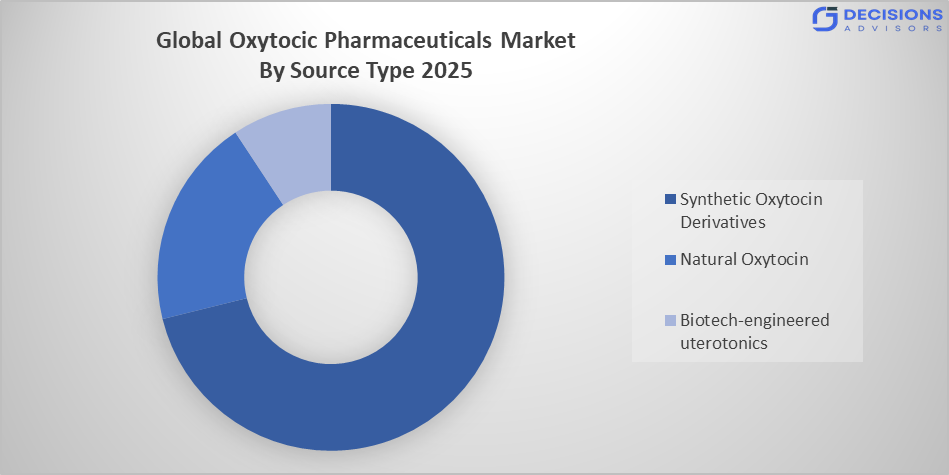
- The synthetic oxytocin derivatives segment dominated the market in 2025, approximately 65%, and is projected to grow at a substantial CAGR during the forecast period.
Based on the source type, the oxytocic pharmaceuticals market is divided into synthetic oxytocin derivatives, natural oxytocin, and biotech-engineered uterotonics. Among these, the synthetic oxytocin derivatives segment dominated the market in 2025, approximately 65%, and is projected to grow at a substantial CAGR during the forecast period. The synthetic oxytocin derivatives segment dominated due to consistent purity, large-scale pharmaceutical manufacturing, and strong clinical acceptance over natural extracts. They are widely used in hospitals for labor induction and hemorrhage control due to their predictable efficacy and regulatory approvals.
- The hospitals segment dominated the market in 2025, approximately 60%, and is projected to grow at a substantial CAGR during the forecast period.
Based on the end user, the oxytocic pharmaceuticals market is divided into hospitals, maternity clinics, ambulatory surgical centers, community healthcare centers, and homecare settings. Among these, the hospitals segment dominated the market in 2025, approximately 60%, and is projected to grow at a substantial CAGR during the forecast period. The growth of the hospitals segment is due to high delivery volumes, emergency obstetric care, and the availability of skilled professionals. Hospitals rely heavily on injectable oxytocics for managing postpartum hemorrhage and labor induction, making them the primary consumption hub.
Strategies to Implement for Growth of the Market in Non-Leading Regions
To drive growth in non-leading regions of the global oxytocic pharmaceuticals market, companies should prioritize expanding access to essential uterotonic drugs such as Oxytocin and Misoprostol through localized manufacturing and cost-efficient supply chains. Strengthening partnerships with organizations like World Health Organization and UNICEF can improve distribution and awareness programs targeting maternal health. Investment in heat-stable formulations and simplified drug delivery devices will enhance usability in rural settings with limited infrastructure. Training healthcare workers and midwives is critical to ensure proper administration and increase institutional deliveries. Additionally, leveraging government maternal health initiatives and expanding public-private partnerships can accelerate adoption. These strategies collectively improve accessibility, reduce maternal mortality rates, and unlock significant growth opportunities in emerging and underserved markets.
Regional Segment Analysis of the Oxytocic Pharmaceutical Market
- North America (U.S., Canada, Mexico)
- Europe (Germany, France, U.K., Italy, Spain, Rest of Europe)
- Asia-Pacific (China, Japan, India, Rest of APAC)
- South America (Brazil and the Rest of South America)
- The Middle East and Africa (UAE, South Africa, Rest of MEA)
North America is anticipated to hold the largest share of approximately 40% the oxytocic pharmaceuticals market over the forecast period.
North America is anticipated to hold the largest share of approximately 40% the oxytocic pharmaceuticals market over the forecast period. The dominance of this region is driven by advanced healthcare infrastructure, high rates of C-sections and maternal care interventions, strong hospital adoption of uterotonic drugs, and the presence of leading pharmaceutical companies. The U.S. contributes the majority share due to high clinical standards and emergency obstetric care usage.
Asia Pacific is expected to grow at a rapid CAGR of approximately 9.5% in the oxytocic pharmaceuticals market during the forecast period.
Asia Pacific is expected to grow at a rapid CAGR of approximately 9.5% in the oxytocic pharmaceuticals market during the forecast period. This growth is fueled by high birth rates, increasing maternal healthcare programs, rising government initiatives to reduce postpartum hemorrhage, and improving rural healthcare access in countries like India, China, and Southeast Asia. Expanding public health distribution of essential uterotonics further supports demand.
Europe is the 2nd largest region to grow in the oxytocic pharmaceuticals market during the period.
Europe represents the second-largest region in the global oxytocic pharmaceuticals market, supported by well-established maternal healthcare systems, strong regulatory frameworks, and high adoption of evidence-based obstetric treatments. Countries like Germany, France, and the UK lead due to advanced hospital networks and increasing focus on safe childbirth practices.
Future Market Trends in Global Oxytocic Pharmaceuticals Market: -
1. Heat-Stable & Long-Acting Formulations
Future growth will be driven by the development of heat-stable oxytocin and long-acting analogs such as carbetocin. These innovations address cold-chain limitations and improve drug efficacy in low-resource settings. Increasing adoption in developing regions will enhance accessibility, reduce wastage, and expand the overall market reach significantly.
2. Rising Focus on Postpartum Hemorrhage (PPH) Management
The growing global burden of postpartum hemorrhage will continue to shape demand for oxytocic drugs. As PPH remains a leading cause of maternal mortality, healthcare systems are prioritizing uterotonic therapies. Expanding institutional deliveries and WHO-backed protocols will further strengthen the use of oxytocin, misoprostol, and related drugs.
3. Integration of Digital Health & Advanced Drug Delivery
Emerging trends include telemedicine integration and advanced drug delivery systems such as auto-injectors and transdermal patches. These technologies improve treatment accessibility, patient monitoring, and ease of administration. Combined with expanding healthcare infrastructure, they are expected to enhance adoption rates and drive long-term market growth.
Recent Development
- In November 2024, Insud Pharma received a $2.7 million grant from the Bill & Melinda Gates Foundation to advance a Phase II clinical trial of a novel sublingual oxytocin therapy for preventing postpartum hemorrhage, strengthening innovation in the global oxytocic pharmaceuticals market.
- In May 2023, Tonix Pharmaceuticals initiated research on TNX-1900, an intranasal potentiated oxytocin therapy, focusing on its neurovascular and vascular effects in female participants. The study explored trigeminal blood flow responses, supporting innovation trends in the global oxytocic pharmaceuticals market.
- In July 2021, Ferring Pharmaceuticals announced the introduction of heat-stable carbetocin in Asian markets, particularly India, to prevent postpartum hemorrhage. The long-acting, temperature-stable formulation was designed to overcome cold-chain challenges, improving access in low-resource settings and strengthening the global oxytocic pharmaceuticals market.
How is Recent Developments Helping the Market?
Recent developments are significantly accelerating the growth of the global oxytocic pharmaceuticals market by improving drug accessibility, effectiveness, and delivery. Advances in R&D have led to innovative formulations such as heat-stable oxytocin, long-acting analogs like carbetocin, and novel sublingual therapies currently under clinical trials, enhancing usability in low-resource settings. Additionally, increased global funding and partnerships—such as collaborations supporting new oxytocin formulations—are strengthening product pipelines and expanding market reach. Technological improvements, including auto-injectors and alternative administration routes, are simplifying drug delivery and boosting adoption. Furthermore, rising government initiatives and global health programs aimed at reducing maternal mortality are driving widespread use of uterotonic drugs. Together, these developments enhance treatment outcomes, expand access in emerging regions, and create strong growth opportunities for the market.
Market Segment
This study forecasts revenue at global, regional, and country levels from 2020 to 2035. Decision Advisors has segmented the Oxytocic Pharmaceuticals Market based on the below-mentioned segments:
Global Oxytocic Pharmaceutical Market, By Drug Type
- Oxytocin
- Ergometrine
- Carbetocin
- Misoprostol
- Combination uterotonics
Global Oxytocic Pharmaceutical Market, By Source Type
- Synthetic Oxytocin Derivatives
- Natural Oxytocin
- Biotech-engineered uterotonics
Global Oxytocic Pharmaceutical Market, By End User
- Hospitals
- Maternity Clinics
- Ambulatory Surgical Centers
- Community Healthcare Centers
- Homecare Settings
Global Oxytocic Pharmaceutical Market, By Regional Analysis
- North America
- US
- Canada
- Mexico
- Europe
- Germany
- UK
- France
- Italy
- Spain
- Russia
- Rest of Europe
- Asia Pacific
- China
- Japan
- India
- South Korea
- Australia
- Rest of Asia Pacific
- South America
- Brazil
- Argentina
- Rest of South America
- Middle East & Africa
- UAE
- Saudi Arabia
- Qatar
- South Africa
- Rest of the Middle East & Africa
Frequently Asked Questions (FAQ)
Q. Why is oxytocic drug accessibility still limited in rural healthcare systems?
A. Oxytocic drug accessibility in rural areas remains limited due to weak cold-chain infrastructure, shortage of trained healthcare professionals, and inconsistent drug supply chains. Injectable oxytocin often requires strict temperature control, which is difficult to maintain in remote regions. However, increasing adoption of heat-stable formulations and NGO-led distribution programs is gradually improving access in underserved populations.
Q. How do oxytocic pharmaceuticals contribute to reducing maternal mortality globally?
A. Oxytocic drugs play a critical role in preventing and managing postpartum hemorrhage, which is one of the leading causes of maternal deaths worldwide. Rapid uterine contraction induced by these drugs helps control excessive bleeding after childbirth. Their inclusion in WHO essential medicine lists and national maternal health protocols has significantly improved survival rates in institutional deliveries.
Q. What challenges affect the global supply chain of oxytocic medications?
A. The supply chain faces challenges such as temperature-sensitive storage requirements, regulatory compliance differences across countries, raw material dependency, and distribution inefficiencies in low-income regions. Additionally, sudden demand surges during maternal health campaigns can strain production capacity, leading to temporary shortages in certain markets.
Q. What future innovations are expected to transform oxytocic drug administration?
A. Future innovations include needle-free delivery systems, intranasal oxytocin formulations, biodegradable drug implants, and AI-based maternal monitoring systems. These advancements aim to improve emergency response, reduce administration errors, and expand access in homecare and remote settings. Combined with digital health integration, they are expected to make maternal care more proactive and accessible.
Check Licence
Choose the plan that fits you best: Single User, Multi-User, or Enterprise solutions tailored for your needs.
We Have You Covered
- 24/7 Analyst Support
- Clients Across the Globe
- Tailored Insights
- Technology Tracking
- Competitive Intelligence
- Custom Research
- Syndicated Market Studies
- Market Overview
- Market Segmentation
- Growth Drivers
- Market Opportunities
- Regulatory Insights
- Innovation & Sustainability
Report Details
| Scope | Global |
| Pages | 210 |
| Delivery | PDF & Excel via Email |
| Language | English |
| Release | Apr 2026 |
| Access | Download from this page |