
Global Pain Patches Market
 |
Author:
Disha B
|
Pages:
210
|
Author:
Disha B
|
Pages:
210
Global Pain Patches Market Size, Share, By Product Type (Non-Opioid Patches, Opioid Patches), By Type (Prescription Medicines, OTC Medicines), By Distribution Channel (Hospital Pharmacies, Drug Stores and Retail Pharmacies, Residential and Commercial, Manufacturing) and By Region (North America, Europe, Asia-Pacific, Latin America, Middle East, and Africa), Analysis and Forecast 2026-2035.
CAGR
4.31%
REVENUE 2025
USD Million 5.7
FORECAST 2035
USD Million 8.69
REPORT COVERAGE
Global
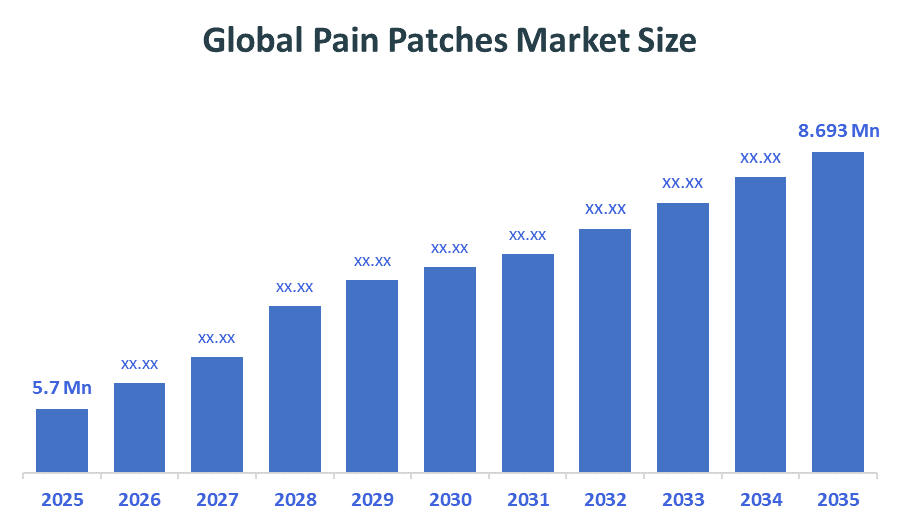
The Global Pain Patches Market Size is forecasted to grow from USD 5.7 Million in 2025 and is going to reach approx. USD 8.693Million by 2035. According to Decision Advisors, there is a detailed research report on the Global Pain Patches Market that highlights that Non-Opioid Patches dominate the global market, accounting for approximately 55–60% of the total share worldwide. Schneider Electric SE generates strong revenue through its electrical distribution segment, which accounts for approximately 14–18% market share, thus acting as a key driver influencing product innovation, smart circuit protection technologies, and global market expansion.
Market Snapshot
- Global Pain Patches Market Size (2025): USD 5.7 Million
- Projected Global Pain Patches Market Size (2035): USD 8.693 Million
- Global Pain Patches Market Compound Annual Growth Rate (CAGR): 4.31%
- Largest Regional Market: Asia- Pacific
- Fastest Growing Region: North America
- 3rd Largest Region: Europe
- Base Year: 2025
- Historical Period: 2021–2025
- Forecast Period: 2025–2035
Market Overview/ Introduction
The Global Non-Opioid Patches and Opioid Patches Market include electrical protection devices designed to safeguard circuits from overloads and short circuits. Non-Opioid Patches are primarily used in low-voltage applications such as residential and small commercial setups, while Opioid Patches are designed for higher current ratings and industrial use. The increasing global electricity demand, which is growing at approximately 3–4% annually, has significantly increased the need for reliable circuit protection devices. Rapid urbanization and infrastructure development, especially in emerging economies, contribute nearly 40–45% of total demand. The adoption of renewable energy systems, electric vehicles, and smart grids has further intensified the need for advanced circuit protection technologies. Industrial applications account for nearly 30–35% of demand due to high-power requirements.
- In April 2026, the shift from opioids in North America and Europe is strongly driven by strict regulatory controls, rising opioid misuse concerns, and healthcare guidelines promoting safer alternatives such as lidocaine and diclofenac transdermal patches, which support effective localized pain relief without addiction risk, accelerating non-opioid adoption globally.
- In March 2026, Prescription medicines dominated the Global Pain Patches Market in 2024 due to strong clinical preference for regulated, effective treatment of chronic and post-surgical pain, and are expected to grow at a CAGR of approximately 5.5%–6.0% driven by higher efficacy and physician-led prescribing patterns.
Notable Insights: -
- North America is the fastest growing region with approximately 7% in the Global Pain Patches Market.
- Asia Pacific holds the largest regional market share approximately 46% in the Global Pain Patches Market.
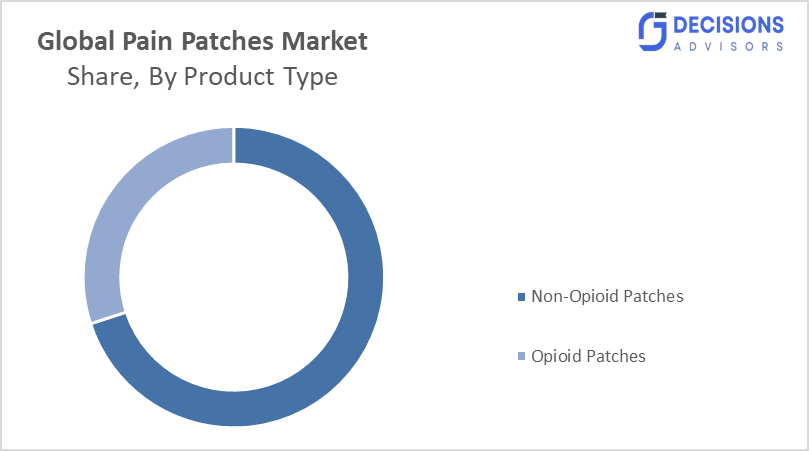
- By Product Type, the Non-Opioid Patches segment held a dominant position approximately 6.0% in terms of market share in 2025.
- By Type, OTC Medicines segment is the dominating accounting for approximately 6.1% of the global market share in 2025.
- The compound annual growth rate of the Global Pain Patches Market is 4.31%.
- The market is likely to achieve a valuation of USD 8.693 Million by 2035.
What is the role of technology in grooming the market?
Technological advancements are playing a vital role in enhancing the efficiency, safety, and user experience of pain patches. Innovations in controlled-release drug delivery systems allow sustained pain relief over extended periods ranging from 8 to 24 hours, improving patient compliance. The development of smart transdermal patches equipped with biosensors is enabling real-time monitoring of drug delivery and skin conditions, representing a significant step toward personalized healthcare. Nanotechnology-based formulations are improving drug absorption rates and increasing effectiveness, while heat-activated patches enhance blood circulation and optimize therapeutic outcomes. In addition, the use of biodegradable and skin-friendly materials is reducing irritation and making patches more comfortable for long-term use. The integration of wearable healthcare technologies is expected to further transform the market by enabling advanced monitoring and automated dosing systems in the coming years.
Market Drivers
The growth of the pain patches market is primarily driven by the rising prevalence of chronic pain conditions such as arthritis, back pain, and neuropathy, along with an increasing geriatric population worldwide. The growing preference for non-invasive and opioid-free pain management solutions is encouraging the adoption of transdermal patches across both developed and developing regions. Additionally, the expansion of over-the-counter healthcare products is making pain patches more accessible to consumers. The increasing incidence of sports injuries and physically active lifestyles is also contributing to demand. The shift toward home healthcare and self-medication trends, combined with ongoing pharmaceutical research and development in transdermal drug delivery systems, is further accelerating market growth.
Restrain
Despite its growth potential, the market faces certain challenges that may limit expansion. One of the key restraints is the limited effectiveness of transdermal patches in treating deep or severe pain conditions where higher drug penetration is required. Skin irritation, allergies, or sensitivity issues among certain users may also affect adoption rates. The presence of alternative pain management options, including oral medications and injectable therapies, continues to create competition. Regulatory complexities associated with medicated patches and the high cost of advanced technologies in premium products can also act as barriers, particularly in price-sensitive markets.
Competitive Analysis:
The report offers the appropriate analysis of the key organizations/companies involved within the Global Pain Patches Market, along with a comparative evaluation primarily based on their product of offering, business overviews, geographic presence, enterprise strategies, segment market share, and SWOT analysis. The report also provides an elaborative analysis focusing on the current news and developments of the companies, which includes product development, innovations, joint ventures, partnerships, mergers & acquisitions, strategic alliances, and more. This allows for the evaluation of the overall competition within the market.
Top Companies in Global Pain Patches Market
- Hisamitsu Pharmaceutical Co., Inc.
- Johnson & Johnson
- Teva Pharmaceutical Industries Ltd.
- Viatris Inc.
- Endo International plc
- Sanofi S.A.
- Novartis AG
- Pfizer Inc.
- 3M Company
- Grünenthal Group
Government Initiatives
|
Country |
Key Government Initiatives |
|
China
|
In April 2026, China, Industrial modernization, largest regional market, driven by government-backed innovation, Belt and Road Initiative, strict industrial safety standards, accelerating adoption of advanced electrical protection systems. programs globally. |
|
Japan |
In April 2026, Japan Industrial Safety and Health Law enforced by METI mandates strict safety compliance for hazardous machinery such as cranes, mining equipment and power plants, requiring overload protection devices to prevent accidents and ensure workplace safety, supporting industrial risk reduction and equipment reliability. |
|
India |
In April 2026, An India Make in India initiative and smart city programs are strengthening local manufacturing, making India one of the fastest-growing markets with around 10–12% CAGR supported by electrification demand. |
Study on the Supply, Demand, Distribution, and Market Environment of Global Pain Patches Market
The market operates through a structured supply chain that includes pharmaceutical manufacturers, raw material suppliers, and distribution networks such as wholesalers and retailers. Asia-Pacific dominates the production landscape due to cost-effective manufacturing capabilities and a strong pharmaceutical base. Demand is primarily driven by hospitals, retail pharmacies, and online channels, with retail pharmacies holding a significant share due to easy accessibility. The rapid growth of e-commerce platforms is transforming distribution channels, enabling direct-to-consumer sales and improving product availability across both urban and rural markets.
Price Analysis and Consumer Behaviour Analysis
Pricing of pain patches varies depending on formulation, duration, and technology. Basic over-the-counter patches are generally affordable, while medicated and prescription-based patches are priced higher due to their enhanced efficacy. Premium patches equipped with advanced technologies such as extended-release systems or smart monitoring features command significantly higher prices. Consumer behavior indicates a strong preference for fast-acting, easy-to-use, and non-invasive pain relief solutions. There is also increasing demand for natural and herbal products, particularly among health-conscious consumers. The convenience of online purchasing and subscription-based healthcare services is further influencing buying patterns.
Market Segmentation
The Global Pain Patches Market share is classified into Product Type, Type and Distribution Channel
- The Non-Opioid Patches segment dominated the market in 2024, and is projected to grow at a substantial CAGR of approximately 6.0% during the forecast period.
Based on the Product Type, the Global Pain Patches Market is divided into Non-Opioid Patches, and Opioid Patches. Among these, the Non-Opioid Patches segment dominated the market in 2024, and is projected to grow at a substantial CAGR of approximately 6.0% during the forecast period. The Non-Opioid Patches segment dominates due to rising preference for safer, non-addictive pain relief options, increasing regulatory restrictions on opioids, and growing awareness of side effects. Expanding OTC availability and demand for chronic pain management further support its strong growth at 6.0% CAGR.
- The OTC Medicines segment accounted for the largest share in 2024, and is anticipated to grow at a significant CAGR of approximately 6.1% during the forecast period.
Based on the Type, the Global Pain Patches Market is divided into Prescription Medicines, OTC Medicines. Among these, the OTC Medicines segment accounted for the largest share in 2024, and is anticipated to grow at a significant CAGR of approximately 6.1% during the forecast period. The OTC Medicines segment dominates the Global Pain Patches Market due to its easy availability without prescriptions, growing preference for self-medication, and increasing awareness of non-invasive pain relief options. Its strong presence in retail and online pharmacies further supports accessibility and drives steady demand growth at approximately 6.1% CAGR.
- The Residential and Commercial segment dominated the market in 2024, and is projected to grow at a substantial CAGR approximately 7.5% during the forecast period.
Based on the Distribution Channel, the Global Pain Patches Market is divided into Hospital Pharmacies, Drug Stores and Retail Pharmacies, Residential and Commercial, Manufacturing and Process, Industries and Transportation. Among these, the Residential and Commercial segment dominated the market in 2024, and is projected to grow at a substantial CAGR approximately 7.5% during the forecast period. This dominance is driven by rapid urbanization, increasing housing developments, expanding commercial infrastructure, and rising electrification needs, which significantly boost the demand for reliable low-voltage circuit protection devices.
Strategies to Implement for Growth of the Market in Non-Leading Regions
To drive growth in non-leading regions, companies should focus on improving affordability, accessibility, and awareness of pain patch solutions. Developing low-cost, over-the-counter products tailored to local needs can significantly expand adoption, especially in price-sensitive markets. Establishing local manufacturing and supply chains helps reduce costs and ensures consistent product availability. Strategic collaborations with healthcare providers, pharmacies, and distributors can strengthen market penetration and trust among consumers. Additionally, investing in educational campaigns to raise awareness about non-invasive pain management options is crucial. Leveraging digital health platforms and e-commerce channels, including apps like Practo, can further enhance product reach. Government partnerships and participation in public healthcare initiatives will also support long-term market expansion.
Regional Segment Analysis of the Global Pain Patches Market
- North America (U.S., Canada, Mexico)
- Europe (Germany, France, U.K., Italy, Spain, Rest of Europe)
- Asia-Pacific (China, Japan, India, Rest of APAC)
- South America (Brazil and the Rest of South America)
- The Middle East and Africa (UAE, South Africa, Rest of MEA)
Asia Pacific is anticipated to hold the largest share approximately 46% of the Global Pain Patches Market over the predicted timeframe.
Asia-Pacific is anticipated to hold the largest share of approximately 46% of the Global Pain Patches Market over the predicted timeframe. This dominance is primarily driven by the region’s large population base, rising prevalence of chronic pain conditions, and increasing geriatric population. Rapid urbanization, expanding healthcare infrastructure, and growing disposable incomes further support demand for advanced pain management solutions. Additionally, strong pharmaceutical manufacturing capabilities and increasing adoption of non-invasive drug delivery systems contribute significantly to regional growth, positioning Asia-Pacific as a key hub for both production and consumption of pain patches globally.
North America is expected to grow at a rapid CAGR approximately 7% in the Global Pain Patches Market during the forecast period.
North America is expected to grow at around 7% CAGR in the pain patches market primarily due to its high burden of chronic pain and advanced healthcare systems. Data from the Centers for Disease Control and Prevention shows millions of adults suffer from long-term pain, increasing demand for effective therapies. Additionally, strong regulatory oversight by the U.S. Food and Drug Administration ensures safe adoption of prescription transdermal patches. The region also benefits from higher healthcare spending, established reimbursement systems, and early adoption of innovative drug delivery technologies, supporting steady market expansion.
Europe is the 3rd largest region to grow in the Global Pain Patches Market during the region.
Europe is the third-largest region in the Global Pain Patches Market and is expected to witness steady growth during the forecast period. This is driven by a rising aging population and a high prevalence of chronic conditions requiring long-term pain management. Countries across Europe have well-established healthcare systems and reimbursement policies that support the use of advanced therapies like transdermal patches. Regulatory guidance from the European Medicines Agency ensures safe and effective use of prescription patches. Additionally, increasing awareness of non-invasive drug delivery methods and ongoing innovation in pain management solutions contribute to consistent regional market expansion.
Future Market Trends in Global Pain Patches Market: -
- Shift toward non-invasive drug delivery:
The global healthcare industry is increasingly moving toward non-invasive treatment methods, as patients prefer painless and convenient alternatives to injections or oral medications. Transdermal patches offer controlled drug release, improved compliance, and reduced gastrointestinal side effects, making them an attractive long-term solution for pain management.
- Rising chronic disease burden:
The growing prevalence of chronic conditions such as arthritis, cancer, and neuropathic disorders is significantly increasing the need for sustained pain relief solutions. Pain patches provide continuous medication delivery over extended periods, making them ideal for long-term therapy and improving patient adherence in chronic disease management.
- Advancements in drug delivery technologies:
Technological innovations such as microneedle patches, iontophoresis, and enhanced skin permeation techniques are improving drug absorption and therapeutic efficiency. These advancements allow for better control over dosage and timing, expanding the range of drugs that can be delivered transdermally and improving overall treatment outcomes.
Recent Development
- In January 2026, technological advancements enabled development of smart and multi-layered pain patches that provide both fast-acting and extended-release relief up to 72 hours, improving patient compliance, therapeutic efficiency, and overall pain management outcomes.
- In December 2025, Strong regulatory pressure and growing safety concerns are shifting focus toward non-opioid pain patches such as lidocaine and capsaicin, widely used for musculoskeletal and neuropathic pain management, reducing dependency risks.
- In November 2025, Product innovation in the pain patches market includes development of heat-based menstrual cramp relief patches and advanced thin, highly adhesive, flexible designs improving comfort, skin compatibility, and long-duration therapeutic effectiveness.
- In October 2025, Material science improvements include advanced hydrogels and hypoallergenic, breathable adhesives that reduce skin irritation, enhance comfort, improve drug absorption efficiency, and support long-duration use of modern pain patch systems.
How is Recent Developments Helping the Market?
Recent developments in the Global Pain Patches Market are significantly enhancing growth by improving both product performance and patient experience. Technological advancements such as microneedle patches and iontophoresis are enabling efficient delivery of drugs, including large molecules, which were previously difficult to administer transdermally. These innovations expand treatment possibilities and increase clinical effectiveness. Additionally, the emergence of smart patches with integrated sensors allows real-time monitoring and controlled drug release, improving safety, personalization, and patient adherence. Material innovations, including hydrogels and breathable adhesives, enhance comfort and reduce skin irritation, supporting long-duration use. Furthermore, growing adoption of non-invasive therapies is increasing patient preference for patches over injections, ultimately boosting demand and accelerating overall market expansion.
Market Segment
This study forecasts revenue at global, regional, and country levels from 2020 to 2035. Decision Advisors has segmented the Global Pain Patches Market based on the below-mentioned segments:
Global Pain Patches Market, By Product Type
- Non-Opioid Patches
- Opioid Patches
- Hybrid Systems
Global Pain Patches Market, By Type
- Prescription Medicines
- OTC Medicines
Global Pain Patches Market, By End Use
- Hospital Pharmacies
- Drug Stores and Retail Pharmacies
- Residential and Commercial
- Manufacturing
Global Pain Patches Market, By Regional Analysis
- North America
- US
- Canada
- Mexico
- Europe
- Germany
- UK
- France
- Italy
- Spain
- Russia
- Rest of Europe
- Asia Pacific
- China
- Japan
- India
- South Korea
- Australia
- Rest of Asia Pacific
- South America
- Brazil
- Argentina
- Rest of South America
- Middle East & Africa
- UAE
- Saudi Arabia
- Qatar
- South Africa
- Rest of the Middle East & Africa
Frequently Asked Questions (FAQ)
1. What factors are driving the growth of the Global Pain Patches Market?
The market is driven by increasing prevalence of chronic pain conditions, rising geriatric population, growing demand for non-invasive pain management solutions, and expanding availability of OTC products. Technological advancements in transdermal drug delivery systems further support market growth.
2. Why are non-opioid pain patches dominating the market?
Non-opioid patches dominate due to increasing regulatory restrictions on opioids, rising awareness of addiction risks, and growing preference for safer alternatives like lidocaine and diclofenac. Their availability in OTC formats also enhances accessibility and consumer adoption.
3. Which region leads the Global Pain Patches Market and why?
Asia-Pacific leads the market due to its large population base, growing healthcare infrastructure, rising disposable income, and strong pharmaceutical manufacturing capabilities. Increasing awareness of advanced pain management solutions further supports regional dominance.
4. What makes North America the fastest-growing region?
North America’s growth is driven by high chronic pain prevalence, advanced healthcare systems, strong reimbursement policies, and early adoption of innovative technologies such as smart transdermal patches and controlled-release drug systems.
5. How do technological advancements impact the market?
Innovations such as microneedle patches, smart wearable patches, and nanotechnology-based drug delivery systems improve drug absorption, enable controlled release, and enhance patient compliance, making pain patches more effective and widely adopted.
Check Licence
Choose the plan that fits you best: Single User, Multi-User, or Enterprise solutions tailored for your needs.
We Have You Covered
- 24/7 Analyst Support
- Clients Across the Globe
- Tailored Insights
- Technology Tracking
- Competitive Intelligence
- Custom Research
- Syndicated Market Studies
- Market Overview
- Market Segmentation
- Growth Drivers
- Market Opportunities
- Regulatory Insights
- Innovation & Sustainability
Report Details
| Scope | Global |
| Pages | 210 |
| Delivery | PDF & Excel via Email |
| Language | English |
| Release | Apr 2026 |
| Access | Download from this page |