
Global Peanut Allergy Market
 |
Pages:
210
|
Pages:
210
Global Peanut Allergy Market Size, Share, and COVID-19 Impact Analysis, By Type (Mild Peanut Allergy, Moderate Peanut Allergy, and Severe Peanut Allergy), By Treatment (Oral Immunotherapy (OIT), Biologics/Monoclonal Antibodies, Epinephrine Auto-Injectors, Hypoallergenic Products, and Others) and By Region (North America, Europe, Asia-Pacific, Latin America, Middle East, and Africa), Analysis and Forecast 2025 - 2035.
REPORT COVERAGE
Global
Global Peanut Allergy Market Insights Forecasts to 2035
- The Global Peanut Allergy Market Size Was valued at USD 477.7 Million in 2024
- The Global Peanut Allergy Market Size is Expected to Grow at a CAGR of around 7.15% from 2025 to 2035
- The Worldwide Peanut Allergy Market Size is Expected to Reach USD 1021.4 Million by 2035
- Asia-Pacific is expected to grow the fastest during the forecast period.
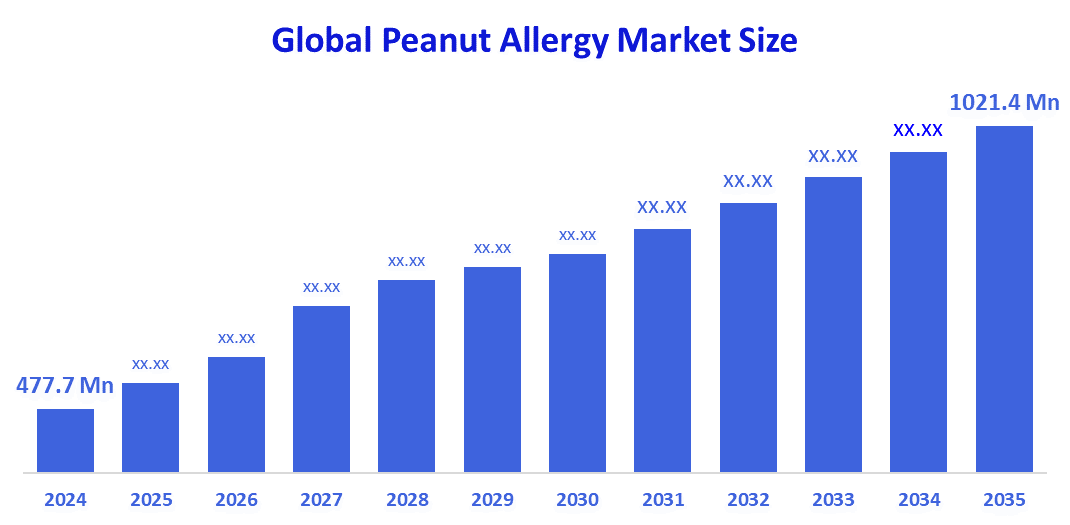
According to a research report published by Decisions Advisors and Consulting, the global peanut allergy market size was worth around USD 477.7 Million in 2024 and is predicted to grow to around USD 1021.4 Million by 2035 with a compound annual growth rate (CAGR) of 7.15% from 2025 to 2035. The global peanut allergy market offers business prospects through its development of hypoallergenic products advanced immunotherapy treatments and tools for early diagnosis and its educational programs and customized health care services and its market expansion to areas where allergy rates are increasing and dietary practices are shifting.
Market Overview
The global peanut allergy market focuses on the diagnosis, management, and treatment of peanut allergies, which represent a serious threat to life through immunological responses that occur after exposure to peanut proteins. Patients display a range of symptoms which include mild hives and swelling as well as life-threatening anaphylaxis which demands urgent medical treatment. The market expands because people are becoming more aware of food allergies, the condition is increasing among children and adults, and new treatment methods like oral immunotherapy and biologics and hypoallergenic products come to market. Developed countries are providing support for allergy management through their implementation of food labeling rules and their establishment of public health programs and their financial backing of allergy research. The creation of educational programs and the development of early diagnostic tools now enable more people to receive medical treatment. The global market experiences growth because consumers increasingly demand safe foods which do not contain allergens.
Report Coverage
This research report categorizes the peanut allergy market based on various segments and regions, forecasts revenue growth, and analyzes trends in each submarket. The report analyses the key growth drivers, opportunities, and challenges influencing the peanut allergy market. Recent market developments and competitive strategies such as expansion, type launch, development, partnership, merger, and acquisition, have been included to draw the competitive landscape in the market. The report strategically identifies and profiles the key market players and analyses their core competencies in each sub-segment of the peanut allergy market.
Driving Factors
The global peanut allergy market establishes itself as a growing market because three factors drive its expansion. The market expansion results from innovations which include oral immunotherapy and biologics and hypoallergenic peanut products and wearable allergy detectors and AI-based early diagnostic tools which enhance patient safety and treatment effectiveness. The market expansion results in better life quality for people who suffer from this condition across the entire world.
Restraining Factors
The global market experiences growth limitations because of five factors which include high treatment costs and restricted access to specialized healthcare treatment and strict requirements for regulatory approval and the potential danger of severe allergic reactions and the public's insufficient knowledge about peanut allergy treatment methods.
Market Segmentation
The peanut allergy market share is classified into type and treatment.
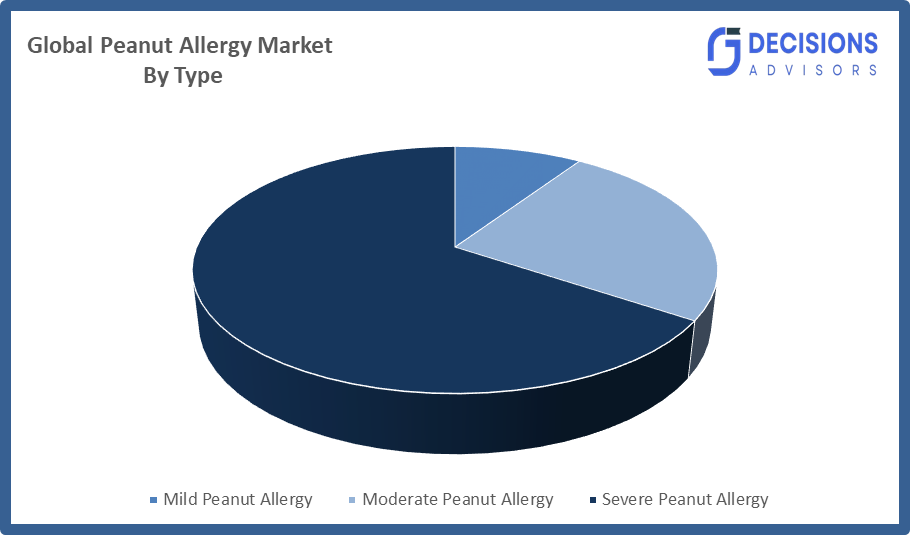
- The severe peanut allergy segment dominated the market in 2024, approximately 55% and is projected to grow at a substantial CAGR during the forecast period.
Based on the type, the peanut allergy market is divided into mild peanut allergy, moderate peanut allergy, and severe peanut allergy. Among these, the severe peanut allergy segment dominated the market in 2024, approximately 55% and is projected to grow at a substantial CAGR during the forecast period. due to its higher risk of life-threatening reactions, patients need specialized treatments which include oral immunotherapy and biologics and epinephrine auto-injectors. The treatment of allergy patients who have severe reactions to their condition requires specialized therapies which include oral immunotherapy and biologics and epinephrine auto-injectors. The combination of rising awareness and better diagnostic methods and government allergy management programs leads to increased treatment demand which creates revenue growth that drives substantial market expansion throughout the forecast period.
- The oral immunotherapy (OIT) segment accounted for the largest share in 2024, approximately 60% and is anticipated to grow at a significant CAGR during the forecast period.
Based on the treatment, the peanut allergy market is divided into oral immunotherapy (OIT), biologics/monoclonal antibodies, epinephrine auto-injectors, hypoallergenic products, and others. Among these, the electronic segment accounted for the largest share in 2024, approximately 60% and is anticipated to grow at a significant CAGR during the forecast period. The treatment demonstrates successful results because it safely desensitizes patients while decreasing their chances of experiencing harmful allergic reactions and enhancing their daily activities. Market expansion occurs because patients and caregivers now understand medical conditions better and clinical guidelines provide support while hospitals and specialty centers expand their usage of medical facilities. The development of new OIT products together with existing combination therapies boosts worldwide treatment distribution.
Regional Segment Analysis of the Peanut Allergy Market
- North America (U.S., Canada, Mexico)
- Europe (Germany, France, U.K., Italy, Spain, Rest of Europe)
- Asia-Pacific (China, Japan, India, Rest of APAC)
- South America (Brazil and the Rest of South America)
- The Middle East and Africa (UAE, South Africa, Rest of MEA)
North America is anticipated to hold the largest share of the peanut allergy market over the predicted timeframe.
North America is anticipated to hold the largest share of the peanut allergy market over the predicted timeframe. The combination of high peanut allergy rates together with efficient healthcare systems and available treatment options such as oral immunotherapy and epinephrine auto-injectors and governmental backing and public education efforts creates this situation. The implementation of early diagnosis programs together with established allergy management protocols leads to increased treatment uptake, which drives significant market expansion throughout the entire prediction period.
Asia-Pacific is expected to grow at a rapid CAGR in the peanut allergy market during the forecast period. The rising prevalence of peanut allergies combined with better healthcare systems and improved access to oral immunotherapy and biologics treatment methods leads to increased adoption of these treatments. The market experiences substantial growth throughout the forecast period because of rising public awareness, government initiatives for allergy management, expanding telemedicine services, and increasing demand for hypoallergenic products.
Competitive Analysis:
The report offers the appropriate analysis of the key organizations/companies involved within the peanut allergy market, along with a comparative evaluation primarily based on their type of offering, business overviews, geographic presence, enterprise strategies, segment market share, and SWOT analysis. The report also provides an elaborative analysis focusing on the current news and developments of the companies, which includes type development, innovations, joint ventures, partnerships, mergers & acquisitions, strategic alliances, and others. This allows for the evaluation of the overall competition within the market.
List of Key Companies
- Aimmune Therapeutics
- DBV Technologies SA
- Sanofi S.A.
- Pfizer Inc.
- ALK?Abelló A/S
- Stallergenes Greer
- Prota Therapeutics
- Camallergy
- Regeneron Pharmaceuticals Inc.
- Teva Pharmaceutical Industries Ltd.
- Others
Key Target Audience
- Market Players
- Investors
- End-users
- Government Authorities
- Consulting and Research Firm
- Venture capitalists
- Value-Added Resellers (VARs)
Market Segment
This study forecasts revenue at global, regional, and country levels from 2020 to 2035. Decisions Advisors has segmented the peanut allergy market based on the below-mentioned segments:
Global Peanut Allergy Market, By Type
- Mild Peanut Allergy
- Moderate Peanut Allergy
- Severe Peanut Allergy
Global Peanut Allergy Market, By Treatment
- Oral Immunotherapy (OIT)
- Biologics/Monoclonal Antibodies
- Epinephrine Auto-Injectors
- Hypoallergenic Products
- Others
Global Peanut Allergy Market, By Regional Analysis
- North America
- US
- Canada
- Mexico
- Europe
- Germany
- UK
- France
- Italy
- Spain
- Russia
- Rest of Europe
- Asia Pacific
- China
- Japan
- India
- South Korea
- Australia
- Rest of Asia Pacific
- South America
- Brazil
- Argentina
- Rest of South America
- Middle East & Africa
- UAE
- Saudi Arabia
- Qatar
- South Africa
- Rest of the Middle East & Africa
Frequently Asked Questions (FAQ)
Q1: What is the expected growth of the global peanut allergy market by 2035?
A: The market is expected to grow from USD 477.7 Million in 2024 to USD 1021.4 Million by 2035, at a CAGR of 7.15%, driven by rising prevalence and treatment innovations.
Q2: Which type of peanut allergy dominates the market?
A: Severe peanut allergy dominates, accounting for approximately 55% in 2024, due to higher risk of life-threatening reactions and greater demand for specialized treatments like oral immunotherapy, biologics, and epinephrine auto-injectors.
Q3: Which treatment segment holds the largest share?
A: Oral immunotherapy (OIT) dominates with approximately 60% share in 2024, offering effective desensitization, reducing severe reactions, and driving adoption through hospitals, specialty centers, and growing patient and caregiver awareness.
Q4: Which region is the largest market for peanut allergy?
A: North America is the largest market due to high allergy prevalence, advanced healthcare infrastructure, government support, public awareness programs, early diagnosis initiatives, and widespread availability of oral immunotherapy and epinephrine auto-injectors.
Q5: Which region is expected to grow the fastest?
A: Asia-Pacific is expected to grow rapidly due to rising allergy prevalence, improved healthcare access, expanding telemedicine, government initiatives, increasing public awareness, and growing demand for advanced treatments and hypoallergenic products.
Check Licence
Choose the plan that fits you best: Single User, Multi-User, or Enterprise solutions tailored for your needs.
We Have You Covered
- 24/7 Analyst Support
- Clients Across the Globe
- Tailored Insights
- Technology Tracking
- Competitive Intelligence
- Custom Research
- Syndicated Market Studies
- Market Overview
- Market Segmentation
- Growth Drivers
- Market Opportunities
- Regulatory Insights
- Innovation & Sustainability
Report Details
| Scope | Global |
| Pages | 210 |
| Delivery | PDF & Excel via Email |
| Language | English |
| Release | Mar 2026 |
| Access | Download from this page |