
Global Pediatric Neurology Device Market
 |
Pages:
230
|
Pages:
230
Global Pediatric Neurology Device Market Size, Share, and COVID-19 Impact Analysis, By Type (Neurosurgery Devices, Neurostimulator and Cerebrospinal Fluid (CSF) Management Devices), By Treatment (Electroencephalogram, Intrathecal Baclofen Therapy, Neurological Evaluations and Vagal Nerve Stimulation), By Neurological Subspecialties (Neuro-Oncology, Neuromuscular, Neonatal Neurology, Neuro-Immunology and Stroke), and By Region (North America, Europe, Asia-Pacific, Latin America, Middle East, and Africa), Analysis and Forecast 2025-2035
REPORT COVERAGE
Global
Global Pediatric Neurology Device Market Size Insights Forecasts to 2035
- The Global Pediatric Neurology Device Market Size Was Estimated at USD 2.85 Billion in 2024
- The Market Size is Expected to Grow at a CAGR of around 6.79 % from 2025 to 2035
- The Worldwide Pediatric Neurology Device Market Size is Expected to Reach USD 5.87 Billion by 2035
- Europe is expected to grow the fastest during the forecast period.
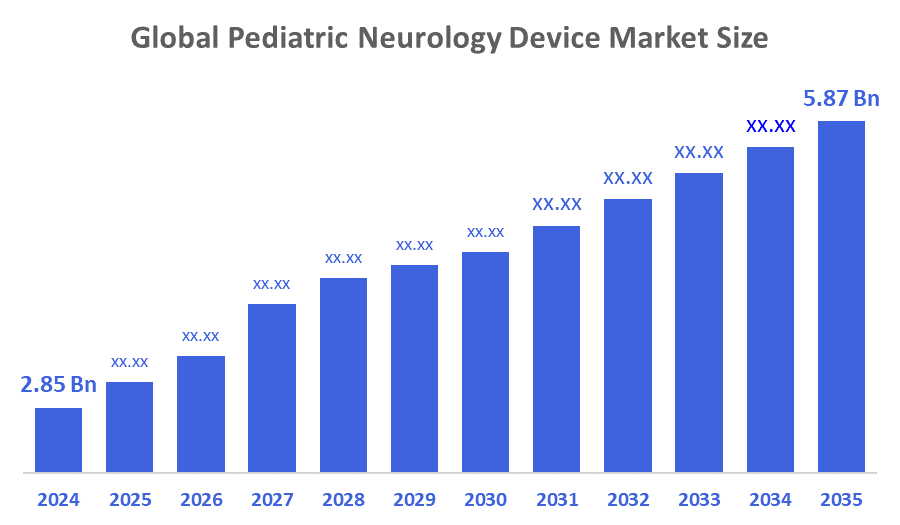
According to a research report published by Decisions Advisors and Consulting, The Global Pediatric Neurology Device Market Size Was Worth Around USD 2.85 Billion In 2024 And Is Predicted To Grow To Around USD 5.87 Billion By 2035 With A Compound Annual Growth Rate (CAGR) Of 6.79 % From 2025 To 2035. The rising incidence of neurological disorders in children, increased awareness of early diagnosis and intervention, and technological developments in pediatric neurology devices that result in better patient monitoring, treatment planning, and diagnostic accuracy in both hospital and clinical settings are the main drivers of the market's growth.
Market Overview
The pediatric neurology device market includes the medical speciality of pediatric neurology, which treats and diagnoses neurological conditions in babies, children, adolescents, and neonates. Child neurology includes conditions affecting the brain, spinal cord, autonomic nervous system (ANS), peripheral nervous system (PNS), muscles, and blood vessels in children and teenagers. A pediatric neurologist, often known as a child neurologist, is a medical professional who treats nervous system problems in children. The brain, spine, nerves, or muscles can all be the source of nervous system problems. Complications include migraines, seizures, and slowed growth, can result from these circumstances. A pediatric neurology device is a medical device used to diagnose and treat a variety of neurological conditions, particularly in young kids. Neurologists who specialise in treating diseases of the neurological system and babies frequently recommend these devices. Treatment for pediatric neurological disorders is more effective when safe and effective treatments are developed. The development of diagnostic tools and technology must continue. It is essential to carry out a study and develop complex processes to provide better and more beneficial solutions. New technologies in neurology include the first hand-held vagus nerve stimulator for episodic cluster headaches, an FDA-approved genetic health risks test, a neurosurgery tracking system, a TMS therapy system to treat depression, and a rehabilitation assistance robot for patients with stroke and other neurological conditions.
Global Healthcare Fund has invested $70 million in Pinnacle Blooms’ AI-powered child development platform, supporting its mission to enhance pediatric care. The funding will accelerate innovation, expand accessibility, and strengthen AI-driven solutions for early childhood development and neurological health.
The Neonatal & Pediatric MedTech Investment Summit 2026 will be held in April 2026, in Berlin, Germany. This event is a premier platform connecting MedTech startups, investors, clinicians, and industry stakeholders to accelerate innovation in neonatal and pediatric healthcare. It features curated pitch sessions, one-on-one investor meetings, and expert-led workshops, spotlighting transformative technologies designed to improve outcomes for the youngest and most vulnerable patients. The summit emphasises collaboration, funding opportunities, and commercialisation strategies to advance life-saving pediatric and neonatal solutions worldwide.
Report Coverage
This research report categorizes the pediatric neurology device market based on various segments and regions, forecasts revenue growth, and analyzes trends in each submarket. The report analyses the key growth drivers, opportunities, and challenges influencing the pediatric neurology device market. Recent market developments and competitive strategies, such as expansion, product launch, development, partnership, merger, and acquisition, have been included to draw the competitive landscape in the market. The report strategically identifies and profiles the key market players and analyzes their core competencies in each sub-segment of the pediatric neurology device market.
Driving Factors
The pediatric neurology devices market is seeing a rise in development because of advances in technology and a greater understanding of children's neurological disorders. Further, with the rise in conditions such as epilepsy and cerebral palsy, there will be an increased need for speciality-based devices for children. As healthcare companies want to provide improved outcomes through the use of specialised pediatric neurology devices, there will be significant market growth. This shows a commitment to addressing the complexities of pediatric neurology. The pediatric neurology devices market is also evolving from clinical-based solutions to more patient-centred and age-appropriate solutions. Manufacturers are focusing on creating devices that meet the specific medical requirements of children while also providing for their comfort and usability. This indicates an increased awareness of the importance of involving children and their families in their treatment processes. Collaborations between technology companies and healthcare providers are also likely to create new imaginative devices that will set the standard for best practices within pediatric neurology.
Restraining Factors
Adoption of pediatric neurology devices is hampered in underdeveloped countries by high costs, restricted reimbursement, supply chain obstacles, and the requirement for specialised training. Access to EEG and neuroimaging is a challenge for smaller clinics, and complicated rules hinder adoption. Sustainable market expansion depends on affordable devices, local production, government assistance, and training.
Market Segmentation
The pediatric neurology device market share is classified into type, treatment, and neurological subspecialties.
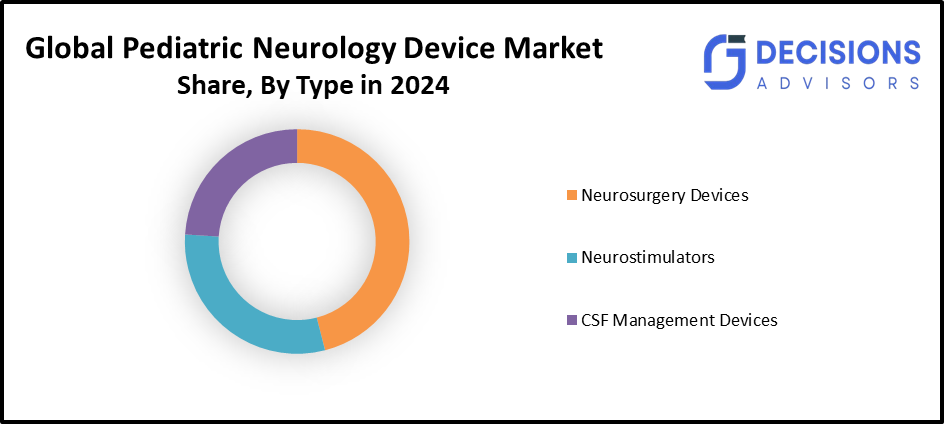
- The neurosurgery devices segment accounted for the largest share in 2024 and is anticipated to grow at a significant CAGR during the forecast period.
Based on the type, the pediatric neurology device market is differentiated into neurosurgery devices, neurostimulators, and cerebrospinal fluid (CSF) management devices. Among these, the neurosurgery devices segment accounted for the largest share in 2024 and is anticipated to grow at a significant CAGR during the forecast period. Increasing healthcare professionals' and caregivers' knowledge of early surgical procedures benefits the segment. Accessibility is improved by reputable producers with extensive portfolios. Adoption is fueled by compatibility with cutting-edge imaging and navigation systems. Revenue growth is also supported by investments in pediatric neurology made by both public and private hospitals.
For instance, CereVasc’s eShunt® System received FDA Breakthrough Device Designation for pediatric use, marking an important milestone in treating hydrocephalus in children. This designation highlights the system’s potential to provide more effective, less invasive treatment options compared to traditional shunts, while accelerating regulatory review and supporting faster clinical adoption.
- The electroencephalogram segment accounted for the highest market revenue in 2024 and is anticipated to grow at a significant CAGR during the forecast period.
Based on the treatment, the pediatric neurology device market is segmented into electroencephalogram, intrathecal baclofen therapy, neurological evaluations and vagal nerve stimulation. Among these, the electroencephalogram segment accounted for the highest market revenue in 2024 and is anticipated to grow at a significant CAGR during the forecast period. This is due to its crucial role in the diagnosis of seizure disorders, epilepsy, and other neurological abnormalities in children. Digital EEG devices, AI-assisted signal interpretation, and telemonitoring are examples of technological innovations that increase the precision and effectiveness of diagnosis. Portable EEG devices are being used by hospitals more frequently for infant care units and bedside monitoring.
For instance, Natus’ acquisition of Holberg EEG strengthens its position in neurodiagnostic innovation by integrating advanced AI-driven EEG analysis into its portfolio. This move expands Natus’ capabilities in automated diagnostics, enhancing accuracy, efficiency, and accessibility for clinicians. Strategically, it positions Natus at the forefront of AI-powered neurodiagnostic solutions, addressing the growing demand for precision tools in neurology.
- The neuro-oncology segment accounted for the highest market revenue in 2024 and is anticipated to grow at a significant CAGR during the forecast period.
Based on the neurological specialities, the pediatric neurology device market is divided into neuro-oncology, neuromuscular, neonatal neurology, neuro-immunology and stroke. Among these, the neuro-oncology segment accounted for the highest market revenue in 2024 and is anticipated to grow at a significant CAGR during the forecast period. The neuro-oncology category, which currently dominates the global market, is anticipated to rise significantly. Neuro-oncology is the study of cancers of the brain and spinal cord. In neurooncology diagnosis, imaging studies are utilised to determine the location, size, and extent of the tumour.
For instance, Day One is set to present new OJEMDA (tovorafenib) data in an oral session at the 2025 Society for Neuro-Oncology (SNO) Annual Meeting. This highlights the drug’s growing relevance in pediatric and adult brain tumour treatment, particularly in low-grade gliomas. The oral presentation format underscores the significance of the findings, suggesting strong clinical impact and potential to influence future therapeutic strategies in neuro-oncology.
Regional Segment Analysis of the Pediatric Neurology Device Market
- North America (U.S., Canada, Mexico)
- Europe (Germany, France, U.K., Italy, Spain, Rest of Europe)
- Asia-Pacific (China, Japan, India, Rest of APAC)
- South America (Brazil and the Rest of South America)
- The Middle East and Africa (UAE, South Africa, Rest of MEA)
Asia Pacific is anticipated to hold the largest share of the pediatric neurology device market over the predicted timeframe.
Asia Pacific is anticipated to hold the largest share of the pediatric neurology device market over the predicted timeframe. The pediatric neurology devices market is expected to grow rapidly in Asia-Pacific due to increased investment in healthcare, increased awareness of pediatric neurological care, and an increase in diagnosed cases of pediatric neurological disorders, primarily in emerging economies like China and India. Governments are contributing to this market expansion through programs, infrastructure improvements, and the adoption of more advanced neurodiagnostic and therapeutic devices. Japan's pediatric neurology device market has seen unprecedented growth due to continual improvement of healthcare standards, increased emphasis on pediatric neurology, and active and widespread utilisation of EEG, imaging, and neurostimulation devices, combined with a higher prevalence of pediatric neurological disorders.
Aster Whitefield Hospital has launched India’s first Mobile Epilepsy Van, aimed at serving underprivileged communities. This initiative brings diagnostic and treatment services directly to patients in rural and underserved areas, addressing gaps in accessibility to epilepsy care. Equipped with EEG and consultation facilities, the van helps overcome barriers of cost, distance, and specialist availability, marking a significant step toward inclusive neurocare in India.
Europe is expected to grow at a rapid CAGR in the pediatric neurology device market during the forecast period. The market for paediatrics in Europe is projected to develop at a rapidly growing rate as a result of government initiatives, increased awareness about neurological/brain disorders, as well as the incorporation of advanced clinical devices into hospitals, rehabilitation centres and paediatric clinics. Specifically, there is evidence of support in the U.K by way of additional funding towards greater healthcare costs; as well as strong evidence suggesting continued clinical adoption due to a strong infrastructure, along with an adequate health services delivery system. Similarly, Germany continues to grow as a result of its strong infrastructure, growing government support for the paediatric market, and the increased usage of diagnostic/monitoring devices (DMD), along with the current rate of innovation and subsequent R&D activity that supports the ongoing integration/implementation of new technologies at both hospitals and speciality clinics within Germany.
The EU has established a new expert group for pediatric and rare disease devices, aiming to strengthen innovation, safety, and accessibility in these highly specialised areas. Strategically, this initiative could help bridge gaps in availability, encourage regional manufacturing, and foster faster adoption of critical technologies across Europe.
Competitive Analysis:
The report offers the appropriate analysis of the key organizations/companies involved within the pediatric neurology device market, along with a comparative evaluation primarily based on their product offering, business overviews, geographic presence, enterprise strategies, segment market share, and SWOT analysis. The report also provides an elaborative analysis focusing on the current news and developments of the companies, which includes product development, innovations, joint ventures, partnerships, mergers & acquisitions, strategic alliances, and others. This allows for the evaluation of the overall competition within the market.
List of Key Companies
- Abbott
- Medtronic
- Stryker Corporation
- Boston Scientific
- Braun
- Integra Lifesciences
- Nihon Kohden
- Natus Medical
- Cadwell Industries
- Neurocare Group AG
- Anuncia Medical Inc.
- Fisher & Paykel Healthcare
- Canon Medical Systems Corporation
- Others
Key Target Audience
- Market Players
- Investors
- End-users
- Government Authorities
- Consulting and Research Firm
- Venture capitalists
- Value-Added Resellers (VARs)
Recent Development
- In March 2026, A remarkable medical milestone was achieved at AIIMS Delhi, where doctors performed the institute’s first auditory brainstem implant (ABI) on a young child who had lost hearing after meningitis. Conventional cochlear implants were not viable because the infection had damaged both the cochlea and auditory nerves. The surgery, followed by 18 months of therapy, enabled the child to respond to sounds and begin speaking more clearly.
- In April 2025, CereVasc, Inc. announced that its investigational eShunt System had received FDA Breakthrough Device Designation for pediatric use. This marks the company’s second breakthrough designation for the device, specifically for treating communicating hydrocephalus in patients aged 12 and older. CereVasc’s eShunt is designed as a minimally invasive endovascular treatment option, offering potential benefits over traditional surgical approaches.
Market Segment
This study forecasts revenue at global, regional, and country levels from 2020 to 2035. Decisions Advisors has segmented the pediatric neurology device market based on the below-mentioned segments:
Global Pediatric Neurology Device Market, By Type
- Neurosurgery Devices
- Neurostimulator
- Cerebrospinal Fluid (CSF) Management Devices
Global Pediatric Neurology Device Market, By Treatment
- Electroencephalogram
- Intrathecal Baclofen Therapy
- Neurological Evaluations
- Vagal Nerve Stimulation
Global Pediatric Neurology Device Market, By Neurological Specialities
- Neuro-Oncology
- Neuromuscular
- Neonatal Neurology
- Neuro-Immunology and Stroke
Global Pediatric Neurology Device Market, By Regional Analysis
- North America
- US
- Canada
- Mexico
- Europe
- Germany
- UK
- France
- Italy
- Spain
- Russia
- Rest of Europe
- Asia Pacific
- China
- Japan
- India
- South Korea
- Australia
- Rest of Asia Pacific
- South America
- Brazil
- Argentina
- Rest of South America
- Middle East & Africa
- UAE
- Saudi Arabia
- Qatar
- South Africa
- Rest of the Middle East & Africa
Frequently Asked Questions (FAQ)
1. How is AI transforming the pediatric neurology device market?
Artificial intelligence (AI) is significantly improving diagnostic speed and accuracy in pediatric neurology. AI-assisted EEG interpretation, automated seizure detection algorithms, and predictive analytics for neonatal brain monitoring are reducing clinician workload and enabling earlier intervention. AI integration also supports tele-neurology models, especially in remote or underserved regions.
2. What role does minimally invasive technology play in pediatric neurology devices?
Minimally invasive approaches—such as endovascular CSF shunt systems and implantable neurostimulators—are reducing surgical trauma, hospital stays, and complication rates in children. These technologies are particularly important in pediatric populations where recovery time and long-term device tolerance are critical considerations.
3. How does reimbursement impact the adoption of pediatric neurology devices?
Reimbursement policies significantly influence device adoption, particularly in emerging markets. Limited insurance coverage for advanced neurodiagnostic tools and implants can slow penetration rates. In contrast, strong public healthcare reimbursement systems in regions like Europe and Japan accelerate the adoption of innovative pediatric neurological technologies.
4. Why is neuro-oncology the leading neurological subspecialty segment?
Neuro-oncology dominates due to the complexity of pediatric brain tumours, which require advanced imaging systems, intraoperative navigation tools, neurosurgical devices, and post-operative monitoring equipment. Early detection and precision treatment technologies are critical in improving survival rates and reducing long-term neurological impairment.
5. How is the shift toward home-based care influencing market growth?
There is a growing trend toward home-based neuro-monitoring and therapy, especially for epilepsy and neuromuscular disorders. Portable EEG systems, wearable seizure monitoring devices, and home neurostimulation solutions allow continuous monitoring while reducing hospital visits. This shift improves the quality of life for children and families and supports long-term disease management.
Check Licence
Choose the plan that fits you best: Single User, Multi-User, or Enterprise solutions tailored for your needs.
We Have You Covered
- 24/7 Analyst Support
- Clients Across the Globe
- Tailored Insights
- Technology Tracking
- Competitive Intelligence
- Custom Research
- Syndicated Market Studies
- Market Overview
- Market Segmentation
- Growth Drivers
- Market Opportunities
- Regulatory Insights
- Innovation & Sustainability
Report Details
| Scope | Global |
| Pages | 230 |
| Delivery | PDF & Excel via Email |
| Language | English |
| Release | Mar 2026 |
| Access | Download from this page |