
Global Pharmaceutical Glass Packaging Market
 |
Author:
Disha B
|
Pages:
240
|
Author:
Disha B
|
Pages:
240
Global Pharmaceutical Glass Packaging Market Size, Share, By Product Type (Vials, Bottles & Jars, Cartridges & Syringes, Ampoules), By Material Type (Type I, Type II, Type III), By Application (Generic Drugs, Branded Drugs, Biological Drugs), and By Region (North America, Europe, Asia-Pacific, Latin America, Middle East & Africa), Analysis and Forecast 2026-2035
CAGR
7.11%
REVENUE 2025
USD Billion 281.6
FORECAST 2035
USD Billion 559.5
REPORT COVERAGE
Global
Market Snapshot
- Global Pharmaceutical Glass Packaging Market Size (2025): USD 281.6 Billion
- Projected Global Pharmaceutical Glass Packaging Market Size (2035): USD 559.5 Billion
- Global Pharmaceutical Glass Packaging Market Compound Annual Growth Rate (CAGR): 7.11%
- Largest Regional Market: North America
- Fastest Growing Region: Asia-Pacific
- Market 3rd Largest Region: Europe
- Base Year: 2025
- Historical Period: 2021–2024
- Forecast Period: 2026–2035
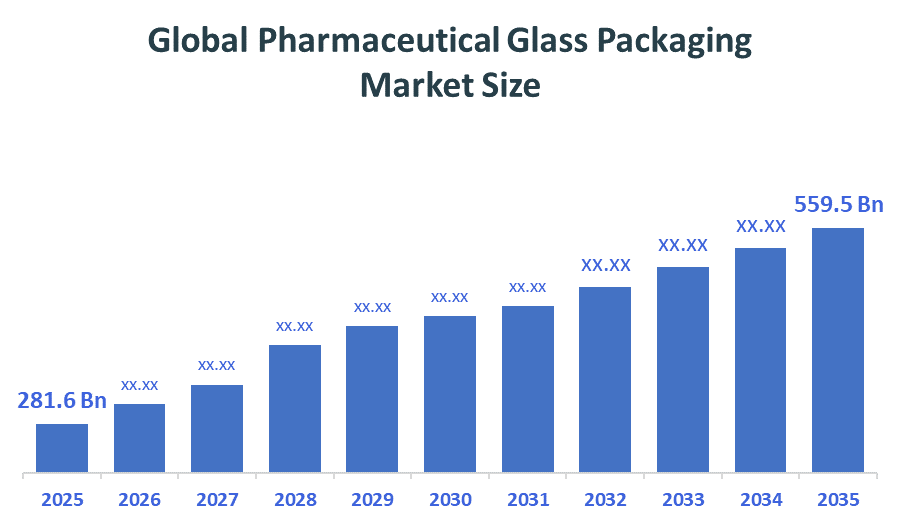
According to Decision Advisors, the Global Pharmaceutical Glass Packaging Market Size is expected to grow from USD 281.6billion in 2025 to USD 559.5billion by 2035, at a CAGR of 7.11% during the forecast period 2026-2035. The global pharmaceutical glass packaging market is projected to grow significantly over the next decade, driven by the biologics & vaccine demand, superior material properties, increasing use of prefilled syringes, stringent regulatory standards, rising chronic diseases, packaging stability, and industry growth.
Market Overview/ Introduction
The global pharmaceutical glass packaging market refers to the industry involved in manufacturing and supplying glass-based containers such as vials, ampoules, and syringes used for storing medicines. Pharmaceutical glass packaging uses non-reactive containers, which preserve drug safety, drug stability, and drug sterility. The market is witnessing strong growth because of increasing demand for packaging solutions that support biologics and vaccines, and injectable drugs. The future will bring opportunities through the creation of new glass materials and the development of lightweight packaging and sustainable recycling methods. The market expansion receives support from two factors, which include rising healthcare infrastructure investments and the implementation of stricter regulatory requirements. The pharmaceutical glass packaging market experiences continuous growth because people increasingly choose safe and environmentally friendly packaging materials instead of plastic throughout the world.
- In February 2025, the European Commission's Clean Industrial Deal, launched, is a major European policy initiative aimed at supporting energy-intensive industries through decarbonization, cost reduction, and industrial competitiveness measures. While it does not specifically target glass manufacturing alone, it applies broadly to sectors such as chemicals, materials, and industrial manufacturing, which include glass production used in pharmaceutical packaging.
- Global regulatory authorities such as the U.S. Food and Drug Administration (FDA), European Medicines Agency (EMA), and the World Health Organization (WHO) enforce strict quality, safety, and compliance standards for pharmaceutical packaging, including glass packaging systems. These regulations emphasize sterility assurance, container-closure integrity, and compatibility between the drug formulation and packaging materials to ensure product stability and patient safety.
- In February 2025, Governments worldwide, particularly in Europe through the EU Packaging and Packaging Waste Regulation (PPWR), are promoting recyclable, reusable, and sustainable packaging materials as part of broader circular economy policies. These regulations aim to reduce packaging waste, lower reliance on virgin raw materials, and improve recycling efficiency across all packaging types, including glass.
Notable Insights: -
- North America is anticipated to hold the largest share of approximately 40% in the pharmaceutical glass packaging market over the forecast period.
- Asia Pacific is expected to grow at a rapid CAGR of approximately 10% in the pharmaceutical glass packaging market during the forecast period.
- The vials segment dominated the market in 2025, approximately 40 %, and is projected to grow at a substantial CAGR during the forecast period.
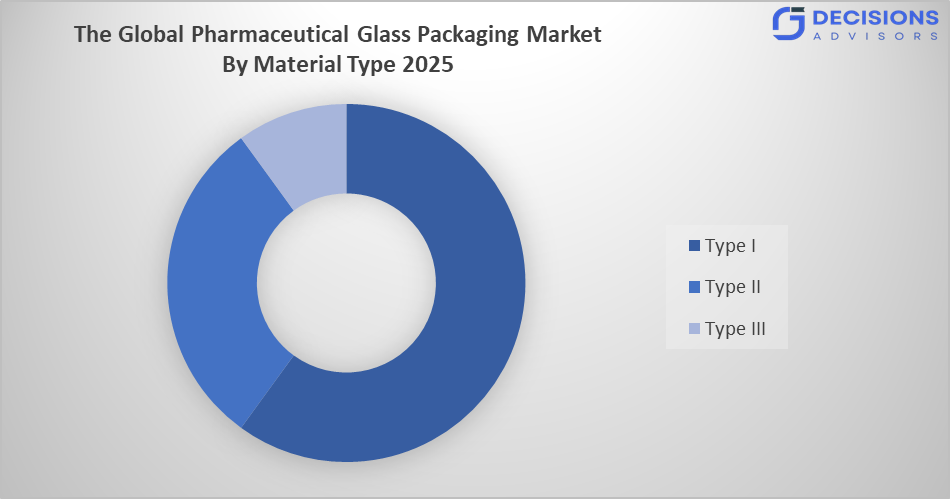
- The type I segment dominated the market in 2025, approximately 65%, and is projected to grow at a substantial CAGR during the forecast period.
- The biological drugs segment dominated the market in 2025, approximately 45%, and is projected to grow at a substantial CAGR during the forecast period.
- The compound annual growth rate of the Global Pharmaceutical Glass Packaging Market is 7.11%.
- The market is likely to achieve a valuation of USD 559.5Billion by 2035.
What is role of technology in grooming the market?
The pharmaceutical glass packaging market depends on technology because it enhances product quality and safety standards while streamlining manufacturing processes. Advanced borosilicate glass formulations enable improved chemical protection and product strength, which assists in drug integrity maintenance. The use of automated systems together with precise manufacturing techniques results in lower production costs and higher product quality. Smart packaging technologies that include track-and-trace systems and tamper-evident features enable supply chain monitoring and protect patient safety. Anti-delamination coatings, together with strengthened glass surface technologies, enable products to operate for extended periods while maintaining high product reliability. The combination of digital quality control systems with AI-powered inspection systems helps organizations maintain compliance with demanding regulatory requirements. Sustainable production technologies, which include energy-efficient furnaces and recycling systems, help pharmaceutical companies achieve environmental objectives while making glass packaging more appealing to their operations, which drives market expansion.
Market Drivers
The global pharmaceutical glass packaging market is growing because of the rise of biologics, the need for robust, high-quality packaging, and the rising demand for vaccinations. Glass is frequently chosen for maintaining drug integrity because it offers an inert, chemical-resistant, and non-contaminating barrier. increase in the use of prefilled syringe packages and injectable medications. The regulations require full adherence to all requirements which need the use of materials that meet the highest standards to protect against drug contamination while maintaining packaging stability. The rising incidence of chronic illnesses creates a demand for more drug manufacturing, which necessitates the development of additional storage spaces. Glass protects pharmaceutical products by creating barriers that stop light and ultraviolet radiation and shield against moisture and gas intrusion. The need is fueled by the pharmaceutical industry's rapid global expansion.
Restrain
The pharmaceutical glass packaging market experiences limitations because its delicate material production and delivery expenses remain high. The production costs become more expensive because of raw material price variations and the production methods that require high energy consumption. The market growth faces obstacles because plastic and polymer packaging materials compete with glass packaging, while breakage hazards and supply chain difficulties exist in the industry.
Competitive Analysis:
The report offers the appropriate analysis of the key organizations/companies involved within the global Pharmaceutical Glass Packaging Market, along with a comparative evaluation primarily based on their product offerings, business overviews, geographic presence, enterprise strategies, segment market share, and SWOT analysis. The report also provides an elaborative analysis focusing on the current news and developments of the companies, which includes product development, innovations, joint ventures, partnerships, mergers & acquisitions, strategic alliances, and others. This allows for the evaluation of the overall competition within the market.
Top Companies in Global Pharmaceutical Glass Packaging Market
- Gerresheimer AG
- Schott AG
- Corning Incorporated
- Nipro Corporation
- SGD Pharma
- Bormioli Pharma S.p.A.
- West Pharmaceutical Services, Inc.
- Stölzle-Oberglas GmbH
- Shandong Medicinal Glass Co., Ltd.
- Ardagh Group S.A.
- Beatson Clark
- Piramal Enterprises Ltd.
Government Initiatives
|
Country |
Key Government Initiatives |
|
US |
The U.S. Food and Drug Administration enforces stringent regulations on pharmaceutical packaging systems, including glass containers such as vials and syringes, to ensure they are chemically inert, non-reactive, and capable of maintaining sterility and drug stability. FDA guidelines require that packaging materials, particularly glass, do not interact with drug formulations or compromise product quality, driving demand for high-resistance borosilicate glass in the global pharmaceutical glass packaging market. |
|
Europe |
The European Medicines Agency and EU regulatory authorities enforce Good Manufacturing Practices (GMP) that extend to pharmaceutical packaging systems, including glass containers such as vials and ampoules. These regulations require that packaging materials maintain product quality, sterility, and integrity, ensuring they are suitable for their intended use and do not compromise drug safety. Such stringent compliance standards drive demand for high-quality, chemically resistant pharmaceutical glass packaging in the global market. |
|
India |
The government of India supports the expansion of domestic pharmaceutical manufacturing through initiatives such as “Make in India” and production-linked incentive (PLI) schemes. These policies encourage local drug production and reduce import dependency, leading to increased demand for compliant primary packaging materials, including pharmaceutical glass vials and ampoules, thereby driving growth in the global pharmaceutical glass packaging market. |
Study on the Supply, Demand, Distribution, and Market Environment of the Pharmaceutical Glass Packaging Market
The pharmaceutical glass packaging market operates through a well-structured supply chain that connects raw material suppliers with glass manufacturers and pharmaceutical companies. The market mostly depends on developed regions for its supply needs, while production activities now move to emerging markets in order to satisfy the growing worldwide demand. The rising demand for injectable drugs, biologics, and vaccines, which need sterile and chemically inert packaging solutions, drives the market need for packaging materials. The regulatory bodies protect distribution networks by creating rules that guarantee secure product delivery during times when the networks encounter difficulties with their delicate items and high-cost transportation. The primary forces create the market environment through their impact, which includes mandatory regulations, sustainability movements, and technological progress. The essential raw materials, including silica sand, soda ash, and limestone, show price fluctuations that affect both production expenses and the stability of supply.
Price Analysis and Consumer Behaviour Analysis
The pharmaceutical glass packaging market experiences its price changes because three main factors determine its pricing. The production costs experience fluctuations because essential materials like silica sand, soda ash, and limestone undergo price changes, which result in different production costs across various regions. The total expenses increase because glass packaging materials need special handling during transportation. People choose products based on their need for safe items that maintain drug quality and provide proof of product excellence. The pharmaceutical industry and healthcare providers select glass packaging because it maintains drug effectiveness through its non-reactive properties and strong protective qualities. The rising demand for affordable generic medications drives customers to purchase standardized glass packaging products, which they use for bulk buying.
Market Segmentation
The Pharmaceutical Glass Packaging Market share is classified into product type, material type, and application.
- The vials segment dominated the market in 2025, approximately 40%, and is projected to grow at a substantial CAGR during the forecast period.
Based on the product type, the pharmaceutical glass packaging market is divided into vials, bottles & jars, cartridges & syringes, and ampoules. Among these, the vials segment dominated the market in 2025, approximately 40%, and is projected to grow at a substantial CAGR during the forecast period. The vials segment dominated due to consumers commonly using vials as packaging for injectable medications, vaccines, and biologic products that need sterile and chemically inert protection. Vials provide better security and maintain compatibility with different drug types while being easy to store and transport. The rising need for injectable medicines, together with strict regulatory requirements, has established their market position as the leading solution.
- The type I segment dominated the market in 2025, approximately 65%, and is projected to grow at a substantial CAGR during the forecast period.
Based on the material type, the pharmaceutical glass packaging market is divided into type I, type II, and type III. Among these, the type I segment dominated the market in 2025, approximately 65%, and is projected to grow at a substantial CAGR during the forecast period. The growth of the type I segment is growing due to the material showing ideal suitability for pharmaceutical applications because of its superior chemical resistance, high durability, and excellent thermal stability. The product achieved massive market share expansion because it prevents contamination and protects drug safety, received regulatory approval, and became common in injectable treatments.
- The biological drugs segment dominated the market in 2025, approximately 45%, and is projected to grow at a substantial CAGR during the forecast period.
Based on the application, the pharmaceutical glass packaging market is divided into generic drugs, branded drugs, and biological drugs. Among these, the biological drugs segment dominated the market in 2025, approximately 45%, and is projected to grow at a substantial CAGR during the forecast period. The growth of the biological drugs segment is growing due to the increasing need for superior medical treatments, which has created demand for monoclonal antibodies, vaccines, and gene-based therapies. The combination of their effective treatment results, their ability to target specific health conditions, and their growing application in chronic disease treatment, together with substantial research development funding and successful regulatory approvals, enabled them to achieve extensive market share and fast business expansion.
Strategies to Implement for Growth of the Market in Non-Leading Regions
The pharmaceutical glass packaging market requires companies to establish new manufacturing facilities in non-leading regions because this expansion will decrease operational expenses and enhance supply chain processes. The establishment of strategic partnerships between companies and regional pharmaceutical businesses and healthcare organizations will improve market access and distribution capabilities. The company must invest in packaging solutions that provide high quality at low prices to meet local market requirements because these solutions are essential for maintaining its competitive advantage. The public needs to learn about the advantages of glass packaging because these advantages include safe usage and recyclable materials, which will result in increased adoption. Market entry should be encouraged through government and private sector partnerships, which will develop healthcare systems and regulatory frameworks. The implementation of technology transfer programs, together with employee training programs and automation systems, will enable factories to achieve higher production capacities. Companies that operate in emerging markets can expand their business activities by offering adaptive pricing solutions that meet the specific needs of their customers.
Regional Segment Analysis of the Pharmaceutical Glass Packaging Market
- North America (U.S., Canada, Mexico)
- Europe (Germany, France, U.K., Italy, Spain, Rest of Europe)
- Asia-Pacific (China, Japan, India, Rest of APAC)
- South America (Brazil and the Rest of South America)
- The Middle East and Africa (UAE, South Africa, Rest of MEA)
North America is anticipated to hold the largest share of approximately 40% the pharmaceutical glass packaging market over the forecast period.
North America is anticipated to hold the largest share of approximately 40% the pharmaceutical glass packaging market over the forecast period. The dominance of this region is primarily driven by the pharmaceutical industry, which has established itself as a permanent market sector that receives continuous demand for injectable medications because of strict regulatory requirements and the presence of major companies, together with developed healthcare systems and extensive research and development funding.
Asia Pacific is expected to grow at a rapid CAGR of approximately 10% in the pharmaceutical glass packaging market during the forecast period.
Asia Pacific is expected to grow at a rapid CAGR of approximately 10% in the pharmaceutical glass packaging market during the forecast period. This growth is driven by the pharmaceutical manufacturing sector is experiencing rapid growth because of three factors, which include rising demand for biologics and injectables, government healthcare programs, and the increasing establishment of contract manufacturing organizations in developing markets.
Europe is the 3rd largest region to grow in the pharmaceutical glass packaging market during the period.
Europe holds the position of the third-largest region in the global pharmaceutical glass packaging market, supported by the region's requirements for major essential elements, which include a robust pharmaceutical manufacturing base, strict regulations for drug packaging, and a high demand for biologics and injectable medications. The area experiences market expansion because it has advanced healthcare systems, and people are beginning to use high-quality glass packaging systems, which protect drug safety and stability.
Future Market Trends in Global Pharmaceutical Glass Packaging Market: -
1. Sustainability and Eco-Friendly Glass Packaging
Sustainability will remain a dominant trend as pharmaceutical companies increasingly adopt recyclable and lightweight glass materials to reduce environmental impact. Growing regulatory pressure and ESG commitments are pushing manufacturers toward eco-friendly production and circular economy practices. This shift enhances brand value while lowering carbon footprints and transportation costs.
2. Rise of Biologics and Injectable Drug Packaging
The growing demand for biologics, vaccines, and injectable therapies will drive higher adoption of advanced glass packaging like vials and prefilled syringes. These drugs require chemically inert, high-quality materials such as borosilicate glass to maintain stability, making glass packaging essential for future pharmaceutical innovations and safety compliance.
3. Smart and Advanced Packaging Technologies
Integration of smart packaging features such as RFID, QR codes, and tamper-evident systems will expand significantly. These technologies improve drug traceability, prevent counterfeiting, and enhance patient safety. Additionally, automation and digital quality control systems will boost production efficiency, ensuring high precision and compliance with strict pharmaceutical regulations.
Recent Development
- In January 2026, Stevanato Group, in collaboration with Gerresheimer AG, introduced an advanced ready-to-use (RTU) vial platform (EZ-fill Smart) featuring improved nest-and-tub configurations designed for automation, quality enhancement, and compatibility with modern fill-finish lines. In parallel, the company has developed AI-based visual inspection systems and camera technologies to enhance defect detection and process control, supporting innovation in the global pharmaceutical glass packaging market.
- In January 2025, Gerresheimer showcased its expanded pharmaceutical packaging and drug delivery portfolio at Pharmapack 2025, including the EZ-fill Smart platform for ready-to-fill (RTF) glass vials and cartridges, and provided a preview of its digital Gx Cap solution for medication adherence, following the completion of its acquisition of Bormioli Pharma.
- In April 2024, Gerresheimer has been advancing smart pharmaceutical glass packaging solutions by integrating digital technologies, including collaborations such as its partnership with RxCap, focused on real-time monitoring and medication adherence, enhancing drug safety and cold chain traceability in the global pharmaceutical glass packaging market.
- In October 2023, SCHOTT AG has advanced sustainable pharmaceutical glass solutions through the development of FIOLAX Pro and FIOLAX Pro OCF low-carbon borosilicate glass tubing, which is used in the production of primary packaging formats such as ampoules, vials, and syringes, supporting decarbonization in the global pharmaceutical glass packaging market.
How is Recent Developments Helping the Market?
The current growth rate of the pharmaceutical glass packaging market is experiencing major improvements because recent advancements deliver better product safety measures, product quality improvements, and sustainable packaging solutions. The development of modern glass materials, contains borosilicate glass, achieves better chemical protection and long-lasting strength to maintain drug effectiveness throughout extended shelf life periods. The implementation of smart packaging solutions, which include tamper-evident systems and track-and-trace technologies, improves both patient protection and supply chain visibility. Pharmaceutical companies show a preference for glass materials instead of plastic options because they focus on using environmentally sustainable materials that can be recycled. The combination of automation technologies with precision manufacturing methods helps businesses achieve better operational outcomes by decreasing production errors and expenses. The pharmaceutical industry experiences continuous growth because companies invest more in research and development, and strict drug packaging regulations drive industry improvements.
Market Segment
This study forecasts revenue at global, regional, and country levels from 2020 to 2035. Decision Advisors has segmented the Pharmaceutical glass packaging market based on the below-mentioned segments:
Global Pharmaceutical Glass Packaging Market, By Product Type
- Vials
- Bottles & Jars
- Cartridges & Syringes
- Ampoules
Global Pharmaceutical Glass Packaging Market, By Material Type
- Type I
- Type II
- Type III
Global Pharmaceutical Glass Packaging Market, By Application
- Generic Drugs
- Branded Drugs
- Biological Drugs
Global Pharmaceutical Glass Packaging Market, By Regional Analysis
- North America
- US
- Canada
- Mexico
- Europe
- Germany
- UK
- France
- Italy
- Spain
- Russia
- Rest of Europe
- Asia Pacific
- China
- Japan
- India
- South Korea
- Australia
- Rest of Asia Pacific
- South America
- Brazil
- Argentina
- Rest of South America
- Middle East & Africa
- UAE
- Saudi Arabia
- Qatar
- South Africa
- Rest of the Middle East & Africa
Frequently Asked Questions (FAQ)
Q What are the key challenges faced by manufacturers in the pharmaceutical glass packaging market?
A. Manufacturers face challenges such as high energy consumption during glass production, rising raw material costs, and breakage risks during transportation. Additionally, maintaining consistent quality standards while meeting strict regulatory requirements adds operational complexity and increases production costs.
Q. How does sustainability influence the pharmaceutical glass packaging market?
A. Injectable drugs require highly sterile and chemically inert packaging to maintain drug safety and stability. Glass packaging is preferred because it provides strong protection against contamination, making it essential for vaccines, biologics, and advanced therapies.
Q. What role do contract manufacturing organizations (CMOs) play in this market?
A. CMOs support the pharmaceutical glass packaging market by increasing production capacity, enabling cost-efficient manufacturing, and helping pharmaceutical companies scale faster. Their expansion, especially in emerging regions, is boosting demand for glass packaging solutions.
Q. What are the key challenges in ensuring equitable access to opioid agonist therapies worldwide?
A. Ensuring equitable access remains a major challenge due to disparities in healthcare infrastructure, stigma associated with addiction, and uneven policy implementation. Many regions lack trained professionals and proper treatment facilities. Additionally, social stigma and legal barriers discourage patients from seeking treatment. Addressing these issues requires coordinated efforts in policy reform, education, and integration of addiction care into mainstream healthcare systems.
Check Licence
Choose the plan that fits you best: Single User, Multi-User, or Enterprise solutions tailored for your needs.
We Have You Covered
- 24/7 Analyst Support
- Clients Across the Globe
- Tailored Insights
- Technology Tracking
- Competitive Intelligence
- Custom Research
- Syndicated Market Studies
- Market Overview
- Market Segmentation
- Growth Drivers
- Market Opportunities
- Regulatory Insights
- Innovation & Sustainability
Report Details
| Scope | Global |
| Pages | 240 |
| Delivery | PDF & Excel via Email |
| Language | English |
| Release | Apr 2026 |
| Access | Download from this page |