
Global Pharmaceutical Market
 |
Author:
David J
|
Pages:
210
|
Author:
David J
|
Pages:
210
Global Pharmaceutical Market Size, Share, By Molecule Type (Conventional Drugs/Small Molecules, Biologics & Biosimilars/Large Molecules, and Others), By Product (Branded and Generics), By Type (Prescription and OTC), By Route of Administration (Oral, Parenteral, Topical, Inhalation, and Others), By Formulation (Tablets, Capsules, Injectable, Sprays, and Others), By Age Group (Adults, Children & Adolescents, and Geriatric), By End User (Hospitals, Clinics, and Others), and By Region (North America, Europe, Asia-Pacific, Latin America, and Middle East & Africa), Analysis and Forecast 2026?2035
CAGR
6.5%
REVENUE 2025
USD Billion 1755.7
FORECAST 2035
USD Billion 3421.0
REPORT COVERAGE
Global
The Global Pharmaceutical Market encompasses the discovery, development, manufacturing, distribution, and commercialization of medicines used to prevent, diagnose, manage, and treat diseases. Pharmaceutical products include conventional small-molecule drugs, biologics, biosimilars, vaccines, speciality medicines, generic medicines, branded medicines, prescription drugs, and over-the-counter products. The market is being supported by the increasing prevalence of chronic diseases, aging populations, expanding healthcare expenditure, rising demand for innovative therapies, pharmaceutical research and development, increasing access to healthcare, and growing demand for affordable medicines. Advances in biologics, gene therapies, personalized medicine, artificial intelligence, digital health, and drug-discovery technologies are also reshaping the pharmaceutical industry.
Market Snapshot
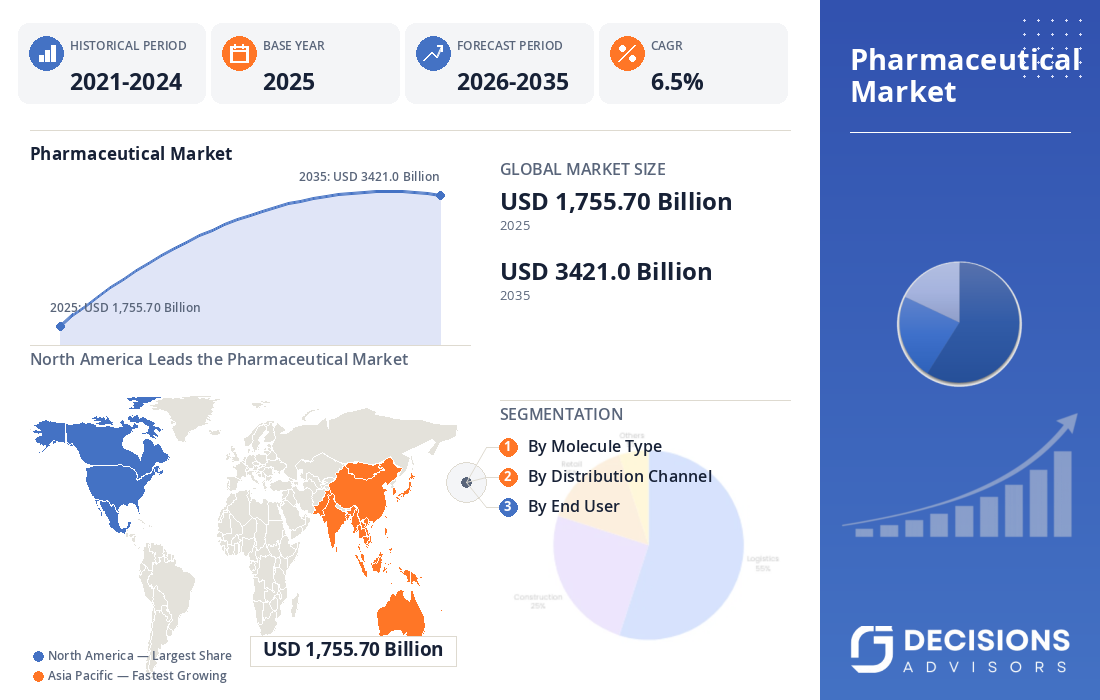
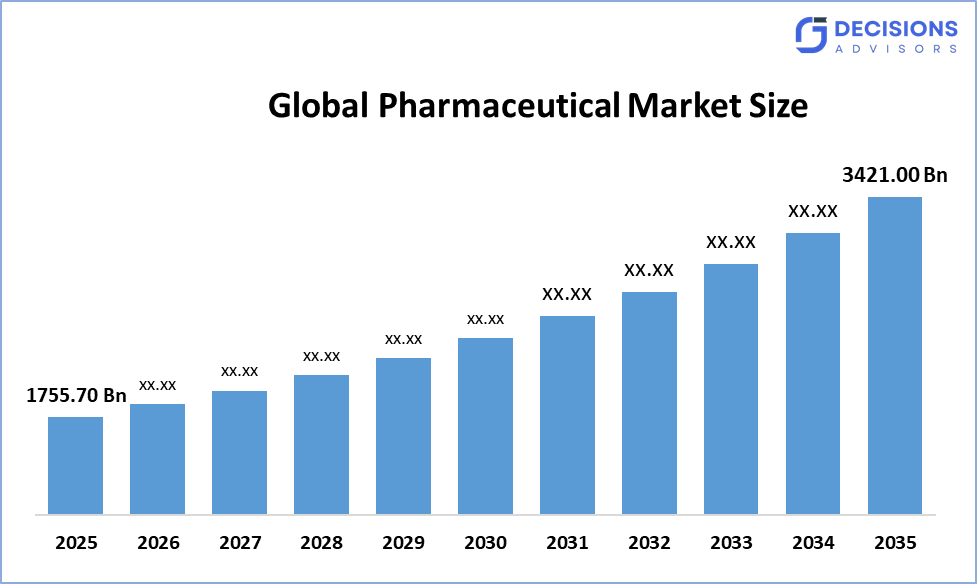
- Global Pharmaceutical Market Size (2025): USD 1,755.70 Billion
- Projected Market Size (2035): USD 3,421.00 Billion
- Global Market CAGR (2025–2035): Approximately 6.5%
- Largest Regional Market: North America
- 2nd Largest Region: Asia-Pacific
- Fastest Growing Region: Asia-Pacific
- Base Year: 2025
- Historical Period: 2021–2024
- Forecast Period: 2026–2035
Market Overview/ Introduction
The Global Pharmaceutical Market encompasses a broad range of products and activities associated with the research, development, manufacturing, distribution, and commercialization of pharmaceutical medicines. The industry includes small-molecule drugs, biologics, biosimilars, vaccines, specialty medicines, generic drugs, branded medicines, prescription medicines, and OTC products. Pharmaceutical products play an essential role in modern healthcare by supporting the prevention and treatment of acute and chronic diseases. Increasing prevalence of cardiovascular diseases, cancer, diabetes, respiratory disorders, neurological diseases, autoimmune conditions, infectious diseases, and other chronic illnesses is generating sustained demand for pharmaceutical products.
The U.S. governments and regulatory authorities across major economies are increasingly emphasizing healthcare accessibility, medicine affordability, pharmaceutical quality, patient safety, regulatory modernization, domestic drug manufacturing, and supply-chain resilience.
- Several Asia-Pacific countries are increasing investments in pharmaceutical manufacturing, healthcare infrastructure, biotechnology, generic drug production, and domestic pharmaceutical R&D.
Notable Insights: -
- North America maintains a leading position in the Global Pharmaceutical Market due to strong pharmaceutical innovation, advanced healthcare infrastructure, high healthcare expenditure, established pharmaceutical companies, and a mature regulatory ecosystem.
- Asia-Pacific is expected to experience strong growth because of expanding healthcare access, rising healthcare expenditure, increasing pharmaceutical manufacturing, large patient populations, growing middle-class populations, and increasing demand for affordable medicines.
- Prescription medicines represent a major segment because of the increasing prevalence of chronic and complex diseases requiring physician-supervised treatment.
- Biologics and biosimilars are gaining importance as pharmaceutical companies increasingly develop advanced therapies for cancer, autoimmune diseases, rare diseases, diabetes, and other complex conditions.
- Generic medicines remain important because of their affordability and increasing demand from healthcare systems seeking to control pharmaceutical expenditure.
- Artificial intelligence and digital technologies are transforming drug discovery, clinical development, manufacturing, supply-chain management, and pharmaceutical commercialization.
Market Drivers
The Global Pharmaceutical Market is primarily driven by the increasing prevalence of chronic diseases worldwide. Growing incidence of cancer, cardiovascular diseases, diabetes, respiratory diseases, neurological disorders, autoimmune diseases, and other long-term conditions is increasing demand for pharmaceutical treatments. Another major driver is the aging global population. Older populations have greater healthcare requirements and are more likely to experience chronic and age-related diseases, supporting long-term pharmaceutical demand. Increasing healthcare expenditure by governments and private healthcare organizations is also supporting pharmaceutical market expansion. Emerging economies are investing in healthcare infrastructure and expanding access to medicines.
Restrain
The Global Pharmaceutical Market faces challenges including high drug-development costs, lengthy clinical trials, stringent regulatory requirements, pricing pressures, patent expirations, supply-chain disruptions, and increasing competition from generic medicines. Pharmaceutical companies must make significant investments in research and development, while many drug candidates fail during clinical development. Regulatory requirements for demonstrating safety, efficacy, and quality can increase development timelines and costs.
Competitive Analysis:
The report offers the appropriate analysis of the key organizations/companies involved within the Global Pharmaceutical Market, along with a comparative evaluation primarily based on their product offerings, business overviews, geographic presence, enterprise strategies, segment market share, and SWOT analysis. The report also provides an elaborative analysis focusing on the current news and developments of the companies, which includes product development, innovations, joint ventures, partnerships, mergers & acquisitions, strategic alliances, and others. This allows for the evaluation of the overall competition within the market.
Top Companies in the Global Pharmaceutical Market
- Pfizer Inc.
- F. Hoffmann-La Roche Ltd.
- Merck & Co., Inc.
- Johnson & Johnson
- Novartis AG
- AstraZeneca PLC
- Eli Lilly and Company
- AbbVie Inc.
- Sanofi
- Bristol Myers Squibb Company
- GSK plc
- Takeda Pharmaceutical Company Limited
- Bayer AG
- Amgen Inc.
- Boehringer Ingelheim
- Novo Nordisk A/S
- Teva Pharmaceutical Industries Ltd.
- Sun Pharmaceutical Industries Ltd.
- Dr. Reddy's Laboratories Ltd.
- Cipla Limited
Government Initiatives
|
Country |
Key Government Initiatives |
|
Us |
Government and regulatory initiatives focused on drug safety, healthcare access, pharmaceutical innovation, domestic manufacturing, generic medicines, biotechnology, and supply-chain resilience are supporting the pharmaceutical ecosystem. |
|
Germany |
Government and European initiatives focused on healthcare accessibility, pharmaceutical regulation, drug safety, innovation, biotechnology, and domestic healthcare resilience are supporting the pharmaceutical sector. |
|
China |
Government programs supporting pharmaceutical innovation, biotechnology, generic medicines, healthcare accessibility, domestic drug manufacturing, and pharmaceutical R&D are contributing to industry development. |
Market Segmentation
The Global Pharmaceutical Market share is classified into molecule type, product, type, route of administration, formulation, age group, end user, and region.
The Prescription Segment Accounts for a Significant Share
Based on type, the market is divided into Prescription and OTC products. Among these, prescription medicines represent a major segment because of the increasing prevalence of chronic diseases, complex conditions, specialty diseases, and treatments requiring physician supervision. A recent market estimate projects prescription pharmaceuticals to retain a dominant position, supported by demand for innovative therapies, biologics, and specialty medicines.
- The Biologics & Biosimilars Continue to Gain Importance
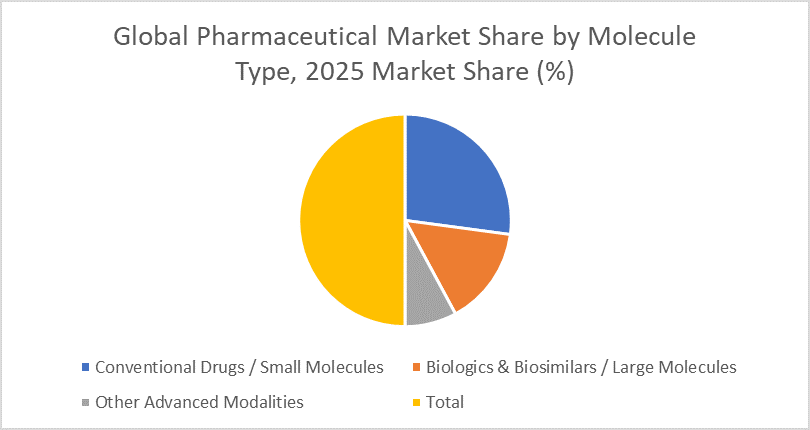
Based on molecule type, the market is divided into Conventional Drugs/Small Molecules, Biologics & Biosimilars/Large Molecules, and Others. Biologics and biosimilars are gaining importance because of increasing adoption in oncology, immunology, diabetes, rare diseases, and other complex therapeutic areas. Advances in biotechnology and personalized medicine are encouraging pharmaceutical companies to expand their biologics pipelines.
- The Branded and Generic Medicines Represent Major Product Categories
Based on product, the market is divided into Branded and Generics. Branded pharmaceuticals benefit from continued innovation and investment in novel therapies, while generic medicines are supported by affordability requirements and efforts to reduce healthcare expenditure.
Regional Segment Analysis of the Global Pharmaceutical Market
- North America (U.S., Canada, Mexico)
- Europe (Germany, U.K., France, Italy, Spain, Netherlands, Rest of Europe)
- Asia-Pacific (China, Japan, India, Australia, South Korea, Rest of Asia-Pacific)
- South America (Brazil, Argentina, Rest of South America)
- Middle East & Africa (UAE, Saudi Arabia, South Africa, Rest of MEA)
North America Maintains a Leading Share of the Global Pharmaceutical Market in 2025
North America maintains a leading position in the Global Pharmaceutical Market because of strong pharmaceutical R&D, advanced healthcare infrastructure, high healthcare expenditure, established pharmaceutical manufacturers, and strong regulatory capabilities. The United States represents a particularly important market because of its large pharmaceutical industry, extensive R&D investment, strong demand for innovative medicines, advanced clinical research ecosystem, and high adoption of specialty pharmaceuticals.
Europe Holds a Significant Share of the Global Pharmaceutical Market in 2025
Europe holds a significant share of the Global Pharmaceutical Market due to its mature healthcare infrastructure, established pharmaceutical companies, strong research capabilities, and comprehensive regulatory environment. Germany, the U.K., France, Italy, Switzerland, and other European countries have well-developed pharmaceutical and biotechnology ecosystems. Growing demand for innovative medicines, aging populations, and increasing healthcare expenditure are expected to support regional pharmaceutical demand.
Asia-Pacific Witnesses Substantial Growth in 2025
Asia-Pacific is expected to experience substantial growth due to rising healthcare expenditure, increasing pharmaceutical manufacturing, expanding healthcare access, large patient populations, increasing prevalence of chronic diseases, and growing demand for affordable medicines. China and India are particularly important pharmaceutical manufacturing and consumption markets. Japan, South Korea, Australia, and Southeast Asian economies are also contributing to regional growth.
Future Market Trends in Global Pharmaceutical Market: -
-
- Expansion of Biologics and Biosimilars
Increasing development and adoption of biologics, biosimilars, cell therapies, and gene therapies are expected to transform pharmaceutical treatment options.
-
- Growth of Personalized Medicine
Pharmaceutical companies are increasingly developing therapies based on individual genetic, molecular, and clinical characteristics, supporting the expansion of precision medicine.
-
- AI-Powered Drug Discovery
Artificial intelligence and machine learning are increasingly being used for target identification, molecule screening, drug design, clinical-trial optimization, and patient selection.
-
- Increasing Demand for Generic Medicines
Growing healthcare expenditure and the need for affordable treatment are expected to support demand for generic medicines, particularly in emerging markets.
Market Segment
This study forecasts revenue at global, regional, and country levels from 2026 to 2035. The Global Pharmaceutical Market has been segmented based on the following segments:
Global Pharmaceutical Market, By Molecule Type
- Conventional Drugs / Small Molecules
- Biologics & Biosimilars / Large Molecules
- Others
Global Pharmaceutical Market, By Distribution Channel
- Branded
- Generics
- Others
Global Pharmaceutical Market, By End User
- Prescription
- OTC
Global Pharmaceutical Market, By Regional Analysis
- North America
- US
- Canada
- Mexico
- Europe
- Germany
- UK
- France
- Italy
- Spain
- Russia
- Rest of Europe
- Asia Pacific
- China
- Japan
- India
- South Korea
- Australia
- Rest of Asia Pacific
- South America
- Brazil
- Argentina
- Rest of South America
- Middle East & Africa
- UAE
- Saudi Arabia
- Qatar
- South Africa
- Rest of the Middle East & Africa
Frequently Asked Questions (FAQ)
Q. What is driving the growth of the Global Pharmaceutical Market?
A. The market is primarily driven by increasing prevalence of chronic diseases, aging populations, rising healthcare expenditure, increasing demand for innovative therapies, expansion of biologics and biosimilars, pharmaceutical R&D, and growing access to healthcare.
Q. Why is the pharmaceutical market expanding in emerging economies?
A. Emerging markets are experiencing rising healthcare expenditure, expanding healthcare infrastructure, growing middle-class populations, increasing disease burden, greater access to medicines, and increasing domestic pharmaceutical manufacturing.
Q. What role does AI play in the Pharmaceutical Market?
A. Artificial intelligence is increasingly being used for drug discovery, molecular screening, clinical-trial design, patient identification, manufacturing optimization, pharmacovigilance, and supply-chain management.
Q. Which region is expected to lead the Global Pharmaceutical Market?
A. North America is expected to maintain the largest regional position, supported by strong R&D, advanced healthcare infrastructure, high pharmaceutical expenditure, and established pharmaceutical companies. Asia-Pacific is expected to remain among the fastest-growing regions.
Check Licence
Choose the plan that fits you best: Single User, Multi-User, or Enterprise solutions tailored for your needs.
We Have You Covered
- 24/7 Analyst Support
- Clients Across the Globe
- Tailored Insights
- Technology Tracking
- Competitive Intelligence
- Custom Research
- Syndicated Market Studies
- Market Overview
- Market Segmentation
- Growth Drivers
- Market Opportunities
- Regulatory Insights
- Innovation & Sustainability
Report Details
| Scope | Global |
| Pages | 210 |
| Delivery | PDF & Excel via Email |
| Language | English |
| Release | Aug 2026 |
| Access | Download from this page |