
Global Plaque Psoriasis Market
 |
Pages:
190
|
Pages:
190
Global Plaque Psoriasis Market Size, Share, and COVID-19 Impact Analysis, By Treatment (Topical Therapy, Phototherapy, Systemic Agents, Biologic Therapies, and Others), By Route of Administration (Oral and Injectable) and By Region (North America, Europe, Asia-Pacific, Latin America, Middle East, and Africa), Analysis and Forecast 2025 - 2035.
REPORT COVERAGE
Global
Global Plaque Psoriasis Market Insights Forecasts to 2035
- The Global Plaque Psoriasis Market Size Was valued at USD 12.8 Billion in 2024
- The Global Plaque Psoriasis Market Size is Expected to Grow at a CAGR of around 8.99% from 2025 to 2035
- The Worldwide Plaque Psoriasis Market Size is Expected to Reach USD 33.0 Billion by 2035
- Asia-Pacific is expected to grow the fastest during the forecast period.
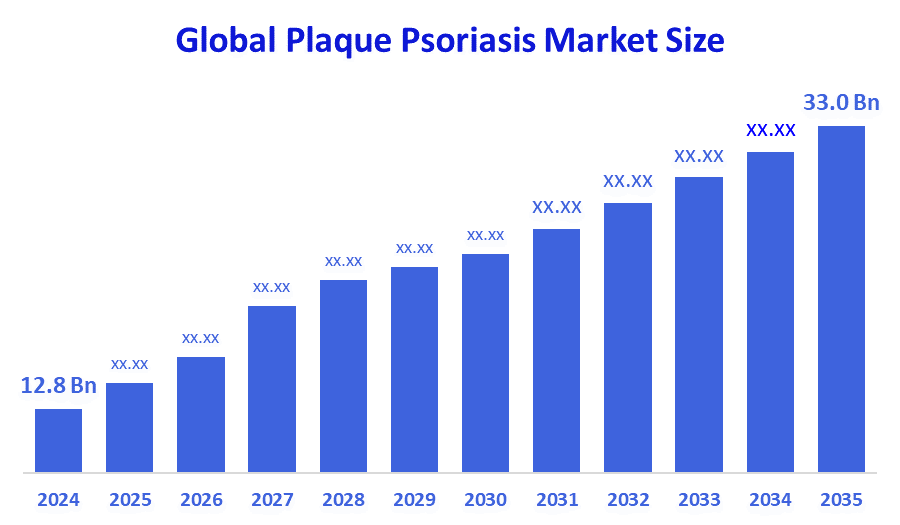
According to a research report published by Decisions Advisors and Consulting, the global plaque psoriasis market size was worth around USD 12.8 Billion in 2024 and is predicted to grow to around USD 33.0 Billion by 2035 with a compound annual growth rate (CAGR) of 8.99% from 2025 to 2035. The global plaque psoriasis market presents business opportunities because the market experiences growth through various factors such as increasing biologics usage and biosimilars development and personalized medicine and new immunotherapy treatments and digital dermatology and telemedicine expansion and R&D research progress which enhances long-term disease management results.
Market Overview
The global plaque psoriasis market refers to the worldwide industry dedicated to developing and producing and marketing therapies which treat plaque psoriasis. This medical field encompasses biologics and systemic drugs and topical treatments and phototherapy and newly developed targeted therapies which hospitals and clinics and retail pharmacies use. Additionally, the plaque psoriasis market operates under current market changes which treatment advancements and disease understanding progress. The increase in public knowledge about the condition results in more people searching for successful treatments which drives up the need for new treatment methods. The market presents multiple treatment options which include biologics and topical treatments and systemic therapies that enable patients to select their required treatment level. Digital health technologies improve patient engagement and treatment adherence according to research which shows better treatment results. The Plaque Psoriasis Market shows increasing competition because pharmaceutical companies currently dedicate their resources to research and development activities. The innovation commitment drives the development of new therapies which will deliver better treatment results and improved safety standards. Future market growth will depend on healthcare providers and patients working together with other stakeholders to develop treatment methods which will make healthcare access easier. The market develops because it aims to meet the unsatisfied needs of people with plaque psoriasis which will improve their living standards.
Report Coverage
This research report categorizes the plaque psoriasis market based on various segments and regions, forecasts revenue growth, and analyzes trends in each submarket. The report analyses the key growth drivers, opportunities, and challenges influencing the plaque psoriasis market. Recent market developments and competitive strategies such as expansion, type launch, development, partnership, merger, and acquisition, have been included to draw the competitive landscape in the market. The report strategically identifies and profiles the key market players and analyses their core competencies in each sub-segment of the plaque psoriasis market.
Driving Factors
The current treatment options for plaque psoriasis have reached a stage where they need to undergo further development which will create new changes for this market section. The development of new biologic drugs and specific treatment methods has created better and safer treatment options for patients which exceed traditional medication standards. The immune system-specific pathway targeting biologics demonstrate their clinical trial success through improved patient outcomes. The biologics market is expected to experience substantial growth because forecasts suggest that it will represent more than 50% of the total psoriasis treatment market by 2025. The transition to advanced treatment methods will improve patient experiences while creating market competition between pharmaceutical companies who will concentrate their efforts on driving research progress in the Plaque Psoriasis Market.
Restraining Factors
The global plaque psoriasis market experiences constraints because of high biologics costs and limited reimbursement coverage and adverse drug effects and treatment discontinuation and stringent regulatory approvals and biosimilar competition and the lack of access to advanced therapies in developing regions.
Market Segmentation
The plaque psoriasis market share is classified into treatment and route of administration.
- The biologic therapies segment dominated the market in 2024, approximately 46% and is projected to grow at a substantial CAGR during the forecast period.
Based on the treatment, the plaque psoriasis market is divided into topical therapy, phototherapy, systemic agents, biologic therapies, and others. Among these, the biologic therapies segment dominated the market in 2024, approximately 46% and is projected to grow at a substantial CAGR during the forecast period. The medical field benefits from treatments which demonstrate better efficacy than standard methods while providing targeted immune system control and sustaining disease management over time. The adoption of advanced monoclonal antibodies accelerated because physicians preferred these treatments while their usage expanded and patient health results improved and the treatments became more accessible. The combination of favorable reimbursement policies in developed markets and the strong research development activities of pharmaceutical companies enabled biologic treatments to maintain their market dominance.
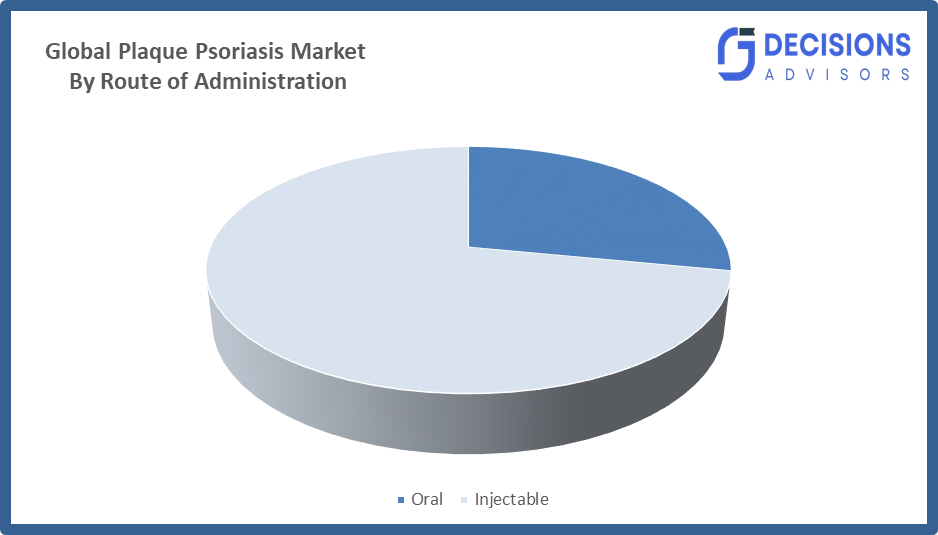
- The injectable segment accounted for the largest share in 2024, approximately 52% and is anticipated to grow at a significant CAGR during the forecast period.
Based on the route of administration, the plaque psoriasis market is divided into oral and injectable. Among these, the injectable segment accounted for the largest share in 2024, approximately 52% and is anticipated to grow at a significant CAGR during the forecast period. The widespread administration of biologic therapies through subcutaneous and intravenous methods has resulted in their extensive adoption. The treatments deliver precise medicinal effects because of their extended treatment periods which help patients to follow their medication schedule. The combination of strong clinical outcomes for moderate-to-severe cases and physician preference for advanced biologics together with expanding injectable immunotherapy approval led to sustained growth which established segment dominance.
Regional Segment Analysis of the Plaque Psoriasis Market
- North America (U.S., Canada, Mexico)
- Europe (Germany, France, U.K., Italy, Spain, Rest of Europe)
- Asia-Pacific (China, Japan, India, Rest of APAC)
- South America (Brazil and the Rest of South America)
- The Middle East and Africa (UAE, South Africa, Rest of MEA)
North America is anticipated to hold the largest share of the plaque psoriasis market over the predicted timeframe.
North America is anticipated to hold the largest share of the plaque psoriasis market over the predicted timeframe. The combination of advanced healthcare infrastructure and high diagnosis rates and strong adoption of premium biologic therapies creates the existing situation. The demand for services receives support from favorable reimbursement frameworks and strong insurance coverage and early access to innovative treatments. The regional market dominance receives additional support from the existing presence of major pharmaceutical companies and ongoing clinical research activities and established networks of dermatologists.
Asia-Pacific is expected to grow at a rapid CAGR in the plaque psoriasis market during the forecast period. The increasing number of patients and better public understanding of diseases together with improved access to dermatology services. The healthcare system expansion together with rising consumer spending and government health programs create an environment that supports treatment implementation. The regional market growth is driven by pharmaceutical companies increasing their investments and advanced therapies becoming more accessible to customers.
Competitive Analysis:
The report offers the appropriate analysis of the key organizations/companies involved within the plaque psoriasis market, along with a comparative evaluation primarily based on their type of offering, business overviews, geographic presence, enterprise strategies, segment market share, and SWOT analysis. The report also provides an elaborative analysis focusing on the current news and developments of the companies, which includes type development, innovations, joint ventures, partnerships, mergers & acquisitions, strategic alliances, and others. This allows for the evaluation of the overall competition within the market.
List of Key Companies
- Pfizer Inc.
- GlaxoSmithKline plc
- Novartis AG
- Mylan N.V.
- Teva Pharmaceutical Industries Ltd.
- Sanofi
- Boehringer Ingelheim International GmbH.
- AstraZeneca
- Johnson & Johnson Private Limited
- Bayer AG
- Merck & Co., Inc.
- Others
Key Target Audience
- Market Players
- Investors
- End-users
- Government Authorities
- Consulting and Research Firm
- Venture capitalists
- Value-Added Resellers (VARs)
Market Segment
This study forecasts revenue at global, regional, and country levels from 2020 to 2035. Decisions Advisors has segmented the plaque psoriasis market based on the below-mentioned segments:
Global Plaque Psoriasis Market, By Treatment
- Topical Therapy
- Phototherapy
- Systemic Agents
- Biologic Therapies
- Others
Global Plaque Psoriasis Market, By Route of Administration
- Oral
- Injectable
Global Plaque Psoriasis Market, By Regional Analysis
- North America
- US
- Canada
- Mexico
- Europe
- Germany
- UK
- France
- Italy
- Spain
- Russia
- Rest of Europe
- Asia Pacific
- China
- Japan
- India
- South Korea
- Australia
- Rest of Asia Pacific
- South America
- Brazil
- Argentina
- Rest of South America
- Middle East & Africa
- UAE
- Saudi Arabia
- Qatar
- South Africa
- Rest of the Middle East & Africa
Frequently Asked Questions (FAQ)
1. What is the projected growth of the global plaque psoriasis market?
A: The global plaque psoriasis market is projected to grow from USD 12.8 billion in 2024 to USD 33.0 billion by 2035, registering a CAGR of 8.99% during 2025–2035.
2. Which treatment segment leads the plaque psoriasis market?
A: Biologic therapies dominate the treatment segment with about 46% market share in 2024, driven by superior efficacy, targeted immune action, strong physician preference, favorable reimbursement policies, and robust pharmaceutical research pipelines.
3. Which route of administration holds the largest market share?
A: Injectable treatments lead with approximately 52% share in 2024 due to widespread biologic use, better clinical outcomes, longer dosing intervals, improved adherence, and increasing approvals for advanced injectable immunotherapies.
4. Why does North America dominate the plaque psoriasis market?
A: North America dominates due to advanced healthcare systems, high diagnosis rates, premium biologics adoption, strong insurance coverage, favorable reimbursement frameworks, major pharmaceutical presence, extensive clinical research, and well-established dermatologist networks.
5. Why is Asia-Pacific the fastest-growing regional market?
A: Asia-Pacific grows fastest due to large patient populations, rising disease awareness, expanding healthcare infrastructure, increasing disposable incomes, supportive government programs, growing pharmaceutical investments, and improving availability of advanced dermatology treatments
Check Licence
Choose the plan that fits you best: Single User, Multi-User, or Enterprise solutions tailored for your needs.
We Have You Covered
- 24/7 Analyst Support
- Clients Across the Globe
- Tailored Insights
- Technology Tracking
- Competitive Intelligence
- Custom Research
- Syndicated Market Studies
- Market Overview
- Market Segmentation
- Growth Drivers
- Market Opportunities
- Regulatory Insights
- Innovation & Sustainability
Report Details
| Scope | Global |
| Pages | 190 |
| Delivery | PDF & Excel via Email |
| Language | English |
| Release | Mar 2026 |
| Access | Download from this page |