
Global Premenstrual Syndrome Treatment Market
 |
Author:
David J
|
Pages:
210
|
Author:
David J
|
Pages:
210
Global Premenstrual syndrome treatment market Size, Share, By Drug Type (Analgesics, Antidepressants, Hormonal Therapies, Diuretics), By Distribution Channel (Hospital Pharmacies, Retail Pharmacies, Online Pharmacies, Direct-to-Consumer Channels), By End Use (Hospitals, Clinics, Homecare Settings, Wellness Centers), and By Region (North America, Europe, Asia-Pacific, Latin America, Middle East & Africa), Analysis and Forecast 2026?2035
CAGR
3.37%
REVENUE 2025
USD Billion 7.25
FORECAST 2035
USD Billion 10.1
REPORT COVERAGE
Global
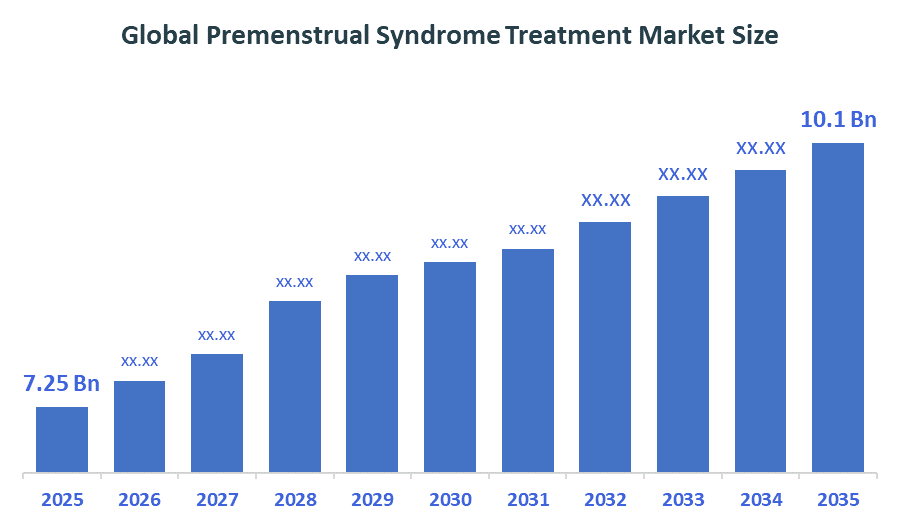
The Global Premenstrual Syndrome Treatment Market Size is forecast to grow from USD 7.25 Billion in 2025 to approximately USD 10.1 Billion by 2035. According to Decision Advisors, a detailed research report on the premenstrual syndrome treatment market indicates that NSAID dominates the market, accounting for approximately 25% of the total share globally. Bayer AG the market with an estimated 8-10% global market share. The company reported a 2025 revenue of approximately USD 51-52 Billion, making it one of the most influential forces shaping industry trends and overall market growth.
Market Snapshot
- Global Premenstrual Syndrome Treatment Market Size (2025): USD 7.25 Billion
- Projected Global Premenstrual Syndrome Treatment Market Size (2035): USD 10.1 Billion
- Global Premenstrual Syndrome Treatment Market Compound Annual Growth Rate (CAGR): 3.37%
- Largest Regional Market: North America
- Fastest Growing Region: Asia-Pacific
- 2nd Largest Region: Europe
- Base Year: 2025
- Historical Period: 2021–2024
- Forecast Period: 2026–2035
Market Overview/ Introduction
The Global Premenstrual Syndrome (PMS) Treatment Market refers to the worldwide industry focused on the development, production, and distribution of therapies used to manage symptoms of Premenstrual Syndrome, a condition affecting women during the luteal phase of the menstrual cycle. PMS treatment includes pharmacological options such as Ibuprofen, Fluoxetine, and hormonal therapies, along with lifestyle and alternative approaches aimed at reducing physical, emotional, and behavioral symptoms. The market is expanding due to rising awareness, increasing diagnosis rates, and growing demand for over-the-counter solutions. Future opportunities lie in personalized medicine, digital health integration, and natural remedies. Market growth is further driven by improving healthcare access, rising female health focus, and continuous innovation in drug formulations and delivery systems.
- The World Health Organization is actively promoting menstrual health integration into global healthcare systems. This initiative focuses on improving access to reproductive health services, education, and symptom management support. It strengthens healthcare responses to menstrual disorders, including PMS, through awareness, research, and cross-sector collaboration.
- The United Nations Human Rights Council adopted a global resolution recognizing menstrual health as a human right. It emphasizes universal access to hygiene products, healthcare services, and infrastructure. This policy indirectly boosts PMS treatment demand by encouraging better diagnosis, care access, and government investment in women’s health systems.
Notable Insights: -
- North America is anticipated to hold the largest share of approximately 39% in the Premenstrual syndrome treatment market over the forecast period.
- Asia Pacific is expected to grow at a rapid CAGR of approximately 10% in the Premenstrual syndrome treatment market during the forecast period.
- The analgesics segment dominated the market in 2025, approximately 23%, and is projected to grow at a substantial CAGR during the forecast period.
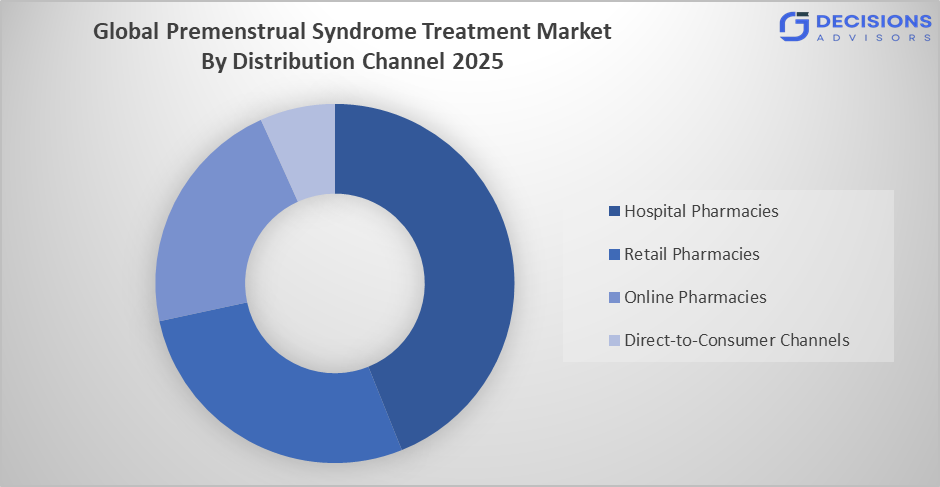
- The retail pharmacies segment dominated the market in 2025, approximately 40%, and is projected to grow at a substantial CAGR during the forecast period.
- The homecare settings segment dominated the market in 2025, approximately 45%, and is projected to grow at a substantial CAGR during the forecast period.
- The compound annual growth rate of the Global Premenstrual syndrome treatment market is 3.37%.
- The market is likely to achieve a valuation of USD 10.1 Billion by 2035.
What is role of technology in grooming the market?
Technology plays a transformative role in shaping the global PMS treatment market by improving diagnosis, personalization, and access to care. Digital health platforms and apps like Flo and Clue enable symptom tracking, helping users and clinicians better understand patterns of Premenstrual Syndrome and tailor treatments accordingly. Telemedicine platforms such as Teladoc Health expand access to gynecological consultations, especially in underserved regions. Advances in Pharmacogenomics support personalized medication approaches, improving treatment outcomes and reducing side effects. Additionally, wearable devices and AI-driven analytics provide real-time health insights, while e-commerce and online pharmacies enhance accessibility to over-the-counter and prescription therapies. Overall, technology accelerates early diagnosis, promotes patient engagement, and drives innovation in drug development and delivery systems, significantly contributing to market growth and efficiency.
Market Drivers
The Global Premenstrual Syndrome Treatment Market is driven by rising awareness of women’s health and increasing diagnosis rates worldwide. Growing demand for effective symptom management solutions, including widely used medications like Ibuprofen and Fluoxetine, is boosting market expansion. The shift toward over-the-counter products, along with improved healthcare access and digital health adoption, supports broader treatment reach. Additionally, increasing stress levels, sedentary lifestyles, and hormonal imbalances contribute to higher PMS prevalence. Pharmaceutical innovations, supportive government initiatives, and expanding e-commerce and telehealth platforms are further accelerating market growth across both developed and emerging regions.
Restrain
The global Premenstrual Syndrome treatment market faces restraints due to underdiagnosis, social stigma, and limited awareness in developing regions. Side effects of therapies such as Fluoxetine and hormonal treatments discourage adoption. Additionally, lack of standardized treatment protocols and restricted access to advanced healthcare services hinder consistent market growth.
Competitive Analysis:
The report offers the appropriate analysis of the key organizations/companies involved within the global premenstrual syndrome treatment market, along with a comparative evaluation primarily based on their product offerings, business overviews, geographic presence, enterprise strategies, segment market share, and SWOT analysis. The report also provides an elaborative analysis focusing on the current news and developments of the companies, which includes product development, innovations, joint ventures, partnerships, mergers & acquisitions, strategic alliances, and others. This allows for the evaluation of the overall competition within the market.
Top Companies in Global Premenstrual Syndrome Treatment Market
- Bayer AG
- Pfizer Inc.
- Eli Lilly and Company
- GlaxoSmithKline plc
- AbbVie Inc.
- H. Lundbeck A/S
- AstraZeneca plc
- Novartis AG
- Dr. Reddy’s Laboratories Ltd
- Shionogi & Co., Ltd.
Government Initiatives
|
Country |
Key Government Initiatives |
|
US |
The United States supports menstrual and women’s health through federal and state-level policies focused on expanding access to reproductive healthcare services, insurance coverage, and awareness programs. Government-backed healthcare systems and policy support improve diagnosis and treatment access for PMS, encouraging adoption of both prescription and OTC therapies. |
|
India |
India implements the Menstrual Hygiene Scheme (MHS) to improve awareness and access to low-cost sanitary products among adolescent girls. It also integrates menstrual education into schools and expands distribution networks. These initiatives enhance early diagnosis and treatment awareness of PMS, boosting demand for affordable therapies. |
|
China |
China promotes menstrual and reproductive health under broader public health and women’s welfare programs. Government efforts focus on awareness, healthcare access, and infrastructure development, improving diagnosis and treatment accessibility. These policies indirectly support PMS treatment demand by strengthening healthcare delivery and expanding women’s health services. |
Study on the Supply, Demand, Distribution, and Market Environment of the Premenstrual Syndrome Treatment Market
The global Premenstrual Syndrome treatment market reflects a balanced interplay of supply, demand, distribution, and evolving market conditions. Supply is driven by pharmaceutical companies producing analgesics, antidepressants, and hormonal therapies, with increasing focus on generics and OTC products like Ibuprofen and Fluoxetine. Demand is steadily rising due to higher awareness, improved diagnosis rates, and growing emphasis on women’s health. Distribution channels are expanding beyond traditional retail pharmacies to include online platforms and telehealth services, improving accessibility globally. The market environment is shaped by regulatory support, rising healthcare investments, and social acceptance of menstrual health discussions. Additionally, emerging markets are witnessing rapid growth due to improving healthcare infrastructure and affordability initiatives, making the overall ecosystem more competitive, accessible, and patient-centric.
Price Analysis and Consumer Behaviour Analysis
Price analysis and consumer behavior in the global Premenstrual Syndrome treatment market reflect a strong tilt toward affordability, accessibility, and self-care. Pricing is largely driven by the dominance of over-the-counter (OTC) drugs, which are low-cost and widely available, making them the preferred option over expensive prescription therapies. Consumers are highly price-sensitive, especially in emerging markets, and tend to choose economical solutions like NSAIDs and supplements for routine symptom relief. Additionally, more than half of affected individuals actively seek treatment, indicating strong demand elasticity. Behavioral trends show growing preference for natural, non-hormonal, and convenient treatments, along with increasing adoption of online pharmacies and digital health tools. Overall, purchasing decisions are influenced by cost, ease of access, perceived safety, and brand familiarity, shaping a highly competitive and consumer-driven market.
Market Segmentation
The Premenstrual Syndrome Treatment Market share is classified into drug type, distribution channel, and end user.
- The analgesics segment dominated the market in 2025, approximately 23%, and is projected to grow at a substantial CAGR during the forecast period.
Based on the drug type, the premenstrual syndrome treatment market is divided into analgesics, antidepressants, hormonal therapies, and diuretics. Among these, the analgesics segment dominated the market in 2025, with approximately 23, and is projected to grow at a substantial CAGR during the forecast period. The growth of the analgesics segment is driven by widespread use of medications like Ibuprofen and Naproxen for immediate relief of cramps and pain. Their over-the-counter availability, affordability, and quick effectiveness make them the first-line choice, leading to higher adoption compared to prescription-based alternatives globally.
- The retail pharmacies segment dominated the market in 2025, approximately 40%, and is projected to grow at a substantial CAGR during the forecast period.
Based on the distribution channel, the premenstrual syndrome treatment market is divided into hospital pharmacies, retail pharmacies, online pharmacies, and direct-to-consumer channels. Among these, the retail pharmacies segment dominated the market in 2025, approximately 40%, and is projected to grow at a substantial CAGR during the forecast period. The retail pharmacies segment dominated due to they provide easy accessibility to both OTC and prescription PMS treatments. Consumers prefer nearby pharmacies for convenience, availability of products like Acetaminophen, and pharmacist guidance, making them the most trusted and frequently used distribution channel worldwide.
- The homecare settings segment dominated the market in 2025, approximately 45%, and is projected to grow at a substantial CAGR during the forecast period.
Based on the end user, the premenstrual syndrome treatment market is divided into hospitals, clinics, homecare settings, and wellness centers. Among these, the homecare settings companies segment dominated the market in 2025, approximately 45%, and is projected to grow at a substantial CAGR during the forecast period. The growth of the homecare settings segment is due to most PMS symptoms are self-managed without hospitalization. The availability of OTC drugs, digital health tools, and supplements enables patients to manage symptoms at home. Increasing awareness and preference for cost-effective, non-clinical care further drive this segment’s growth globally.
Strategies to Implement for Growth of the Market in Non-Leading Regions
Growth in non-leading regions for the global Premenstrual Syndrome treatment market can be driven through targeted awareness, accessibility, and affordability strategies. Governments and private players should expand menstrual health education to reduce stigma and improve diagnosis rates. Strengthening primary healthcare systems and telemedicine platforms can enhance access to treatments, especially in rural areas. Promoting affordable generics and over-the-counter options like Ibuprofen and Fluoxetine will increase adoption. Partnerships with NGOs and local health organizations can support outreach programs. Additionally, leveraging digital tools for symptom tracking and consultations, along with investing in localized manufacturing and distribution networks, can reduce costs and improve availability. Encouraging policy support and insurance coverage for women’s health will further accelerate market penetration and long-term growth.
Regional Segment Analysis of the Premenstrual Syndrome Treatment Market
- North America (U.S., Canada, Mexico)
- Europe (Germany, France, U.K., Italy, Spain, Rest of Europe)
- Asia-Pacific (China, Japan, India, Rest of APAC)
- South America (Brazil and the Rest of South America)
- The Middle East and Africa (UAE, South Africa, Rest of MEA)
North America is anticipated to hold the largest share of approximately 40% the premenstrual syndrome treatment market over the forecast period.
North America is anticipated to hold the largest share of approximately 40% the premenstrual syndrome treatment market over the forecast period. The dominance of this region is driven by high awareness, strong healthcare infrastructure, widespread use of OTC and prescription therapies, and the presence of key pharmaceutical companies. The United States leads due to high diagnosis rates and access to advanced treatment options.
Asia Pacific is expected to grow at a rapid CAGR of approximately 11% in the premenstrual syndrome treatment market during the forecast period.
Asia Pacific is expected to grow at a rapid CAGR of approximately 11% in the premenstrual syndrome treatment market during the forecast period. This growth is fueled by rising awareness, improving healthcare access, increasing disposable income, and expanding availability of affordable treatments in countries like India and China.
Europe is the 2nd largest region to grow in the premenstrual syndrome treatment market during the period.
Europe is the second-largest market, supported by strong healthcare infrastructure and rising focus on women’s health. Countries such as Germany, United Kingdom, and France lead due to increasing adoption of PMS treatments, supportive policies, and growing demand for both pharmacological and non-pharmacological therapies.
Future Market Trends in Global Premenstrual Syndrome Treatment Market: -
1. Personalized Medicine
The shift toward precision and personalized treatment is a major trend, where therapies are tailored based on hormonal profiles, genetics, and symptom patterns. This improves effectiveness and reduces trial-and-error prescribing. Growing adoption of biomarker-based treatments and targeted therapies is enhancing patient outcomes and driving demand for customized PMS management solutions globally.
2. Digital Health Integration
Digital health tools such as apps, telemedicine, AI chatbots, and wearable devices are transforming PMS management. Increasing user adoption of symptom-tracking apps and virtual consultations enables real-time monitoring and early intervention. This trend improves accessibility, patient engagement, and data-driven treatment decisions, significantly expanding the reach and efficiency of PMS care.
3. Natural & OTC Solutions
There is a strong rise in demand for over-the-counter and natural remedies such as herbal supplements, magnesium, and botanical products. Consumers increasingly prefer non-prescription, holistic approaches due to convenience and fewer side effects. This trend is supported by growing awareness, self-care practices, and expanding product innovation in the wellness segment.
Recent Development
- In October 2025, Pfizer Inc. and Myovant Sciences continued advancing Myfembree for managing heavy menstrual bleeding and endometriosis-related pain. The therapy showed broader relevance in addressing severe menstrual-related symptoms, indirectly supporting treatment approaches linked to the global PMS treatment market.
- In July 2025, Bayer AG advanced its non-hormonal drug elinzanetant following successful late-stage trials targeting vasomotor symptoms. The therapy demonstrated significant symptom reduction and progressed through regulatory review stages, highlighting broader potential across women’s health and indirectly supporting innovation trends within the global PMS treatment market.
- In February 2024, Samphire Neuroscience raised $2.3 million in pre-seed funding to advance its Nettle wearable headband. The device used non-invasive tDCS technology to manage mood and physical menstrual symptoms, highlighting innovation in non-hormonal solutions and supporting emerging trends in the global PMS treatment market.
How is Recent Developments Helping the Market?
Recent developments are significantly accelerating growth in the global Premenstrual Syndrome treatment market by enhancing accessibility, personalization, and treatment effectiveness. Advances in digital health—such as mobile apps, telemedicine, and AI-based tools—enable real-time symptom tracking and personalized care, improving patient engagement and outcomes. Studies show digital interventions effectively reduce PMS symptom severity and improve management efficiency. Additionally, innovations in hormonal and non-hormonal therapies, along with rising adoption of natural supplements and OTC products, are expanding treatment options. Emerging technologies like wearable devices, AI chatbots, and virtual therapies further support remote care and self-management, while increasing awareness and healthcare access continue to drive demand. Overall, these developments are making PMS treatment more patient-centric, accessible, and effective globally.
Market Segment
This study forecasts revenue at global, regional, and country levels from 2020 to 2035. Decision Advisors has segmented the Premenstrual syndrome treatment market based on the below-mentioned segments:
Global Premenstrual syndrome treatment market, By Drug Type
- Analgesics
- Antidepressants
- Hormonal Therapies
- Diuretics
Global Premenstrual syndrome treatment market, By Distribution Channel
- Hospital Pharmacies
- Retail Pharmacies
- Online Pharmacies
- Direct-to-Consumer Channels
Global Premenstrual syndrome treatment market, By End User
- Hospitals
- Clinics
- Homecare Settings
- Wellness Centers
Global Premenstrual syndrome treatment market, By Regional Analysis
- North America
- US
- Canada
- Mexico
- Europe
- Germany
- UK
- France
- Italy
- Spain
- Russia
- Rest of Europe
- Asia Pacific
- China
- Japan
- India
- South Korea
- Australia
- Rest of Asia Pacific
- South America
- Brazil
- Argentina
- Rest of South America
- Middle East & Africa
- UAE
- Saudi Arabia
- Qatar
- South Africa
- Rest of the Middle East & Africa
Frequently Asked Questions (FAQ)
Q. Which treatment category is expected to witness the fastest growth in the PMS treatment market?
A. Antidepressants, particularly SSRIs like Sertraline, are expected to grow rapidly due to increasing recognition of emotional and psychological PMS symptoms. Rising diagnosis of mood-related disorders and physician preference for targeted therapies are driving higher adoption of these medications globally.
Q. How is the shift toward self-care influencing the PMS treatment market?
A. The growing self-care trend is encouraging consumers to prefer OTC drugs, supplements, and lifestyle-based solutions. Easy availability of treatments like Acetaminophen and digital health apps is reducing dependence on clinical visits, thereby increasing demand for convenient and home-based PMS management options.
Q. What challenges do companies face in expanding PMS treatments globally?
A. Companies face challenges such as cultural stigma, underreporting of symptoms, and lack of awareness in developing regions. Additionally, varying regulatory frameworks and limited reimbursement policies for women’s health treatments can restrict market penetration and delay product approvals across different countries.
Q. How are partnerships and collaborations shaping the PMS treatment market?
A. Strategic collaborations between pharmaceutical companies, digital health platforms, and research institutions are accelerating innovation. These partnerships support the development of new therapies, enhance distribution networks, and improve patient engagement through integrated care solutions, ultimately strengthening market competitiveness and global reach.
Check Licence
Choose the plan that fits you best: Single User, Multi-User, or Enterprise solutions tailored for your needs.
We Have You Covered
- 24/7 Analyst Support
- Clients Across the Globe
- Tailored Insights
- Technology Tracking
- Competitive Intelligence
- Custom Research
- Syndicated Market Studies
- Market Overview
- Market Segmentation
- Growth Drivers
- Market Opportunities
- Regulatory Insights
- Innovation & Sustainability
Report Details
| Scope | Global |
| Pages | 210 |
| Delivery | PDF & Excel via Email |
| Language | English |
| Release | May 2026 |
| Access | Download from this page |