
Global Pruritus Market
 |
Pages:
220
|
Pages:
220
Global Pruritus Market Size, Share, and COVID-19 Impact Analysis, By Type (Acute Pruritus and Chronic Pruritus), By Cause (Dermatological Disorders, Systemic Diseases, Neurological Conditions, Psychogenic Pruritus, and Others) and By Region (North America, Europe, Asia-Pacific, Latin America, Middle East, and Africa), Analysis and Forecast 2025 - 2035.
REPORT COVERAGE
Global
Global Pruritus Market Insights Forecasts to 2035
- The Global Pruritus Market Size Was valued at USD 6.3 Billion in 2024
- The Global Pruritus Market Size is Expected to Grow at a CAGR of around 2.76% from 2025 to 2035
- The Worldwide Pruritus Market Size is Expected to Reach USD 8.5 Billion by 2035
- Asia-Pacific is expected to grow the fastest during the forecast period.
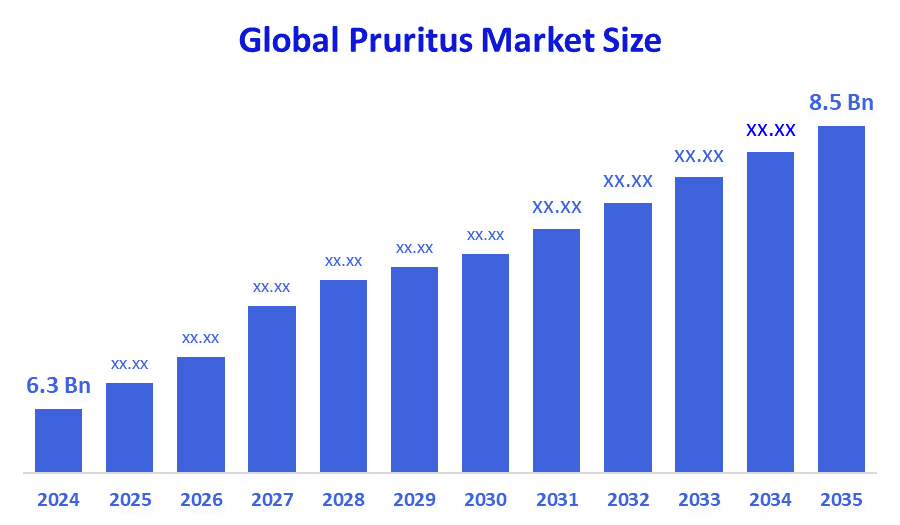
According to a research report published by Decisions Advisors and Consulting, the global pruritus market size was worth around USD 6.3 Billion in 2024 and is predicted to grow to around USD 8.5 Billion by 2035 with a compound annual growth rate (CAGR) of 2.76% from 2025 to 2035. The future possibilities of the global pruritus market will grow through the combined effects of increasing chronic disease rates and the development of new anti-itch biologics and the expansion of dermatology product pipelines and the rising awareness of diagnostic procedures and the growth of telemedicine and the development of emerging markets and the creation of personalized treatment solutions and the growing research funding which will drive upcoming treatment requirements.
Market Overview
The global pruritus market refers to the worldwide industry focused on the diagnosis, treatment, and management of pruritus which is a medical condition that causes persistent itching due to dermatological or systemic or neurological disorders. The market experiences growth because chronic diseases become more common and the elderly population increases and people become more aware of skin health. The development of targeted biologics and immunotherapies together with new topical treatment options leads to better treatment results. patient access to medical care improves through the expansion of teledermatology services and digital health platforms. The future will present opportunities through personalized medicine and the creation of long-acting anti-itch treatments and increased research funding. The global demand for pruritus treatment will continue because emerging markets and improved pharmaceutical development paths will drive both demand and innovation.
Report Coverage
This research report categorizes the pruritus market based on various segments and regions, forecasts revenue growth, and analyzes trends in each submarket. The report analyses the key growth drivers, opportunities, and challenges influencing the pruritus market. Recent market developments and competitive strategies such as expansion, type launch, development, partnership, merger, and acquisition, have been included to draw the competitive landscape in the market. The report strategically identifies and profiles the key market players and analyses their core competencies in each sub-segment of the pruritus market.
Driving Factors
The global pruritus market experiences growth because of three factors which include rising chronic skin and systemic disease rates and increasing elderly population and improved public knowledge about dermatological treatment. The development of targeted biologics and monoclonal antibodies and advanced topical formulations and neuroimmune pathway treatments enable better symptom management. The market demand and medical treatment progress both receive boosts from the growing adoption of teledermatology and artificial intelligence diagnostic systems and customized treatment methods.
Restraining Factors
The global pruritus market experiences growth restrictions because of six factors which include expensive treatment costs and insufficient disease knowledge and difficulties associated medical diagnosis and treatment side effects and limitations in access to treatment in underdeveloped areas and the gradual implementation of advanced biologic therapies.
Market Segmentation
The pruritus market share is classified into type and cause.
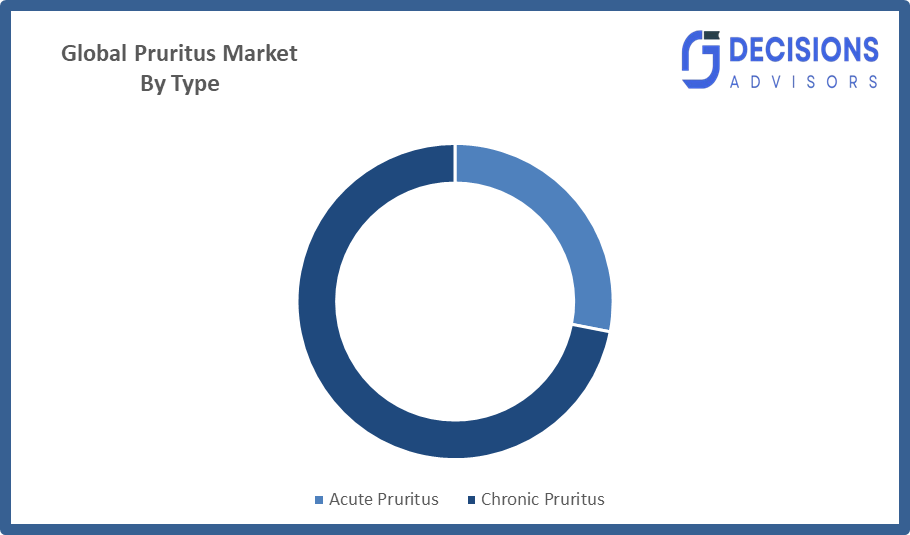
- The chronic pruritus segment dominated the market in 2024, approximately 62% and is projected to grow at a substantial CAGR during the forecast period.
Based on the type, the pruritus market is divided into acute pruritus and chronic pruritus. Among these, the chronic pruritus segment dominated the market in 2024, approximately 62% and is projected to grow at a substantial CAGR during the forecast period. The extended duration of the condition together with its connection to chronic illnesses including kidney disease and liver disorders and long-term skin disorders requires patients to receive ongoing medical treatment. The increasing demand for healthcare services results from patients who need sustained medical attention and multiple doctor visits and ongoing drug therapies. The expanding elderly population together with improved diagnostic capabilities results in a larger chronic patient population which drives continuous market growth.
- The electronic segment accounted for the largest share in 2024, approximately 48% and is anticipated to grow at a significant CAGR during the forecast period.
Based on the cause, the pruritus market is divided into dermatological disorders, systemic diseases, neurological conditions, psychogenic pruritus, and others. Among these, the dermatological disorders segment accounted for the largest share in 2024, approximately 48% and is anticipated to grow at a significant CAGR during the forecast period. Persistent itching develops from skin conditions that include eczema and psoriasis and dermatitis and allergic reactions. The conditions need ongoing treatment through applying topical and systemic medications and patients must visit dermatologists multiple times for their long-term disease management. The growth of patient numbers results from rising pollution together with lifestyle changes and increased skin sensitivity which keeps treatment demands at high levels.
Regional Segment Analysis of the Pruritus Market
- North America (U.S., Canada, Mexico)
- Europe (Germany, France, U.K., Italy, Spain, Rest of Europe)
- Asia-Pacific (China, Japan, India, Rest of APAC)
- South America (Brazil and the Rest of South America)
- The Middle East and Africa (UAE, South Africa, Rest of MEA)
North America is anticipated to hold the largest share of the pruritus market over the predicted timeframe.
North America is anticipated to hold the largest share of the pruritus market over the predicted timeframe. The combination of advanced dermatology infrastructure and increased healthcare spending and public knowledge about skin disorders creates an ideal environment for dermatology practices to thrive. The combination of favorable reimbursement policies with fast-growing usage of biologic medications and new treatment methods makes it easier for patients to access medical care. The combination of strong research funding and major pharmaceutical company presence and supportive regulatory frameworks establishes an environment that speeds up product development and market entry.
Asia-Pacific is expected to grow at a rapid CAGR in the pruritus market during the forecast period. The increasing occurrence of skin and systemic diseases together with the growth of healthcare facilities and better access to dermatology services. The regional market growth accelerates through increasing disposable incomes and rising public knowledge of skin health and government healthcare support programs and faster implementation of new medical treatments.
Competitive Analysis:
The report offers the appropriate analysis of the key organizations/companies involved within the pruritus market, along with a comparative evaluation primarily based on their type of offering, business overviews, geographic presence, enterprise strategies, segment market share, and SWOT analysis. The report also provides an elaborative analysis focusing on the current news and developments of the companies, which includes type development, innovations, joint ventures, partnerships, mergers & acquisitions, strategic alliances, and others. This allows for the evaluation of the overall competition within the market.
List of Key Companies
- Novartis AG
- Sanofi S.A.
- Pfizer Inc.
- AbbVie Inc.
- Johnson & Johnson (Janssen)
- Bayer AG
- Eli Lilly & Co.
- Bristol Myers Squibb (BMS)
- Amgen Inc.
- Takeda Pharmaceutical Co. Ltd.
- Others
Key Target Audience
- Market Players
- Investors
- End-users
- Government Authorities
- Consulting and Research Firm
- Venture capitalists
- Value-Added Resellers (VARs)
Market Segment
This study forecasts revenue at global, regional, and country levels from 2020 to 2035. Decisions Advisors has segmented the pruritus market based on the below-mentioned segments:
Global Pruritus Market, By Type
- Acute Pruritus
- Chronic Pruritus
Global Pruritus Market, By Cause
- Dermatological Disorders
- Systemic Diseases
- Neurological Conditions
- Psychogenic Pruritus
- Others
Global Pruritus Market, By Regional Analysis
- North America
- US
- Canada
- Mexico
- Europe
- Germany
- UK
- France
- Italy
- Spain
- Russia
- Rest of Europe
- Asia Pacific
- China
- Japan
- India
- South Korea
- Australia
- Rest of Asia Pacific
- South America
- Brazil
- Argentina
- Rest of South America
- Middle East & Africa
- UAE
- Saudi Arabia
- Qatar
- South Africa
- Rest of the Middle East & Africa
Frequently Asked Questions (FAQ)
1. What is the projected growth of the global pruritus market by 2035?
A: The global pruritus market is projected to grow from USD 6.3 billion in 2024 to USD 8.5 billion by 2035, registering a CAGR of 2.76% during 2025–2035.
2. Which type segment dominates the pruritus market?
A: Chronic pruritus dominates with a 62% share in 2024 due to long disease duration, links with chronic illnesses, continuous treatment needs, frequent consultations, expanding elderly population, and improved diagnostic rates.
3. Which cause segment holds the largest share in the pruritus market?
A: Dermatological disorders lead with 48% share in 2024, driven by common skin conditions like eczema and psoriasis, long-term treatment requirements, repeated dermatology visits, pollution effects, lifestyle changes, and rising skin sensitivity.
4. Which region leads the global pruritus market and why?
A: North America leads due to advanced dermatology infrastructure, high healthcare spending, strong reimbursement systems, rapid biologics adoption, major pharmaceutical presence, robust research funding, and supportive regulatory frameworks.
5. Why is Asia-Pacific the fastest-growing pruritus market?
A: Rapid growth comes from rising skin disease prevalence, expanding healthcare facilities, improving dermatology access, increasing disposable incomes, stronger public awareness, supportive government programs, and faster adoption of innovative therapies.
Check Licence
Choose the plan that fits you best: Single User, Multi-User, or Enterprise solutions tailored for your needs.
We Have You Covered
- 24/7 Analyst Support
- Clients Across the Globe
- Tailored Insights
- Technology Tracking
- Competitive Intelligence
- Custom Research
- Syndicated Market Studies
- Market Overview
- Market Segmentation
- Growth Drivers
- Market Opportunities
- Regulatory Insights
- Innovation & Sustainability
Report Details
| Scope | Global |
| Pages | 220 |
| Delivery | PDF & Excel via Email |
| Language | English |
| Release | Mar 2026 |
| Access | Download from this page |