
Global Renal Anemia Market
 |
Pages:
190
|
Pages:
190
Global Renal Anemia Market Size, Share, and COVID-19 Impact Analysis, By Type (Iron Deficiency Anemia, Vitamin B12 Deficiency Anemia, Folate Deficiency Anemia, Aplastic Anemia, Sickle Cell Anemia, and Others), By Route of Administration (Oral, Parenteral, and Others) and By Region (North America, Europe, Asia-Pacific, Latin America, Middle East, and Africa), Analysis and Forecast 2025 - 2035.
REPORT COVERAGE
Global
Global Renal Anemia Market Insights Forecasts to 2035
- The Global Renal Anemia Market Size Was valued at USD 4.89 Billion in 2024
- The Global Renal Anemia Market Size is Expected to Grow at a CAGR of around 7.72% from 2025 to 2035
- The Worldwide Renal Anemia Market Size is Expected to Reach USD 11.08 Billion by 2035
- Asia-Pacific is expected to grow the fastest during the forecast period.
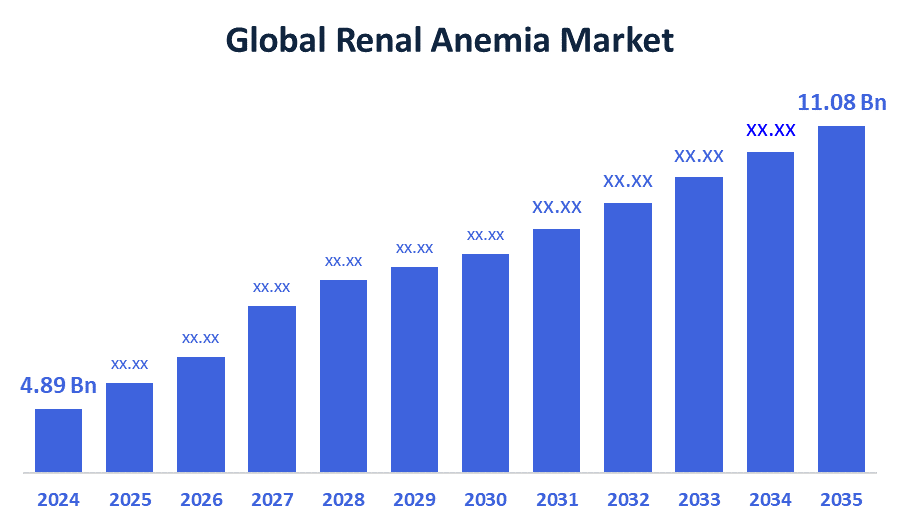
According to a research report published by Spherical Insights and Consulting, the global renal anemia market size was worth around USD 4.89 billion in 2024 and is predicted to grow to around USD 11.08 billion by 2035 with a compound annual growth rate (CAGR) of 7.72% from 2025 to 2035. Future opportunities in the global renal anemia market will emerge from three key developments, which include new erythropoiesis-stimulating agents, oral iron treatments, and hypoxia-inducible factor stabilizers. The medical field will expand through the development of new dialysis centers, which will enable doctors to identify chronic kidney disease in its early stages and create customized treatment plans for patients living in developing healthcare markets.
Market Overview
Renal anemia develops as a result of chronic kidney disease because the damaged kidneys stop producing adequate erythropoietin, which leads to decreased red blood cell production and results in low hemoglobin levels, fatigue, and oxygen delivery problems that affect the entire body. Additionally, the global renal anemia market is currently experiencing significant changes, which result from new treatment methods and better knowledge about renal anemia disease mechanisms. The condition this study addresses, which occurs with chronic kidney disease, has resulted in higher research activities that aim to achieve better patient results. Pharmaceutical companies are developing new treatment methods through their research on erythropoiesis-stimulating agents and iron supplements, which help patients improve their hemoglobin levels and life quality. Personalized medicine is becoming part of treatment procedures that hospitals use to create patient-specific treatment plans that lead to improved results for this difficult medical condition. The global renal anemia market develops through two main factors, which include new treatment methods and increased public understanding about how early diagnosis and treatment help patients. Educational initiatives, together with better screening techniques, will lead to higher detection rates, which will increase the number of patients who need medical treatment. The partnership between healthcare providers and pharmaceutical companies will lead to the creation of complete care systems, which will treat both anemia and its related health issues. The market shows signs of growth because various forces create a demand for proper management techniques that handle renal anemia.
Report Coverage
This research report categorizes the renal anemia market based on various segments and regions, forecasts revenue growth, and analyzes trends in each submarket. The report analyses the key growth drivers, opportunities, and challenges influencing the renal anemia market. Recent market developments and competitive strategies, such as expansion, type launch, development, partnership, merger, and acquisition, have been included to draw the competitive landscape in the market. The report strategically identifies and profiles the key market players and analyzes their core competencies in each sub-segment of the renal anemia market.
Driving Factors
The global renal anemia Industry experiences growth due to the increasing number of elderly people who require medical support. Aging leads to a higher probability of people developing multiple health issues, which include kidney disease. The World Health Organization estimates that by 2050, the number of people aged 60 years and older will double, reaching over 2 billion. The increasing number of elderly people will lead to more cases of renal anemia because older people have a higher risk of kidney failure and its associated health issues. Healthcare systems will require adjustments to meet the evolving needs of patients, which will result in a greater need for renal anemia medical solutions. The global renal anemia market will gain from this trend because healthcare providers need to meet the special medical requirements of senior patients.
Restraining Factors
The global renal anemia market faces various constraints, which include high treatment costs together with restricted access to advanced therapies in low-income areas and side effects caused by erythropoiesis-stimulating agents, the need for strict regulatory approvals, and the failure to detect early-stage chronic kidney disease in patients.
Market Segmentation
The renal anemia market share is classified into type and route of administration.
- The iron deficiency anemia segment dominated the market in 2024, approximately 48% and is projected to grow at a substantial CAGR during the forecast period.
Based on the type, the renal anemia market is divided into iron deficiency anemia, vitamin B12 deficiency anemia, folate deficiency anemia, aplastic anemia, sickle cell anemia, and others. Among these, the iron deficiency anemia segment dominated the market in 2024, approximately 48%, and is projected to grow at a substantial CAGR during the forecast period. The disease occurs frequently in chronic kidney disease patients who require dialysis treatment. The blood loss, together with decreased iron absorption and increased iron needs during erythropoiesis-stimulating therapy, leads to the development of this condition. The segment experiences continuous expansion because of clinical guidelines that mandate iron supplementation together with intravenous and oral treatment options and continuous patient monitoring.
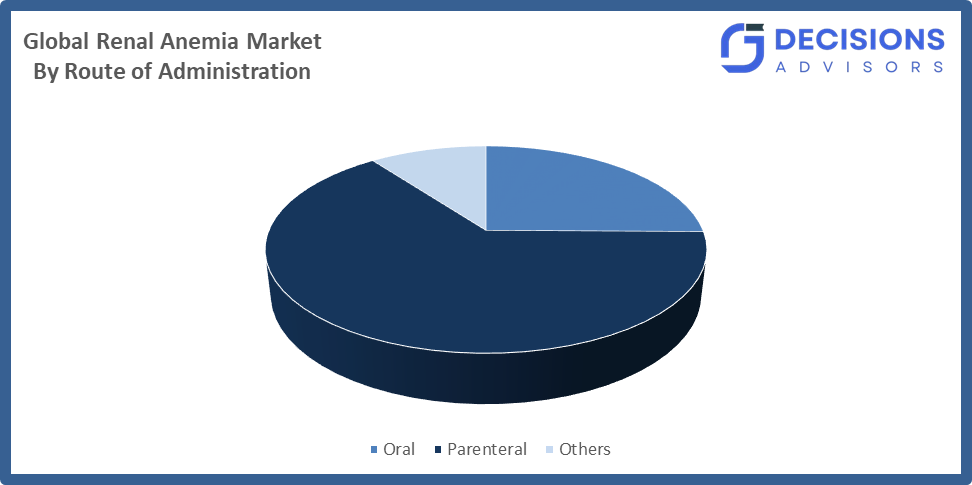
- The parenteral segment accounted for the largest share in 2024, approximately 58%, and is anticipated to grow at a significant CAGR during the forecast period.
Based on the route of administration, the renal anemia market is divided into oral, parenteral, and others. Among these, the parenteral segment accounted for the largest share in 2024, approximately 58%, and is anticipated to grow at a significant CAGR during the forecast period. The hospitals opt for injectable treatments, which help them manage patient dosages and enhance medication absorption. The segment expansion is driven by three factors, which include lower stomach-related side effects of intravenous treatments when compared to oral medications, strong clinical guidance, and frequent use of hospital-based medical services.
Regional Segment Analysis of the Renal Anemia Market
- North America (U.S., Canada, Mexico)
- Europe (Germany, France, U.K., Italy, Spain, Rest of Europe)
- Asia-Pacific (China, Japan, India, Rest of APAC)
- South America (Brazil and the Rest of South America)
- The Middle East and Africa (UAE, South Africa, Rest of MEA)
North America is anticipated to hold the largest share of the renal anemia market over the predicted timeframe.
North America is anticipated to hold the largest share of the renal anemia market over the predicted timeframe. The region benefits from its advanced healthcare system, which exists alongside its high chronic kidney disease rates and its effective research support for new medical treatments. The demand for erythropoiesis-stimulating agents (ESAs) is particularly high because people now understand renal anemia better, and they can identify it earlier. Amgen Johnson & Johnson and Pfizer operate as the main market players in the United States which serves as the leading market for this industry. The competitive environment shows continuous development through innovation, while key companies form strategic alliances. Canada also plays a vital role because its strong healthcare system and patient access initiatives support market growth. The North American market will experience continuous growth because research and development activities remain active in the region.
Asia-Pacific is expected to grow at a rapid CAGR in the renal anemia market during the forecast period. The region's growth is driven by increasing healthcare expenditure, rising awareness of chronic kidney diseases, and a growing aging population. China and India lead the world with their expanding healthcare infrastructure and government programs that enhance patient access to medical treatment. China has the largest market share in the region because of its high rate of kidney disease occurrence and its strong development of new medical treatments. India ranks second in the pharmaceutical industry because of its rapidly expanding drug market and growing healthcare investment. The competitive landscape features both local and international players, with companies like Novartis and Horizon Therapeutics actively participating. The region will experience major growth because of the continuous progress in medical technology and new treatment methods.
Competitive Analysis:
The report offers the appropriate analysis of the key organizations/companies involved within the renal anemia market, along with a comparative evaluation primarily based on their type of offering, business overviews, geographic presence, enterprise strategies, segment market share, and SWOT analysis. The report also provides an elaborative analysis focusing on the current news and developments of the companies, which includes type development, innovations, joint ventures, partnerships, mergers & acquisitions, strategic alliances, and others. This allows for the evaluation of the overall competition within the market.
List of Key Companies
- Amgen Inc.
- Roche Holding AG
- Johnson & Johnson (Janssen)
- Novartis AG
- Pfizer Inc.
- Bayer AG
- AstraZeneca plc
- GlaxoSmithKline (GSK)
- Akebia Therapeutics
- FibroGen Inc.
- Others
Key Target Audience
- Market Players
- Investors
- End-users
- Government Authorities
- Consulting and Research Firm
- Venture capitalists
- Value-Added Resellers (VARs)
Market Segment
This study forecasts revenue at global, regional, and country levels from 2020 to 2035. Spherical Insights has segmented the renal anemia market based on the below-mentioned segments:
Global Renal Anemia Market, By Type
- Iron Deficiency Anemia
- Vitamin B12 Deficiency Anemia
- Folate Deficiency Anemia
- Aplastic Anemia
- Sickle Cell Anemia
- Others
Global Renal Anemia Market, By Route of Administration
- Oral
- Parenteral
- Others
Global Renal Anemia Market, By Regional Analysis
- North America
- US
- Canada
- Mexico
- Europe
- Germany
- UK
- France
- Italy
- Spain
- Russia
- Rest of Europe
- Asia Pacific
- China
- Japan
- India
- South Korea
- Australia
- Rest of Asia Pacific
- South America
- Brazil
- Argentina
- Rest of South America
- Middle East & Africa
- UAE
- Saudi Arabia
- Qatar
- South Africa
- Rest of the Middle East & Africa
Frequently Asked Questions (FAQ)
Q1. What is the projected growth of the renal anemia market?
A: According to Spherical Insights and Consulting, the market will grow from USD 4.89 billion in 2024 to USD 11.08 billion by 2035, registering a CAGR of 7.72%.
Q2. What key innovations create future opportunities?
A: Opportunities arise from novel erythropoiesis-stimulating agents, oral iron therapies, hypoxia-inducible factor stabilizers, expanding dialysis infrastructure, early chronic kidney disease diagnosis, and personalized treatment approaches in developing healthcare markets.
Q3. Which segment dominates by anemia type?
A: Iron deficiency anemia leads due to high prevalence among chronic kidney disease and dialysis patients, frequent blood loss, strong supplementation guidelines, multiple treatment options, and continuous monitoring requirements.
Q4. Which administration route holds the largest share?
A: Parenteral administration dominates because injectable therapies ensure faster absorption, controlled dosing, fewer gastrointestinal side effects, strong hospital preference, and better effectiveness for dialysis and severe renal anemia management.
Q5. Which regions lead and grow fastest?
A: North America leads with advanced healthcare systems and strong R&D, while Asia-Pacific grows fastest due to rising healthcare spending, aging populations, and expanding treatment access.
Check Licence
Choose the plan that fits you best: Single User, Multi-User, or Enterprise solutions tailored for your needs.
We Have You Covered
- 24/7 Analyst Support
- Clients Across the Globe
- Tailored Insights
- Technology Tracking
- Competitive Intelligence
- Custom Research
- Syndicated Market Studies
- Market Overview
- Market Segmentation
- Growth Drivers
- Market Opportunities
- Regulatory Insights
- Innovation & Sustainability
Report Details
| Scope | Global |
| Pages | 190 |
| Delivery | PDF & Excel via Email |
| Language | English |
| Release | Mar 2026 |
| Access | Download from this page |