
Global Rheumatic Fever Market
 |
Pages:
254
|
Pages:
254
Global Rheumatic Fever Market Size, Share, and COVID-19 Impact Analysis, By Age Group (Children, Adolescents, Adults, and Elderly), By Disease (Acute Rheumatic Fever, Chronic Rheumatic Heart Disease, and Post-Streptococcal Sequelae), By Treatment (Antibiotic Therapy, Anti-Inflammatory Medications, Surgical Interventions, and Preventive Measures), and By Region (North America, Europe, Asia-Pacific, Latin America, Middle East, and Africa), Analysis and Forecast 2025 - 2035
REPORT COVERAGE
Global
Global Rheumatic Fever Market Size Insights Forecasts to 2035
- The Global Rheumatic Fever Market Size Was Estimated at USD 1306.33 Million in 2024
- The Market Size is Expected to Grow at a CAGR of around 6.95% from 2025 to 2035
- The Worldwide Rheumatic Fever Market Size is Expected to Reach USD 2736.31 Million by 2035
- Europe is expected to grow the fastest during the forecast period.
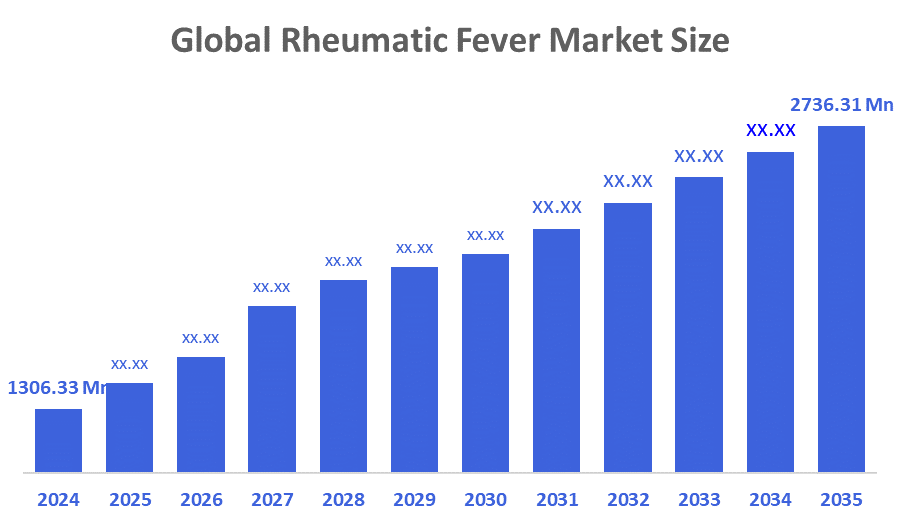
According to a Research Report Published by Decisions Advisors and Consulting, The Global Rheumatic Fever Market Size was worth around USD 1306.33 Million in 2024 and is predicted to Grow to around USD 2736.31 Million by 2035 with a compound annual growth rate (CAGR) of 6.95% from 2025 to 2035. The rise in R&D activities is the main driver for the expansion of the market. This, in turn, will open up a lot of positive opportunities for the rheumatic fever market to grow. Moreover, the increasing number of drug approvals and launches will act as rocket fuel for the market to grow at a higher pace.
Market Overview
The global healthcare sector segment that includes medications, diagnostics, and healthcare services for the diagnosis, treatment, and management of rheumatic fever is known as the rheumatic fever market. It monitors the size, demand, trends, and projections of the market for treatments, diagnostic instruments, and places for providing care. Rheumatic fever is an inflammatory disease with an infectious origin that may develop after an untreated strep throat. In some individuals, rheumatic fever may lead to permanent damage to the heart and heart valves. It develops due to a prolonged case of group A streptococcal pharyngitis. Besides the connective tissue of the skin, rheumatic fever can also damage the joints, heart, and blood vessels. A typical scenario is the appearance of fever, muscle aches, swollen and painful joints, and, in some cases, a red, net-like rash two to four weeks after the streptococcal infection.
In addition, rheumatic fever may result in Sydenham's chorea, which is a temporary nervous system disorder that was initially referred to as St. Vitus' dance. This is a neurological disorder characterised by rapid, jerky, involuntary movements of the body that usually affect one side of the body more than the other.
An international research collaboration has been awarded a US$8 million grant to design the world’s first diagnostic tool for acute rheumatic fever (ARF). The project aims to revolutionise how ARF is detected, enabling earlier treatment and reducing progression to rheumatic heart disease (RHD).
Report Coverage
This research report categorises the rheumatic fever market based on various segments and regions, forecasts revenue growth, and analyzes trends in each submarket. The report analyses the key growth drivers, opportunities, and challenges influencing the rheumatic fever market. Recent market developments and competitive strategies, such as expansion, product launch, development, partnership, merger, and acquisition, have been included to draw the competitive landscape in the market. The report strategically identifies and profiles the key market players and analyzes their core competencies in each sub-segment of the rheumatic fever market.
Driving Factors
The rheumatic fever market is undergoing a significant transformation, largely influenced by factors such as enhanced awareness, extended treatment options, and a growing focus on prevention. The market looks like it will expand as healthcare systems globally are strengthening their focus on early diagnosis and management. Also, innovative technologies' integration in healthcare delivery might make it easier for patient outcomes to improve and for patients to follow their treatment protocols. Besides that, the rheumatic fever market is expected to be a winner in the ongoing research initiatives that aim to figure out the disease mechanisms. Such work may eventually lead to the creation of new therapeutic agents and vaccines, which would completely change the face of treatment. In addition, campaigns in public health that focus on educating communities on the importance of going to the doctor immediately when one gets a throat infection might therefore be a great support to market expansion as well.
Restraining Factors
The high upfront cost tied to the treatment of rheumatic fever will hinder the expansion of the market. Moreover, the shortage of qualified professionals and poor healthcare infrastructure in developing countries will pose a challenge to the rheumatic fever market. Also, the decrease in clinical visits because of the pandemic and the lack of awareness among the population will be factors that will restrain the market.
Market Segmentation
The rheumatic fever market share is classified into age group, disease, and treatment.
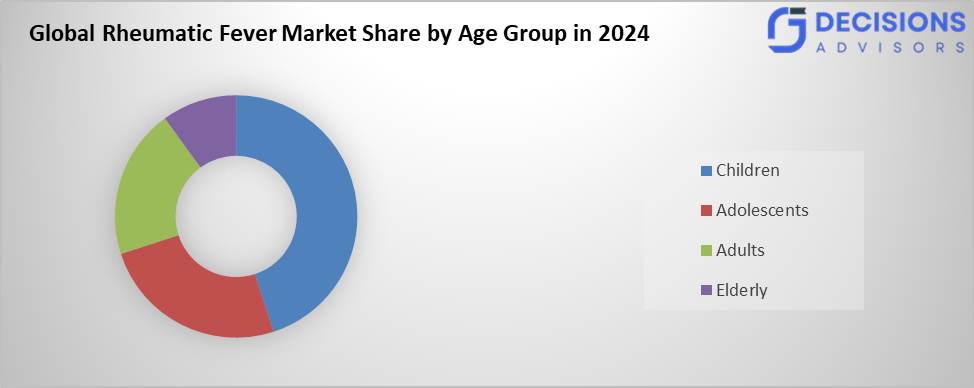
- The children segment dominated the market in 2024 and is anticipated to grow at a significant CAGR during the forecast period.
Based on the age group, the rheumatic fever market is divided into children, adolescents, adults, and elderly. Among these, the children segment dominated the market in 2024 and is anticipated to grow at a significant CAGR during the forecast period. This is because they are more susceptible to Group A Streptococcus infections, which can cause rheumatic fever. The significance of this category is largely due to public health initiatives focused on lowering the frequency of childhood rheumatic fever. Moreover, severely impacts families because of the significant vulnerability in early development, particularly in developing areas.
- The chronic rheumatic heart disease segment accounted for the largest share in 2024 and is projected to grow at a substantial CAGR during the forecast period.
Based on the disease, the rheumatic fever market is classified into acute rheumatic fever, chronic rheumatic heart disease, and post-streptococcal sequelae. Among these, the chronic rheumatic heart disease segment accounted for the largest share in 2024 and is projected to grow at a substantial CAGR during the forecast period. This is due to its detrimental effects on heart health and the need for continued care after diagnosis. Further, healthcare expansion and serious consequences due to the need for long-term care, this segment's growth is expanded. This market is distinguished by its enduring nature, which leads to an ongoing need for pharmaceuticals, surgical operations, and medical treatments.
- The antibiotic therapy segment accounted for the highest market revenue in 2024 and is expected to grow at a remarkable CAGR during the forecast period.
Based on the treatment, the rheumatic fever market is segmented into antibiotic therapy, anti-inflammatory medications, surgical interventions, and preventive measures. Among these, the antibiotic therapy segment accounted for the highest market revenue in 2024 and is expected to grow at a remarkable CAGR during the forecast period. The most common treatment for rheumatic fever is antibiotic therapy, which focuses on eliminating the streptococcal bacteria to stop serious problems from developing. Comprehensive clinical guidelines that highlight its importance in management procedures accompany this section. It is essential in the fight against the streptococcal infection that causes rheumatic fever.
Regional Segment Analysis of the Rheumatic Fever Market
- North America (U.S., Canada, Mexico)
- Europe (Germany, France, U.K., Italy, Spain, Rest of Europe)
- Asia-Pacific (China, Japan, India, Rest of APAC)
- South America (Brazil and the Rest of South America)
- The Middle East and Africa (UAE, South Africa, Rest of MEA)
Asia Pacific is anticipated to hold the largest share of the rheumatic fever market over the predicted timeframe.
Asia Pacific is anticipated to hold the largest share of the rheumatic fever market over the predicted timeframe. The market is experiencing significant growth, largely attributed to the increased access to healthcare and the greater awareness of rheumatic diseases. In response to these developments, governments are adopting policies aimed at upgrading the healthcare infrastructure, thus propelling the demand for effective therapies. The region's population, characterised by its diversity and varied healthcare needs, poses both risks and potential avenues for the market.
India and China, among other countries, are at the forefront of the market, making substantial commitments to the healthcare and pharmaceutical sectors. The competition and innovation are being intensified by the presence of leading players, and the emphasis on enhancing accessibility to treatments will be the key to winning more market shares in the coming years.
Europe is expected to grow at a rapid CAGR in the rheumatic fever market during the forecast period. The market is expanding due to increased healthcare spending and a greater emphasis on preventive care. Regulatory agencies are refining their standards to enhance disease management, which will likely contribute to the market's expansion. The surge in rheumatic diseases, along with the ageing population, is causing a higher demand for proper treatments throughout Africa. Major countries in the region, such as Germany, France, and the UK, have healthcare systems that are increasingly focusing on the management of rheumatic fever. The competitive environment is marked by collaborations and partnerships aimed at improving treatment options; thus, Europe will continue to be a significant player in the global market.
Competitive Analysis:
The report offers the appropriate analysis of the key organizations/companies involved within the Rheumatic Fever market, along with a comparative evaluation primarily based on their product offering, business overviews, geographic presence, enterprise strategies, segment market share, and SWOT analysis. The report also provides an elaborative analysis focusing on the current news and developments of the companies, which includes product development, innovations, joint ventures, partnerships, mergers & acquisitions, strategic alliances, and others. This allows for the evaluation of the overall competition within the market.
List of Key Companies
- Abbott
- AbbVie Inc.
- AstraZeneca
- Bayer AG
- Cipla Inc.
- Eli Lilly and Company
- F. Hoffmann-La Roche Ltd.
- GlaxoSmithKline plc
- Merck & Co., Inc.
- Mylan N.V.
- Novartis AG
- Pfizer Inc.
- Sanofi
- Teva Pharmaceutical Industries Ltd.
- Others
Key Target Audience
- Market Players
- Investors
- End-users
- Government Authorities
- Consulting and Research Firm
- Venture capitalists
- Value-Added Resellers (VARs)
Recent Development
- In July 2025, Uttar Pradesh launched the “RHD Roko” initiative, a first-of-its-kind statewide program aimed at eliminating rheumatic heart disease (RHD) within the next 10 years. It is being anchored by the Sanjay Gandhi Postgraduate Institute of Medical Sciences (SGPGIMS) in collaboration with Stanford Biodesign, the American Heart Association, and other partners.
- In September 2022, Biotome joined an international consortium to develop biomarkers for diagnosing acute rheumatic fever (ARF), supported by an $8 million grant from the Leducq Foundation. This collaboration aims to create the world’s first reliable diagnostic tool for ARF, a disease that remains difficult to diagnose but is a leading cause of acquired heart disease in children worldwide.
Market Segment
This study forecasts revenue at global, regional, and country levels from 2020 to 2035. Decisions Advisors has segmented the rheumatic fever market based on the below-mentioned segments:
Global Rheumatic Fever Market, By Age Group
- Children
- Adolescents
- Adults
- Elderly
Global Rheumatic Fever Market, By Disease
- Acute Rheumatic Fever
- Chronic Rheumatic Heart Disease
- Post-Streptococcal Sequelae
Global Rheumatic Fever Market, By Treatment
- Antibiotic Therapy
- Anti-Inflammatory Medications
- Surgical Interventions
- Preventive Measures
Global Rheumatic Fever Market, By Regional Analysis
- North America
- US
- Canada
- Mexico
- Europe
- Germany
- UK
- France
- Italy
- Spain
- Russia
- Rest of Europe
- Asia Pacific
- China
- Japan
- India
- South Korea
- Australia
- Rest of Asia Pacific
- South America
- Brazil
- Argentina
- Rest of South America
- Middle East & Africa
- UAE
- Saudi Arabia
- Qatar
- South Africa
- Rest of the Middle East & Africa
Frequently Asked Questions (FAQ)
- What is the projected size of the global rheumatic fever market by 2035?
The market is expected to reach USD 2736.31 million by 2035, growing from USD 1306.33 million in 2024.
- What is the CAGR for the rheumatic fever market from 2025 to 2035?
The market is forecasted to grow at a CAGR of 6.95% during this period.
- Which age group dominates the rheumatic fever market?
The children segment led the market in 2024 and is expected to grow at a significant CAGR, due to higher susceptibility to Group A Streptococcus infections.
- Which disease segment has the largest market share?
Chronic rheumatic heart disease held the largest share in 2024 and is projected to grow substantially, driven by the need for long-term care.
- What treatment segment generates the highest revenue?
Antibiotic therapy accounted for the highest revenue in 2024 and is expected to grow at a remarkable CAGR, as it's essential for eliminating streptococcal bacteria.
- Which region will hold the largest market share?
Asia-Pacific is anticipated to hold the largest share, fueled by improved healthcare access, awareness, and investments in countries like India and China.
- What are the main drivers of market growth?
Key drivers include rising R&D activities, new drug approvals, increased awareness, and public health initiatives for early diagnosis and prevention.
- Who are some key companies in the rheumatic fever market?
Major players include Abbott, Pfizer Inc., Novartis AG, Sanofi, GlaxoSmithKline plc, and Cipla Inc., along with others focused on treatments and innovations.
Check Licence
Choose the plan that fits you best: Single User, Multi-User, or Enterprise solutions tailored for your needs.
We Have You Covered
- 24/7 Analyst Support
- Clients Across the Globe
- Tailored Insights
- Technology Tracking
- Competitive Intelligence
- Custom Research
- Syndicated Market Studies
- Market Overview
- Market Segmentation
- Growth Drivers
- Market Opportunities
- Regulatory Insights
- Innovation & Sustainability
Report Details
| Scope | Global |
| Pages | 254 |
| Delivery | PDF & Excel via Email |
| Language | English |
| Release | Jan 2026 |
| Access | Download from this page |