
Global RNA Interference Market
 |
Pages:
240
|
Pages:
240
Global RNA Interference Market Size, Share, By Type (siRNA, miRNA, shRNA), By Application (Oncology, Rare Genetic Disorders, Infectious Diseases, Others), By End User (Pharmaceutical & Biotechnology Companies, Research Institutes, Hospitals), and By Region (North America, Europe, Asia-Pacific, Latin America, Middle East & Africa), Analysis and Forecast 2025-2035
REPORT COVERAGE
Global
Market Snapshot
- Market Size (2025): USD 33.6 Billion
- Projected Market Size (2035): USD 133.6 Billion
- Compound Annual Growth Rate (CAGR): 14.8%
- Largest Regional Market: North America
- Fastest Growing Region: Asia Pacific
- 3rd Largest Region: Europe
- Base Year: 2025
- Historical Period: 2021–2025
- Forecast Period: 2025–2035
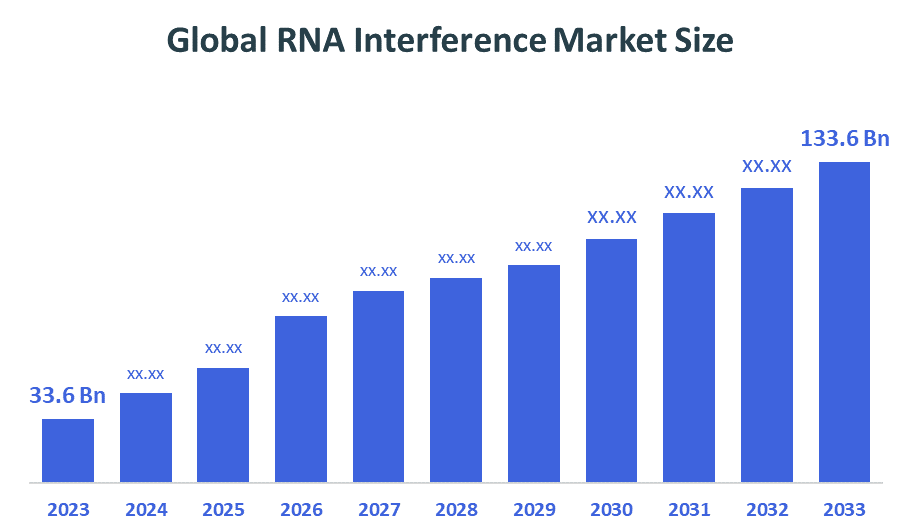
According to Decision Advisors, the Global RNA interference market Size is expected to grow from USD 33.6 billion in 2024 to USD 133.6 billion by 2035, at a CAGR of 14.8% during the forecast period 2025-2035. The market is expanding rapidly due to increasing demand for gene-silencing therapies, advancements in delivery technologies, rising prevalence of genetic and chronic diseases, and growing investment in RNA-based therapeutics.
Market Overview/ Introduction
The RNA interference market is defined by the commercialization of therapies that silence disease causing genes by degrading messenger RNA (mRNA). The RNA interference (RNAi) market is currently undergoing a transformative shift from treating rare genetic disorders to managing high-volume chronic conditions like cardiovascular disease and hypertension. Government support has really become the backbone of this growth, with agencies like the FDA and EMA creating fast-pass approvals to get these treatments to patients much sooner. Big-name companies are matching that energy with some serious money, while Alnylam is still the clear leader, heavy hitters like Novartis and Eli Lilly have recently signed multi-billion dollar deals to grab a piece of the RNAi action for heart disease and metabolic health. To keep up with all this demand, manufacturing experts like Agilent are pouring hundreds of millions into doubling their factory space so they can actually produce enough of these complex medicines The future of the market lies in overcoming the humanised challenges of delivery and specificity. Right now, we're really good at getting these treatments to the liver using a zip code system called GalNAc. But the real game-changer is going to be perfecting tiny delivery vehicles, known as Lipid Nanoparticles (LNPs), that can travel deeper into the body. The goal is to reach the brain, lungs, and muscles without the body’s immune system sounding the alarm. If we can nail that, RNAi could move beyond rare diseases and start tackling massive health challenges like obesity and Alzheimer’s. It’s an exciting leap, though we still have to figure out how to bring down the massive development costs and make sure these gene silencers don't accidentally turn off the wrong targets.
Notable Insights: -
- North America is anticipated to hold the largest share of the RNA interference market over the predicted timeframe.
- Asia Pacific is expected to grow at a rapid CAGR in the RNA interference market during the forecast period.
- By type, the siRNA segment dominated the market in 2025 and is projected to grow at a substantial CAGR during the forecast period.
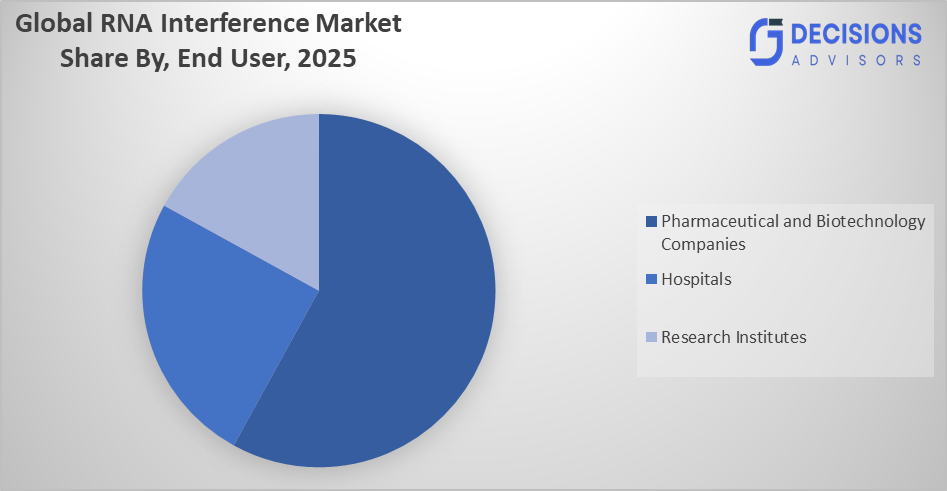
- By end user, the pharmaceutical and biotechnology companies segment dominated the market in 2025 with a share 58%, and is projected to grow at a substantial CAGR during the forecast period.
- The compound annual growth rate of the global spirit market is 14.8%.
- The market is likely to achieve a valuation of USD 133.6 billion by 2035.
What is role of technology in grooming the market?
Technology plays a critical role in advancing the RNA interference market by enabling efficient and targeted gene silencing. Innovations in delivery systems, such as lipid nanoparticles (LNPs), GalNAc conjugates, and viral vectors, have significantly improved the stability and targeting of RNA molecules. Artificial intelligence (AI) and bioinformatics tools are increasingly used for target identification, RNA sequence optimization, and predicting off-target effects. These advancements reduce development timelines and improve the success rate of RNAi therapies. Additionally, high-throughput screening and next-generation sequencing technologies are accelerating the discovery of novel RNA targets. Improvements in manufacturing processes have enhanced scalability and reduced production costs, making RNAi therapies more accessible.
Market Drivers
The RNA interference market is driven by the increasing prevalence of genetic disorders, cancer, and liver diseases, which require targeted therapeutic approaches. The growing success of RNA-based drugs in clinical trials and commercial markets is significantly boosting confidence in RNAi technology. Advancements in delivery technologies have overcome earlier challenges related to stability and targeting, making RNAi therapies more effective. Increasing investments in biotechnology research, a rising number of partnerships and collaborations, and expanding clinical pipelines are further driving market growth. Additionally, the shift toward precision medicine and personalized therapies is creating strong demand for RNAi-based treatments.
Restrain
The RNA interference market faces challenges due to high development and manufacturing costs associated with RNA-based therapeutics. Delivery of RNA molecules to specific tissues remains complex and requires advanced technologies. Regulatory challenges, potential off-target effects, and safety concerns also hinder market growth. Additionally, limited awareness and accessibility in developing regions may restrict adoption.
Competitive Analysis:
The report offers the appropriate analysis of the key organizations/companies involved within the RNA interference market, along with a comparative evaluation primarily based on their product of offering, business overviews, geographic presence, enterprise strategies, segment market share, and SWOT analysis. The report also provides an elaborative analysis focusing on the current news and developments of the companies, which includes product development, innovations, joint ventures, partnerships, mergers & acquisitions, strategic alliances, and others. This allows for the evaluation of the overall competition within the market.
Top Companies in the Global RNA interference market
- Alnylam Pharmaceuticals
- Arrowhead Pharmaceuticals
- Dicerna Pharmaceuticals
- Ionis Pharmaceuticals
- Moderna Inc.
- Silence Therapeutics
- Benitec Biopharma
- Arbutus Biopharma
- Sirnaomics
- Sarepta Therapeutics
Government Initiatives
|
Country |
Key Government Initiatives |
|
US |
The National Institutes of Health (NIH) has partnered with the U.S. National Science Foundation (NSF) to provide approximately $15.4 million over three years for research into the structures, functions and interactions of ribonucleic acid (RNA), as well as the creation of RNA-based technologies. |
|
Canada |
Annie Koutrakis, Member of Parliament for Vimy and Parliamentary Secretary to the Minister of Tourism and Minister responsible for CED, announced a repayable contribution of $200,000 for RNA Technologies & Therapeutics Inc. (RNA T&T). |
|
UK |
The UK RNA Biofoundry that will springboard new RNA therapies which could help tackle cancer, heart conditions, and other diseases will be established in CPI’s RNA Centre of Excellence, by £29.6 million government backing. |
Market Segmentation
The RNA interference market share is classified into therapy type, application, and end user
- The siRNA segment dominated the market in 2025 and is projected to grow at a substantial CAGR during the forecast period.
Based on the type, the RNA interference market is divided into siRNA, miRNA, and shRNA. Among these,the siRNA segment dominated the market in 2025 and is projected to grow at a substantial CAGR during the forecast period. This dominance is primarily due to its extensive clinical application and high specificity in gene silencing, particularly in the treatment of liver diseases, rare genetic disorders, and certain cancers. siRNA-based therapies have demonstrated strong therapeutic efficacy and have gained regulatory approvals, which has significantly boosted their adoption. The increasing number of clinical trials, strong pipeline of RNAi therapeutics, and advancements in delivery technologies such as lipid nanoparticles (LNPs) and GalNAc conjugates are further driving this segment. Meanwhile, miRNA and shRNA are emerging segments, gaining traction in research and early-stage therapeutic development due to their ability to regulate multiple gene targets and support long-term gene silencing applications.
- The oncology segment accounted for the largest share in 2025, and is anticipated to grow at a significant CAGR during the forecast period.
Based on the application, the RNA interference market is divided into oncology, rare genetic disorders, infectious diseases and others. Among these, the oncology segment accounted for the largest share in 2025, and is anticipated to grow at a significant CAGR during the forecast period. This dominance is driven by the increasing global burden of cancer and the rising demand for targeted therapies that can selectively silence oncogenes and tumor-related pathways. RNA interference therapies offer a highly precise mechanism for inhibiting cancer progression at the molecular level, making them a promising alternative to conventional treatments. The rare genetic disorders segment is also witnessing strong growth due to the effectiveness of RNAi in targeting disease-causing genes. Additionally, infectious diseases are gaining attention with ongoing research focused on RNA-based antiviral therapies, further expanding the application scope of RNA interference.
- The pharmaceutical and biotechnology companies segment dominated the market in 2025 with a share 58%, and is projected to grow at a substantial CAGR during the forecast period.
Based on the end user, the RNA interference market is divided into pharmaceutical and biotechnology companies, hospitals, and research institutes. Among these, the pharmaceutical and biotechnology companies segment dominated the market in 2025 with a share 58%, and is projected to grow at a substantial CAGR during the forecast period, owing to their strong research and development capabilities, increasing investment in RNA-based drug development, and active involvement in clinical trials and commercialization of RNAi therapeutics. These companies play a key role in advancing innovative therapies and expanding the RNAi pipeline. Hospitals also contribute significantly to the market, as they are primary centers for the administration of advanced RNA-based treatments and management of patients with chronic and genetic diseases.
Strategies to Implement for Growth of the Market in Non-Leading Regions
Growth of the RNA interference (RNAi) market in non-leading regions such as Latin America and the Middle East & Africa can be significantly accelerated through targeted investments, policy support, and strategic collaborations. One of the primary strategies is the development of healthcare and biotechnology infrastructure. Establishing advanced diagnostic centers, genomic research labs, and RNA manufacturing facilities will help reduce dependency on imports and improve access to innovative RNAi therapies. Strengthening healthcare systems will also enable better adoption of advanced gene-silencing treatments.
Regional Segment Analysis of the RNA Interference Market
- North America (U.S., Canada, Mexico)
- Europe (Germany, France, U.K., Italy, Spain, Rest of Europe)
- Asia-Pacific (China, Japan, India, Rest of APAC)
- South America (Brazil and the Rest of South America)
- The Middle East and Africa (UAE, South Africa, Rest of MEA)
North America is anticipated to hold the largest share of the RNA interference market over the predicted timeframe.
North America is anticipated to hold the largest share of the RNA interference market over the predicted timeframe. The dominance of this region is primarily driven by the strong presence of leading biotechnology and pharmaceutical companies actively developing RNA-based therapeutics. The region benefits from substantial investments in research and development, along with a high number of clinical trials focused on RNA interference therapies, particularly small interfering RNA (siRNA)-based drugs. Additionally, favorable regulatory frameworks, including accelerated approval pathways, have supported the rapid commercialization of innovative RNAi treatments. The increasing prevalence of genetic disorders, cancer, and rare diseases is further driving demand for targeted gene-silencing therapies. Moreover, the growing adoption of precision medicine and advancements in RNA delivery technologies, such as lipid nanoparticles and conjugate systems, are enhancing treatment outcomes and supporting market growth in the region.
Acia Pacific is expected to grow at a rapid CAGR in the RNA interference market during the forecast period.
Asia Pacific is expected to grow at a rapid CAGR in the RNA interference market during the forecast period. This growth is driven by the rising prevalence of chronic and genetic diseases, increasing healthcare expenditure, and expanding access to advanced therapeutics across emerging economies such as China and India. The region benefits from a large patient population, improving healthcare infrastructure, and growing awareness of gene-based therapies. Additionally, increasing government initiatives to support biotechnology innovation and local pharmaceutical manufacturing are contributing to market expansion. The growing presence of global biotech companies, along with an increasing number of clinical trials and collaborations in RNA-based drug development, is further accelerating growth. Furthermore, the adoption of cost-effective therapies and advancements in genomic research are improving accessibility, thereby boosting demand for RNA interference therapies.
Europe is the 3rd largest region to grow in the RNA interference market during the period.
Europe is the third-largest region in the RNA interference market, supported by advanced healthcare systems and strong research capabilities in molecular biology and RNA-based therapeutics. Key countries such as Germany, France, and the United Kingdom play a significant role in driving market growth due to their well-established biotechnology sectors and increasing focus on innovation in gene-silencing technologies. The region has witnessed a steady rise in the adoption of RNA-based therapies, supported by favourable regulatory frameworks and approvals from the European Medicines Agency (EMA).
Future Market Trends in the Global RNA interference market: -
- Expansion of RNAi-Based Therapeutics Across Multiple Diseases
RNA interference therapies are rapidly expanding beyond rare genetic disorders into broader therapeutic areas such as oncology, cardiovascular diseases, and infectious diseases. RNAi enables precise gene silencing, making it highly effective for targeting previously “undruggable” genes. The growing clinical success and increasing approvals of RNAi-based drugs are encouraging pharmaceutical companies to invest heavily in expanding their pipelines. This trend is expected to significantly broaden the scope of RNAi applications in the coming years.
- Advancements in RNA Delivery Technologies
One of the most critical trends shaping the RNAi market is the rapid advancement in delivery technologies such as lipid nanoparticles (LNPs), GalNAc conjugates, and viral vectors. These innovations have overcome earlier challenges related to instability, poor cellular uptake, and off-target effects. Improved delivery systems are enhancing tissue-specific targeting and therapeutic efficiency, enabling RNAi therapies to move beyond liver-based diseases into areas like oncology and central nervous system disorders.
- Integration of Precision Medicine and AI in RNAi Development
The integration of precision medicine and artificial intelligence (AI) is transforming RNAi drug discovery and development. AI-driven platforms are being used for target identification, sequence optimization, and prediction of off-target effects, significantly reducing development timelines and costs. At the same time, the shift toward personalized medicine is increasing demand for highly targeted RNAi therapies tailored to individual genetic profiles. This trend is expected to accelerate innovation and improve treatment outcomes.
Recent Development
- In January 2026, Arrowhead Pharmaceuticals Announces Interim Clinical Data on RNAi-based Obesity Candidates Showing Weight Loss in Obese Patients with Diabetes and Improved Measures of Body Composition.
- In May 2025, Biogen Inc. (Nasdaq: BIIB) and City Therapeutics, Inc., a privately held biopharmaceutical company leading the future of RNA interference (RNAi)-based medicine, today announced a strategic collaboration to develop select novel RNAi therapies.
- In November 2025, Arrowhead Pharmaceuticals achieved a major milestone by receiving its first approval from the U.S. Food and Drug Administration (FDA) for its RNA interference (RNAi) therapy Redemplo (plozasiran). This approval marked the company’s transition from a development-stage biotechnology firm to a fully commercial-stage organization, highlighting the growing maturity and clinical success of RNAi-based therapeutics.
How is Recent Developments Helping the Market?
These developments are accelerating the RNA interference market by improving therapeutic effectiveness, enhancing delivery mechanisms, and expanding treatment applications. Increased approvals and technological advancements are strengthening the market pipeline and driving long-term growth. Additionally, the approval of new RNAi-based drugs is one of the biggest growth drivers. For example, the U.S. FDA approval of plozasiran (Redemplo) marked a major milestone, demonstrating that RNAi therapies can successfully treat rare genetic disorders by targeting disease-causing genes at the molecular level. This kind of regulatory success increases confidence among investors, pharmaceutical companies, and healthcare providers, leading to higher adoption and funding.
Market Segment
This study forecasts revenue at global, regional, and country levels from 2020 to 2035. Decision Advisors has segmented the RNA interference market based on the below-mentioned segments:
Global RNA Interference Market, By Type
- siRNA
- miRNA
- shRNA
Global RNA Interference Market, By Application
- Oncology
- Rare Genetic Disorders
- Infectious Diseases
- Others
Global RNA Interference Market, By End User
- Pharmaceutical and Biotechnology Companies
- Research Institutes
- Hospitals
Global RNA Interference Market, By Regional Analysis
- North America
- US
- Canada
- Mexico
- Europe
- Germany
- UK
- France
- Italy
- Spain
- Russia
- Rest of Europe
- Asia Pacific
- China
- Japan
- India
- South Korea
- Australia
- Rest of Asia Pacific
- South America
- Brazil
- Argentina
- Rest of South America
- Middle East & Africa
- UAE
- Saudi Arabia
- Qatar
- South Africa
- Rest of the Middle East & Africa
Frequently Asked Questions (FAQ)
Q. What are the key challenges in delivering RNA interference therapies to non-liver tissues?
A. Delivering RNAi therapies beyond the liver remains a major challenge due to biological barriers such as poor cellular uptake and degradation of RNA molecules. While technologies like lipid nanoparticles and conjugates have improved liver targeting, ongoing research is focused on expanding delivery to organs like the brain, lungs, and tumours.
Q. How does RNA interference compare with CRISPR-based gene editing technologies?
A. RNA interference temporarily silences gene expression without altering DNA, making it reversible and potentially safer for certain applications. In contrast, CRISPR permanently edits the genome. RNAi is often preferred for conditions where controlled and reversible gene suppression is required.
Q. What role does intellectual property (IP) play in the RNA interference market?
A. Intellectual property is highly significant in the RNAi market due to the complex and competitive landscape of gene-silencing technologies. Patents related to RNA sequences, delivery platforms, and therapeutic applications can impact market entry, partnerships, and commercialisation strategies.
Q. How is the RNA interference market expected to impact the future of personalized medicine?
A. RNA interference is expected to play a major role in personalized medicine by enabling therapies tailored to an individual’s genetic profile. It allows precise targeting of disease-causing genes, improving treatment outcomes and reducing side effects, especially in rare genetic disorders and cancer.
Check Licence
Choose the plan that fits you best: Single User, Multi-User, or Enterprise solutions tailored for your needs.
We Have You Covered
- 24/7 Analyst Support
- Clients Across the Globe
- Tailored Insights
- Technology Tracking
- Competitive Intelligence
- Custom Research
- Syndicated Market Studies
- Market Overview
- Market Segmentation
- Growth Drivers
- Market Opportunities
- Regulatory Insights
- Innovation & Sustainability
Report Details
| Scope | Global |
| Pages | 240 |
| Delivery | PDF & Excel via Email |
| Language | English |
| Release | Apr 2026 |
| Access | Download from this page |