
Global RX Medical Food Market
 |
Pages:
240
|
Pages:
240
Global RX Medical Food Market Size, Share, By Product Type (Pills, Powder, Liquid), By Therapeutic Application (Neurological Disorders, Gastrointestinal Disorders, Pulmonary Disorders, Metabolic Disorders), By Distribution Channel (Retail Pharmacies, Online Pharmacies), and By Region (North America, Europe, Asia-Pacific, Latin America, Middle East & Africa), Analysis and Forecast 2026-2035
REPORT COVERAGE
Global
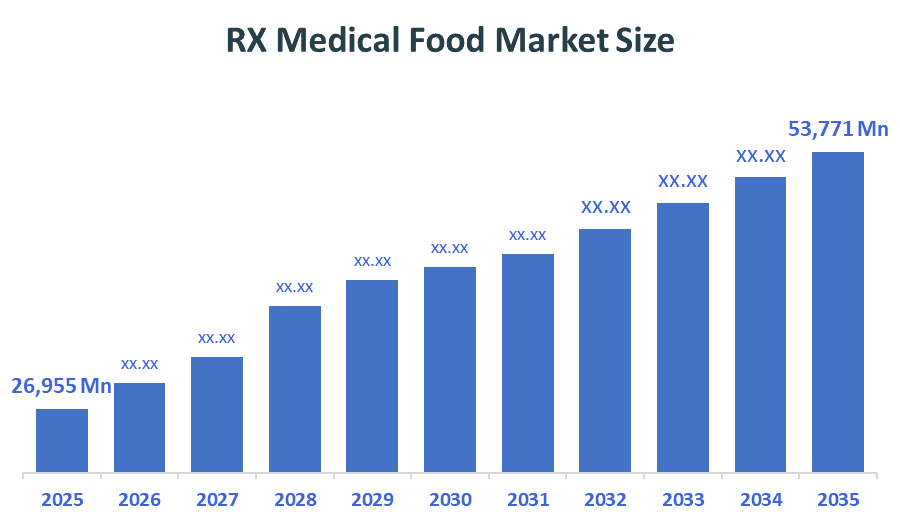
The Global Rx medical food market size is forecast to grow from USD 26,955 Million in 2025 to approximately USD 53,771 Million by 2035. According to Decision Advisors, a detailed research report on the Rx medical food market indicates that the personalized and disease-specific medical nutrition trend dominates the market, accounting for approximately 33% of the total share globally. Abbott Laboratories leads the market with an estimated 20-25% global market share. The company reported a 2025 revenue of approximately USD 40-44 Billion, making it one of the most influential forces shaping industry trends and overall market growth.
Market Snapshot
- RX Medical Food Market Size (2025): USD 26,955 Million
- Projected Global RX Medical Food Market Size (2035): USD 53,771 Million
- Global RX Medical Food Market Compound Annual Growth Rate (CAGR): 7.15%
- Largest Regional Market: North America
- Fastest Growing Region: Asia-Pacific
- Market 3rd Largest Region: Europe
- Base Year: 2025
- Historical Period: 2021–2024
- Forecast Period: 2026–2035
Market Overview/ Introduction
The Global Rx Medical Food Market refers to the industry focused on specially formulated nutritional products designed for the dietary management of diseases under medical supervision. The U.S. Food and Drug Administration defines Rx medical food as a product that serves patients whose specific dietary requirements exceed what standard food can provide. Market growth is driven by rising prevalence of chronic diseases such as Diabetes Mellitus and neurological conditions, along with increasing adoption of Medical Nutrition Therapy. The market provides opportunities through personalized nutrition dedicated to emerging markets and expanding clinical studies, which demonstrate effectiveness. The rising demand for Rx medical foods as vital components in contemporary disease management systems occurs because of both technological progress and rising knowledge among healthcare professionals.
- International standards under Codex Alimentarius define FSMP as foods for dietary management of diseases under medical supervision. These global guidelines promote harmonization of regulations and facilitate international trade and product development in the medical food sector.
- The Food Safety and Standards Authority of India regulates FSMP under the Food Safety and Standards (Nutraceuticals, FSMP, and Functional Foods) Regulations, 2016, along with guidance notes clarifying classification and usage. These initiatives ensure product safety, encourage innovation, and support the growth of medical nutrition in India.
Notable Insights: -
- North America is anticipated to hold the largest share of approximately 40% in the Rx medical food market over the forecast period.
- Asia Pacific is expected to grow at a rapid CAGR of approximately 6.3 % in the Rx medical food market during the forecast period.
- The pills segment dominated the market in 2025, approximately 42.5 %, and is projected to grow at a substantial CAGR during the forecast period.
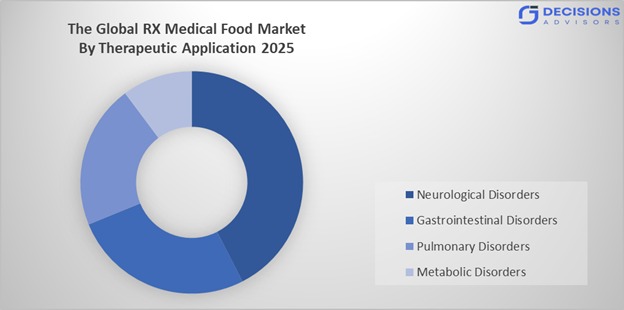
- The neurological disorders segment dominated the market in 2025, approximately 32%, and is projected to grow at a substantial CAGR during the forecast period.
- The retail pharmacies segment dominated the market in 2025, approximately 68.1%, and is projected to grow at a substantial CAGR during the forecast period.
- The compound annual growth rate of the Global RX Medical Food Market is 7.15%.
- The market is likely to achieve a valuation of USD 53771 Million by 2035.
What is role of technology in grooming the market?
Technology plays a crucial role in shaping the global Rx medical food market by enabling innovation, personalization, and improved patient outcomes. Advances in Biotechnology and Genomics allow the development of targeted nutritional formulations tailored to specific diseases and individual patient profiles. Digital health tools, including telehealth and mobile applications, support real-time monitoring and adherence to prescribed diets, enhancing treatment effectiveness. Integration of Artificial Intelligence helps analyze patient data and optimize product recommendations. Additionally, innovations in manufacturing technologies improve product quality, stability, and scalability. E-commerce platforms and digital supply chains further enhance accessibility and distribution, especially in emerging regions, making Rx medical foods more widely available and supporting overall market growth.
Market Drivers
The Global Rx Medical Food Market expands because more people suffer from chronic diseases, which include Diabetes Mellitus, Alzheimer’s disease, and gastrointestinal disorders that require specialized medical nutrition. Physicians now recommend Medical Nutrition Therapy because people understand its importance for managing persistent health conditions. Research advancements in clinical studies, together with technological progress in formulation development, create opportunities to produce more efficient targeted solutions. The market is growing as the global population ages, healthcare spending increases, and people seek alternatives to traditional medicine. The global adoption of Rx medical foods increases because healthcare systems expand and personalized nutrition gains popularity.
Restrain
The global Rx medical food market faces restraints due to limited reimbursement policies and high product costs, restricting accessibility in emerging regions. Lack of standardized regulations across countries creates approval challenges. Additionally, low awareness among healthcare professionals and patients, along with competition from conventional pharmaceuticals, hinders widespread adoption of Medical Nutrition Therapy solutions.
Competitive Analysis:
The report offers the appropriate analysis of the key organizations/companies involved within the global Rx medical food market, along with a comparative evaluation primarily based on their product offerings, business overviews, geographic presence, enterprise strategies, segment market share, and SWOT analysis. The report also provides an elaborative analysis focusing on the current news and developments of the companies, which includes product development, innovations, joint ventures, partnerships, mergers & acquisitions, strategic alliances, and others. This allows for the evaluation of the overall competition within the market.
Top Companies in Global RX Medical Food Market
- Abbott Laboratories
- Nestlé Health Science
- Danone S.A.
- Fresenius Kabi AG
- Mead Johnson & Company, LLC
- Primus Pharmaceuticals, Inc.
- Targeted Medical Pharma Inc.
- Metagenics, Inc.
- Medtrition Inc.
- Ajinomoto Cambrooke, Inc.
- Reckitt Benckiser Group plc
- Alfasigma S.p.A.
Government Initiatives
|
Country |
Key Government Initiatives |
|
UK |
The Medicines and Healthcare Products Regulatory Agency oversees healthcare products and supports safe innovation in clinical nutrition and specialized medical products. The UK also aligns with European “Foods for Special Medical Purposes (FSMP)” frameworks, ensuring strict safety, labeling, and clinical compliance standards for medical foods. |
|
China |
The Chinese government has introduced revised regulations for Formula Foods for Special Medical Purposes (FSMP) under the State Administration for Market Regulation, improving registration, labeling, and approval systems. These reforms enhance product quality, accelerate approvals, and support growth of the medical food industry. |
|
Japan |
Japan regulates medical and health foods under laws such as the Food Sanitation Act and systems like “Food for Specified Health Use (FOSHU),” ensuring safety, labeling, and functional claims validation. These initiatives support controlled innovation and consumer trust in medical nutrition products. |
Study on the Supply, Demand, Distribution, and Market Environment of the RX Medical Food Market
The global Rx medical food market demonstrates a structured interplay between supply, demand, distribution, and overall market environment, driven by clinical, economic, and regulatory factors. On the supply side, leading manufacturers such as Abbott Laboratories and Nestle S.A. focus on developing condition-specific formulations (pills, powders, liquids), with pills alone accounting for over 40% share due to ease of use and dosage precision. Demand is primarily fueled by the rising prevalence of chronic diseases and increasing physician prescriptions, with neurological disorders contributing over 30% of demand due to aging populations. In terms of distribution, retail pharmacies dominate with approximately 65–68% share, supported by trust, accessibility, and prescription-based purchasing, while online channels are expanding due to convenience. The market environment is moderately concentrated, with strong competition, evolving regulatory frameworks, and limited reimbursement policies acting as both growth drivers and barriers. Additionally, increasing awareness of clinical nutrition, technological advancements, and regional disparities where North America leads while Asia-Pacific grows fastest, shape the global ecosystem.
Price Analysis and Consumer Behaviour Analysis
Pricing in the global Rx medical food market is influenced by formulation complexity, clinical validation, and regulatory compliance. Products designed for specific conditions like Alzheimer’s disease or metabolic disorders often carry premium pricing due to R&D investments and specialized ingredients. However, pricing varies across regions, with developed markets showing higher affordability compared to emerging economies. Companies are increasingly adopting flexible pricing strategies such as tiered pricing, reimbursement support, and smaller packaging to improve access and competitiveness. Consumer behavior is largely driven by physician recommendations, clinical evidence, and awareness of Medical Nutrition Therapy. Patients with chronic conditions are more inclined toward Rx medical foods as part of long-term disease management. Increasing health awareness, preference for non-pharmaceutical interventions, and rising adoption of personalized nutrition are also shaping demand, while digital platforms are enhancing engagement and adherence.
Market Segmentation
The RX Medical Food Market share is classified into product type, therapeutic application, and distribution channel.
- The pills segment dominated the market in 2025, approximately 42.5%, and is projected to grow at a substantial CAGR during the forecast period.
Based on the product type, the Rx medical food market is divided into pills, powder, and liquid. Among these, the pills segment dominated the market in 2025, approximately 42.5%, and is projected to grow at a substantial CAGR during the forecast period. The growth of the pills segment is growing due to convenience, precise dosage, and longer shelf life compared to liquids or powders. Patients managing chronic conditions prefer easy-to-administer formats. Additionally, physicians favor pills for accurate prescription control, enhancing adherence to Medical Nutrition Therapy and supporting widespread adoption globally.
- The neurological disorders segment dominated the market in 2025, approximately 32%, and is projected to grow at a substantial CAGR during the forecast period.
Based on the therapeutic application, the Rx medical food market is divided into neurological disorders, gastrointestinal disorders, pulmonary disorders, and metabolic disorders. Among these,the neurological disorders segment dominated the market in 2025, approximately 32%, and is projected to grow at a substantial CAGR during the forecast period. The neurological disorders segment dominated due to strong patient trust, easy accessibility, and integration with prescription-based purchasing systems. Pharmacist guidance supports proper product usage, especially for chronic disease patients. Additionally, the availability of specialized products and partnerships with healthcare providers strengthen retail pharmacies as primary distribution channels for Rx medical foods.
- The retail pharmacies drugs segment dominated the market in 2025, approximately 68.1%, and is projected to grow at a substantial CAGR during the forecast period.
Based on the distribution channel, the Rx medical food market is divided into retail pharmacies and online pharmacies. Among these, the retail pharmacies segment dominated the market in 2025, approximately 68.1%, and is projected to grow at a substantial CAGR during the forecast period. The growth of the retail pharmacies segment is growing due to the companies operating through three main resources, which include their strong research and development capabilities, their extensive manufacturing facilities, and their wide network of market distribution partners. The companies maintain their market position and continuous business expansion by developing new products through their research efforts and their partnership agreements, which enable them to create and introduce new medical products.
Strategies to Implement for Growth of the Market in Non-Leading Regions
To drive growth of the global Rx medical food market in non-leading regions, companies should focus on improving awareness, accessibility, and affordability. Educational initiatives targeting healthcare professionals can enhance understanding of Medical Nutrition Therapy and its role in managing chronic diseases like Diabetes Mellitus. Expanding distribution through partnerships with local healthcare providers and pharmacies can increase product reach in underserved areas. Pricing strategies, including tiered pricing and smaller pack sizes, can improve affordability. Collaborations with governments and organizations such as the World Health Organization can support inclusion of medical foods in public health programs. Additionally, leveraging digital platforms and telehealth services can improve patient engagement and adherence, while local manufacturing and supply chain optimization can reduce costs and ensure consistent product availability.
Regional Segment Analysis of the RX Medical Food Market
- North America (U.S., Canada, Mexico)
- Europe (Germany, France, U.K., Italy, Spain, Rest of Europe)
- Asia-Pacific (China, Japan, India, Rest of APAC)
- South America (Brazil and the Rest of South America)
- The Middle East and Africa (UAE, South Africa, Rest of MEA)
North America is anticipated to hold the largest share of approximately 40% the Rx medical food market over the forecast period.
North America is anticipated to hold the largest share of approximately 40% the Rx medical food market over the forecast period. The dominance of this region is primarily driven by advanced healthcare infrastructure, high awareness of Medical Nutrition Therapy, and strong presence of key players like Abbott Laboratories. Favorable reimbursement policies, robust clinical research, and increasing prevalence of chronic diseases further drive adoption, ensuring the region maintains its leading market share.
Asia Pacific is expected to grow at a rapid CAGR of approximately 6.3% in the Rx medical food market during the forecast period.
Asia Pacific is expected to grow at a rapid CAGR of approximately 6.3% in the Rx medical food market during the forecast period. This growth is driven by rising healthcare awareness, increasing prevalence of chronic diseases like Diabetes Mellitus, and improving access to Medical Nutrition Therapy. Expanding healthcare infrastructure, growing middle-class population, and increasing investments by global companies are further accelerating regional market growth.
Europe is the 3rd largest region to grow in the Rx medical food market during the period.
Europe is the third-largest region in the Rx medical food market due to well-established healthcare systems, increasing adoption of Medical Nutrition Therapy, and a growing aging population prone to chronic diseases. Strong regulatory frameworks and rising awareness among healthcare professionals’ further support steady market growth across the region.
Future Market Trends in Global RX Medical Food Market: -
1. Personalized Nutrition and Precision Medicine Integration
The integration of personalized nutrition with advances in Genomics and Metabolomics is a key trend shaping the Rx medical food market. Tailored formulations based on individual genetic and metabolic profiles improve treatment outcomes, driving demand. This approach enhances patient compliance, enabling more targeted and effective disease-specific nutritional therapies.
2. Expansion in Neurological and Rare Disease Applications
Growing research in Clinical Nutrition is expanding the use of Rx medical foods for neurological and rare disorders like Alzheimer’s disease. Increasing prevalence and limited pharmaceutical options are encouraging physicians to adopt medical foods as supportive treatments, boosting innovation and market penetration in niche therapeutic segments.
3. Digital Health and Remote Patient Monitoring Integration
The rise of Digital Health and platforms like MyFitnessPal is supporting better patient monitoring and adherence to prescribed medical foods. Integration with telehealth enables real-time tracking of nutritional intake, improving outcomes and expanding accessibility, particularly in chronic disease management across global healthcare systems.
Recent Development
- In February 2026, UK HealthCare launched a “Food as Health” initiative across Kentucky aimed at improving health outcomes through a “food is medicine” approach. The program partnered with Medicaid organizations and healthcare providers to deliver medically tailored meals, nutrition counseling, and grocery prescription services to vulnerable populations. It primarily targeted patients with chronic conditions such as diabetes, HIV, and cardiovascular diseases.
- In September 2025, the U.S. administration announced a major drug pricing initiative in partnership with Pfizer aimed at reducing prescription drug costs for American patients. The agreement introduced “most-favored-nation” pricing, aligning U.S. drug prices with those in other developed countries. It also included plans for a new platform, TrumpRx, to enable direct purchase of medicines at discounted rates.
- In October 2025, Clemson Rural Health launched its first-of-its-kind “Protein Rx” program aimed at addressing malnutrition among adults in Upstate South Carolina. The initiative provided protein-rich food prescriptions, nutrition education, and ongoing support to vulnerable patients, particularly after hospitalization. Participants received regular food boxes containing high-protein items along with guidance to improve dietary habits.
- In June 2025, Abbott Laboratories announced new research on its Healthy Food Rx program, demonstrating that the “food is medicine” approach helped individuals living with diabetes improve their diet and overall health. The study, presented at the American Diabetes Association’s Scientific Sessions, showed that participants increased their fruit and vegetable intake and reported better health outcomes.
How is Recent Developments Helping the Market?
Recent developments are significantly accelerating growth in the global Rx medical food market by enhancing product innovation, regulatory clarity, and clinical adoption. Advances in precision nutrition and biotechnology have enabled the development of condition-specific formulations targeting diseases such as Alzheimer’s, diabetes, and metabolic disorders. Increased clinical validation and evidence-based studies are strengthening physician confidence and driving prescription rates. Regulatory bodies are also streamlining guidelines for medical foods, improving market access and product standardization. Additionally, strategic collaborations between pharmaceutical and nutrition companies are expanding product pipelines and global reach. Digital health integration, including personalized diet tracking and telehealth, is further supporting patient adherence. Rising awareness about preventive healthcare and the role of nutrition in disease management is also boosting demand, positioning Rx medical foods as a vital component of modern therapeutic strategies worldwide.
Market Segment
This study forecasts revenue at global, regional, and country levels from 2020 to 2035. Decision Advisors has segmented the RX Medical Food Market based on the below-mentioned segments:
Global RX Medical Food Market, Product Type
- Pills
- Powder
- Liquid
Global RX Medical Food Market, By Therapeutic Application
- Neurological Disorders
- Gastrointestinal Disorders
- Pulmonary Disorders
- Metabolic Disorders
Global RX Medical Food Market, By Distribution Channel
- Retail Pharmacies
- Online Pharmacies
Global RX Medical Food Market, By Regional Analysis
- North America
- US
- Canada
- Mexico
- Europe
- Germany
- UK
- France
- Italy
- Spain
- Russia
- Rest of Europe
- Asia Pacific
- China
- Japan
- India
- South Korea
- Australia
- Rest of Asia Pacific
- South America
- Brazil
- Argentina
- Rest of South America
- Middle East & Africa
- UAE
- Saudi Arabia
- Qatar
- South Africa
- Rest of the Middle East & Africa
Frequently Asked Questions (FAQ)
Q What role do healthcare professionals play in the Rx medical food market?
A. Healthcare professionals play a critical role as Rx medical foods are prescribed under medical supervision. Physicians and dietitians recommend products based on patient conditions, ensuring proper use of Medical Nutrition Therapy, which directly influences market demand and patient outcomes.
Q. How does regulatory classification impact the Rx medical food market?
A. Regulatory classification by authorities like the U.S. Food and Drug Administration distinguishes medical foods from drugs and supplements, reducing approval complexity but requiring scientific evidence. This balance encourages innovation while ensuring safety, supporting steady market expansion globally.
Q. Which patient groups are the primary consumers of Rx medical foods?
A. Primary consumers include patients suffering from chronic and metabolic disorders such as Phenylketonuria, diabetes, and neurological conditions. These patients require specialized nutrition that cannot be fulfilled through a regular diet, driving consistent demand in the market.
Q. How are partnerships influencing the Rx medical food market growth?
A. Strategic partnerships between pharmaceutical, nutrition, and biotech companies enhance product innovation and global reach. Collaborations help in expanding clinical research, improving distribution networks, and accelerating the development of advanced formulations, thereby strengthening competitive positioning and market penetration worldwide.
Check Licence
Choose the plan that fits you best: Single User, Multi-User, or Enterprise solutions tailored for your needs.
We Have You Covered
- 24/7 Analyst Support
- Clients Across the Globe
- Tailored Insights
- Technology Tracking
- Competitive Intelligence
- Custom Research
- Syndicated Market Studies
- Market Overview
- Market Segmentation
- Growth Drivers
- Market Opportunities
- Regulatory Insights
- Innovation & Sustainability
Report Details
| Scope | Global |
| Pages | 240 |
| Delivery | PDF & Excel via Email |
| Language | English |
| Release | Apr 2026 |
| Access | Download from this page |