
Global Scopolamine Market
 |
Pages:
240
|
Pages:
240
Global Scopolamine Market Size, Share, By Product Type (Scopolamine Hydrobromide, Scopolamine Butylbromide), By Application (Motion Sickness, Postoperative Nausea and Vomiting (PONV), Ophthalmic Uses, Gastrointestinal & Antispasmodic Uses), By Distribution Channel (Hospital Pharmacies, Retail Pharmacies, Online Pharmacies), and By Region (North America, Europe, Asia-Pacific, Latin America, Middle East & Africa), Analysis and Forecast 2026-2035
REPORT COVERAGE
Global
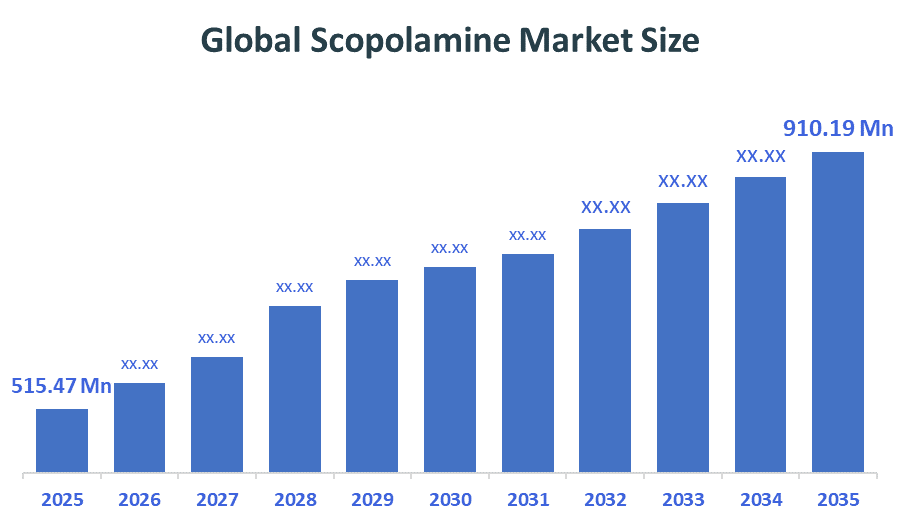
The Global Scopolamine Market size is forecast to grow from USD 515.47 Million in 2025 to approximately USD 910.19 Million by 2035. According to Decision Advisors, a detailed research report on the Scopolamine market indicates that the dominance of transdermal patch delivery systems trend dominates the market, accounting for approximately 50-60% of the total share globally. Baxter International Inc. leads the market with an estimated 18-22% global market share. The company reported a 2025 revenue of approximately USD 15-16 Billion, making it one of the most influential forces shaping industry trends and overall market growth.
Market Snapshot
- Global Scopolamine Market Size (2025): USD 515.47 Million
- Projected Global Scopolamine Market Size (2035): USD 910.19 Million
- Global Scopolamine Market Compound Annual Growth Rate (CAGR): 5.85%
- Largest Regional Market: North America
- Fastest Growing Region: Asia-Pacific
- Market 3rd Largest Region: Europe
- Base Year: 2025
- Historical Period: 2021–2024
- Forecast Period: 2026–2035
Market Overview/ Introduction
The Global Scopolamine industry describes the business that develops and sells anticholinergic medications which customers use to treat motion sickness and postoperative nausea and vomiting (PONV) symptoms. Scopolamine functions as a medication that prevents nausea because it blocks muscarinic receptors located in the central nervous system. The market expansion occurs because more people travel, more surgical operations take place worldwide, and people discover effective antiemetic treatments. The market creates chances through developing new transdermal delivery systems and entering new markets that, are not yet established. The market grows because people need drug delivery systems that are both easy to use and provide extended effects, while pharmaceutical companies develop better drug formulas.
- The U.S. Food and Drug Administration introduced updated safety regulations for scopolamine transdermal patches requiring new warnings about heat-related complications and stricter labeling requirements. These initiatives enhance patient safety, improve pharmacovigilance, and ensure safer usage of antiemetic therapies, supporting long-term market credibility and regulatory compliance.
- The European Medicines Agency regulates scopolamine through strict clinical and safety frameworks, including Paediatric Investigation Plans (PIPs) for transdermal therapies. These initiatives ensure drug safety across age groups, promote innovation in delivery systems, and standardize approvals across Europe, strengthening market reliability and encouraging pharmaceutical R&D investments.
Notable Insights: -
- North America is anticipated to hold the largest share of approximately 42% in the Scopolamine market over the forecast period.
- Asia Pacific is expected to grow at a rapid CAGR of approximately 7.4 % in the Scopolamine market during the forecast period.
- The scopolamine hydrobromide segment dominated the market in 2025, approximately 45 %, and is projected to grow at a substantial CAGR during the forecast period.
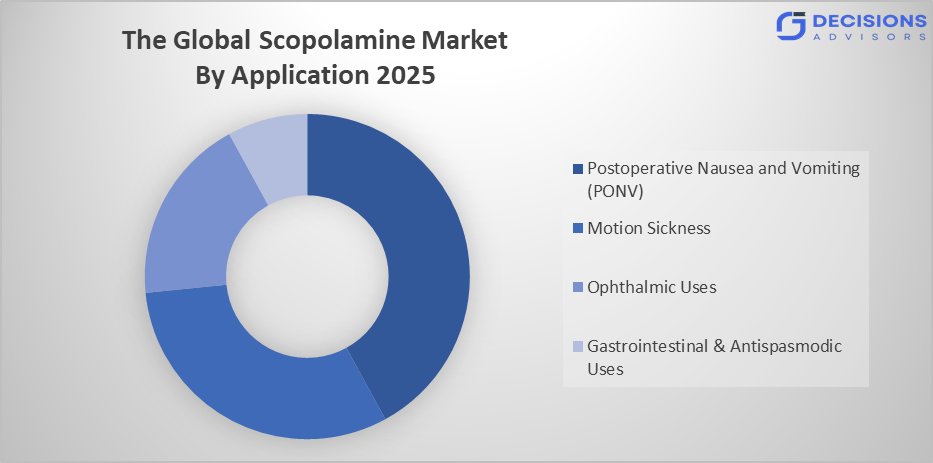
- The postoperative nausea and vomiting (PONV) segment dominated the market in 2025, approximately 40%, and is projected to grow at a substantial CAGR during the forecast period.
- The hospital pharmacies segment dominated the market in 2025, approximately 50%, and is projected to grow at a substantial CAGR during the forecast period.
- The compound annual growth rate of the Global Scopolamine market is 5.85%.
- The market is likely to achieve a valuation of USD 910.19 Million by 2035.
What is role of technology in grooming the market?
Technology significantly shapes the global scopolamine market by improving drug delivery, patient compliance, and therapeutic outcomes. Advances in transdermal patch systems enable controlled and sustained drug release, reducing dosing frequency and enhancing convenience for patients. Innovations in pharmaceutical formulations improve drug stability and bioavailability, ensuring better efficacy. Digital health tools play a key role in monitoring treatment adherence, particularly in post-surgical care. Additionally, artificial intelligence supports drug development by optimizing formulations and dosage accuracy. Modern manufacturing technologies enhance scalability while maintaining strict quality standards. Furthermore, the growth of e-commerce and digital distribution channels increases accessibility of scopolamine-based products, especially in emerging markets, thereby contributing to overall market expansion and improved healthcare delivery worldwide.
Market Drivers
The global scopolamine market expands because people experience more motion sickness, and surgical procedures increase, and there is a greater need for effective antiemetic medications. The tourism and travel industry creates high demand because more people want preventive treatments for nausea during their travels. The adoption rate increases because healthcare professionals now know more about managing postoperative nausea. The development of transdermal delivery systems through technological advancements now provides users with easier methods to take their medications. The market experiences worldwide growth because of increasing healthcare spending, the development of pharmaceutical facilities, and the need for non-invasive medication delivery systems.
Restrain
The global scopolamine market faces restraints due to side effects such as dry mouth, dizziness, and blurred vision, which limit patient adoption. Strict regulatory requirements and product approval processes can delay market entry. Additionally, availability of alternative antiemetic drugs and limited awareness in developing regions restrict market expansion.
Competitive Analysis:
The report offers the appropriate analysis of the key organizations/companies involved within the global Scopolamine market, along with a comparative evaluation primarily based on their product offerings, business overviews, geographic presence, enterprise strategies, segment market share, and SWOT analysis. The report also provides an elaborative analysis focusing on the current news and developments of the companies, which includes product development, innovations, joint ventures, partnerships, mergers & acquisitions, strategic alliances, and others. This allows for the evaluation of the overall competition within the market.
Top Companies in Global Scopolamine Market
- Novartis AG
- Baxter International Inc.
- GlaxoSmithKline plc
- Perrigo Company plc
- Pfizer Inc.
- Teva Pharmaceutical Industries Ltd.
- Boehringer Ingelheim GmbH
- Alchem International Pvt. Ltd.
- Caleb Pharmaceuticals Inc.
- Myungmoon Pharm Co. Ltd.
- Fine Chemicals Corporation
- Alkaloids of Australia
Government Initiatives
|
Country |
Key Government Initiatives |
|
UK |
The U.S. Food and Drug Administration introduced updated safety regulations for scopolamine transdermal patches in 2025, requiring revised labeling and warnings regarding heat-related complications and hyperthermia risks. These measures strengthen pharmacovigilance, improve patient safety, and ensure proper usage of antiemetic therapies, supporting regulatory compliance and long-term market growth. |
|
Europe |
The European Medicines Agency regulates scopolamine under strict pharmacovigilance and drug safety frameworks, ensuring quality, efficacy, and risk monitoring of antiemetic drugs. The agency promotes standardized approvals and continuous monitoring of transdermal drug systems, encouraging innovation while maintaining high safety standards across European markets. |
|
India |
The Central Drugs Standard Control Organization regulates scopolamine under the Drugs and Cosmetics Act, ensuring drug approval, quality control, and clinical trial oversight. CDSCO initiatives focus on strengthening pharmaceutical safety, improving accessibility, and supporting domestic manufacturing, which enhances the availability of essential antiemetic drugs in the Indian healthcare system. |
Study on the Supply, Demand, Distribution, and Market Environment of the Scopolamine market
The global scopolamine market demonstrates a structured interplay between supply, demand, distribution, and overall market environment. On the supply side, manufacturers focus on developing advanced delivery formats such as transdermal patches, which dominate due to convenience and sustained drug release. Demand is primarily driven by increasing travel-related motion sickness and rising surgical procedures requiring antiemetic management. In terms of distribution, hospital pharmacies dominate due to prescription-based usage, while retail and online pharmacies are expanding. The market environment is moderately competitive, with strong regulatory oversight and ongoing innovation shaping growth. Regional disparities, with North America leading and Asia-Pacific growing rapidly, further define the market landscape.
Price Analysis and Consumer Behaviour Analysis
Pricing in the global scopolamine market is influenced by formulation type, regulatory compliance, and manufacturing costs. Transdermal patches typically have higher pricing due to advanced technology and extended drug release benefits. Pricing varies regionally, with developed markets offering better affordability compared to emerging economies. Companies adopt strategies such as generic drug production and competitive pricing to improve accessibility. Consumer behavior is driven by physician prescriptions, the effectiveness of treatment, and the convenience of use. Patients prefer long-acting solutions like patches, especially for travel and postoperative care. Increasing awareness and preference for non-invasive drug delivery systems are shaping demand patterns globally.
Market Segmentation
The Scopolamine market share is classified into product type, application, and distribution channel.
- The scopolamine hydrobromide segment dominated the market in 2025, approximately 45%, and is projected to grow at a substantial CAGR during the forecast period.
Based on the product type, the scopolamine market is divided into scopolamine hydrobromide and scopolamine butylbromide. Among these, the scopolamine hydrobromide segment dominated the market in 2025, approximately 45%, and is projected to grow at a substantial CAGR during the forecast period. The growth of the scopolamine hydrobromide segment is growing due to its strong central nervous system penetration and high effectiveness in treating motion sickness and postoperative nausea. It is widely used in transdermal patches, offering sustained drug release and better patient compliance. Its proven clinical efficacy and broader therapeutic applications drive higher adoption globally.
- The postoperative nausea and vomiting (PONV) segment dominated the market in 2025, approximately 40%, and is projected to grow at a substantial CAGR during the forecast period.
Based on the application, the scopolamine market is divided into motion sickness, postoperative nausea and vomiting (PONV), ophthalmic uses, and gastrointestinal & antispasmodic uses. Among these, the postoperative nausea and vomiting (PONV) segment dominated the market in 2025, approximately 40%, and is projected to grow at a substantial CAGR during the forecast period. The postoperative nausea and vomiting (PONV) segment dominated due to the rising number of surgical procedures worldwide and the need for effective nausea management after anesthesia. Clinical guidelines strongly recommend scopolamine patches for high-risk patients. Hospitals rely on it for reliable outcomes, making it a standard solution in perioperative care and boosting segment dominance.
- The hospital pharmacies drugs segment dominated the market in 2025, approximately 50%, and is projected to grow at a substantial CAGR during the forecast period.
Based on the distribution channel, the scopolamine market is divided into hospital pharmacies, retail pharmacies, and online pharmacies. Among these, the hospital pharmacies segment dominated the market in 2025, approximately 50%, and is projected to grow at a substantial CAGR during the forecast period. The growth of the hospital pharmacies segment is growing due to the high usage of scopolamine in surgical and inpatient settings. These facilities ensure controlled administration, especially for injections and patches. Bulk procurement, integration with hospital protocols, and direct physician supervision increase reliability, making hospitals the primary distribution channel for scopolamine products globally.
Strategies to Implement for Growth of the Market in Non-Leading Regions
To drive growth of the global scopolamine market in non-leading regions, companies should focus on improving awareness, accessibility, and affordability of antiemetic therapies. Educational programs targeting healthcare professionals can enhance understanding of scopolamine’s effectiveness in managing motion sickness and postoperative nausea. Expanding distribution networks through partnerships with local hospitals and pharmacies can improve product reach in underserved areas. Implementing cost-effective strategies such as generic formulations and smaller packaging sizes can increase affordability. Collaborations with governments and public health organizations can support inclusion of essential antiemetic drugs in healthcare programs. Additionally, leveraging digital platforms and telemedicine can improve patient awareness, adherence, and access, while local manufacturing can reduce costs and ensure consistent supply.
Regional Segment Analysis of the Scopolamine Market
- North America (U.S., Canada, Mexico)
- Europe (Germany, France, U.K., Italy, Spain, Rest of Europe)
- Asia-Pacific (China, Japan, India, Rest of APAC)
- South America (Brazil and the Rest of South America)
- The Middle East and Africa (UAE, South Africa, Rest of MEA)
North America is anticipated to hold the largest share of approximately 42% the Scopolamine market over the forecast period.
North America is anticipated to hold the largest share of approximately 42% the Scopolamine market over the forecast period. The dominance of this region is primarily driven by advanced healthcare infrastructure, high surgical procedure volumes, and strong awareness of antiemetic therapies. The widespread use of transdermal scopolamine patches in hospitals and travel medicine supports demand. Favorable regulatory approvals, strong presence of key pharmaceutical companies, and higher healthcare spending further strengthen regional dominance.
Asia Pacific is expected to grow at a rapid CAGR of approximately 7.4% in the Scopolamine market during the forecast period.
Asia Pacific is expected to grow at a rapid CAGR of approximately 7.4% in the Scopolamine market during the forecast period. This growth is driven by rising surgical procedures, expanding healthcare infrastructure, and increasing demand for motion sickness treatments. Rapid urbanization and growing travel activities further boost adoption. Additionally, improving access to healthcare, rising disposable incomes, and the expansion of online pharmacies are increasing awareness and availability of scopolamine products across emerging economies.
Europe is the 3rd largest region to grow in the scopolamine market during the period.
Europe holds a significant position due to well-established healthcare systems and increasing use of antiemetic therapies in surgical care. Rising awareness of motion sickness treatments and strong regulatory frameworks support market stability. Additionally, the presence of leading pharmaceutical companies and growing elderly population contribute to steady demand across the region.
Future Market Trends in Global Scopolamine Market: -
1. Growing Adoption of Transdermal Drug Delivery Systems
The increasing preference for transdermal patches is a key trend in the scopolamine market due to their convenience and sustained drug release. These systems reduce dosing frequency and improve patient compliance, especially for motion sickness and postoperative care. Advancements in patch technology are further enhancing effectiveness and expanding their clinical applications globally.
2. Rising Demand from Travel and Tourism Sector
The growth of global travel and tourism is driving demand for scopolamine as a preventive solution for motion sickness. Increasing air, sea, and road travel has raised awareness of antiemetic treatments. As more individuals seek comfortable travel experiences, demand for fast-acting and long-lasting solutions continues to rise significantly.
3. Expansion in Surgical and Postoperative Care Applications
The increasing number of surgical procedures worldwide is boosting demand for scopolamine in managing postoperative nausea and vomiting (PONV). Healthcare providers are increasingly adopting effective antiemetic protocols to improve patient outcomes. Growing hospital infrastructure and advancements in perioperative care are supporting the wider use of scopolamine globally.
Recent Development
- In February 2026, reports revealed that Jeffrey Epstein had referenced toxic “trumpet plants” in emails linked to his private nursery. Newly released documents suggested the plants were associated with scopolamine, a psychoactive substance known for causing memory loss and suggestibility, raising concerns about its potential misuse.
- In October 2025, the Central Drugs Standard Control Organization issued a directive reinforcing mandatory testing of raw materials and finished pharmaceutical products to ensure drug quality and safety across the country. The initiative aimed to address manufacturing quality concerns and strengthen regulatory oversight in India’s pharmaceutical sector.
- In August 2024, Zydus Lifesciences received final approval from the U.S. Food and Drug Administration to market its Scopolamine Transdermal System (1 mg/3 days) for the prevention of motion sickness and postoperative nausea and vomiting. The product was planned for manufacturing at its Ahmedabad facility, strengthening its transdermal portfolio.
- In January 2024, the U.S. Food and Drug Administration issued a Complete Response Letter rejecting Defender Pharmaceuticals’ investigational intranasal scopolamine gel for motion sickness. The company stated it planned to meet with the regulator to address concerns and develop a strategy for potential future approval.
How is Recent Developments Helping the Market?
Recent developments are significantly supporting the growth of the global scopolamine market by enhancing innovation, competition, and clinical adoption. Advancements in transdermal patch technology, including improved adhesion and controlled drug release, have increased patient compliance and treatment effectiveness. Additionally, the launch of multiple new patch formulations and growing competition in developed markets have improved accessibility and reduced pricing pressures. Ongoing research into alternative delivery systems and synthetic production methods is also strengthening supply stability. Furthermore, rising surgical procedures and expanding tele-pharmacy platforms are increasing product visibility and demand, especially in emerging regions. These developments collectively improve treatment outcomes, accessibility, and overall market expansion.
Market Segment
This study forecasts revenue at global, regional, and country levels from 2020 to 2035. Decision Advisors has segmented the Scopolamine Market based on the below-mentioned segments:
Global Scopolamine Market, Product Type
- Scopolamine Hydrobromide
- Scopolamine Butylbromide
Global Scopolamine Market, By Application
- Motion Sickness
- Postoperative Nausea and Vomiting (PONV)
- Ophthalmic Uses
- Gastrointestinal & Antispasmodic Uses
Global Scopolamine Market, By Distribution Channel
- Hospital Pharmacies
- Retail Pharmacies
- Online Pharmacies
Global Scopolamine Market, By Regional Analysis
- North America
- US
- Canada
- Mexico
- Europe
- Germany
- UK
- France
- Italy
- Spain
- Russia
- Rest of Europe
- Asia Pacific
- China
- Japan
- India
- South Korea
- Australia
- Rest of Asia Pacific
- South America
- Brazil
- Argentina
- Rest of South America
- Middle East & Africa
- UAE
- Saudi Arabia
- Qatar
- South Africa
- Rest of the Middle East & Africa
Frequently Asked Questions (FAQ)
Q What factors influence the demand for scopolamine in the global market?
A. Demand for scopolamine is influenced by increasing travel activities, rising prevalence of motion sickness, and growing surgical procedures requiring antiemetic treatments. Additionally, advancements in transdermal drug delivery systems and improved patient awareness about nausea prevention therapies significantly contribute to increasing global demand.
Q. How does scopolamine compare with other antiemetic drugs in terms of effectiveness?
A. Scopolamine is highly effective for preventing motion sickness and postoperative nausea due to its action on the central nervous system. Compared to other antiemetics, it offers longer-lasting relief, especially in transdermal patch form, though side effects may limit its use in certain patient populations.
Q. What challenges do manufacturers face in the scopolamine market?
A. Manufacturers face challenges such as stringent regulatory approvals, potential side effects of the drug, and competition from alternative antiemetic medications. Additionally, sourcing raw materials and ensuring consistent quality in transdermal delivery systems can impact production efficiency and market expansion.
Q. How is the rise of generic drugs impacting the scopolamine market?
A. The rise of generic scopolamine products is increasing market competition and improving affordability. This trend is making treatments more accessible in developing regions while reducing pricing pressures on branded products, thereby expanding the overall market reach and encouraging wider adoption globally.
Check Licence
Choose the plan that fits you best: Single User, Multi-User, or Enterprise solutions tailored for your needs.
We Have You Covered
- 24/7 Analyst Support
- Clients Across the Globe
- Tailored Insights
- Technology Tracking
- Competitive Intelligence
- Custom Research
- Syndicated Market Studies
- Market Overview
- Market Segmentation
- Growth Drivers
- Market Opportunities
- Regulatory Insights
- Innovation & Sustainability
Report Details
| Scope | Global |
| Pages | 240 |
| Delivery | PDF & Excel via Email |
| Language | English |
| Release | Apr 2026 |
| Access | Download from this page |