
Global Short Bowel Syndrome Market
 |
Pages:
210
|
Pages:
210
Global Short Bowel Syndrome Market Size, Share, By Drug Class (GLP-2, Growth Hormone, Glutamine, and Others), By Treatment Type (Parenteral Nutrition, Enteral Nutrition, Medications, Surgical Interventions), By Distribution Channel (Hospital Pharmacies, Retail Pharmacies, and Others), and By Region (North America, Europe, Asia-Pacific, Latin America, Middle East, and Africa), Analysis and Forecast 2025 ? 2035
REPORT COVERAGE
Global
Market Snapshot
- Market Size (2025): USD 2.49 Billion
- Projected Market Size (2035): USD 72.64 Billion
- Compound Annual Growth Rate (CAGR): 5.98%
- Largest Regional Market: North America
- Fastest Growing Region: Asia Pacific
- 2nd Largest Region: Europe
- Base Year: 2025
- Historical Period: 2021–2024
- Forecast Period: 2025–2035
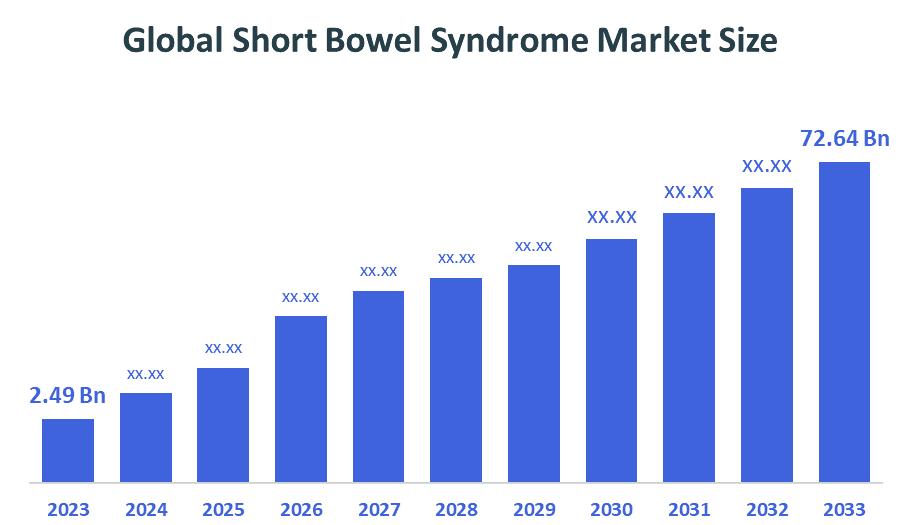
According to Decision Advisors, the Global Short Bowel Syndrome Market Size is expected to grow from USD 2.49 billion in 2025 to USD 4.45 billion by 2035, at a CAGR of 5.98% during the forecast period 2025-2035. The global short bowel syndrome market is driven by an increasing tendency to develop short bowel syndrome. The number of patients with short bowel syndrome intestinal failure (SBS-IF) has increased in developed countries because medical professionals now diagnose this condition more frequently.
Market Overview/ Introduction
The short bowel syndrome market refers to the global industry that focuses on diagnosing, treating, and managing short bowel syndrome as a medical condition that results from substantial small intestine loss or malfunction. The market experiences growth because intestinal disorders become more common, drug treatments improve, and people become more knowledgeable about uncommon medical conditions. The system includes all medical facilities that provide SBS treatment, including hospitals and specialty clinics, and home healthcare services. The SBS market will expand because more people develop the condition, the population ages, and surgical procedures become more common.
The future of the market will develop through the implementation of personalized medicine, artificial intelligence systems and combined treatment methods. The world will experience an increase in treatment needs because of better diagnostic methods and the ability to identify diseases at their initial stages.
- The European Commission decided to grant Orphan Drug Designation for crofelemer to treat short bowel syndrome after reviewing the ODD application, which Napo EU submitted to the European Medicines Agency in September 2021. The announcement of this decision was made by Jaguar Health together with its Italian subsidiary, Napo EU S.p.A., in December 2021.
- Takeda Pharmaceutical Company Limited is a leading company in the market due to the highly desirable GLP-2 initiative.
Notable Insights: -
- North America holds the largest regional market share, approximately 75.87% in the global short bowel syndrome market.
- Asia Pacific is the fastest-growing region in the global short bowel syndrome market.
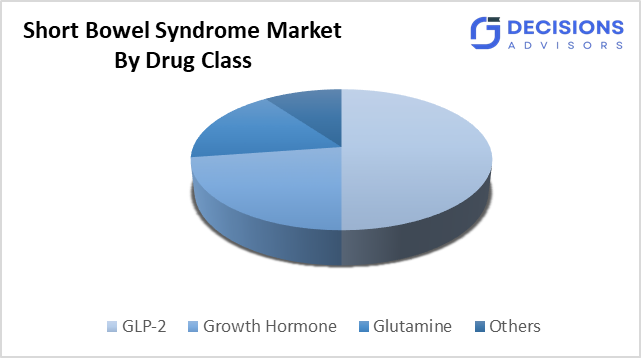
- By drug class, the GLP-2 segment held a dominant position of over 97.01% in terms of market share in 2025.
- By distribution channel, the retail pharmacies segment is the dominating one, accounting for over 60.66% of the global market share in 2025.
- The compound annual growth rate of the global short bowel syndrome market is 5.98%.
- The market is likely to achieve a valuation of USD 4.45 billion by 2035.
What is the role of technology in grooming the market?
Technology is transforming the short bowel syndrome (SBS) market through its capacity to improve disease diagnosis and treatment methods and patient management systems. Digital health solutions, which include telemedicine and remote monitoring platforms, enable better treatment for complex medical conditions such as home parenteral nutrition because they help patients follow through with their treatment and stay out of hospitals. The combination of artificial intelligence (AI) and big data technologies enables the development of personalized medical treatment solutions, which allow doctors to optimize GLP?2 analog therapy and nutritional assistance. Modern technologies for parenteral nutrition systems and biologics delivery systems increase operational efficiency and safety standards and lead to better results for patients. The global SBS market—valued at USD?2?billion in 2024—is projected to grow to USD?6.4?billion by 2030 at 21.6?% CAGR because technological advancements in patient care and research development drive market expansion.
Market Drivers
The global short bowel syndrome market is driven by the development of GLP?2 analog therapies, which enhance nutrient absorption, leading to higher adoption rates and decreased need for parenteral nutrition. The combination of improved diagnostic capabilities and increased healthcare funding allows for early medical intervention and continual treatment options. The combination of increased research and development funding, with orphan drug incentives, creates a favorable environment for companies to develop new products and access markets. The current product rollouts and ongoing research activities are focused on developing next-generation GLP?2 analogs and extended-release medications, which are currently undergoing Phase 3 testing, with new oral GLP?2 products that will enhance patient adherence.
Restrain
The main restraints on the global short bowel syndrome market are high treatment costs and limited access to advanced therapies in developing regions, and low disease awareness among healthcare providers creates this situation. The implementation of stringent regulatory requirements, with the possibility of adverse effects from parenteral nutrition and GLP?2 analogs prevents their widespread use.
Competitive Analysis:
The report offers the appropriate analysis of the key organizations/companies involved within the short bowel syndrome market, along with a comparative evaluation primarily based on their product of offering, business overviews, geographic presence, enterprise strategies, segment market share, and SWOT analysis. The report also provides an elaborative analysis focusing on the current news and developments of the companies, which includes product development, innovations, joint ventures, partnerships, mergers & acquisitions, strategic alliances, and others. This allows for the evaluation of the overall competition within the market.
Top Companies in Global Short Bowel Syndrome Market
- Takeda Pharmaceutical Company Limited
- OxThera
- Zealand Pharma
- VectivBio
- Ardelyx Inc.
- Nutrinia Ltd.
- Merck KGaA
- Ironwood Pharmaceuticals
- Nestlé Health Science
- Hanmi Pharmaceutical
- Jaguar Health
- Entera Bio Ltd.
Government Initiatives
|
Country |
Key Government Initiatives |
|
US |
The FDA provides Orphan Drug Designation (ODD) and Fast-Track status to accelerate rare disease treatments. In 2023, the US expanded ICD-10 codes (K90.82 for SBS) to improve diagnosis tracking and reimbursement accuracy. |
|
UK |
The NICE has approved Teduglutide (Revestive) for use in the NHS for patients aged 1 year and older. Special commercial arrangements exist to manage the high cost of therapy while ensuring patient access. |
|
Japan |
Japan's MHLW approved Teduglutide in 2021. The Nanbyo system (Designated Intractable Diseases) grants patients special medical subsidies for chronic conditions like Crohn's, which often lead to SBS. |
|
China |
The government has implemented healthcare reforms and invested in rare disease treatments. New 2025 policies focus on pharmaceutical R&D and expanding infrastructure to support specialized SBS therapies in hospitals. |
Market Segmentation
The short bowel syndrome market share is classified by drug class, treatment type, and distribution channel.
- The GLP-2 segment dominated the market in 2025, and is projected to grow at a substantial CAGR of approximately 38% during the forecast period.
Based on the drug class, the short bowel syndrome market is divided into GLP-2, growth hormone, glutamine, and others. Among these, the GLP-2 segment dominated the market in 2025 and is projected to grow at a substantial CAGR of approximately 97.01% during the forecast period. The growth of the segment is driven by a broad spectrum of GLP-2-based pipeline products for short bowel syndrome. Furthermore, the sanction adieu some on the market only enhances marketable growth for this segment.
The medications segment accounted for the largest share in 2025 and is anticipated to grow at a significant CAGR during the forecast period.
Based on the treatment type, the short bowel syndrome market is divided into parenteral nutrition, enteral nutrition, medications, surgical interventions. Among these, the medications segment accounted for the largest share in 2025 and is anticipated to grow at a significant CAGR during the forecast period. The widespread adoption of the product, with its lower surgical costs, simple usage and its function as an initial treatment establishes its success. The medical field uses enteral nutrition as its main method of feeding patients, whereas parenteral nutrition and surgical procedures represent their minor specialized applications.
- The retail pharmacies segment dominated the market in 2025, and is projected to grow at a substantial CAGR of approximately 60.66% during the forecast period.
Based on the distribution channel, the short bowel syndrome market is divided into hospital pharmacies, retail pharmacies, and others. Among these, the retail pharmacies segment dominated the market in 2025 and is projected to grow at a substantial CAGR of approximately 60.66% during the forecast period. The market leadership results from the increasing establishment of retail pharmacies across various nations, including the United States, the United Kingdom, India, and additional countries. The leading companies in this market are now focusing on partnerships with online pharmacies because patients prefer to use online platforms instead of physical stores.
According to the data published by the Commonwealth Fund in 2021, it was estimated that around 60,000 retail pharmacies are present in the U.S. The existing market conditions create multiple chances for retail pharmacies to introduce new medications which treat this specific syndrome.
Regional Segment Analysis of the Short Bowel Syndrome Market
- North America (U.S., Canada, Mexico)
- Europe (Germany, France, U.K., Italy, Spain, Rest of Europe)
- Asia-Pacific (China, Japan, India, Rest of APAC)
- South America (Brazil and the Rest of South America)
- The Middle East and Africa (UAE, South Africa, Rest of MEA)
North America is anticipated to hold the largest share of the short bowel syndrome market over the predicted timeframe.
North America is anticipated to hold the largest share of the Short Bowel Syndrome market over the predicted timeframe. North America generated 1.25 billion USD in 2025, which created 75.87% of global market revenue and will increase to 1.45 billion USD in 2026. The short bowel syndrome market in this area grows because many patients need new treatment options, and they already use advanced medications. The market in this area will expand during the forecast period because approved drugs treat both adult and pediatric patients, and because multiple pipeline products exist and key players increase their research and development activities. The U.S. market will reach a value of 1.43 billion USD by 2026.
In February 2024, Ironwood Pharmaceuticals announced positive topline results from the Global Phase III Trial of once-weekly apraglutide in adults with short bowel syndrome with intestinal failure (SBS-IF)
Asia Pacific is expected to grow at a rapid CAGR in the short bowel syndrome market during the forecast period. The Asia Pacific market achieved a value of USD 0.17 billion in 2025, which provided 10.03% of the worldwide market share, and it is expected to grow to USD 0.19 billion by 2026. The market in this area expands because major companies directly operate in the market while they spend large amounts on research and development to create new drugs, and because they focus more on conducting clinical trials for GLP-2 drugs. The increasing knowledge about rare diseases that exists in India, Japan, Australia and other countries leads to more demand for different treatment solutions in this area. The Japan market is valued at USD 0.14 billion by 2026; the China market is valued at USD 0.03 billion by 2026.
Europe is the 2nd largest region to grow in the Short Bowel Syndrome market during the period. The growth of Europe happens because its clinical research infrastructure exists as a strong foundation that supports the rising use of GLP-2 therapies and the implementation of treatment guidelines. The presence of emerging biotechnology companies, with improved public knowledge about rare diseases, drives the expansion of the market.
Strategies to Implement for Growth of the Market in Non-Leading Regions
The global short bowel syndrome (SBS) market in non-leading regions needs targeted strategies that require stakeholders to implement non-traditional methods. The development of awareness and education campaigns will help doctors and patients better understand medical conditions, which will result in higher diagnosis rates through expanded access to healthcare services. The implementation of tiered pricing and reimbursement partnerships will enhance patient access to innovative therapies, which include GLP-2 analogs and parenteral nutrition solutions, through cost-effective solutions. The establishment of local clinical trial networks together with regulatory harmonization will provide significant advantages because it will speed up the approval process while enabling biopharmaceutical companies to enter new markets that need advanced medical solutions. The establishment of telehealth services together with home care systems will create the necessary conditions for managing SBS in remote areas that lack hospital facilities. The global SBS market is expected to grow from approximately USD 1.65 billion in 2025 to USD 2.7 billion by 2034 with a compound annual growth rate of 4.6%. The opening of new regional markets will deliver substantial profits for businesses.
Future Market Trends in Global Short Bowel Syndrome Market: -
1. Rising Adoption of GLP-2 Analog Therapies
Rising adoption of GLP-2 analog therapies is transforming Short Bowel Syndrome treatment by enhancing intestinal absorption and reducing dependence on parenteral nutrition. These therapies improve patient quality of life and clinical outcomes. Increasing approvals, strong pipeline development, and growing physician preference are driving their widespread use and contributing significantly to market growth.
2. Growth of Regenerative Medicine
The growth of regenerative medicine in Short Bowel Syndrome is driven by advances in stem cell therapy and tissue engineering. These approaches aim to restore intestinal function and reduce dependence on long-term nutrition support. Increasing research investments and clinical trials are accelerating innovation, offering promising long-term treatment solutions and improving patient outcomes.
3. Digital Health & Telemedicine Integration
Digital health and telemedicine integration are transforming Short Bowel Syndrome management by enabling remote patient monitoring, real-time data tracking, and virtual consultations. These technologies improve treatment adherence, reduce hospital visits, and enhance patient outcomes. Additionally, AI-driven insights and mobile health platforms support personalized care, making disease management more efficient and accessible.
Recent Development
In March 2026, the Colitis & Crohn’s Foundation of India (CCFI) launched its Tamil Nadu chapter, with a focus on improving awareness, early diagnosis, and patient support for Inflammatory Bowel Disease (IBD).
In July 2025, OPKO Health, Inc. and Entera Bio Ltd. announced that their abstract First-in-Class Oral GLP-2 Analog for Treatment of short bowel syndrome had been selected for a poster presentation at the 47th European Society for Clinical Nutrition & Metabolism Congress.
How is Recent Developments Helping the Market?
Recent developments are significantly accelerating the growth of the global Short Bowel Syndrome (SBS) market. Therapeutic advancements in GLP-2 analog treatments demonstrate their ability to enhance intestinal absorption while decreasing the need for parenteral nutrition. The combination of clinical trials and upcoming drugs in development will create new treatment possibilities. The orphan drug designations provide increased regulatory support, which leads to quicker drug approvals and additional funding. The combination of home care developments with digital health tracking and tailored medical solutions leads to better patient care and improved access. Pharmaceutical companies create partnerships that drive their research and development efforts. The current developments support better patient health results while they create new business opportunities, which will drive worldwide market expansion and sustainable growth.
Market Segment
This study forecasts revenue at global, regional, and country levels from 2020 to 2035. Decision Advisors has segmented the short bowel syndrome market based on the below-mentioned segments:
Global Short Bowel Syndrome Market, By Drug Class
- GLP-2
- Growth Hormone
- Glutamine
- Others
Global Short Bowel Syndrome Market, By Treatment Type
- Parenteral Nutrition
- Enteral Nutrition
- Medications
- Surgical Interventions
Global Short Bowel Syndrome Market, By Distribution Channel
- Hospital Pharmacies
- Retail Pharmacies
- Others
Global Short Bowel Syndrome Market, By Regional Analysis
- North America
- US
- Canada
- Mexico
- Europe
- Germany
- UK
- France
- Italy
- Spain
- Russia
- Rest of Europe
- Asia Pacific
- China
- Japan
- India
- South Korea
- Australia
- Rest of Asia Pacific
- South America
- Brazil
- Argentina
- Rest of South America
- Middle East & Africa
- UAE
- Saudi Arabia
- Qatar
- South Africa
- Rest of the Middle East & Africa
Frequently Asked Questions (FAQ)
Q: What trends are shaping the SBS market?
A: Key trends include innovation in biologics, expanded use of digital health for home care, and multidisciplinary intestinal rehabilitation units. Investments in R&D and personalized therapy options are increasing market penetration, especially in advanced healthcare systems.
Q: What are common treatments for SBS?
A: SBS treatment includes specialized nutrition, parenteral nutrition, GLP?2 analogs like teduglutide, growth hormones, and symptom management medications. Nutritional support aims to maintain hydration and nutrient absorption, while biologics improve intestinal adaptation and reduce parenteral reliance.
Q: What causes short bowel syndrome and market impact?
A: SBS results from surgical removal or disease of the small intestine, leading to nutrient malabsorption. Rising rates of bowel resections due to conditions like Crohn’s disease and cancer increase the SBS patient pool, driving demand for nutritional support and advanced therapies, directly influencing market expansion globally.
Q: How does reimbursement affect market adoption?
A: Strong reimbursement frameworks in developed regions support wider adoption of costly orphan drugs and parenteral therapies, while limited coverage in emerging markets slows uptake and restricts access to advanced SBS treatments.
Q: How important is home care in SBS management?
A: Home care with telehealth and specialized nutrition delivery is increasingly vital, lowering hospitalization costs and improving patient quality of life by enabling long?term management outside healthcare facilities
Check Licence
Choose the plan that fits you best: Single User, Multi-User, or Enterprise solutions tailored for your needs.
We Have You Covered
- 24/7 Analyst Support
- Clients Across the Globe
- Tailored Insights
- Technology Tracking
- Competitive Intelligence
- Custom Research
- Syndicated Market Studies
- Market Overview
- Market Segmentation
- Growth Drivers
- Market Opportunities
- Regulatory Insights
- Innovation & Sustainability
Report Details
| Scope | Global |
| Pages | 210 |
| Delivery | PDF & Excel via Email |
| Language | English |
| Release | Apr 2026 |
| Access | Download from this page |