
Global Skin Health Dermatology Functional Foods Market
 |
Pages:
210
|
Pages:
210
Global Skin Health Dermatology Functional Foods Market Size, Share, By Product Type (Dietary Supplements, Fortified Beverages, Fortified Foods), By Ingredient Type (Botanical Extracts, Aloe Vera, Green Tea Extract, Collagen, Vitamin E, Zinc), By Distribution Channel (E-commerce, Direct To Consumer, Marketplace, Social Commerce, Pharmacies & Drugstores, Supermarkets & Hypermarkets), and By Region (North America, Europe, Asia-Pacific, Latin America, Middle East, and Africa), Analysis and Forecast 2025 ? 2035.
REPORT COVERAGE
Global
Market Snapshot
- Market Size (2025): USD 4.26 Billion
- Projected Market Size (2035): USD 9.81 Billion
- Compound Annual Growth Rate (CAGR): 8.7%
- Largest Regional Market: Asia-Pacific
- Fastest Growing Region: North America
- 3rd Largest Region: Europe
- Base Year: 2025
- Historical Period: 2021–2024
- Forecast Period: 2025–2035
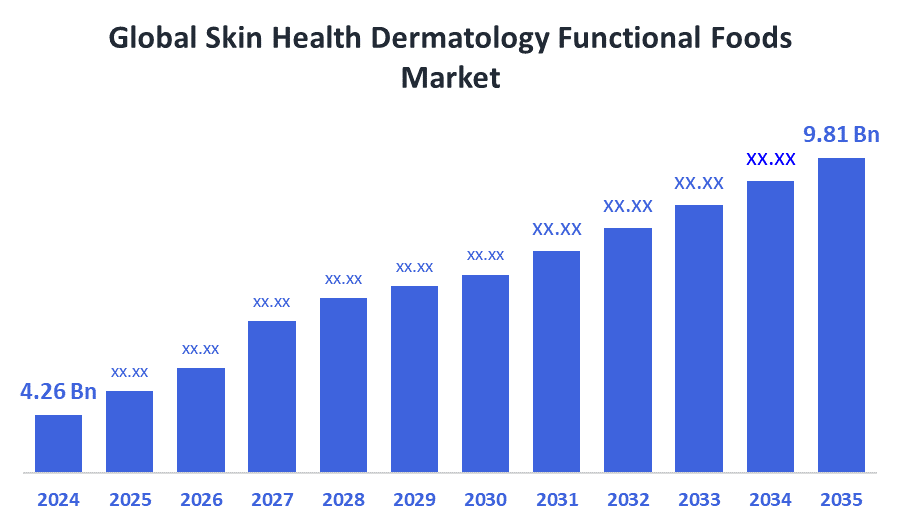
According to Decision Advisors, the Global Skin Health Dermatology Functional Foods Market Size is expected to grow from USD 4.26 billion in 2025 to USD 9.81 billion by 2035, at a CAGR of 8.7% during the forecast period 2025-2035. It is propelled by consumer demand for beauty-from-within products, the rise of allergic diseases, and heightened awareness of nutritional effects on skin. Growth is driven by advances in probiotics, collagen, and anti-aging substances.
Market Overview/ Introduction
The skin health dermatology functional foods market encompasses consumable items such as dietary supplements and fortified foods designed with bioactive ingredients like collagen, vitamins, and antioxidants that support skin health, diminish inflammation, and improve anti-aging effects. It is commonly referred to as nutricosmetics; these products are consumed to provide bioactives such as probiotics, collagen peptides, and botanical extracts directly to the epidermis and dermis via the bloodstream, thereby improving skin barrier support, hydration, and UV protection. The market is experiencing a robust transition toward ingestible, scientifically validated skin solutions, with forecasts suggesting that its value will more than double in the coming ten years. Rising incidences of skin conditions (acne, eczema), increasing investment in R&D by food and cosmetic companies, and the mainstream adoption of antioxidant-rich foods and nutraceuticals.
- In the European Union, the European Food Safety Authority evaluates the safety and scientific evidence behind health claims for functional foods, with over 2,300 claims assessed and more than 70% rejected, ensuring strict quality standards and supporting credible skin health claims in the dermatology functional foods market.
- In the United States, the U.S. Food and Drug Administration enforces the Nutrition Labeling and Education Act of 1990, which provides the regulatory framework for nutrition labeling and health claims. This ensures transparency and builds consumer trust in skin health, dermatology, and functional foods.
- India’s nutraceutical market is expanding rapidly, expected to reach around USD 18 billion by 2028, supported by regulations from the Food Safety and Standards Authority of India that standardize safety, labeling, and functional food ingredients, driving growth in skin health and dermatology functional foods.
Notable Insights: -
- Asia-Pacific holds the largest regional market share, approximately 54% in the skin health dermatology functional foods.
- North America is the fastest growing region in the skin health dermatology functional foods the share of 34.8%.
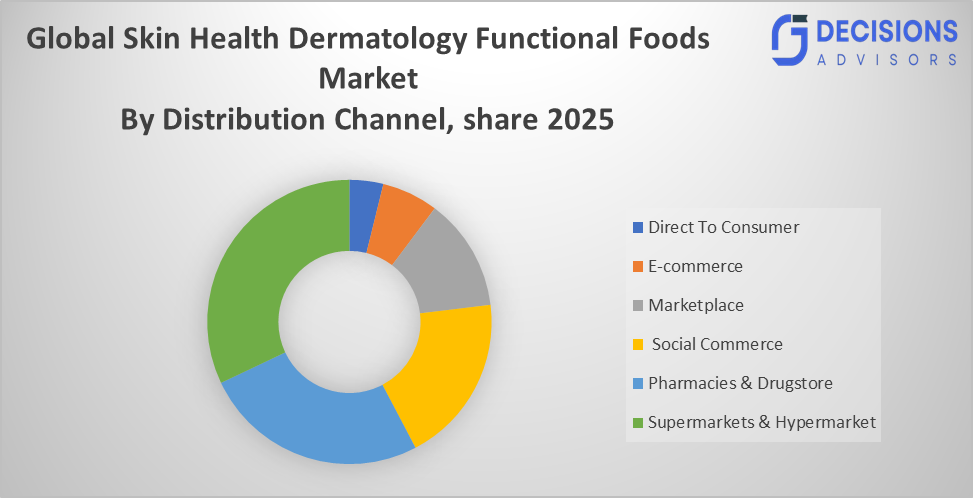
- By distribution Channel, the supermarkets and hypermarkets segment is the dominating accounting for over 57% of the global market share in 2025.
- The compound annual growth rate of the skin health dermatology functional foods is 8.7%.
- The market is likely to achieve a valuation of USD 9.81 billion by 2035.
What is the role of technology in grooming the market?
Technology is key to shaping the skin health dermatology functional foods market, moving it from a general wellness context into a precise, data-driven, and personalized industry. With the advent of technologies such as AI, biotech, and high-end production methods, it has become possible to create targeted nutritional solutions based on scientific evidence that enhance skin hydration and elasticity and combat aging. The key technological driver which are shaping the market include the discovery of bioactives here AI plays a crucial role in accelerating the discovery and validation of new bioactive compounds for dermatological needs. Technologies like nanoencapsulation and fermentation are used to improve the stability and absorption of functional ingredients (e.g., probiotics, collagen peptides) in the gut, ensuring they reach the skin.
How are recent developments helping the market?
Recent advancements in the dermatology functional foods market for skin health are driving growth via personalized nutrition, beauty-from-within solutions, and cutting-edge, scientifically supported ingredients such as prebiotics and collagen peptides. Personalization and technology are helping brands use digital health platforms to create tailored nutritional programs based on individual skin phenotypes and genetic factors. Scientific branding and ingredients are increasing the research and development focused on the skin microbiome, which has resulted in the creation of advanced probiotics, prebiotics, and antioxidants aimed at addressing inflammatory skin problems internally. There is also increasing demand for skin health management products, like collagen peptides for hydration and elasticity, which is drawing substantial investment from players in the cosmetics and functional food industries.
Market Drivers
The market for dermatology functional foods that promote skin health is propelled by heightened consumer awareness of the beauty-from-within concept, a growing demand for natural and scientifically validated ingredients, and an increased understanding of the gut-skin connection. The market is growing because of the increasing interest in dietary prevention of skin problems (such as aging and acne) and the rise in popularity of products enriched with collagen and probiotics. Consumers are increasingly adopting a food-as-medicine approach, prioritizing nutritional interventions for long-term skin health, such as collagen peptides for elasticity and botanical extracts for anti-inflammatory support. A key factor is the realization that skin issues such as acne and eczema are directly influenced by gut health, which has led to increased demand for prebiotic products, probiotics, and fermented foods.
Restrain
The market is getting restrained by various factors and the challenges, which include high cost pricing and sensitivity, where the inclusion of premium, naturally sourced ingredients and the complex manufacturing processes leads to the final product prices, limiting adoption in the cost-sensitive region. Also, the taste and formulation challenges bring many beneficial botanical extracts and functional ingredient possess bitter or off tastes, making it difficult to prepare palatable food and beverage products without compromising the nutritional value.
Competitive Analysis:
The report offers the appropriate analysis of the key organizations/companies involved within the skin health dermatology functional foods market, along with a comparative evaluation primarily based on their product offerings, business overviews, geographic presence, enterprise strategies, segment market share, and SWOT analysis. The report also provides an elaborate analysis focusing on the current news and developments of the companies, which includes product development, innovations, joint ventures, partnerships, mergers & acquisitions, strategic alliances, and others. This allows for the evaluation of the overall competition within the market.
Top Companies in the Global Skin Health Dermatology Functional Foods Market
- BASF SE
- Archer Daniels Midland Company (ADM)
- DuPont
- Cargill Incorporated
- Danone SA
- Arla Foods
- Nestlé SA
- Koninklijke DSM N.V.
- Glanbia PLC
- Herbalife Nutrition Ltd
- Amway Corporation
- Chr. Hansen Holding A/S
- Ingredion Incorporated
- Kemin Industries, Inc.
- and Meiji Holdings Co., Ltd.
Government Initiatives
|
Country |
Key Government Initiatives |
|
UK |
Government authorities and the UK Nutrition and Health Claims Committee ensure that skin health functional foods meet strict scientific standards, validating dermatology-related claims and strengthening consumer trust in the market. |
|
US |
In the US, the National Institute of Food and Agriculture supports research in functional ingredients and personalized nutrition through multiple funding programs, with investments ranging from $4–11 million in 2024, driving innovation in nutricosmetics and dermatology-focused functional foods. |
|
China |
China’s regulatory framework, led by the National Medical Products Administration, has streamlined health food filings through the updated raw material directory. Recent additions of functional ingredients support innovation in nutricosmetics, accelerating growth in the skin health dermatology functional foods market. |
Market Segmentation
The skin health dermatology functional foods market share is classified into product type, distribution channel, and ingredient type.
- The dietary supplements segment dominated the market in 2025, and is projected to grow at a substantial CAGR during the forecast period.
Based on the product type, the skin health dermatology functional foods market is divided into dietary supplements, fortified beverages, and fortified foods. Among these, the dietary supplements segment dominated the market in 2025 and is projected to grow at a substantial CAGR during the forecast period. Supplements provide high, targeted doses of nutrients (e.g., collagen peptides, vitamins, hyaluronic acid) that offer faster or more measurable dermatology benefits compared to smaller amounts found in fortified foods. Capsules, powders, and gummies are perceived as highly efficient nutricosmetics, offering easy, daily routines focused specifically on beauty and skin health.
- The supermarkets and hypermarkets segment accounted for the largest share in 2025, and is anticipated to grow at a significant CAGR of approximately 57% during the forecast period.
Based on the distribution channel, the skin health dermatology functional foods market is divided into e-commerce, direct to consumer, marketplace, social commerce, pharmacies & drugstores, supermarkets & hypermarkets. Among these, the supermarkets and hypermarkets segment accounted for the largest share in 2025, and is anticipated to grow at a significant CAGR of approximately 57 % during the forecast period. Mass-market consumers enjoy unparalleled and extensive accessibility offered by supermarkets and hypermarkets. Their existence in urban and suburban regions designates them as a key spot for everyday shopping requirements.
- The botanical extracts segment dominated the market in 2025, and is projected to grow at a substantial CAGR during the forecast period.
Based on the ingredient type, the skin health dermatology functional foods market is divided into the following botanical extracts: aloe vera, green tea extract, collagen, vitamin E, zinc S. Among these, the botanical extracts segment dominated the market in 2025, and is projected to grow at a substantial CAGR during the forecast period. Due to the increasing consumer preference for natural and plant-based solutions, botanical extracts such as green tea, aloe vera, turmeric, and grape seed dominate. The botanical extracts hold the total share of approximately 65% in the ingredient type segment.
Strategies to Implement for Growth of the Market in Non-Leading Regions
In order to expand the market for dermatology functional foods aimed at skin health in non-leading regions, it is important to adopt strategies that emphasize localized, scientifically supported product formulations (such as anti-aging and hydration) and utilize digital, community-oriented marketing approaches to foster trust. Forging strategic alliances with regional producers, utilizing locally obtained botanical components, and launching educational initiatives with dermatologists can expedite market entry. The Key strategies include the tailored formulation, which creates products that address regional skin concerns, such as resilience to high pollution, protection against UV damage, or tailored hydration for local climatic conditions.
- Localized Sourcing and Production: Reduce logistics expenses and foster trust by collaborating with local suppliers for botanical extracts and establishing regional production for collagen and other essential ingredients.
- Digital & Community-Based Marketing: Leverage AI-driven product customizers and digital consultations, along with collaborations with micro-influencers, to inform consumers and enhance brand credibility.
- Clinical Validation & Education: Work together with local dermatologists and healthcare professionals to promote products, offering trustworthy proof of their advantages.
Regional Segment Analysis of the Skin Health Dermatology Functional Foods Market
- North America (U.S., Canada, Mexico)
- Europe (Germany, France, U.K., Italy, Spain, Rest of Europe)
- Asia-Pacific (China, Japan, India, Rest of APAC)
- South America (Brazil and the Rest of South America)
- The Middle East and Africa (UAE, South Africa, Rest of MEA)
Asia Pacific is anticipated to hold the largest share of the Skin Health Dermatology Functional Foods market over the predicted timeframe. It is due to strong beauty-from-within traditions in countries like Japan, South Korea, and China, a large aging population, and rising disposable incomes in India and China, which are increasing demand for collagen-based and functional nutrition products. Additionally, rapid urbanization, growing e-commerce penetration, and expanding middle-class populations are improving product accessibility and awareness. The region also benefits from the strong presence of key players such as Shiseido and Amorepacific, along with continuous product innovation, local manufacturing capabilities, and increasing focus on preventive healthcare and holistic skin wellness.
North America is expected to grow at a rapid CAGR in the skin health dermatology functional foods market during the forecast period. Because the region already accounts for a significant share, North America held around 38.4% of the global beauty supplements market in 2024 (~US$1.2?billion) due to high consumer awareness and strong spending on nutrition-based skin solutions. Additionally, there is a rising demand for ingestible skin health products, preventive wellness trends, advanced retail and e?commerce channels, and a preference for science?backed formulations in the United States and Canada, all driving robust expansion.
Europe is the 3rd largest region to grow in the skin health dermatology functional foods market during the period. Europe ranks as the third-largest region in the skin health dermatology functional foods market due to rising consumer awareness about skin wellness, increasing demand for nutraceuticals, and a surge in aging populations seeking anti-aging solutions. In 2025, Europe accounted for approximately 18% of the global market, driven by countries like Germany, France, and the UK, with functional food sales exceeding USD 2.5 billion. Growing e-commerce and health-conscious lifestyles further boost market penetration.
Future Market Trends in Skin Health Dermatology Functional Foods Market: -
- Rise of Nutricosmetics:
Beauty and nutrition are becoming intertwined, leading to a convergence of the cosmetic, food, and pharmaceutical sectors. This integration emphasizes the use of ingredients such as collagen, hyaluronic acid, and ceramide for structural support of the skin.
- Preventive & Anti-Aging Focus:
The growing consumer emphasis on "beauty from within" highlights the importance of daily dietary intake for slowing skin aging, managing acne, and improving skin moisture, rather than relying solely on topical treatments.
- Natural & Botanical Ingredients:
There is a strong demand for clean-label, plant-based ingredients like green tea, turmeric, and aloe vera due to their antioxidant and anti-inflammatory properties.
Recent Development
- In March 2025, functional beauty drinks gained traction in the Global Skin Health Dermatology Functional Foods Market, with biotin, vitamins, and plant-based collagen-supporting RTD beverages like Catalyse’s Mizu Beauty Blend promoting skin hydration, glow, and overall dermatological wellness.
- In June 2024, Shiseido invested approximately USD 300 million to expand nutricosmetics R&D in Asia, focusing on collagen-enhancing ingestible products, supporting growth in the global skin health and dermatology functional foods market.
- In August 2024, Aurelle Health launched in India as a D2C brand focused on women’s hormonal health, offering functional nutrition products that support skin, hair, and overall wellness within the dermatology functional foods market.
- In August 2023, Caliray launched Get Lit, a nutrient-rich dissolvable disc supplement with nicotinamide riboside, biotin, green tea phytosome, and vitamin D3, supporting skin health within the dermatology functional foods market.
Market Segment
This study forecasts revenue at global, regional, and country levels from 2020 to 2035. Decision Advisor has segmented the skin health dermatology functional foods market based on the below-mentioned segments:
Global Skin Health Dermatology Functional Foods Market, By Product Type
- Dietary Supplements
- Fortified Beverages
- Fortified Foods
Global Skin Health Dermatology Functional Foods Market, By Distribution Channel
- E-commerce
- Direct to Consumer
- Marketplace,
- Social Commerce
- Pharmacies & Drugstores
- Supermarkets & Hypermarkets
Global Skin Health Dermatology Functional Foods Market, By Ingredient Type
- Botanical Extracts
- Aloe Vera
- Green Tea Extract
- Collagen
- Vitamin E
- Zinc s
Global Skin Health Dermatology Functional Foods Market, By Regional Analysis
- North America
- US
- Canada
- Mexico
- Europe
- Germany
- UK
- France
- Italy
- Spain
- Russia
- Rest of Europe
- Asia Pacific
- China
- Japan
- India
- South Korea
- Australia
- Rest of Asia Pacific
- South America
- Brazil
- Argentina
- Rest of South America
- Middle East & Africa
- UAE
- Saudi Arabia
- Qatar
- South Africa
- Rest of the Middle East & Africa
Frequently Asked Questions (FAQ)
1. How do regulations impact the market?
A. Regulatory bodies like the European Food Safety Authority and U.S. Food and Drug Administration ensure that health claims are scientifically validated, increasing consumer trust and product credibility.
2. What role does technology play in this market?
A. Technologies such as AI, biotechnology, and nanoencapsulation enable the development of personalized nutrition and enhance the absorption and effectiveness of functional ingredients for improved skin outcomes.
3. Which ingredients are most popular in dermatology functional foods?
Key ingredients include collagen, botanical extracts, probiotics, vitamins (like Vitamin E), zinc, and green tea extract due to their anti-aging, anti-inflammatory, and skin-repair properties.
4. What are the key challenges faced by the market?
A. Major challenges include high product costs, formulation difficulties (taste and stability issues), and strict regulatory requirements that may delay product approvals.
5. How is e-commerce influencing market growth?
A. E-commerce and direct-to-consumer channels are expanding rapidly, improving accessibility and allowing brands to offer personalized skin nutrition solutions directly to consumers.
6. What future trends are expected in this market?
A. Key trends include the rise of personalized nutrition, increased demand for plant-based and clean-label products, and growing integration of skincare, food, and pharmaceutical industries.
Check Licence
Choose the plan that fits you best: Single User, Multi-User, or Enterprise solutions tailored for your needs.
We Have You Covered
- 24/7 Analyst Support
- Clients Across the Globe
- Tailored Insights
- Technology Tracking
- Competitive Intelligence
- Custom Research
- Syndicated Market Studies
- Market Overview
- Market Segmentation
- Growth Drivers
- Market Opportunities
- Regulatory Insights
- Innovation & Sustainability
Report Details
| Scope | Global |
| Pages | 210 |
| Delivery | PDF & Excel via Email |
| Language | English |
| Release | Mar 2026 |
| Access | Download from this page |