
Global Smart battery charger Market
 |
Author:
Omkar J
|
Pages:
200
|
Author:
Omkar J
|
Pages:
200
Global Smart battery charger Market Size, Share, By Type (Wired, and Wireless,), By Category (OEM, and Replacement), By End User (Smartphones, Laptops, Electric Vehicles, Tablets, and Others), and By Region (North America, Europe, Asia-Pacific, Latin America, Middle East, and Africa), Analysis and Forecast 2026-2035
CAGR
1.71%
REVENUE 2025
USD Billion 4.11
FORECAST 2035
USD Billion 9.15
REPORT COVERAGE
Global
Market Snapshot
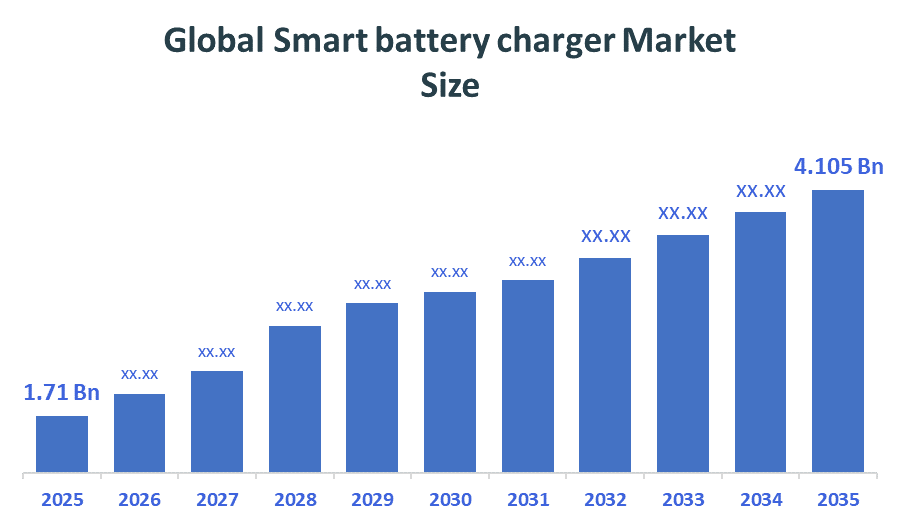
- Global Smart battery charger Market Size (2025): USD 1.71 Billion
- Projected Global Smart battery charger Market Size (2035): USD 4.105 Billion
- Global Smart battery charger Compound Annual Growth Rate (CAGR): 9.15%
- Largest Regional Market: Asia pacific
- Fastest Growing Region: North America
- 3rd Largest Region: Europe
- Base Year: 2025
- Historical Period: 2021–2024
- Forecast Period: 2026–2035
Market Overview/ Introduction
The Global Smart Battery Charger Market consists of advanced battery charger manufacturers and sellers who provide efficient and intelligent battery charger solutions. Global EV adoption is driving demand for 6.6–350 kW chargers and 400 kW+ ultra-fast hubs. The International Energy Agency estimates 145 million EVs by 2030 (7% share). Advanced systems deliver 98%+ efficiency, support 800 V architectures, and align with batteries exceeding 300 Wh/kg, while smart charging (ISO 15118, OCPP 2.0) optimizes grid load. The intelligent or smart battery charger can be defined as an electronic device that uses microcontrollers along with sensors to ensure effective, efficient, and safe battery charging without causing overcharging, overheating, or damage. Smart battery chargers are employed in various industries like electrical vehicles (EV), consumer electronics, heavy industrial machines, renewable energy storage, and automotive applications. Such batteries are capable of extending the life of battery as well as improving their energy efficiency, hence they are crucial to any energy system. Net-zero mandates boost charger efficiency from 85–90% to >96%, with <0.5 W standby loss. India targets 40% non-fossil capacity by 2030, while U.S. Department of Energy EERE aims for 90% cost reduction. Smart chargers enable grid support and extend battery life by 20–30%, meeting Energy Star and 80 PLUS Titanium standards. Growing electric mobility and rising sales of portable electronic devices are some of the driving factors of the market. Clean energy, technological innovations, and rising energy consumption awareness are key factors driving the market growth. The market is witnessing rapid growth in terms of innovations like fast charging, wireless charging, Internet of Things (IoT) based monitoring systems, etc.
- In April 2026, United Kingdom, updated EV charge points grant effective increase funding to £500 per socket and extend schemes to March 2027. The policy favors renters and landlords while boosting demand for smart battery chargers with advanced grid-responsive capabilities.
- In January 2026, European Union, the AFIR regulation mandates smart EV charging requiring ISO 15118 compliance and real-time data sharing. Supported by EPBD rules, this accelerates adoption of smart battery chargers across public and private infrastructure.
- In September 2025, United States, the Section 30C EV charger tax credit under the Inflation Reduction Act is set to expire on June 30, 2026, accelerating investments in smart battery chargers and EV charging infrastructure nationwide.
Notable Insights: -
- Asia-Pacific holds the largest regional market share approximately 44% in the global Smart battery charger market.
- North America is the fastest growing region market share approximately 29% in the global Smart battery charger market.
- By type, the Wired segment held a dominant position with 49% in terms of market share in 2025.
- By category, OEM segment is the dominating accounting for market is approximately 51%.
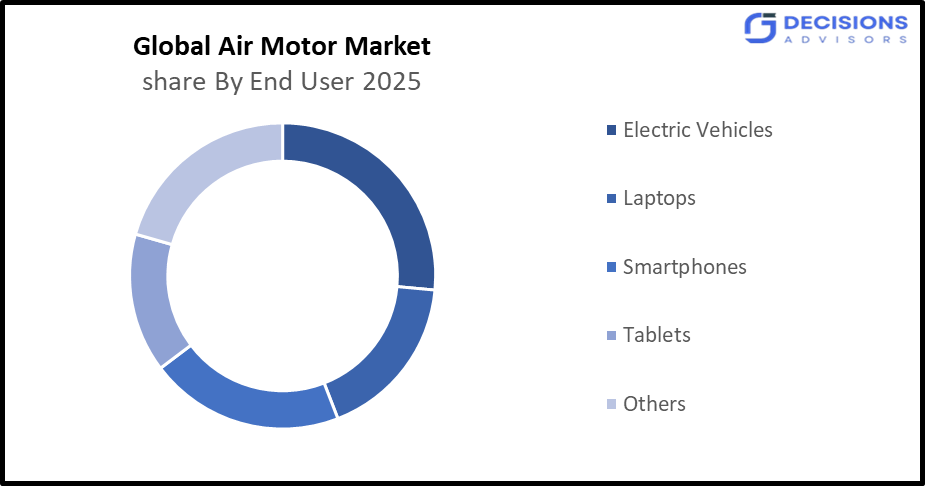
- By end user, Electric vehicles segment held a dominant position market is approximately 65%.
- The market is likely to achieve a valuation of USD 4.105 Billion by 2035.
What is role of technology in grooming the market?
Technology is the leading architect in designing the smart battery charger industry, where the technology transforms hardware into data-based energy nodes. The software integrated with cloud-based services enables live tracking and the "Peak Shaving" concept, where the technology charges during non-peak periods to save electricity bills. Moreover, the improvement in semiconductors, such as Gallium Nitride, has enabled denser power consumption. The diagnostics performed by artificial intelligence enable the prediction of battery damage and extend vehicle life span. Through the integration of Internet of Things (IoT), the charger works in coordination with solar inverters and domestic batteries.
How is Recent Developments Helping the Market?
These latest innovations are likely to drive the global smart battery charger market in terms of efficiency, safety, and ease of use. The fast-charging innovations and wireless charging innovations have minimized the charging period and improved ease of use. The introduction of the Internet of Things (IoT) and artificial intelligence (AI) systems for battery management can monitor battery performance and optimize charging schedules. The integration of innovations related to compatibility with modern battery types, such as lithium-ion batteries and solid-state batteries, has increased the applicability of the smart battery chargers.
Market Drivers
Demand for the innovative technology has been driven by the fast-paced changes towards electric mobility and integration of IoT technology into domestic life. Growing adoption of EVs has brought about demand for Level 2 chargers, which would not only provide users with electricity but with advanced energy management tools. Today's advanced chargers act as smart devices integrated into a household through use of AI software for "peak shaving" automatic scheduling for the most cost-efficient time of the day to recharge a battery. Government policies and various incentives have also contributed to the increased uptake of equipment capable of managing peak loads without harming the existing infrastructure of power generation. Growing number of personal electronics and medical devices also require adaptability and remote monitoring features. Through combining renewable energy sources like solar energy with regular grid power, chargers have become indispensable parts of energy decentralization.
Restrain
The smart battery charger market faces restraints due to high initial costs and complex technology integration, limiting adoption in price-sensitive regions. Compatibility issues with different battery types and lack of standardization also hinder growth. Additionally, concerns regarding cybersecurity in IoT-enabled chargers and limited charging infrastructure in developing regions further restrict widespread market expansion.
Competitive Analysis:
The report offers the appropriate analysis of the key organizations/companies involved within the Smart battery charger market, along with a comparative evaluation primarily based on their Product of offering, business overviews, geographic presence, enterprise strategies, segment market share, and SWOT analysis. The report also provides an elaborative analysis focusing on the current news and developments of the companies, which includes Product development, innovations, joint ventures, partnerships, mergers & acquisitions, strategic alliances, and others. This allows for the evaluation of the overall competition within the market.
Top Companies in Global Smart battery charger Market
- Accutronics Ltd
- Analytic Systems Ware Ltd
- Anoma Corporation
- Associated Equipment Corporation
- Energizer Holdings Inc
- Exide Technologies
- Ferro Magnetics Corporation
- FRIWO AG
- HindlePower Inc
- Panasonic Corporation
- Others
Government Initiatives
|
Country |
Key Government Initiatives |
|
India
|
In India, April 2026, the Technology Development Board and Department of Science & Technology partnered with Scharge Pvt Ltd under the India–UK R&D programme to advance smart EV charging, focusing on intelligent controllers, automated cable management, and improved fleet charging efficiency. |
|
US |
March 2026, In the United States, the Department of Energy is advancing EV corridor infrastructure, supporting high-power charging for heavy-duty vehicles. The emerging Megawatt Charging System enables smart-grid integration, boosting demand for advanced smart battery charging solutions in freight transport. |
Study on the Supply, Demand, Distribution, and Market Environment of Smart battery charger Market
There is high demand in the smart battery charger market owing to the increasing usage of electric cars, consumer electronics, and energy storage solutions for renewables. The supply of smart battery chargers comes from global suppliers that specialize in the latest technologies and mass manufacturing. As for the distribution chain, there are e-commerce sites, OEMs, and retailers. High demand is noted in developed markets because of the widespread application of technologies, whereas emerging economies offer great potential. The industry operates in a highly competitive environment based on innovation and price strategies and affected by policies on energy savings and green energy.
Price Analysis and Consumer Behaviour Analysis
Analysis of price reveals that there is a large variation in the prices, based on the different specifications, technology, and uses. The cost of advanced chargers which incorporate IoT, fast charging abilities, and safety measures is relatively higher due to the higher cost of production, while the conventional ones are relatively cheap. Up to 20-30 percent of the consumers can afford to purchase high-quality and reliable chargers. From consumer behaviour, it can be observed that there is an inclination towards efficient and multi-purpose chargers. More than 55 percent of the consumers prefer smart chargers, while up to 58 percent prefer fast chargers.
Market Segmentation
The Smart battery charger market share is classified into type, application, and end user
- The type segment dominated the market in 2025, and is projected to grow at a substantial CAGR of approximately 9.5% during the forecast period.
Based on the type, the smart battery charger market is divided into Wired, and Wireless. Among these, Wired segment dominates the smart battery charger market due to its higher efficiency, affordability, and wide compatibility with most electronic devices. Wired chargers accounted for around 58–60% market share in recent years and are expected to grow at a steady CAGR of about 9–10%. Their dominance is driven by faster charging speed, reliability, and extensive use in smartphones, laptops, and EVs. However, the wireless segment is growing faster, with a higher CAGR (around 12–15%), due to increasing demand for convenience, cable-free solutions, and advancements in wireless charging technologies.
- The category segment accounted for the largest share in 2025, and is anticipated to grow at a significant CAGR of approximately 7% during the forecast period.
Based on the category, the Smart battery charger market is divided into OEM, and Replacement. Among these, OEM segment dominates the Smart battery charger market due to widespread use in manufacturing, Electric Vehicles, and maintenance operations where spark-free and durable pneumatic tools are preferred. It holds the largest market share of around 38–42% and is expected to grow at a CAGR of approximately 5–6% during the forecast period. Replacement, mixing & pumping, and Laptops applications follow with comparatively lower shares but steady demand from process industries and hazardous environments requiring reliable pneumatic power solutions. Overall demand is driven by safety and efficiency requirements across industries.
- The end user segment dominated the market in 2025, and is projected to grow at a substantial CAGR of approximately 28% during the forecast period.
Based on the end user, the Smart battery charger market is divided into Smartphones, Laptops, Electric Vehicles, Tablets, and Others. Among these, Electric Vehicle (EV) segment currently dominates the smart battery charger market, commanding approximately 65% of the total market share as of 2026. While the smartphone and laptop segments remain high in volume, the EV sector leads in revenue due to the high unit cost of Level 2 infrastructure and the technical necessity for "smart" grid-integration software. This dominance is further fuelled by a staggering CAGR of approximately 26-30%, far outstripping the single-digit growth of traditional consumer electronics. This rapid expansion is driven by global zero-emission mandates and the consumer shift toward home-based energy management systems that require sophisticated, high-power AI diagnostics to balance household loads and optimize utility costs.
Strategies to Implement for Growth of the Market in Non-Leading Regions
Approaches to promote the expansion of the smart battery charger market in emerging regions that are not yet dominant include affordability, availability, and infrastructural development. The company should invest in affordable and scalable devices in order to meet the needs of cost-sensitive customers since expensive devices tend to hinder their purchase. Investing in the development of charging stations and rural electrification programs could help tap into this potential market. Moreover, utilizing online platforms would enhance availability. Working with governments on subsidies, electric vehicles, and renewable energy programs will also boost adoption in fast-growing regions such as Asia-Pacific.
Regional Segment Analysis of the Smart battery charger Market
- North America (U.S., Canada, Mexico)
- Europe (Germany, France, U.K., Italy, Spain, Rest of Europe)
- Asia-Pacific (China, Japan, India, Rest of APAC)
- South America (Brazil and the Rest of South America)
- The Middle East and Africa (UAE, South Africa, Rest of MEA)
Asia pacific is anticipated to hold the largest share of the Smart battery charger market over the predicted timeframe.
Asia Pacific is anticipated to hold the largest share of the smart battery charger market, accounting for around 40–45% of global revenue during the forecast period. This dominance is driven by rapid industrialization, high smartphone penetration, and strong growth in electric vehicle adoption in countries like China, India, and Japan. The region is expected to grow at a CAGR of 11–13%, supported by expanding renewable energy projects and government initiatives promoting clean energy and EV infrastructure. Additionally, The Asia-Pacific leads with >60% global EV sales, driven by China (40%+ share) targeting 20% EV penetration by 2025. South Korea aims for 1M chargers by 2025, while Japan shifts to 350 kW charging. Demand also rises for 65W+ GaN chargers, led by BYD, LG Energy Solution, and Panasonic.
North America is expected to grow at a rapid CAGR in the Smart battery charger market during the forecast period. North America is expected to grow at a rapid CAGR in the smart battery charger market, accounting for approximately 25–30% of total market revenue., driven by strong adoption of electric vehicles, advanced consumer electronics, and well-established charging infrastructure. The region is projected to register a CAGR of around 12–14%, supported by increasing investments in EV charging networks and renewable energy storage systems. Additionally, The United States leads with 1.8M EVs (2020) to 18.7M by 2030. Incentives include $7,500 tax credits and $5B NEVI funding. Tesla and others drive charger growth, while California targets 100% ZEV by 2035. Grid pilots in CAISO/ERCOT enable V2G and DER integration.
Europe is the 3rd largest region to grow in the Smart battery charger market during the region. Europe is the third-largest region in the smart battery charger market, showing steady growth during the forecast period. The region holds approximately 20–25% market share and is expected to grow at a CAGR of around 9–11%. Growth is driven by strong environmental regulations, increasing adoption of electric vehicles, and rising demand for energy-efficient technologies. Government initiatives supporting clean energy, along with expanding EV charging infrastructure across countries like Germany, France, and the UK, further contribute to market expansion. Additionally, the presence of advanced automotive and electronics industries supports continuous demand for smart charging solutions.
Future Market Trends in Global Smart battery charger Market: -
- Rapid Expansion of Electric Vehicle (EV) Charging Ecosystem
The increasing global adoption of electric vehicles is a major trend driving the smart battery charger market. Governments and private players are heavily investing in EV charging infrastructure, including fast and ultra-fast chargers. Smart chargers with advanced battery management, load balancing, and grid connectivity are becoming essential. Additionally, vehicle-to-grid (V2G) technology is gaining traction, allowing energy exchange between EVs and power grids. This trend is expected to significantly boost demand for intelligent and efficient charging solutions worldwide.
2. Integration of IoT and AI in Charging Solutions
Smart battery chargers are increasingly incorporating IoT and artificial intelligence to enhance performance and user experience. These technologies enable real-time monitoring, remote control, predictive maintenance, and optimized charging cycles. AI-driven systems can analyze battery health and usage patterns to improve efficiency and extend battery life. IoT connectivity also allows integration with smartphones and smart home systems. This trend is transforming traditional chargers into intelligent energy management devices, increasing their adoption across residential, commercial, and industrial applications.
3. Growth in Wireless and Fast Charging Technologies
Advancements in wireless and fast charging technologies are shaping the future of the smart battery charger market. Consumers are demanding faster, more convenient charging solutions, leading to innovation in high-speed charging and cable-free systems. Wireless charging is gaining popularity in consumer electronics and is gradually expanding into EV applications. At the same time, improvements in fast charging technologies are reducing charging time while maintaining safety and efficiency. These innovations are expected to enhance user convenience and drive widespread adoption of smart charging solutions globally.
Recent Development
In January 2026, CTEK launches the CS ONE (Gen 2), featuring APTO adaptive technology, Wi-Fi connectivity, and app-based control. The charger automatically identifies battery type and condition, improving efficiency, safety, and performance in automotive battery maintenance systems worldwide.
In March 2026, NOCO strengthened its Genius series with Genius5 and Genius10 smart battery chargers featuring Force Mode, thermal sensors, and battery recovery functions. These advancements enhance charging efficiency, improve safety, and support deep-discharge battery restoration in automotive applications globally.
Market Segment
This study forecasts revenue at global, regional, and country levels from 2021 to 2035. Decision Advisors has segmented the Smart battery charger market based on the below-mentioned segments:
Global Smart battery charger Market, By Type
- Wired
- Wireless
Global Smart battery charger Market, By Category
- OEM
- Replacement
Global Smart battery charger Market, By End User
- Smartphones
- Laptops
- Electric Vehicles
- Tablets
- Others
Global Smart battery charger Market, By Regional Analysis
- North America
- US
- Canada
- Mexico
- Europe
- Germany
- UK
- France
- Italy
- Spain
- Russia
- Rest of Europe
- Asia Pacific
- China
- Japan
- India
- South Korea
- Australia
- Rest of Asia Pacific
- South America
- Brazil
- Argentina
- Rest of South America
- Middle East & Africa
- UAE
- Saudi Arabia
- Qatar
- South Africa
- Rest of the Middle East & Africa
Frequently Asked Questions (FAQ)
1. How does smart battery charger technology differ from conventional charging systems?
Smart battery chargers utilize advanced microcontrollers and sensors to automatically adjust charging parameters based on battery condition, unlike conventional chargers that supply constant current without optimization, leading to improved efficiency, safety, and battery lifespan.
2. What role do smart battery chargers play in renewable energy systems?
Smart battery chargers enable efficient energy storage and management in renewable systems by optimizing charging cycles, integrating with solar and wind sources, and ensuring stable power distribution for residential and commercial applications.
3. How does the integration of bidirectional charging impact the market?
Bidirectional charging allows energy flow between batteries and the grid, supporting vehicle-to-grid (V2G) applications, enhancing energy efficiency, and creating new revenue opportunities, thereby significantly influencing market growth.
4. What challenges do manufacturers face in scaling smart battery charger production?
Manufacturers encounter challenges such as high R&D costs, supply chain disruptions, component shortages (e.g., semiconductors), and the need for compliance with varying international standards and regulations.
5. How are smart battery chargers contributing to sustainability goals?
Smart battery chargers reduce energy wastage, support renewable energy integration, and enhance battery longevity, thereby minimizing environmental impact and aligning with global sustainability and carbon reduction targets.
Check Licence
Choose the plan that fits you best: Single User, Multi-User, or Enterprise solutions tailored for your needs.
We Have You Covered
- 24/7 Analyst Support
- Clients Across the Globe
- Tailored Insights
- Technology Tracking
- Competitive Intelligence
- Custom Research
- Syndicated Market Studies
- Market Overview
- Market Segmentation
- Growth Drivers
- Market Opportunities
- Regulatory Insights
- Innovation & Sustainability
Report Details
| Scope | Global |
| Pages | 200 |
| Delivery | PDF & Excel via Email |
| Language | English |
| Release | Apr 2026 |
| Access | Download from this page |