
Global Soy Protein Market
 |
Author:
Anurag B
|
Pages:
200
|
Author:
Anurag B
|
Pages:
200
Global Soy Protein Market Size, Share, By Type (Concentrated Soy Protein, Isolated Soy Protein, Textured Soy Protein, and Others), By Application (Meat Products, Bean Snack Foods, Candy and Bakery Products, Beverages, Feed, and Others), and By Region (North America, Europe, Asia-Pacific, South America, Middle East & Africa), Analysis and Forecast 2026?2035
CAGR
5.1%
REVENUE 2025
USD Billion 9.06
FORECAST 2035
USD Billion 14.18
REPORT COVERAGE
Global
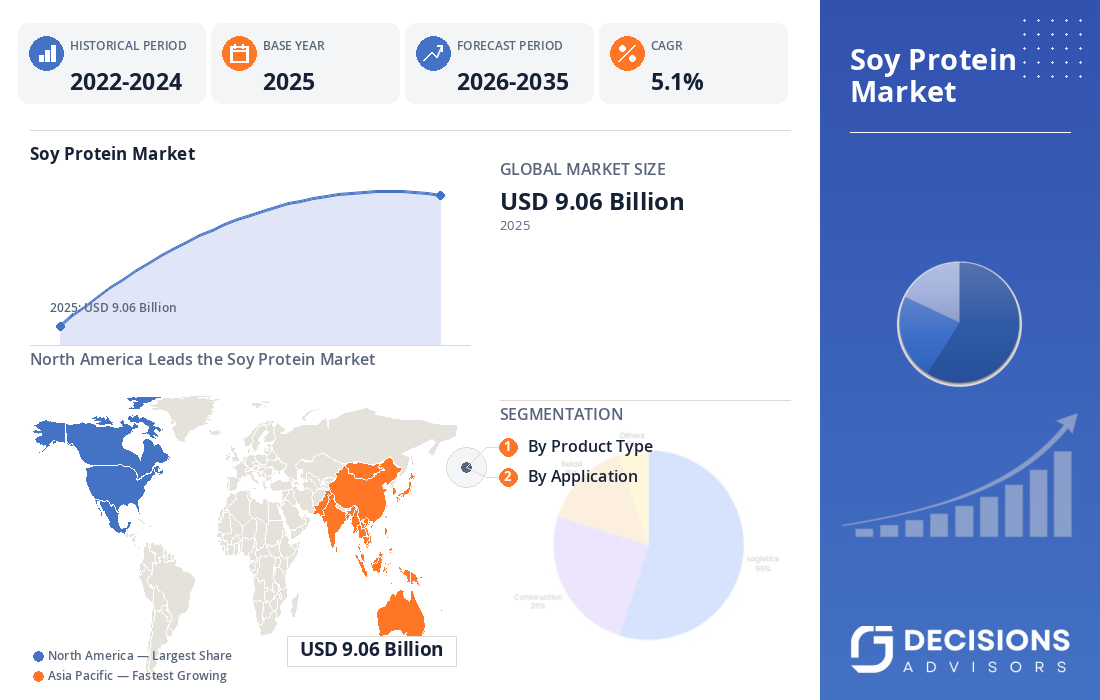
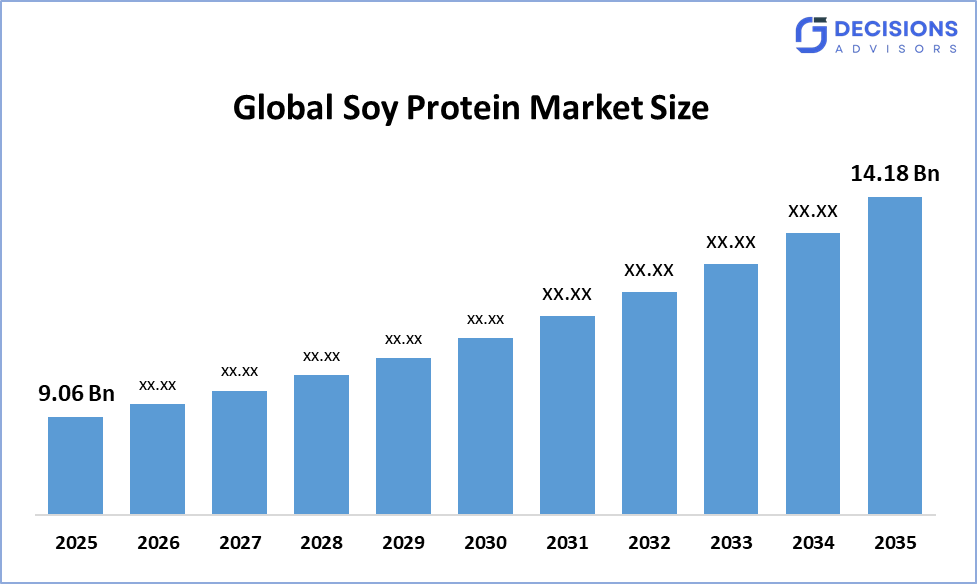
The Global Soy Protein Market Size is projected to grow from approximately USD 9.06 Billion in 2026 and is expected to reach approximately USD 14.18 Billion by 2035, expanding at a CAGR of 5.10% during the forecast period. The market is experiencing steady growth due to rising demand for plant-based protein sources, increasing consumer awareness of healthy diets, growing vegetarian and vegan populations, and expanding use of soy protein in meat alternatives, bakery products, beverages, nutritional products, and animal feed.
Market Snapshot
- Global Soy Protein Market Size (2026): USD 9.06 Billion
- Projected Market Size (2035): USD 14.18 Billion
- Global Market CAGR (2026–2035): 5.10%
- Largest Regional Market: North America
- 2nd Largest Region: Asia-Pacific
- Fastest Growing Region: Asia-Pacific
- Base Year: 2025
- Historical Period: 2022–2024
- Forecast Period: 2026–2035
Market Overview/ Introduction
The Global Soy Protein Market encompasses protein ingredients derived from soybeans and processed into concentrated, isolated, textured, and other functional forms. Soy protein is widely used across food and beverage applications, including plant-based meat alternatives, bakery and confectionery products, beverages, nutritional supplements, sports nutrition, and animal feed. Soy protein is gaining importance as manufacturers and consumers increasingly seek affordable, nutritious, and versatile plant-based protein sources. Its favorable amino acid profile, functional properties, relatively established supply chain, and ability to provide texture and protein enrichment make it suitable for a broad range of applications. The market is undergoing continued transformation due to growing consumer interest in plant-based diets and clean-label food products. Food manufacturers are expanding their portfolios of meat alternatives, protein-fortified foods, dairy alternatives, and functional beverages. At the same time, soy protein remains an important ingredient in animal feed because of its high protein content and established use in livestock and poultry nutrition.
The U.S. governments and food-industry organizations are supporting sustainable agriculture, plant-based food innovation, food security, and alternative protein development.
- Several Asia-Pacific countries continue investing in soybean processing, food manufacturing, plant-based food products, and nutritional ingredient production.
Notable Insights: -
- North America is anticipated to maintain a leading position in the Global Soy Protein Market due to strong demand for plant-based foods, established food-processing industries, high consumer awareness of protein-rich diets, and the presence of major ingredient manufacturers.
- Asia-Pacific is expected to witness strong growth due to rising disposable incomes, increasing health consciousness, expanding food-processing industries, and growing adoption of plant-based and protein-enriched foods.
- By type, Isolated Soy Protein and Textured Soy Protein are expected to gain significant demand because of their high protein content, functional characteristics, and suitability for meat alternatives and nutritional products.
- By application, Meat Products represent a major demand-generating segment due to increasing use of soy protein in plant-based meat and meat-substitute products.
- Growing demand for sports nutrition, functional foods, protein beverages, and plant-based dairy alternatives is creating additional opportunities for soy protein manufacturers.
Market Drivers
The Global Soy Protein Market is primarily driven by increasing consumer demand for plant-based protein alternatives. Growing awareness of healthy lifestyles, protein-rich diets, and sustainable food choices is encouraging consumers to incorporate plant-based protein into their diets. The increasing popularity of vegetarian and vegan diets is another important growth driver. Food manufacturers are using soy protein in meat substitutes, plant-based burgers, nuggets, sausages, protein beverages, and other alternative-protein products. Growing demand for sports nutrition and functional foods is also supporting market expansion. Soy protein provides a cost-effective source of protein for nutritional powders, protein bars, beverages, and other products targeted toward active and health-conscious consumers.
Restrain
The Global Soy Protein Market faces challenges including fluctuating soybean prices, supply-chain disruptions, agricultural production risks, competition from alternative plant proteins, consumer concerns regarding genetically modified soybeans, and taste and texture limitations in certain food applications. Soybean production is influenced by weather conditions, agricultural yields, commodity prices, trade policies, and geopolitical developments. These factors can affect the cost and availability of soy protein ingredients. Competition from pea, wheat, rice, potato, and other plant-based proteins is also increasing as food manufacturers diversify their protein sources.
Competitive Analysis:
The report offers the appropriate analysis of the key organizations/companies involved within the Global Global Soy Protein Market, along with a comparative evaluation primarily based on their product offerings, business overviews, geographic presence, enterprise strategies, segment market share, and SWOT analysis. The report also provides an elaborative analysis focusing on the current news and developments of the companies, which includes product development, innovations, joint ventures, partnerships, mergers & acquisitions, strategic alliances, and others. This allows for the evaluation of the overall competition within the market.
Top Companies in the Global Soy Protein Market
- Archer Daniels Midland Company (ADM)
- Cargill, Incorporated
- Bunge Limited
- Wilmar International Limited
- Fuji Oil Holdings Inc.
- CHS Inc.
- Sojaprotein a.d.
- Ingredion Incorporated
- Roquette Frères
- International Flavors & Fragrances Inc.
Government Initiatives
|
Country |
Key Government Initiatives |
|
Us |
Federal and state-level initiatives supporting sustainable agriculture, food innovation, plant-based protein development, domestic soybean production, and alternative protein research are supporting the broader plant-protein industry. |
|
Germany |
Government and EU-supported initiatives promoting sustainable food systems, alternative proteins, climate-friendly agriculture, and plant-based food innovation are supporting market development. |
|
China |
Government policies supporting agricultural modernization, soybean production, food security, food processing, and development of plant-based food products are strengthening the domestic protein ingredient ecosystem. |
Market Segmentation
The Global Soy Protein Market share is classified into type, application, and region.
The Isolated Soy Protein Segment Accounted for a Significant Share
Based on type, the market is divided into Concentrated Soy Protein, Isolated Soy Protein, Textured Soy Protein, and Others. Among these, isolated soy protein represents a significant segment because of its high protein content, neutral functionality, and suitability for nutritional products, beverages, meat alternatives, and protein-fortified foods. Textured soy protein is also gaining demand due to its ability to provide meat-like texture in plant-based food products.
- The Meat Products Segment Accounted for a Significant Share
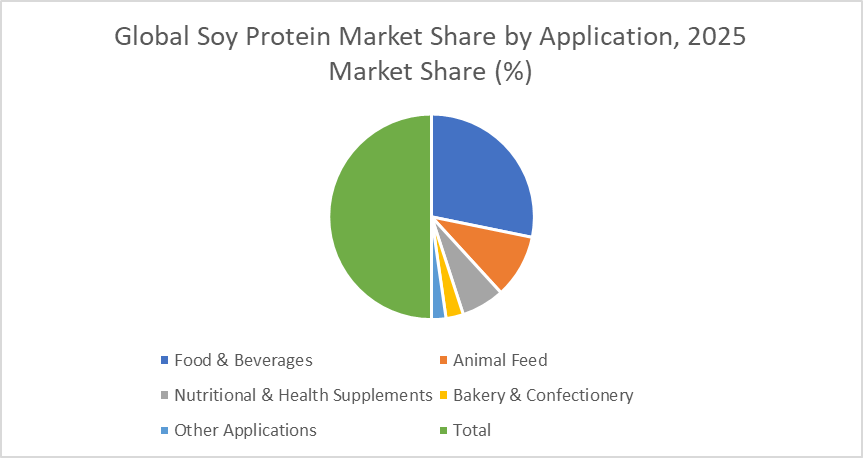
Based on application, the market is divided into Meat Products, Bean Snack Foods, Candy and Bakery Products, Beverages, Feed, and Others. Among these, meat products represent a significant application segment due to increasing demand for plant-based meat alternatives and the growing use of textured soy protein to replicate the texture and protein characteristics of conventional meat products.
Regional Segment Analysis of the Global Soy Protein Market
- North America: U.S., Canada, Mexico
- Europe: Germany, U.K., France, Italy, Spain, Netherlands, Rest of Europe
- Asia-Pacific: China, Japan, India, Australia, South Korea, Rest of Asia-Pacific
- South America: Brazil, Argentina, Rest of South America
- Middle East & Africa: UAE, Saudi Arabia, South Africa, Rest of MEA
North America is anticipated to hold a leading share of the Global Soy Protein Market during the forecast period. The region benefits from strong soybean production and processing capabilities, established food and beverage industries, increasing consumer interest in plant-based foods, and growing demand for protein-rich products.
The United States represents a major market because of its large food-processing industry, strong demand for plant-based meat and beverages, expanding sports nutrition market, and significant soybean production base.
Asia-Pacific is expected to experience significant growth due to rising health consciousness, increasing disposable incomes, expanding food-processing industries
Growing demand for plant-based protein products. China, Japan, India, South Korea, and Southeast Asian countries are witnessing increasing demand for protein-enriched foods and alternative protein products.
South America represents an important region for the soy protein industry because of its strong soybean cultivation and processing capabilities, particularly in Brazil and Argentina.
Expanding agricultural production and food-processing industries are supporting the availability of soy-derived ingredients.
Future Market Trends in Global Soy Protein Market: -
-
- Expansion of Plant-Based Meat Alternatives
The increasing adoption of plant-based diets is expected to create continued demand for soy protein in meat substitutes. Textured soy protein can provide desirable structure and texture while increasing the protein content of plant-based meat products.
-
- Growth in Sports Nutrition and Functional Foods
Growing interest in fitness, active lifestyles, and protein-rich diets is supporting demand for soy protein powders, protein bars, beverages, and functional foods.
-
- Increasing Demand for Isolated Soy Protein
Isolated soy protein is expected to gain market share because of its high protein concentration and broad applicability in nutritional products, beverages, meat alternatives, and food formulations.
-
- Development of Clean-Label and Sustainable Protein Products
Food manufacturers are increasingly developing products positioned around plant-based, sustainable, and nutritionally balanced formulations. Advances in processing and formulation technologies are helping improve taste, texture, solubility, and functionality.
Recent Development
- In February 2024, ADM announced continued investments and innovations across its alternative protein and nutrition portfolio, supporting the development of plant-based food and beverage ingredients.
- In July 2024, Cargill continued expanding its plant-based protein and food ingredient capabilities, supporting manufacturers seeking alternative protein solutions.
- In November 2024, soy protein manufacturers continued expanding concentrated, isolated, and textured soy protein offerings to address rising demand from plant-based food, nutrition, and food-processing applications.
Market Segment
This study forecasts revenue at global, regional, and country levels from 2026 to 2035. Decision Advisors has segmented the Global Soy Protein Market based on the below-mentioned segments:
Global Soy Protein Market, By Product Type
- Concentrated Soy Protein
- Isolated Soy Protein
- Textured Soy Protein
- Others
Global Soy Protein Market, By Application
- Meat Products
- Bean Snack Foods
- Candy and Bakery Products
- Beverages
- Feed
- Others
Global Soy Protein Market, By Regional Analysis
- North America
- US
- Canada
- Mexico
- Europe
- Germany
- UK
- France
- Italy
- Spain
- Russia
- Rest of Europe
- Asia Pacific
- China
- Japan
- India
- South Korea
- Australia
- Rest of Asia Pacific
- South America
- Brazil
- Argentina
- Rest of South America
- Middle East & Africa
- UAE
- Saudi Arabia
- Qatar
- South Africa
- Rest of the Middle East & Africa
Frequently Asked Questions (FAQ)
Q. Why is soy protein important in plant-based foods?
A. Soy protein provides a high-quality plant-based protein source and offers functional properties that make it suitable for meat alternatives, beverages, bakery products, nutritional foods, and other food applications.
Q. Why is isolated soy protein widely used?
A. Isolated soy protein contains a high concentration of protein and offers useful functional properties, making it suitable for protein-fortified foods, nutritional products, beverages, and plant-based meat formulations.
Q. What role does soy protein play in meat alternatives?
A. Soy protein, particularly textured soy protein, can provide structure, texture, and protein content in plant-based meat products, making it an important ingredient for burgers, nuggets, sausages, and other meat substitutes.
Q. What is driving demand for soy protein?
A. Demand is being driven by the growing popularity of plant-based diets, increasing health consciousness, rising demand for protein-rich foods, expansion of sports nutrition, and increasing consumption of plant-based meat and beverage products.
Check Licence
Choose the plan that fits you best: Single User, Multi-User, or Enterprise solutions tailored for your needs.
We Have You Covered
- 24/7 Analyst Support
- Clients Across the Globe
- Tailored Insights
- Technology Tracking
- Competitive Intelligence
- Custom Research
- Syndicated Market Studies
- Market Overview
- Market Segmentation
- Growth Drivers
- Market Opportunities
- Regulatory Insights
- Innovation & Sustainability
Report Details
| Scope | Global |
| Pages | 200 |
| Delivery | PDF & Excel via Email |
| Language | English |
| Release | Aug 2026 |
| Access | Download from this page |