
Global Stem Cell Cryopreservation Market
 |
Pages:
220
|
Pages:
220
Global Stem Cell Cryopreservation Market Size, Share, By Type (Umbilical Cord Blood, Adult Stem Cells, Embryonic Stem Cells), By Application (Regenerative Medicine, Drug Discovery, Clinical Research), By End User (Biobanks, Hospitals & Clinics, Research Institutes), and By Region, Analysis and Forecast 2025?2035.
REPORT COVERAGE
Global
Market Snapshot
- Market Size (2025): USD 4.92 Billion
- Projected Market Size (2035): USD 31.9 Billion
- Compound Annual Growth Rate (CAGR): 20.55%
- Largest Regional Market: North America
- Fastest Growing Region: Asia Pacific
- 3rd Largest Region: Europe
- Base Year: 2025
- Historical Period: 2021–2025
- Forecast Period: 2025–2035
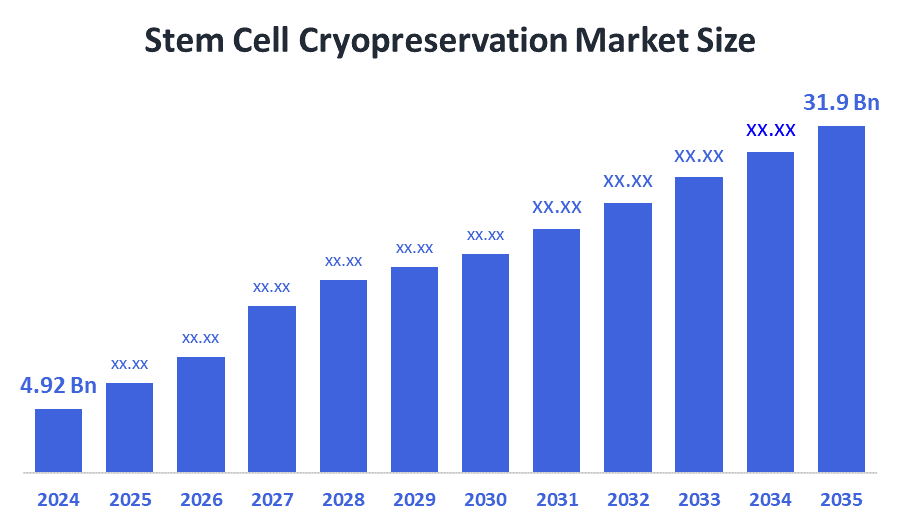
According to Decision Advisors, the Global Stem cell cryopreservation market Size is expected to grow from USD 4.92 billion in 2024 to USD 31.9 billion by 2035, at a CAGR of 20.55% during the forecast period 2025-2035. The growth is driven by increasing adoption of stem cell therapies, rising awareness about cord blood banking, and expanding applications in regenerative medicine. The growing prevalence of chronic diseases such as cancer, diabetes, and neurological disorders is further boosting demand for preserved stem cells for future therapeutic use. Additionally, advancements in cryopreservation technologies, improved storage techniques, and increasing investments in biobanking infrastructure are significantly contributing to market expansion.
Market Overview/ Introduction
The stem cell cryopreservation market is defined as the specialized sector of biotechnology focused on the ultra-low temperature preservation and storage of human biological materials—including hematopoietic, mesenchymal, and induced pluripotent stem cells, to maintain their viability for clinical and research applications. The WHO's 2025 foundational guidance (TRS 1048), which standardized global cell therapy classifications, and India’s NGSCR 2025, which established a strict framework for clinical-grade cell banking. Company initiatives are simultaneously pushing technical boundaries; for instance. Looking ahead, the most significant future opportunities lie in the humanization of drug discovery, where cryopreserved human stem cells are used to engraft humanized mouse models and develop complex organ-on-a-chip systems. These models are increasingly favoured by the FDA and EMA to replace traditional animal testing, offering a multi-billion-dollar frontier for specialized cryopreservation solutions that ensure the stability of these high-fidelity human biological systems.
- CPC (Colder Products Company) recently launched a specialized aseptic micro-connector designed for direct integration into freeze cassettes.
- The Jackson Laboratory (JAX) acquired the New York Stem Cell Foundation in late 2025 to scale automated stem cell arrays.
Notable Insights: -
- North America is anticipated to hold the largest share of the stem cell cryopreservation market over the predicted timeframe.
- Asia Pacific is expected to grow at a rapid CAGR in the Stem cell cryopreservation market during the forecast period.
- By type, the umbilical cord blood segment dominated the market in 2025 and is projected to grow at a substantial CAGR during the forecast period.
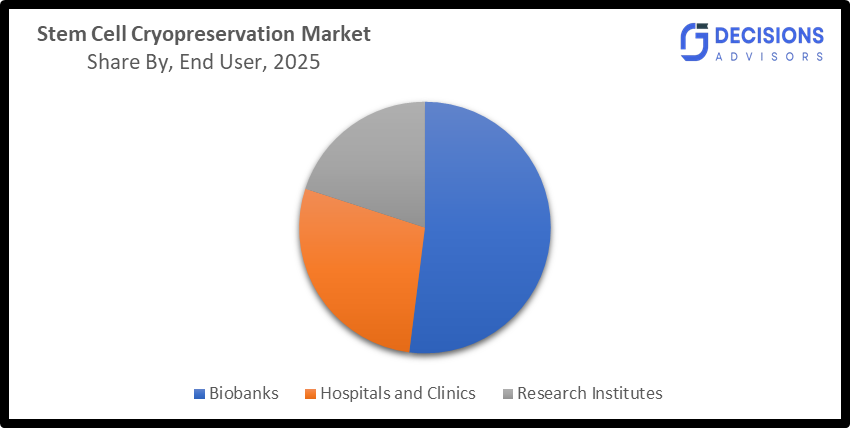
- By end user, the biobanks segment dominated the market in 2025, and is projected to grow at a substantial CAGR during the forecast period.
- The compound annual growth rate of the global spirit market is 20.55%.
- The market is likely to achieve a valuation of USD 31.9 billion by 2035.
What is role of technology in grooming the market?
Technology plays a crucial role in enhancing the efficiency and reliability of stem cell cryopreservation. Advanced freezing techniques such as vitrification and controlled-rate freezing ensure higher cell viability after thawing. Automated storage systems improve sample tracking and reduce human error. Digital platforms and cloud-based systems are enabling real-time monitoring of storage conditions, ensuring optimal temperature maintenance. Artificial intelligence is also being used to predict cell viability and optimize preservation protocols. These advancements are making cryopreservation more reliable, scalable, and efficient, thereby driving market growth.
Market Drivers
The stem cell cryopreservation market is driven by the increasing demand for regenerative medicine and stem cell therapies. Rising awareness about the benefits of cord blood banking among parents is significantly boosting adoption. The growing prevalence of chronic and genetic diseases is further increasing the need for preserved stem cells. Advancements in biotechnology, increasing investments in research and development, and expanding applications in drug discovery and clinical trials are also supporting market growth. Additionally, government initiatives promoting biobanking and regenerative medicine are contributing to market expansion. Modern cryopreservation techniques, particularly vitrification, have significantly improved cell survival outcomes. Studies show that vitrification can achieve recovery rates of up to 81.9%, compared to only 22.8% with traditional slow-freezing methods, highlighting a substantial technological improvement in preservation efficiency.
Restrain
The stem cell cryopreservation market is restrained because it faces certain challenges, including high costs associated with stem cell collection, processing, and storage. Limited awareness in developing regions and ethical concerns related to embryonic stem cells can also hinder growth. Additionally, stringent regulatory requirements and a lack of standardised protocols may restrict market expansion.
Competitive Analysis:
The report offers the appropriate analysis of the key organizations/companies involved within the stem cell cryopreservation market, along with a comparative evaluation primarily based on their product of offering, business overviews, geographic presence, enterprise strategies, segment market share, and SWOT analysis. The report also provides an elaborative analysis focusing on the current news and developments of the companies, which includes product development, innovations, joint ventures, partnerships, mergers & acquisitions, strategic alliances, and others. This allows for the evaluation of the overall competition within the market.
Top Companies in the Stem Cell Cryopreservation Market
- Cord Blood Registry
- ViaCord
- Cryo-Cell International
- STEMCELL Technologies
- Thermo Fisher Scientific
- Merck KGaA
- Lonza Group
- BioLife Solutions
- Global Cord Blood Corporation
- Smart Cells International
Government Initiatives
|
Country |
Key Government Initiatives |
|
India |
National Guidelines for Stem Cell Research (NGSCR) 2025: Jointly released by the Indian Council of Medical Research (ICMR) and the Department of Biotechnology (DBT), these updated guidelines provide a strict framework for banked stem cell storage to prevent misleading commercial claims about future self-use. Tax Exemption: In July 2025, the Supreme Court ruled that cord blood banking constitutes healthcare services, granting GST tax exemptions to reduce costs and increase accessibility |
|
US |
PDUFA VII Milestones: By the end of fiscal year 2025, the FDA convened a public meeting to help manufacturers leverage internal prior knowledge (CMC and clinical data) to expedite the application review process for cell therapies. |
|
China |
Regulatory Reform: In October 2025, China released a landmark regulation on clinical research and the transformation of new biomedical technologies, providing a unified framework for both domestic and foreign-invested institutions |
Market Segmentation
The stem cell cryopreservation market share is classified into type, application, and end user
- The umbilical cord blood segment dominated the market in 2025 and is projected to grow at a substantial CAGR during the forecast period.
Based on the type, the stem cell cryopreservation market is divided into umbilical cord, adult stem cells and embryonic stem cells. Among these, the umbilical cord blood segment dominated the market in 2025 and is projected to grow at a substantial CAGR during the forecast period. This dominance is primarily attributed to its non-invasive collection process, high concentration of hematopoietic stem cells, and increasing adoption of cord blood banking among parents. Cord blood stem cells are widely used in treating blood disorders, immune deficiencies, and certain cancers, which further strengthens their demand. The adult stem cells segment held the second-largest share due to their extensive use in regenerative medicine and clinical therapies, particularly mesenchymal stem cells (MSCs). These cells are increasingly used in orthopaedic, cardiovascular, and neurological treatments. Meanwhile, embryonic stem cells represent a smaller but scientifically significant segment due to their high pluripotency, although ethical concerns and regulatory restrictions limit their widespread adoption.
- The regenerative medicine segment accounted for the largest share in 2025, and is anticipated to grow at a significant CAGR during the forecast period.
Based on the application, the stem cell cryopreservation market is divided into regenerative medicine, drug discovery and clinical research. Among these, the regenerative medicine segment accounted for the largest share in 2025, and is anticipated to grow at a significant CAGR during the forecast period. This is driven by the increasing use of stem cells in tissue engineering, organ repair, and treatment of chronic diseases such as diabetes, spinal cord injuries, and neurodegenerative disorders. Drug discovery is the second-largest segment, supported by the growing use of stem cells in toxicity testing, disease modeling, and pharmaceutical research. The clinical research segment is also expanding steadily, driven by the rising number of stem cell-based clinical trials globally.
- The biobanks segment dominated the market in 2025, and is projected to grow at a substantial CAGR during the forecast period.
Based on the end user, the stem cell cryopreservation market is divided into biobanks, hospitals and clinics. Among these, the biobanks segment dominated the market in 2025 and is projected to grow at a substantial CAGR during the forecast period. This dominance is attributed to the increasing demand for long-term storage of stem cells, particularly umbilical cord blood and other biological samples. Biobanks offer specialized infrastructure, advanced cryogenic storage systems, and continuous monitoring technologies, ensuring safe and efficient preservation of stem cells over extended periods. These healthcare settings play a critical role in therapeutic applications, particularly in oncology and regenerative medicine. The research institutes segment is also expected to witness steady growth over the forecast period, supported by increasing investments in stem cell research, drug discovery, and clinical trials. Research organizations rely on cryopreservation technologies to maintain sample integrity for long-term studies, thereby contributing to the overall expansion of the market.
Strategies to Implement for Growth of the Market in Non-Leading Regions
Market growth in emerging regions can be accelerated by increasing awareness about stem cell preservation and its benefits. Governments and private organizations should invest in biobanking infrastructure and promote public-private partnerships. Expanding access to affordable storage services and improving regulatory frameworks can further support market growth. Additionally, collaborations with international research organizations can help enhance technological capabilities.
Regional Segment Analysis of the Stem Cell Cryopreservation Market
- North America (U.S., Canada, Mexico)
- Europe (Germany, France, U.K., Italy, Spain, Rest of Europe)
- Asia-Pacific (China, Japan, India, Rest of APAC)
- South America (Brazil and the Rest of South America)
- The Middle East and Africa (UAE, South Africa, Rest of MEA)
North America is anticipated to hold the largest share of the Stem cell cryopreservation market over the predicted timeframe.
North America is anticipated to hold the largest share of the stem cell cryopreservation market over the predicted timeframe. The dominance of this region is primarily driven by its well-established healthcare infrastructure, strong presence of leading biobanking companies, and high adoption of advanced cryopreservation technologies. The region benefits from increasing awareness regarding stem cell preservation, particularly umbilical cord blood banking, along with rising demand for regenerative medicine and cell-based therapies. Additionally, significant investments in research and development, along with supportive regulatory frameworks and government funding for biotechnology and stem cell research, are further contributing to market growth. The widespread availability of advanced storage facilities and increasing integration of automated cryogenic systems are also strengthening North America's leading position.
Asia Pacific is expected to grow at a rapid CAGR in the Stem cell cryopreservation market during the forecast period.
Asia Pacific is expected to grow at a rapid CAGR in the Stem cell cryopreservation market during the forecast period. This growth is driven by the large population base, increasing awareness about stem cell banking, and rising healthcare expenditure across countries such as China, India, and Japan. The region is witnessing rapid expansion in biobanking infrastructure and growing adoption of regenerative medicine applications. Additionally, government initiatives supporting biotechnology research, along with increasing investments in healthcare infrastructure, are accelerating market growth. The rising prevalence of chronic diseases and the growing demand for advanced therapeutic solutions are further supporting the adoption of stem cell cryopreservation services in the region.
Europe is the 3rd largest region to grow in the stem cell cryopreservation market during the period
Europe is the third-largest region in the stem cell cryopreservation market, supported by well-developed healthcare systems and strong research capabilities in biotechnology and regenerative medicine. Key countries such as Germany, France, and the United Kingdom play a significant role in regional growth. The region is witnessing increasing adoption of stem cell preservation services, particularly in clinical research and therapeutic applications. Supportive regulatory frameworks and growing investments in life sciences research are further contributing to market expansion. Additionally, the presence of established biobanks and increasing collaboration between research institutions and healthcare providers are driving sustained growth in the region.
Future Market Trends in Stem Cell Cryopreservation Market: -
- Rapid Expansion of Regenerative Medicine and Cell-Based Therapies
One of the most significant trends shaping the market is the rapid expansion of regenerative medicine and cell-based therapies. Stem cells are increasingly being used for the treatment of chronic diseases such as cancer, diabetes, neurological disorders, and cardiovascular conditions. The growing pipeline of cell and gene therapies, along with increasing clinical trials, is driving the demand for long-term storage of viable stem cells. As the adoption of personalized medicine increases, the need for reliable cryopreservation solutions is expected to rise significantly.
- Advancements in Cryopreservation Technologies and Automation
Technological innovation is a key trend transforming the market. Advanced cryopreservation techniques such as vitrification, controlled-rate freezing, and the use of ready-to-use freezing media are improving cell viability and reducing ice crystal formation. Additionally, the adoption of automated cryogenic storage systems and AI-based monitoring solutions is enhancing storage efficiency, reducing human error, and enabling large-scale biobanking. These advancements are making cryopreservation more reliable and scalable for clinical and research applications.
- Growing Adoption of Biobanking and Cord Blood Banking Services
The increasing awareness regarding the therapeutic potential of stem cells is driving the growth of biobanking services, particularly umbilical cord blood banking. Both public and private biobanks are expanding their storage capacities to meet rising demand from parents, healthcare providers, and research institutions. Additionally, increasing investments in biobanking infrastructure and the expansion of stem cell repositories for research and clinical use are further accelerating market growth. This trend is expected to play a crucial role in the long-term development of the market.
Recent Development
- In March 2026, Cryo-Cell International highlighted continued adherence to stringent quality standards and advanced cord blood processing technologies such as PrepaCyte-CB, reinforcing its position in high-quality stem cell cryopreservation services and regulatory compliance in the U.S. market.
- In February 2026, industry reports highlighted increasing investments in cryopreservation equipment, with the market projected to grow significantly due to rising demand for stem cell storage, regenerative medicine, and biobanking applications. This reflects strong infrastructure expansion supporting large-scale cryogenic storage systems.
- In January 2026, Cordlife Group announced the renewal of its cord blood banking licence for one year and its human tissue banking licence for two years. This development reflects regulatory compliance improvements and continued operational presence in the stem cell cryopreservation space, reinforcing trust in private cord blood banking services.
How is Recent Developments Helping the Market?
Recent developments are enhancing the growth of the stem cell cryopreservation market by improving storage technologies and expanding applications. Advanced cryopreservation techniques are increasing cell survival rates, making therapies more effective. Government support and awareness initiatives are encouraging adoption, while investments in research are driving innovation. These developments are strengthening the overall ecosystem and accelerating market expansion.
Market Segment
This study forecasts revenue at global, regional, and country levels from 2020 to 2035. Decision Advisors has segmented the stem cell cryopreservation market based on the below-mentioned segments:
Global Stem Cell Cryopreservation Market, By Type
- Umbilical cord blood
- Adult stem cells
- Embryonic stem cells
Global Stem Cell Cryopreservation Market, By Application
- Regenerative Medicine
- Drug Discovery
- Clinical Research
Global Stem Cell Cryopreservation Market, By End User
- Biobanks
- Hospitals and clinics
- Research Institutes
Global Stem Cell Cryopreservation Market, By Regional Analysis
- North America
- US
- Canada
- Mexico
- Europe
- Germany
- UK
- France
- Italy
- Spain
- Russia
- Rest of Europe
- Asia Pacific
- China
- Japan
- India
- South Korea
- Australia
- Rest of Asia Pacific
- South America
- Brazil
- Argentina
- Rest of South America
- Middle East & Africa
- UAE
- Saudi Arabia
- Qatar
- South Africa
- Rest of the Middle East & Africa
Frequently Asked Questions (FAQ)
Q1. How long can stem cells be stored using cryopreservation techniques?
A. Stem cells can be stored for decades under ultra-low temperature conditions without significant loss of viability, provided that proper cryogenic storage protocols and monitoring systems are maintained.
Q2. What factors affect the viability of stem cells after thawing?
A. Key factors include the type and concentration of cryoprotective agents, cooling and thawing rates, storage temperature stability, and handling procedures during freezing and recovery.
Q3. What is the difference between public and private stem cell biobanks?
A. Public biobanks store donated stem cells for use by the general population and research purposes, while private biobanks store stem cells exclusively for personal or family use, typically for future therapeutic applications.
Q4. How is cryopreservation supporting the growth of personalized medicine?
A. Cryopreservation enables long-term storage of patient-specific stem cells, which can later be used for personalized therapies, reducing the risk of immune rejection and improving treatment outcomes.
Check Licence
Choose the plan that fits you best: Single User, Multi-User, or Enterprise solutions tailored for your needs.
We Have You Covered
- 24/7 Analyst Support
- Clients Across the Globe
- Tailored Insights
- Technology Tracking
- Competitive Intelligence
- Custom Research
- Syndicated Market Studies
- Market Overview
- Market Segmentation
- Growth Drivers
- Market Opportunities
- Regulatory Insights
- Innovation & Sustainability
Report Details
| Scope | Global |
| Pages | 220 |
| Delivery | PDF & Excel via Email |
| Language | English |
| Release | Mar 2026 |
| Access | Download from this page |