
Global Telepharmacy Market
 |
Pages:
283
|
Pages:
283
Global Telepharmacy Market Size, Share, and COVID-19 Impact Analysis, By Type (Inpatient, Remote Dispensing, IV Admixture, and Remote Counselling), By Component (Hardware, and software), By Delivery Mode (On-Premise, Web-Based, and Cloud-Based), and By Region (North America, Europe, Asia-Pacific, Latin America, Middle East, and Africa), Analysis and Forecast 2025 - 2035
REPORT COVERAGE
Global
Global Telepharmacy Market Size Insights Forecasts to 2035
- The Global Telepharmacy Market Size Was Estimated at USD 9.55 Billion in 2024
- The Market Size is Expected to Grow at a CAGR of around 9.33 % from 2025 to 2035
- The Worldwide Telepharmacy Market Size is Expected to Reach USD 25.48 Billion by 2035
- Europe is expected to Grow the fastest during the forecast period.
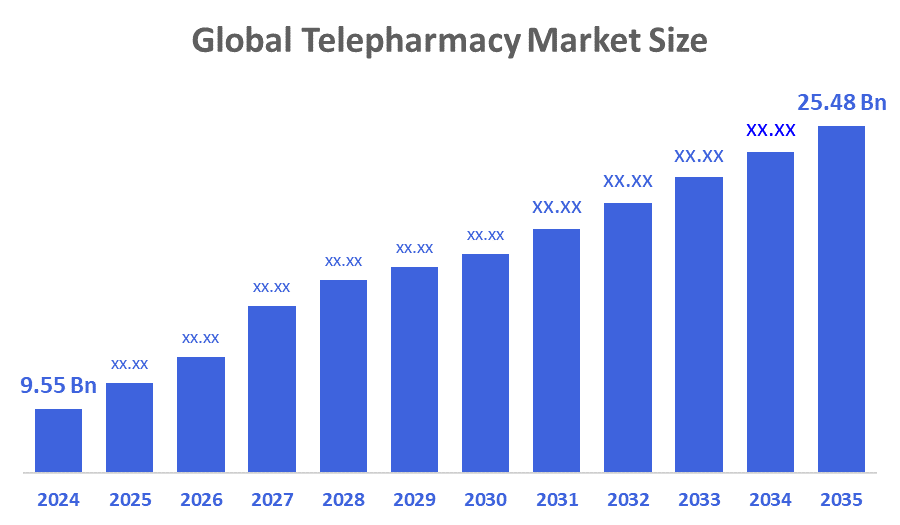
According to a Research Report Published by Decisions Advisors and Consulting, The Global Telepharmacy Market Size was worth around USD 9.55 Billion in 2024 and is predicted to Grow to around USD 25.48 Billion by 2035 with a compound annual growth rate (CAGR) of 9.33 % from 2025 to 2035. The increasing need for affordable healthcare solutions and the growing necessity for healthcare access in rural areas are the main factors propelling the market's expansion.
Market Overview
The telepharmacy market includes medications and other healthcare-related services that are provided through telecommunications. Patients with busy schedules who are unable to physically visit a pharmacy or those who live in remote areas where it is challenging to have direct contact with a pharmacist can benefit from these services. Drug review/monitoring, drug information provision, medicine delivery, oral and sterile compounding verification, patient assessment, patient counselling, and pharmaceutical treatment management are a few examples of telepharmacy services. Telepharmacy ensures that patients in medically underserved and rural areas have access to high-quality health care services by offering consultations to patients who live in remote areas. Additionally, the availability of pharmaceutical treatment at low prices is a significant aspect that influences the market. Moreover, market development is anticipated to be driven by key trends like the growth of telehealth platforms, the incorporation of AI and ML to improve medication management, and regulatory support in different regions that facilitates telepharmacy practices. Telepharmacy services have also grown as chronic disease treatment has become more popular, particularly among older populations.
Report Coverage
This research report categorises the telepharmacy market based on various segments and regions, forecasts revenue growth, and analyses trends in each submarket. The report analyses the key growth drivers, opportunities, and challenges influencing the telepharmacy market. Recent market developments and competitive strategies, such as expansion, product launch, development, partnership, merger, and acquisition, have been included to draw the competitive landscape in the market. The report strategically identifies and profiles the key market players and analyses their core competencies in each sub-segment of the telepharmacy market.
Driving Factors
The market for telepharmacies has grown significantly in recent years due to improvements in digital health technologies, rising internet usage, and growing telehealth practice adoption. By increasing medication adherence, lowering errors, and guaranteeing prompt access to necessary medications, telepharmacy integration into healthcare systems has shown promise for improving patient outcomes. Additionally, telepharmacy offered a simple and safe way to obtain pharmacological therapy while upholding social distancing requirements. The epidemic hastened the development of telepharmacy. Telepharmacy is anticipated to be a key factor in changing the pharmaceutical industry as the need for distant healthcare services grows. Hospitals, elderly homes, and even direct-to-consumer platforms are among the new situations in the worldwide healthcare system. AI uses natural language processing and automated image recognition to provide precise prescription verification and error detection. Chatbots and virtual assistants with AI capabilities improve patient engagement by responding to questions, sending out reminders, and delivering round-the-clock assistance.
Utah has become the first U.S. state to allow artificial intelligence to prescribe certain medications without direct physician oversight. The pilot program, launched in January 2026 with health-tech startup Doctronic, enables AI to renew prescriptions for chronic conditions, but doctors warn of patient safety risks.
Restraining Factors
The shortage of consistent regulations and reimbursement structures, which restricts scalability and acceptance across areas, is a major barrier to the telepharmacy industry. Widespread adoption is further hampered by worries about patient safety, data privacy, and uneven digital infrastructure.
Market Segmentation
The telepharmacy market share is classified into type, component, and delivery mode.
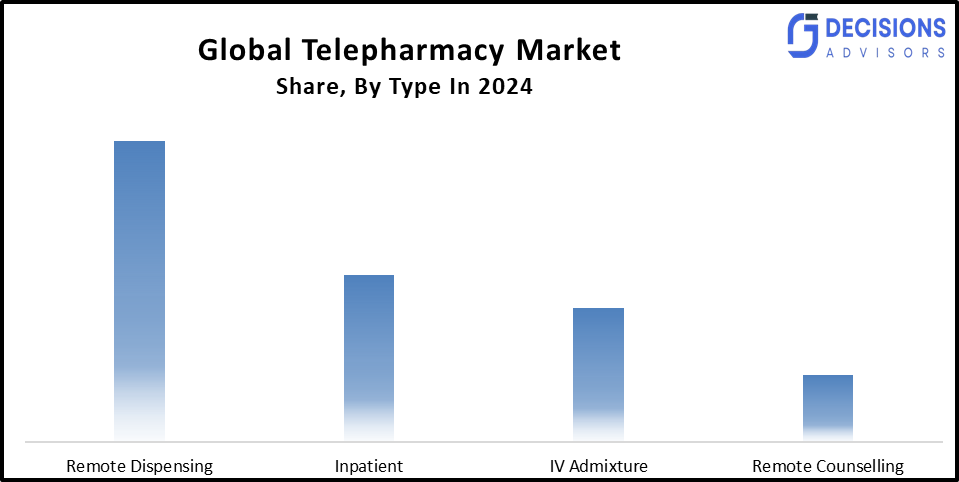
- The remote dispensing segment accounted for the largest market share in 2024 and is anticipated to grow at a substantial CAGR over the forecast period.
Based on the type, the telepharmacy market is divided into inpatient, remote dispensing, IV admixture, and remote counselling. Among these, the remote dispensing segment accounted for the largest market share in 2024 and is anticipated to grow at a substantial CAGR over the forecast period. The segment is driven by the increasing need, particularly in underserved and rural areas, for easily accessible drug delivery. The adoption of this strategy has been accelerated by the ease with which prescription drugs can be administered via remote systems, as well as by improvements in telemedicine.
Sweden has launched its first national procurement of medication dispensing systems with a remote care platform, awarding a framework agreement to Dosell AB (a subsidiary of iZafe Group). This initiative will enable municipalities and regions to adopt safe, efficient, and digitally integrated medication management in home care.
- The software segment accounted for the largest market share in 2024 and is anticipated to grow at a notable CAGR during the forecast period.
Based on the component, the telepharmacy market is divided into hardware and software. Among these, the software segment accounted for the largest market share in 2024 and is anticipated to grow at a notable CAGR during the forecast period. This is due to the growing need for integrated systems that make managing telepharmacy services easier; the software category now has the biggest market share. The efficient operation of remote pharmaceutical services depends on these software solutions, which include teleconsultation tools, prescription dispensing software, and patient management systems. Further, developments in cloud-based technology, artificial intelligence, and the growing use of telemedicine platforms, which need reliable software systems for smooth operations and data protection, are also driving the software industry to experience the fastest growth.
Omnicell presents the Titan XT, an automated dispensing device that offers a more effective medication management experience by combining automation and intelligence. OmniSphere, a cloud-based, HITRUST-certified pharmaceutical management platform designed to unify user administration and task guidance, enable a worldwide formulary, and support inventory management to ease enterprise-wide utilisation, powers the automation of the system.
- The cloud-based segment accounted for the highest market revenue in 2024 and is anticipated to grow at a significant CAGR during the forecast period.
Based on the delivery mode, the telepharmacy market is divided into on-premise, web-based, and cloud-based. Among these, the cloud-based segment accounted for the highest market revenue in 2024 and is anticipated to grow at a significant CAGR during the forecast period. This is due to the growing need for flexible, scalable, and affordable telepharmacy solutions; the cloud-based sector has the largest market share and is growing at the fastest rate. Healthcare providers are seeking to streamline their operations with cloud-based systems because they give real-time access to pharmaceutical data, remote consultations, and seamless interaction with other healthcare technologies.
CVS Health and Google Cloud announced a new strategic partnership to reimagine healthcare consumer engagement. The collaboration will launch Health100, a CVS Health subsidiary, offering an AI-native platform powered by Google Cloud to deliver personalised, proactive, and connected health experiences.
Regional Segment Analysis of the Telepharmacy Market
- North America (U.S., Canada, Mexico)
- Europe (Germany, France, U.K., Italy, Spain, Rest of Europe)
- Asia-Pacific (China, Japan, India, Rest of APAC)
- South America (Brazil and the Rest of South America)
- The Middle East and Africa (UAE, South Africa, Rest of MEA)
Asia Pacific is anticipated to hold the largest share of the telepharmacy market over the predicted timeframe.
Asia Pacific is anticipated to hold the largest share of the telepharmacy market over the predicted timeframe. The telepharmacy industry in the Asia Pacific is expanding quickly due to rising healthcare needs and the increasing use of digital health solutions. Significant investments are being made in telemedicine and telepharmacy services in nations including Australia, China, Japan, and India. Telepharmacy use has increased in India as a result of the government's push for digital healthcare through programs like the National Digital Health Mission, especially in rural areas where access to medical services is restricted. China and Japan are also making great progress; China is employing technology to provide access to healthcare in remote regions, while Japan is concentrating on telehealth integration in response to an ageing population.
The Government of India has launched a new telepharmacy pilot program aimed at expanding access to medicines, particularly in rural and underserved areas. This initiative will allow patients to consult pharmacists remotely and receive prescribed medicines through digital platforms and local delivery networks.
Europe is expected to grow at a rapid CAGR in the telepharmacy market during the forecast period. The telepharmacy market in Europe is expanding steadily, with the UK, Germany, and France leading the way in adoption. The integration of telepharmacy services into current healthcare systems is made possible by the region's robust healthcare infrastructure and regulatory support. In order to improve access to medical treatments, particularly in rural regions, the European Union has been promoting the use of telehealth, which includes telepharmacy. For instance, the National Health Service (NHS) in the United Kingdom has been aggressively incorporating telemedicine systems, such as telepharmacy, to manage medication and offer remote consultations. The market is anticipated to expand as a result of continuous improvements in telemedicine regulations and digital healthcare initiatives, despite slower acceptance in some Southern and Eastern European nations.
Gematik, Germany’s national digital health agency, has published preliminary specifications for the “Proof of Patient Presence” (PoPP) module, which will serve as the foundation for a low-threshold e-prescription solution in the coming years. The draft aims to ensure secure, user-friendly redemption of electronic prescriptions.
Competitive Analysis:
The report offers the appropriate analysis of the key organisations/companies involved within the telepharmacy market, along with a comparative evaluation primarily based on their product offering, business overviews, geographic presence, enterprise strategies, segment market share, and SWOT analysis. The report also provides an elaborate analysis focusing on the current news and developments of the companies, which includes product development, innovations, joint ventures, partnerships, mergers & acquisitions, strategic alliances, and others. This allows for the evaluation of the overall competition within the market.
List of Key Companies
- Cerner Corporation
- HealthHub
- Healthway Services
- McKesson Corporation
- MediSprout
- MedPharm
- Omnicare
- Pharmacy Automation Systems
- Pharmalink
- Pharmasimple
- PipelineRx
- ScriptPro
- TelePharm
- Others
Key Target Audience
- Market Players
- Investors
- End-users
- Government Authorities
- Consulting and Research Firm
- Venture capitalists
- Value-Added Resellers (VARs)
Recent Development
- In February 2026, PowerGate Software developed a HIPAA-compliant telepharmacy platform for a U.S. client, enabling secure digital pharmacist consultations and streamlined medicine delivery. The solution was rolled out rapidly, ensuring strong patient engagement and adherence to privacy standards. This project highlights how tailored digital health platforms can accelerate access to care while maintaining regulatory compliance.
Market Segment
This study forecasts revenue at global, regional, and country levels from 2020 to 2035. Decisions Advisors has segmented the telepharmacy market based on the below-mentioned segments:
Global Telepharmacy Market, By Type
- Inpatient
- Remote Dispensing
- IV Admixture
- Remote Counselling
Global Telepharmacy Market, By Component
- Hardware
- Software
Global Telepharmacy Market, By Delivery Mode
- On-Premise
- Web-Based
- Cloud-Based
Global Telepharmacy Market, By Regional Analysis
- North America
- US
- Canada
- Mexico
- Europe
- Germany
- UK
- France
- Italy
- Spain
- Russia
- Rest of Europe
- Asia Pacific
- China
- Japan
- India
- South Korea
- Australia
- Rest of Asia Pacific
- South America
- Brazil
- Argentina
- Rest of South America
- Middle East & Africa
- UAE
- Saudi Arabia
- Qatar
- South Africa
- Rest of the Middle East & Africa
Frequently Asked Questions (FAQ)
1. How does telepharmacy improve medication adherence among patients?
Telepharmacy improves medication adherence by providing continuous remote support from pharmacists through digital consultations, automated reminders, and virtual follow-ups. These services help patients understand dosage instructions, manage side effects, and stay consistent with treatment plans. Telepharmacy platforms can also integrate mobile apps and digital monitoring tools that track prescription refills and notify patients when medications need to be taken, reducing the likelihood of missed doses.
2. What role do wearable devices and remote monitoring tools play in telepharmacy?
Wearable devices and remote monitoring tools can support telepharmacy by providing real-time health data such as heart rate, glucose levels, or blood pressure. Pharmacists can use this information to monitor medication effectiveness and make informed recommendations for therapy adjustments. Integration with telepharmacy systems can enhance personalised medication management and improve overall patient outcomes.
3. How are telepharmacy services integrated with electronic health record (EHR) systems?
Telepharmacy platforms can integrate with electronic health record systems to allow pharmacists secure access to patient medical histories, prescriptions, allergies, and laboratory results. This integration enables pharmacists to perform accurate medication reviews, detect potential drug interactions, and coordinate care with physicians and other healthcare providers more effectively.
4. What impact could 5G connectivity have on the telepharmacy market?
The adoption of 5G technology could significantly improve telepharmacy services by enabling faster data transmission, high-quality video consultations, and reliable real-time monitoring. Enhanced connectivity will allow healthcare providers to deliver more advanced remote pharmaceutical services, particularly in areas with limited healthcare infrastructure.
5. How can telepharmacy contribute to reducing healthcare costs?
Telepharmacy can help reduce healthcare costs by minimising unnecessary hospital visits, improving medication management, and preventing medication errors. Remote consultations and automated dispensing systems reduce operational expenses for healthcare providers while allowing patients to receive pharmaceutical care without travelling long distances.
6. What cybersecurity challenges could affect telepharmacy adoption?
Telepharmacy systems rely heavily on digital infrastructure, which makes them vulnerable to cybersecurity risks such as data breaches, unauthorised access, and ransomware attacks. Protecting sensitive patient information requires robust encryption, secure authentication methods, and strict compliance with healthcare data protection regulations.
7. How could personalised medicine influence the future development of telepharmacy services?
As personalised medicine becomes more common, telepharmacy platforms may play a greater role in tailoring medication therapies based on genetic profiles, lifestyle data, and patient-specific health information. Pharmacists could remotely monitor treatment responses and recommend personalised medication adjustments, enhancing treatment effectiveness and safety.
Check Licence
Choose the plan that fits you best: Single User, Multi-User, or Enterprise solutions tailored for your needs.
We Have You Covered
- 24/7 Analyst Support
- Clients Across the Globe
- Tailored Insights
- Technology Tracking
- Competitive Intelligence
- Custom Research
- Syndicated Market Studies
- Market Overview
- Market Segmentation
- Growth Drivers
- Market Opportunities
- Regulatory Insights
- Innovation & Sustainability
Report Details
| Scope | Global |
| Pages | 283 |
| Delivery | PDF & Excel via Email |
| Language | English |
| Release | Mar 2026 |
| Access | Download from this page |