
Global Tissue Engineering Market
 |
Pages:
245
|
Pages:
245
Global Tissue Engineering Market Size, Share, By Type (Scaffolds and Biomaterials), By Application (Orthopaedics, Skin & Integumentary, Cardiovascular, Neurology), By End User (Hospitals, Research Institutes, Biotechnology Companies), and By Region, Analysis and Forecast 2025?2035
REPORT COVERAGE
Global
Market Snapshot
- Market Size (2025): USD 21.5 Billion
- Projected Market Size (2035): USD 81.8 Billion
- Compound Annual Growth Rate (CAGR): 14.3%
- Largest Regional Market: North America
- Fastest Growing Region: Asia Pacific
- 3rd Largest Region: Europe
- Base Year: 2025
- Historical Period: 2021–2025
- Forecast Period: 2025–2035
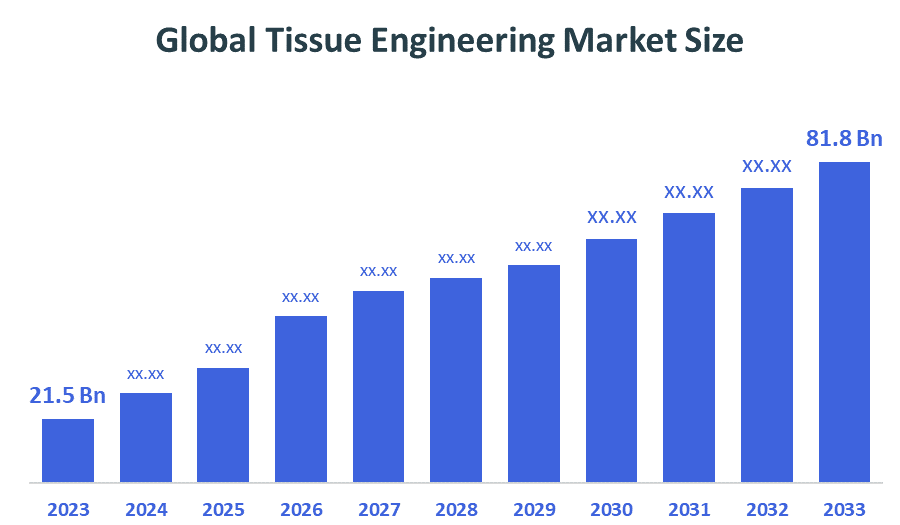
According to Decision Advisors, the global tissue engineering market Size is expected to grow from USD 21.5 billion in 2024 to USD 81.8 billion by 2035, at a CAGR of 14.3% during the forecast period 2025-2035. Growth is driven by increasing demand for regenerative medicine, rising prevalence of chronic diseases, and advancements in biomaterials and 3D bioprinting technologies. The growing need for organ transplantation and the limited availability of donor organs are further accelerating demand for tissue-engineered products.
Market Overview/ Introduction
The tissue engineering market refers to the segment of the biotechnology and regenerative medicine industry focused on the development, manufacturing, and commercialization of biological substitutes that restore, maintain, or enhance the function of damaged or diseased tissues. The market for tissue engineering is really about putting together cells, special materials and molecules that help the body to make tissue that can be used for medical purposes. Tissue engineering uses materials and living cells to fix or replace damaged organs, that are damaged which is a big change from just treating patients to actually making them better. Tissue engineering is getting a lot of attention now because there are a lot of old patients in the world and not enough organs available. To accelerate this momentum, governments worldwide are stepping in with aggressive support from the U.S. National Institutes of Health (NIH) funding high-risk moonshot regenerative projects to the European Union’s Horizon Europe initiatives and Japan’s streamlined regulatory pathways for regenerative products. Not to be outdone, industry leaders are shifting from simple scaffolds to complex 3D-bioprinted tissues and AI-driven cell therapies, backed by record-breaking R&D investments and strategic mergers aimed at scaling manufacturing. Looking ahead, the future opportunities are immense. The integration of Organ-on-a-Chip technology for rapid drug testing and the perfection of vascularized tissues, which would allow us to lab-grow fully functional complex organs, represent the next multi-billion-dollar frontier. For stakeholders, this isn't just an investment in a medical niche; it is an investment in the next era of human longevity.
- The market is unlocking a multi-billion-dollar opportunity in organ regeneration and personalized medicine, driven by breakthroughs in 3D bioprinting and patient-specific tissue development, which have the potential to significantly reduce organ transplant dependency and transform future treatment paradigms.
- The tissue engineering market is rapidly transitioning from research-driven innovation to commercial clinical adoption, with increasing availability of FDA-approved regenerative products and bioengineered tissues, signalling a strong shift toward real-world healthcare integration and revenue generation.
Notable Insights: -
- North America is anticipated to hold the largest share of approximately 40% in the tissue engineering market over the predicted timeframe.
- Asia Pacific is expected to grow at a rapid CAGR in the tissue engineering market during the forecast period.
- By type, the scaffolds segment accounted for the largest share of approximately 42% and is projected to grow at a substantial CAGR during the forecast period.
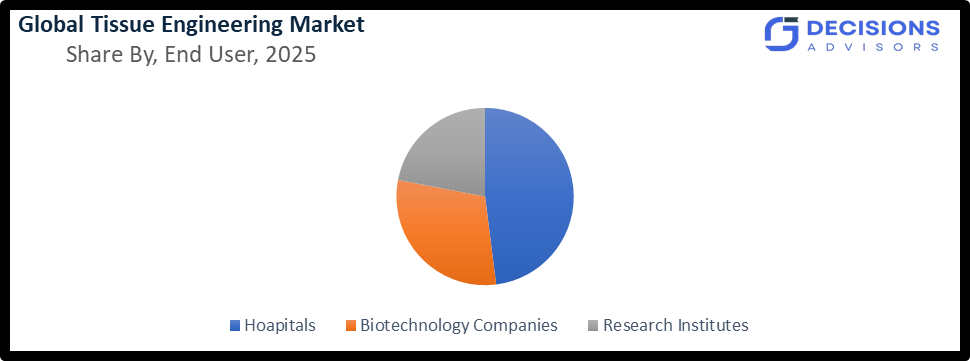
- By end user, the hospitals segment dominated the market with a share 48% in 2025, and is projected to grow at a substantial CAGR during the forecast period.
- The compound annual growth rate of the global spirit market is 14.3%.
- The market is likely to achieve a valuation of USD 81.8 billion by 2035.
What is role of technology in grooming the market?
Technology plays a crucial role in advancing tissue engineering. Innovations such as 3D bioprinting enable the precise fabrication of tissues and organs. Advanced biomaterials improve cell adhesion and tissue regeneration efficiency. Nanotechnology enhances scaffold design and drug delivery systems. Artificial intelligence is being used to optimize tissue growth conditions and predict outcomes. These technologies are improving the success rates, scalability, and commercialization of tissue-engineered products.
Market Drivers
The tissue engineering market is driven by increasing demand for regenerative therapies and rising cases of chronic diseases such as cardiovascular disorders, diabetes, and orthopedic conditions. The shortage of organ donors is significantly boosting the need for artificial tissues and organs. Advancements in stem cell research, biomaterials, and bioprinting technologies are accelerating innovation. Growing investments in R&D and supportive government initiatives are further contributing to market growth. Additionally, increasing adoption of personalized medicine is expanding the application scope of tissue engineering.
Restrain
The market faces challenges such as high costs associated with tissue engineering procedures and complex manufacturing processes. Regulatory hurdles and ethical concerns related to stem cell use can limit adoption. Limited availability of skilled professionals and technical complexities in large-scale production also act as restraints.
Competitive Analysis:
The report offers the appropriate analysis of the key organizations/companies involved within the tissue engineering market, along with a comparative evaluation primarily based on their product of offering, business overviews, geographic presence, enterprise strategies, segment market share, and SWOT analysis. The report also provides an elaborative analysis focusing on the current news and developments of the companies, which includes product development, innovations, joint ventures, partnerships, mergers & acquisitions, strategic alliances, and others. This allows for the evaluation of the overall competition within the market.
Top Companies in the Tissue Engineering Market
- Integra LifeSciences
- Zimmer Biomet
- Smith & Nephew
- CollPlant
- Thermo Fisher Scientific
- MiMedx Group
- Smith & Nephew
- Tissue Regenix
- Medtronic
- Organovo Holdings
Government Initiatives
|
Country |
Key Government Initiatives |
|
Canada |
The government is investing USD 22.5 million for a new cell therapy manufacturing facility in British Columbia, alongside USD 23.6 million for cardiac regenerative medicine research. |
|
US |
The NIH funds hundreds of millions in research for tissue scaffolds and biomaterials, along with a 150 million dollars initiative for organ-on-chip platforms to speed drug development. The FDA uses Breakthrough Device Designations to accelerate approval for products like tissue-engineered bone grafts. |
|
Europe |
The newly adopted Horizon Europe Work Programme for 2025 allocates €7.3 billion to support research and innovation that delivers on the EU’s ambitions to build a more competitive, fair and resilient Europe. |
Market Segmentation
The tissue engineering market share is classified into type, application, and end user
- The scaffolds segment accounted for the largest share of approximately 42% and is projected to grow at a substantial CAGR during the forecast period.
Based on the type, the tissue engineering market is divided into scaffolds and biomaterials. Among these, the scaffolds segment accounted for the largest share of approximately 42% and is projected to grow at a substantial CAGR during the forecast period. Owing to its essential role in providing structural support for cell attachment, proliferation, and tissue formation. Scaffolds are widely used across various applications, including bone, cartilage, and skin regeneration, making them a fundamental component in tissue engineering. The biomaterials segment held around 33% of the market share, driven by their increasing use in enhancing biocompatibility, mechanical strength, and tissue integration. These materials play a critical role in improving the performance of engineered tissues. Meanwhile, the stem cells segment captured nearly 25% of the market and is expected to witness the fastest growth, supported by their high regenerative potential and expanding use in advanced therapies and personalized medicine.
- The orthopaedics segment accounted for the largest share in 2025, and is anticipated to grow at a significant CAGR during the forecast period.
Based on the application, the tissue engineering market is divided into orthopaedics, skin and integumentary, cardiovascular and neurology. Among these, the orthopaedics segment accounted for the largest share in 2025 and is anticipated to grow at a significant CAGR during the forecast period. This is driven by increasing cases of bone injuries, osteoporosis, and joint disorders. Tissue engineering is widely used in bone grafts and cartilage repair. The skin & integumentary segment is also significant due to the rising demand for wound healing and burn treatment. Cardiovascular and neurological applications are growing steadily with advancements in regenerative therapies.
- The hospitals segment dominated the market with a share 48% in 2025, and is projected to grow at a substantial CAGR during the forecast period.
Based on the end user, the tissue engineering market is divided into hospitals, biotechnology companies and research institutes. Among these, the hospitals segment dominated the market with a share 48% in 2025, and is projected to grow at a substantial CAGR during the forecast period, as they are the primary centers for surgical procedures and regenerative treatments. The availability of advanced medical infrastructure and skilled professionals further supports their dominance. The biotechnology companies segment accounted for around 30% of the market, driven by increasing commercialization of tissue-engineered products and continuous innovation in regenerative medicine. Meanwhile, the research institutes segment held approximately 22%, supported by growing investments in research and development, clinical trials, and advancements in tissue engineering technologies.
Strategies to Implement for Growth of the Market in Non-Leading Regions
Market growth in emerging regions can be accelerated by increasing awareness about regenerative medicine. Governments should invest in healthcare infrastructure and promote biotechnology research. Expanding access to affordable treatment options and encouraging collaborations with global organizations can further boost market growth.
Regional Segment Analysis of the Global Tissue Engineering Market
- North America (U.S., Canada, Mexico)
- Europe (Germany, France, U.K., Italy, Spain, Rest of Europe)
- Asia-Pacific (China, Japan, India, Rest of APAC)
- South America (Brazil and the Rest of South America)
- The Middle East and Africa (UAE, South Africa, Rest of MEA)
North America is anticipated to hold the largest share of approximately 40% in the tissue engineering market over the predicted timeframe.
North America is anticipated to hold the largest share of approximately 40% in the Tissue engineering market over the predicted timeframe. The dominance of this region is primarily driven by its well-established healthcare infrastructure, strong presence of leading biotechnology and regenerative medicine companies, and high adoption of advanced tissue engineering technologies. The region benefits from increasing demand for regenerative therapies, rising prevalence of chronic diseases, and growing use of bioengineered tissues in clinical applications. Additionally, significant investments in research and development, along with supportive regulatory frameworks and government funding for biotechnology and life sciences, are further contributing to market growth. The widespread availability of advanced medical facilities and increasing integration of technologies such as 3D bioprinting are also strengthening North America's leading position.
Asia Pacific is expected to grow at a rapid CAGR in the tissue engineering market during the forecast period.
Asia Pacific is expected to grow at a rapid CAGR in the tissue engineering market during the forecast period. This growth is driven by the large population base, increasing awareness about regenerative medicine, and rising healthcare expenditure across countries. The region is witnessing rapid expansion in biotechnology infrastructure and growing adoption of tissue engineering applications in orthopaedics, wound care, and organ regeneration. Additionally, government initiatives supporting biotechnology research, along with increasing investments in healthcare infrastructure, are accelerating market growth. The rising prevalence of chronic diseases and the growing demand for advanced therapeutic solutions are further supporting the adoption of tissue engineering technologies in the region.
Europe is the 3rd largest region to grow in the tissue engineering market during the period
Europe is the third-largest region in the tissue engineering market, supported by well-developed healthcare systems and strong research capabilities in biotechnology and regenerative medicine. Key countries such as Germany, France, and the United Kingdom play a significant role in regional growth. The region is witnessing increasing adoption of tissue engineering solutions, particularly in clinical research, orthopaedics, and wound healing applications. Supportive regulatory frameworks and growing investments in life sciences research are further contributing to market expansion. Additionally, the presence of established research institutions and increasing collaboration between academia and healthcare providers are driving sustained growth in the region.
Future Market Trends in the Global Tissue Engineering Market: -
- Rapid Advancement of 3D Bioprinting and Bio fabrication
One of the most significant future trends in the tissue engineering market is the rapid advancement of 3D bioprinting and bio fabrication technologies. These technologies enable the precise creation of complex tissue structures using living cells, biomaterials, and growth factors. Recent developments have shown progress in printing organ-like structures such as liver and kidney tissues, which are expected to address the global shortage of donor organs. Additionally, innovations in scaffold design and smart biomaterials are improving tissue functionality and integration. These advancements are expected to revolutionize regenerative medicine by enabling personalized tissue implants and more efficient drug testing models.
- Increasing Integration of Stem Cells and Regenerative Therapies
Another key trend is the growing integration of stem cell-based therapies and regenerative medicine in tissue engineering. Stem cells are increasingly being used to develop functional tissues for treating chronic diseases such as cardiovascular disorders, neurological conditions, and orthopedic injuries. The market is witnessing a shift toward personalized medicine, where patient-specific cells are used to reduce the risk of rejection and improve treatment outcomes. Additionally, technologies such as organ-on-chip and AI-driven tissue modeling are enhancing research capabilities and accelerating clinical applications.
- Integration of Artificial Intelligence (AI) and Smart Biomaterials
A key emerging trend in the tissue engineering market is the increasing integration of artificial intelligence (AI), machine learning, and smart biomaterials in tissue development processes. AI is being used to optimize scaffold design, predict cell behavior, and improve the success rate of tissue regeneration by analyzing large biological datasets. Additionally, the development of smart biomaterials that can respond to environmental stimuli (such as temperature, pH, or mechanical stress) is enhancing tissue functionality and improving healing outcomes
Recent Development
- In March 2026, Advancements by Vericel Corporation in cell-based therapies, particularly in cartilage repair and severe burn treatment. The company emphasised improvements in manufacturing processes and clinical outcomes, reinforcing its position in the tissue engineering and regenerative medicine market.
- In February 2026, industry reports highlighted increasing investments in 3D bioprinting technologies and biomaterials, with the market witnessing significant growth due to rising demand for regenerative medicine and organ engineering. This reflects strong technological advancement supporting the development of complex tissue structures and improving clinical applications in tissue repair and replacement.
- In January 2026, Organogenesis announced the expansion of its advanced wound care and regenerative medicine product portfolio, focusing on bioengineered skin substitutes. This development reflects the growing commercialisation of tissue-engineered products and the increasing adoption in chronic wound management and surgical applications.
How is Recent Developments Helping the Market?
Recent developments are significantly accelerating the growth of the tissue engineering market by improving both clinical effectiveness and scalability. The approval of stem cell-based therapies is validating the real-world application of tissue engineering, increasing confidence among healthcare providers and investors. Innovations such as lab-grown tissues and organ models are reducing dependency on traditional organ transplants and animal testing, thereby expanding the scope of applications. Additionally, advancements in biomaterials and bioprinting technologies are improving the success rate of tissue regeneration and enabling mass production of engineered tissues
Market Segment
This study forecasts revenue at global, regional, and country levels from 2020 to 2035. Decision Advisors has segmented the global tissue engineering market based on the below-mentioned segments:
Global Tissue Engineering Market, By Type
- Scaffolds
- Biomaterials
Global Tissue Engineering Market, By Application
- Orthopedics
- Skin and Integumentary
- Cardiovascular
- Neurology
Global Tissue Engineering Market, By End User
- Hospitals
- Research and Integumentary
- Neurology
Global Tissue Engineering Market, By Regional Analysis
- North America
- US
- Canada
- Mexico
- Europe
- Germany
- UK
- France
- Italy
- Spain
- Russia
- Rest of Europe
- Asia Pacific
- China
- Japan
- India
- South Korea
- Australia
- Rest of Asia Pacific
- South America
- Brazil
- Argentina
- Rest of South America
- Middle East & Africa
- UAE
- Saudi Arabia
- Qatar
- South Africa
- Rest of the Middle East & Africa
Frequently Asked Questions (FAQ)
Q. What are the major challenges in commercialising tissue-engineered products?
A. The major challenges include high production costs, complex manufacturing processes, strict regulatory approvals, and difficulties in scaling up production while maintaining product quality and consistency.
Q. How long does it take to develop tissue-engineered products for clinical use?
A. The development timeline can range from several years to over a decade, depending on the complexity of the tissue, clinical trial requirements, and regulatory approval processes.
Q. What role do biomaterials play in tissue engineering success?
A. Biomaterials provide structural support and influence cell behaviour, including adhesion, growth, and differentiation. Their properties significantly impact the effectiveness and integration of engineered tissues.
Q. Can tissue engineering completely replace organ transplantation in the future?
A. While tissue engineering shows strong potential to reduce dependence on organ donors, complete replacement of organ transplantation will take time due to technical, regulatory, and clinical challenges.
Check Licence
Choose the plan that fits you best: Single User, Multi-User, or Enterprise solutions tailored for your needs.
We Have You Covered
- 24/7 Analyst Support
- Clients Across the Globe
- Tailored Insights
- Technology Tracking
- Competitive Intelligence
- Custom Research
- Syndicated Market Studies
- Market Overview
- Market Segmentation
- Growth Drivers
- Market Opportunities
- Regulatory Insights
- Innovation & Sustainability
Report Details
| Scope | Global |
| Pages | 245 |
| Delivery | PDF & Excel via Email |
| Language | English |
| Release | Apr 2026 |
| Access | Download from this page |