
United Kingdom Opioids Market
 |
Author:
Disha B
|
Pages:
220
|
Author:
Disha B
|
Pages:
220
United Kingdom Opioids Market size, Share, By Drug Type (Natural Opioids, Semi-Synthetic Opioids, and Synthetic Opioids), By Route of Administration (Oral, Injectable, Transdermal, and Others), and By End-User (Hospital, Clinics, Homecare Settings, and Rehabilitation Centers) Analysis and Forecast 2026-2035.
CAGR
5.23%
REVENUE 2025
USD Billion 17.6
FORECAST 2035
USD Billion 29.3
REPORT COVERAGE
Country
Market Snapshot
- United Kingdom Opioids Market Size (2025): USD 17.60 Billion
- Projected United Kingdom Opioids Market Size (2035): USD 29.3 Billion
- United Kingdom Opioids Market Compound Annual Growth Rate (CAGR): 5.23%
- Base Year: 2025
- Historical Period: 2021–2024
- Forecast Period: 2026–2035
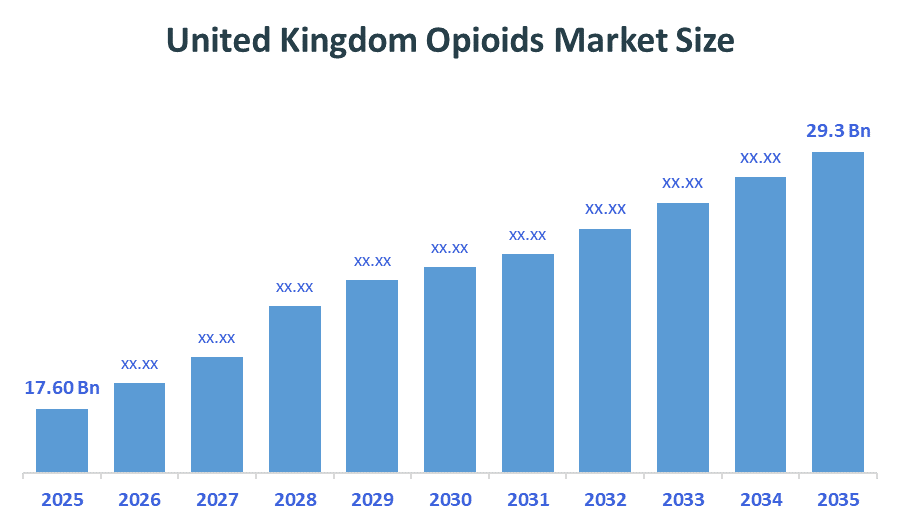
According to Decision Advisors, the United Kingdom Opioids Market Size was grown from USD 17.60 billion in 2025 to USD 29.3 billion by 2035, at a CAGR of 5.23% during the forecast period 2026-2035. The United Kingdom opioids market is projected to grow significantly over the next decade, fuelled by the rising geriatric population, high prevalence of chronic pain, increased surgical procedures, new product approvals and formulations, adoption of abuse-deterrent formulations, and emerging markets and improved access.
Market Overview/Introduction
The United Kingdom opioids market refers to the production, distribution, and consumption of opioid-based medications used for pain management and treatment of opioid dependence within the UK healthcare system. Opioids are a class of drugs that includes natural, semi-synthetic, and synthetic compounds, which bring relief to people who experience moderate to severe pain because these compounds interact with their opioid receptors. The market experiences growth because there is an increase in chronic pain cases, together with an older population and more people developing cancer who need palliative treatments. The development of abuse-deterrent formulations together with controlled drug delivery systems creates new possibilities for safer treatment methods. The future presents a prospect for non-addictive pain therapies, together with better monitoring technologies and significantly increased addiction treatments. Government initiatives and upcoming clinical guidelines will create an environment that supports sustainable market development in the upcoming years.
- Public Health England (now part of the Office for Health Improvement and Disparities, OHID) and the National Crime Agency (NCA) have set up a joint log of synthetic?opioid?related deaths, extending from June 2023 and formally collecting coroner?lab toxicology data from April 2024 onward. This acts as an early?warning and surveillance scheme for nitazenes and other potent synthetic opioids infiltrating the UK illicit?drug market.
- The Home Office has convened a Synthetic Opioids Taskforce to review health and security risks from synthetic opioids and to shape policy options. Under the wider 10?year drugs strategy, the government is also funding an expansion of treatment capacity, including creating roughly 21,000 new treatments “places” for opiate? and crack?users who are most at risk from synthetic?opioid contamination in the illicit market.
Notable Insights: -
- The semi-synthetic opioids segment dominated the market in 2025 and holds the largest market share, accounting for approximately 60% during the forecast period.
- The oral segment dominated the market in 2025 and holds the largest market share, accounting for approximately 59.9% during the forecast period.
- The hospitals segment dominated the market in 2025 and holds the largest market share, accounting for approximately 45% during the forecast period.
- The compound annual growth rate of the United Kingdom Opioids Market is 5.23%.
- The market is likely to achieve a valuation of USD 29.3 Billion by 2035.
What is the role of technology in grooming the market?
Technology plays a crucial role in shaping the UK opioids market by improving prescription monitoring, patient safety, and drug development. Advanced digital health systems, including electronic prescribing and real-time monitoring tools, help track opioid usage and reduce misuse or overprescribing. Integration of data analytics and AI enables healthcare providers to identify high-risk patients and personalize pain management strategies. Innovations in drug delivery systems, such as extended-release formulations and abuse-deterrent technologies, enhance treatment effectiveness while minimizing dependency risks. Additionally, telemedicine platforms have expanded patient access to pain management consultations, ensuring timely and controlled opioid prescriptions. Overall, technology supports a more regulated, efficient, and patient-centric approach, balancing the need for effective pain relief with efforts to reduce opioid-related harm in the UK healthcare system.
Market Drivers
The UK Opioids Market experiences its main growth driver through the rising elderly population, who require pain treatment because of their higher risk for chronic diseases, including arthritis and cardiovascular diseases, and cancer. A significant proportion of older adults’ experience persistent orthopedic and chronic pain, which leads to increased opioid usage. The annual rise in cancer cases generates ongoing requirements for strong and durable pain relief medications. The market expansion occurs because doctors now prescribe medications in new ways, which include continued morphine use and rising adoption of modern synthetic opioids. The UK heroin market, which operates illegally, develops into an indirect force that shapes opioid distribution patterns and consumption practices.
Restrain
The UK Opioids Market faces significant restraints due to stringent regulatory policies aimed at curbing misuse and addiction, alongside increasing awareness of opioid-related risks. Concerns over dependency, overdose, and side effects have led to cautious prescribing practices. Additionally, the growing preference for non-opioid and alternative pain management therapies further limits market growth.
Study on the Supply, Demand, Distribution, and Market Environment of the United Kingdom Opioids Market
The United Kingdom opioids market is shaped by a complex interplay of supply, demand, distribution, and regulatory environment. Demand is primarily driven by the high prevalence of chronic pain, post-surgical care, and cancer-related treatments, with opioids accounting for a significant share of pain management drugs in the country. On the supply side, the UK relies heavily on a global pharmaceutical supply chain, where most raw materials and finished opioid drugs are sourced internationally, making availability sensitive to disruptions. Raw materials include opium poppy derivatives such as morphine and codeine, along with chemical precursors for synthetic opioids. Distribution occurs through regulated healthcare channels like hospitals and pharmacies, alongside illicit networks involving street markets and online platforms. Overall, strict regulations, global sourcing dependencies, and evolving distribution channels define the UK opioids market environment.
Price Analysis and Consumer Behaviour Analysis
The price dynamics of the United Kingdom Opioids Market are influenced by strict regulatory controls, NHS pricing policies, and the availability of generic formulations, which keep prescription opioid prices relatively stable and affordable. However, branded and advanced formulations, such as extended-release or abuse-deterrent opioids, tend to be priced higher. From a consumer behavior perspective, there is increasing caution among patients and healthcare providers due to rising awareness of addiction risks and side effects. This has led to more conservative prescribing patterns and a gradual shift toward non-opioid alternatives where possible. Nevertheless, patients with severe or chronic pain, particularly cancer-related, continue to rely on opioids, ensuring consistent demand despite evolving perceptions and regulatory pressures.
Market Segmentation
The United Kingdom Opioids Market share is classified into drug type, route of administration, and end-user
- The semi-synthetic opioids segment dominated the market in 2025 and holds the largest market share, accounting for approximately 60% during the forecast period.
Based on the drug type, the opioids market is divided into natural opioids, semi-synthetic opioids, and synthetic opioids. Among these, the semi-synthetic opioids segment dominated the market in 2025 and holds the largest market share, accounting for approximately 60% during the forecast period. The semi-synthetic opioids segment is driven by their balanced efficacy, safety, and versatility in pain management. Drugs such as oxycodone and tramadol are widely prescribed due to their controlled potency and availability in multiple formulations, including extended-release forms for chronic pain. Additionally, these opioids offer better pharmacokinetic control and adaptability compared to natural opioids, supporting their higher clinical preference.
- The oral segment dominated the market in 2025 and holds the largest market share, accounting for approximately 59.9% during the forecast period.
Based on the route of administration, the opioids market is divided into oral, injectable, transdermal, and others. Among these, the oral segment dominated the market in 2025 and holds the largest market share, accounting for approximately 59.9% during the forecast period. The oral segment in the U.K. is attributed to its convenience, cost-effectiveness, and high patient compliance. Oral formulations such as tablets and capsules are widely prescribed for chronic pain management, especially in outpatient settings. Additionally, ease of administration, availability of extended-release forms, and reduced need for clinical supervision further support their widespread adoption.
- The hospitals segment dominated the market in 2025 and holds the largest market share, accounting for approximately 45% during the forecast period.
Based on the end user, the opioids market is divided into hospitals, clinics, homecare settings, and rehabilitation centers. Among these, the hospitals segment dominated the market in 2025 and holds the largest market share, accounting for approximately 45% during the forecast period. The hospitals segment in the U.K. is driven by the high volume of surgical procedures, trauma cases, and inpatient care requiring strong pain management. Hospitals ensure controlled opioid administration under medical supervision, particularly for acute and post-operative pain, thereby increasing their overall consumption and market share.
Recent Development
- In December 2025, the UK government’s plan to expand access to take-home naloxone is part of a broader strategy to reduce opioid-related deaths and improve public health outcomes. By increasing availability through pharmacies, emergency services, and public access points, the policy strengthens the opioid treatment and harm-reduction ecosystem.
- In March 2025, the Medicines and Healthcare Products Regulatory Agency (MHRA) issued a Drug Safety Update (DSU) stating that the indication for prolonged?release opioids to treat post?operative pain has been removed from all such products’ licences.
- In May 2025, the UK government issued new local?authority guidance to help local partners respond to synthetic?opioid threats, including nitazenes and similar potent opioids in the illegal market. The guidance offers 12 practical recommendations for local authorities, police, and public?health bodies to coordinate overdose?response, naloxone deployment, and early warning systems.
Competitive Analysis
The report offers the appropriate analysis of the key organisations/companies involved within the United Kingdom opioids market, along with a comparative evaluation primarily based on their product offering, business overviews, geographic presence, enterprise strategies, segment market share, and SWOT analysis. The report also provides an elaborative analysis focusing on the current news and developments of the companies, which includes product development, innovations, joint ventures, partnerships, mergers & acquisitions, strategic alliances, and others. This allows for the evaluation of the overall competition within the market.
Top Key Companies in the United Kingdom Opioids market
- Teva Pharmaceutical Industries Ltd.
- Viatris Inc.
- Accord Healthcare
- Sandoz
- Indivior PLC
- Others
Key Target Audience
- Market Players
- Investors
- End-users
- Government Authorities
- Consulting and Research Firm
- Venture capitalists
- Value-Added Resellers (VARs)
Market Segment
This study forecasts revenue at the United Kingdom, regional, and country levels from 2020 to 2035. Decision Advisor has segmented the United Kingdom opioids market based on the below-mentioned segments
United Kingdom Opioids Market, By Drug Type
- Natural Opioids
- Semi-Synthetic Opioids
- Synthetic Opioids
United Kingdom Opioids Market, By Route of Administration
- Oral
- Injectable
- Transdermal
- Others
United Kingdom Opioids Market, By End-User
- Hospital
- Clinics
- Homecare Settings
- Rehabilitation Centers
Frequently Asked Questions (FAQ)
Q. How do regulatory bodies influence opioid availability in the United Kingdom?
A. Regulatory authorities such as the Medicines and Healthcare Products Regulatory Agency and National Health Service play a critical role by enforcing strict prescribing guidelines, monitoring drug safety, and controlling distribution. These measures ensure patient safety while limiting misuse, directly impacting market access and product approvals.
Q. What role does opioid substitution therapy (OST) play in the UK opioids market?
A. Opioid substitution therapy, including medications like methadone and buprenorphine, is essential for treating opioid dependence. It supports long-term recovery programs, reduces illicit opioid use, and contributes significantly to the demand for controlled opioid medications within rehabilitation and public health frameworks.
Q. How does the illicit drug market affect the legal opioids market in the UK?
A. The presence of a strong illicit opioid market, particularly heroin and synthetic opioids, influences prescribing caution, regulatory tightening, and public perception. This indirectly affects legal opioid demand by encouraging stricter controls and promoting safer alternatives in clinical settings.
Q. What impact does innovation in pain management alternatives have on the opioids market?
A. Advancements in non-opioid therapies, such as nerve stimulation devices, biologics, and cannabinoid-based treatments, are gradually reducing reliance on opioids. These innovations are reshaping treatment approaches, leading to more diversified pain management strategies and moderating long-term opioid market growth.
Check Licence
Choose the plan that fits you best: Single User, Multi-User, or Enterprise solutions tailored for your needs.
We Have You Covered
- 24/7 Analyst Support
- Clients Across the Globe
- Tailored Insights
- Technology Tracking
- Competitive Intelligence
- Custom Research
- Syndicated Market Studies
- Market Overview
- Market Segmentation
- Growth Drivers
- Market Opportunities
- Regulatory Insights
- Innovation & Sustainability
Report Details
| Scope | Country |
| Pages | 220 |
| Delivery | PDF & Excel via Email |
| Language | English |
| Release | Apr 2026 |
| Access | Download from this page |