
United Kingdom Pharmaceutical Packaging Market
 |
Author:
David J
|
Pages:
195
|
Author:
David J
|
Pages:
195
United Kingdom Pharmaceutical Packaging Market Size, Share, By Packaging Type (Primary Packaging, Secondary Packaging, Tertiary Packaging), By Material Type (Plastic, Paper & Paperboard, Metal, Others), By End User (Pharmaceutical Companies, Contract Packaging Organizations (CPOs), Hospitals & Clinics, Research Institutes) Analysis and Forecast 2026-2035.
CAGR
8.81%
REVENUE 2025
USD Million 3485.5
FORECAST 2035
USD Million 8110.9
REPORT COVERAGE
Country
Market Snapshot
- United Kingdom Pharmaceutical Packaging Market size (2025): USD 3485.5 Million
- Projected United Kingdom Pharmaceutical Packaging Market Size (2035): USD 8110.9 Million
- United Kingdom Pharmaceutical Packaging Market Compound Annual Growth Rate (CAGR): 8.81%
- Base Year: 2025
- Historical Period: 2021–2024
- Forecast Period: 2026–2035
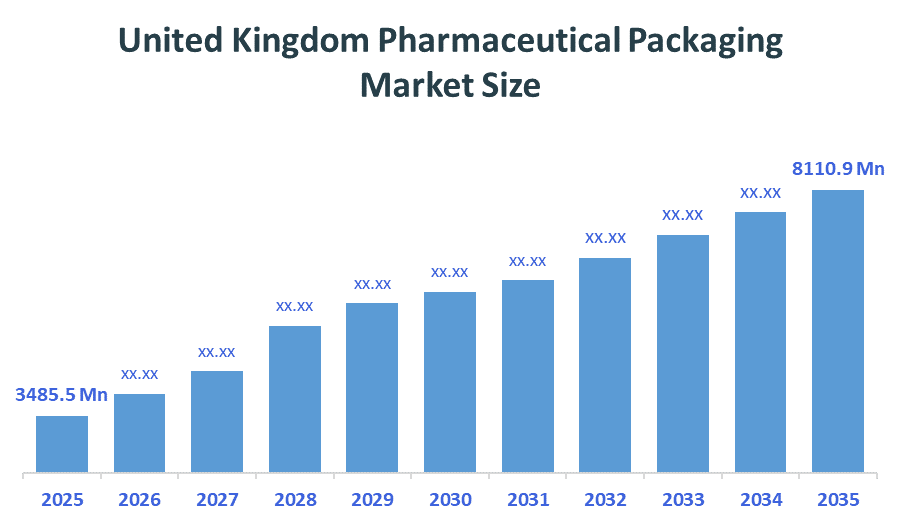
According to Decision Advisors, the United Kingdom Pharmaceutical Packaging Market size was grown from USD 3485.5 Million in 2025 to USD 8110.9 Million by 2035, at a CAGR of 8.81% during the forecast period 2026-2035. The United Kingdom pharmaceutical packaging market is projected to grow significantly over the next decade, fueled by a strong national healthcare sector, rapid growth in biopharmaceuticals, and enhanced R&D, sustainability and eco-friendly materials, smart packaging technologies, stringent safety requirements, growth in biopharmaceuticals, pharmaceutical industry growth.
Market Overview/Introduction
The UK Pharmaceutical Packaging Market encompasses the complete process of designing, manufacturing, and delivering packaging systems that protect both medicines and healthcare products according to safety standards while maintaining product integrity. Pharmaceutical packaging describes the process that requires special materials to seal drugs because glass, plastic, and polymers serve as protective elements that keep drugs free from contamination while maintaining their stability for proper use. The market will grow because sustainable packaging solutions, smart labeling systems, and ground-breaking drug delivery technologies for biologics and personalized medicine will create new business opportunities. The market expands because two elements drive growth, which include the combination of strict regulatory requirements, rising pharmaceutical production, and increasing need for secure tamper-evident packaging, and advancements in technology. The UK pharmaceutical packaging industry experiences market growth through sustainability initiatives and digital integration, which drive innovation at an increasing pace.
- The Life Sciences Innovative Manufacturing Fund (LSIMF) provides up to £520 Million in capital grants to support the manufacturing of human medicines, including active pharmaceutical ingredients (APIs) and finished drug products in the UK.
- In November 2025, the Sustainable Medicines Manufacturing Innovation Programme (SMMIP), launched by Innovate UK is a government-backed initiative that funds the development of innovative technologies to improve sustainability, efficiency, and productivity in medicines manufacturing. It focuses on reducing environmental impact, minimizing waste, and enhancing resource efficiency across the pharmaceutical supply chain.
- The Medicines and Healthcare products Regulatory Agency (MHRA) is the primary regulatory authority governing pharmaceutical packaging in the UK. It sets and enforces strict requirements for medicine packaging, labelling, and patient information, ensuring safety, quality, and compliance. These regulations include clear labelling standards, mandatory safety information, anti-counterfeiting measures, and packaging integrity to prevent contamination and misuse.
Notable Insights: -
- The primary packaging segment dominated the market in 2025 and holds the largest market share, accounting for approximately 65% during the forecast period.
- The plastic segment dominated the market in 2025 and holds the largest market share, accounting for approximately 44% during the forecast period.
- The pharmaceutical companies segment dominated the market in 2025 and holds the largest market share, accounting for approximately 63% during the forecast period.
- The compound annual growth rate of the United Kingdom Pharmaceutical Packaging Market is 8.81%.
- The market is likely to achieve a valuation of USD 8110.9Million by 2035.
What is the role of technology in grooming the market?
Technology plays a crucial role in enhancing the United Kingdom pharmaceutical packaging market by improving safety, efficiency, and compliance. Advanced automation and robotics streamline packaging processes, reducing human error and increasing production speed. Serialization and track-and-trace systems enable end-to-end supply chain visibility, helping prevent counterfeit drugs and ensuring regulatory compliance. Smart packaging technologies, such as QR codes and RFID tags, enhance patient engagement and product authentication. Innovations in materials science support the development of sustainable, high-barrier, and tamper-evident packaging solutions. Digital printing allows greater customization and faster turnaround times for labeling and branding. Additionally, data analytics and AI help optimize packaging design, forecast demand, and improve inventory management. Overall, technology is transforming the industry into a more secure, efficient, and patient-centric ecosystem, driving long-term growth and competitiveness in the UK pharmaceutical packaging market.
Market Drivers
The United Kingdom pharmaceutical packaging market operates under multiple main drivers, which include the current trend that leads companies to adopt recyclable packaging materials and eco-friendly packaging alternatives. The market growth is supported by the rising adoption of QR codes, which deliver patient information to users and especially assist visually impaired individuals. Packaging solutions that protect products from unauthorized access while preserving their contents secure market growth because customers require these solutions. The pharmaceutical industry needs protective packaging solutions that meet its requirements, supported by the increasing demand for specialized and advanced medicines. The United Kingdom pharmaceutical industry requires packaging solutions that deliver both dependable performance and exceptional quality to maintain its market competitiveness.
Restrain
The United Kingdom pharmaceutical packaging market faces restraints such as high production costs, strict regulatory compliance requirements, and fluctuating raw material prices. Sustainability pressures and complex approval processes also slow innovation. Additionally, supply chain disruptions and dependence on imported materials further challenge market growth and profitability for packaging manufacturers.
Study on the Supply, Demand, Distribution, and Market Environment of the United Kingdom Pharmaceutical Packaging Market
The United Kingdom pharmaceutical packaging market is shaped by a balanced supply chain, strong demand from pharmaceutical manufacturers, and a highly regulated distribution network. Supply is driven by global and domestic players providing glass, plastic, and polymer-based packaging, supported by advanced manufacturing capabilities and stringent quality standards. Demand is increasing due to rising production of biologics, injectables, and personalized medicines, requiring high-barrier and sterile packaging solutions. Distribution operates through direct contracts between packaging suppliers and pharma companies, alongside specialized logistics providers ensuring compliance with GDP standards. The market environment is highly regulated, focusing on patient safety, traceability, and sustainability. Key raw materials include borosilicate glass, polyethylene (PE), polypropylene (PP), aluminum, and specialty polymers, all essential for durability and drug compatibility. Increasing environmental concerns are pushing adoption of recyclable and eco-friendly materials, shaping long-term industry growth and innovation in packaging design and material selection.
Price Analysis and Consumer Behaviour Analysis
The United Kingdom pharmaceutical packaging market is characterized by moderate to high pricing due to strict regulatory compliance, high-quality material requirements, and advanced manufacturing technologies. Prices are influenced by raw material costs such as glass, plastics, and specialized polymers, along with increasing demand for sustainable and tamper-evident packaging solutions. Premium packaging formats like prefilled syringes and high-barrier blister packs command higher prices due to added safety and precision standards. From a consumer behavior perspective, pharmaceutical companies and healthcare providers in the UK prioritize quality, regulatory compliance, and patient safety over cost. There is rising demand for eco-friendly and recyclable packaging driven by environmental regulations and ESG commitments. Buyers also prefer suppliers offering customization, traceability, and serialization technologies to ensure drug authenticity and supply chain transparency. Overall, purchasing decisions are value-driven, focusing on long-term reliability and regulatory adherence rather than low-cost options.
Market Segmentation
The United Kingdom Pharmaceutical Packaging Market share is classified into material type, application, and end user
- The primary packaging segment dominated the market in 2025 and holds the largest market share, accounting for approximately 65% during the forecast period.
Based on the packaging type, the pharmaceutical packaging market is divided into primary packaging, secondary packaging, and tertiary packaging. Among these, the primary packaging segment dominated the market in 2025 and holds the largest market share, accounting for approximately 65% during the forecast period. The primary packaging segment is driven by the product, which requires direct contact with drug formulations to maintain its three essential safety requirements, which include product safety, sterility, and stability. The system protects sensitive medicines, which include biologics, injectables, and oral drugs, from both contamination and degradation. The company maintains its market leadership because of three factors, which include the growing need for advanced drug delivery systems, the implementation of strict regulatory standards, and the increasing production of high-value pharmaceuticals.
- The plastic segment dominated the market in 2025 and holds the largest market share, accounting for approximately 44% during the forecast period.
Based on the material type, the pharmaceutical packaging market is divided into glass, plastic, paper & paperboard, metal, and others. Among these, the plastic segment dominated the market in 2025 and holds the largest market share, accounting for approximately 44% during the forecast period. The plastic segment in the U.K. is attributed to the material providing moisture and contamination protection through its lightweight design, affordable price, and effective barrier capabilities. The material serves as the standard packaging solution for bottles and blister packs, and closures in pharmaceutical manufacturing operations. The growing need for packaging solutions that offer both convenience and durability, and flexible use, combined with increased adoption of generic drugs and oral medication forms, drives the current market demand.
- The pharmaceutical companies segment dominated the market in 2025 and holds the largest market share, accounting for approximately 63% during the forecast period.
Based on the end user, the pharmaceutical packaging market is divided into pharmaceutical companies, contract packaging organizations (CPOs), hospitals & clinics, and research institutes. Among these, the pharmaceutical companies segment dominated the market in 2025 and holds the largest market share, accounting for approximately 63% during the forecast period. The pharmaceutical companies segment in the U.K. is driven by their central role in drug development, large-scale manufacturing, and distribution of medicines. The companies need extensive amounts of dependable primary and secondary packaging systems which will protect their products, meet regulatory requirements and support their supply chain activities. The increased production of biologics, injectable therapies, and personalized medicines that these companies develop will enhance their existing market dominance.
Recent Development
- In January 2026, ACG Packaging Materials launched SuperPod, an advanced cold-form blister packaging technology designed to improve sustainability, reduce material usage, and enhance efficiency in pharmaceutical packaging.
- In January 2026, industry insights highlighted that pharmaceutical packaging trends are increasingly focused on smart, connected, and personalized packaging solutions, integrating digital technologies with physical drug products to enhance patient engagement and safety. These innovations include QR codes, NFC/RFID tags, and sensor-enabled packaging, enabling real-time data access, authentication, and improved treatment adherence.
- In December 2025, ProAmpac announced that it had signed a definitive agreement to acquire TC Transcontinental Packaging for approximately $1.51 billion. The deal was completed in March 2026, significantly expanding ProAmpac’s capabilities in flexible packaging, including medical and pharmaceutical applications, as well as its global footprint in regions such as the United Kingdom.
Competitive Analysis
The report offers the appropriate analysis of the key organisations/companies involved within the United Kingdom Pharmaceutical packaging market, along with a comparative evaluation primarily based on their product offering, business overviews, geographic presence, enterprise strategies, segment market share, and SWOT analysis. The report also provides an elaborative analysis focusing on the current news and developments of the companies, which includes product development, innovations, joint ventures, partnerships, mergers & acquisitions, strategic alliances, and others. This allows for the evaluation of the overall competition within the market.
Top Key Companies in the United Kingdom Pharmaceutical Packaging Market
- Amcor Plc
- Gerresheimer AG
- Schott AG
- West Pharmaceutical Services, Inc.
- Origin Pharma Packaging
- Others
Key Target Audience
- Market Players
- Investors
- End-users
- Government Authorities
- Consulting and Research Firm
- Venture capitalists
- Value-Added Resellers (VARs)
Market Segment
This study forecasts revenue at the United Kingdom, regional, and country levels from 2020 to 2035. Spherical Insights has segmented the United Kingdom pharmaceutical packaging market based on the below-mentioned segments
United Kingdom Pharmaceutical Packaging Market, By Packaging Type
- Primary Packaging
- Secondary Packaging
- Tertiary Packaging
United Kingdom Pharmaceutical Packaging Market, By Material Type
- Plastic
- Paper & Paperboard
- Metal
- Others
United Kingdom Pharmaceutical Packaging Market, By End User
- Pharmaceutical Companies
- Contract Packaging Organizations (CPOs)
- Hospitals & Clinics
- Research Institutes
Frequently Asked Questions (FAQ)
Q. What factors are influencing innovation in the United Kingdom Pharmaceutical Packaging Market?
A. Innovation is mainly driven by the need for advanced drug delivery systems, stricter regulatory standards, and increasing demand for patient-centric packaging. The rise of biologics and precision medicine is pushing companies to develop high-barrier, contamination-resistant, and smart packaging solutions. Sustainability goals are also encouraging the use of biodegradable and recyclable materials, fostering continuous innovation in design and manufacturing processes.
Q. How does sustainability impact the United Kingdom Pharmaceutical Packaging Market?
A. Sustainability significantly impacts the market by driving the adoption of eco-friendly materials, reducing plastic usage, and promoting recyclable packaging formats. Pharmaceutical companies are increasingly aligning with ESG goals and government environmental regulations. This shift is encouraging investment in green packaging technologies and reducing the environmental footprint of pharmaceutical supply chains.
Q. Why is regulatory compliance important in this market?
A. Regulatory compliance ensures drug safety, product integrity, and patient protection. Strict UK and EU-aligned regulations require packaging to meet high standards for labeling, traceability, and tamper resistance. Compliance also helps prevent counterfeit medicines and ensures that pharmaceutical products maintain quality throughout their lifecycle.
Q. What challenges affect supply chain efficiency in pharmaceutical packaging?
A. Supply chain efficiency is affected by raw material price volatility, dependency on imported materials, and logistical delays. Additionally, stringent quality checks and documentation requirements slow down operations. Global disruptions and rising transportation costs also add pressure, making supply chain management more complex and cost-intensive.
Check Licence
Choose the plan that fits you best: Single User, Multi-User, or Enterprise solutions tailored for your needs.
We Have You Covered
- 24/7 Analyst Support
- Clients Across the Globe
- Tailored Insights
- Technology Tracking
- Competitive Intelligence
- Custom Research
- Syndicated Market Studies
- Market Overview
- Market Segmentation
- Growth Drivers
- Market Opportunities
- Regulatory Insights
- Innovation & Sustainability
Report Details
| Scope | Country |
| Pages | 195 |
| Delivery | PDF & Excel via Email |
| Language | English |
| Release | Apr 2026 |
| Access | Download from this page |