
United States High Potency Active Pharmaceutical Ingredients Market
 |
Author:
Disha B
|
Pages:
245
|
Author:
Disha B
|
Pages:
245
United States High Potency Active Pharmaceutical Ingredients Market Size, Share, By Type (Synthetic HPAPI, Biotech HPAPI), By Therapeutic Application (Oncology, Capsules, Hormonal Disorders, Glaucoma, Cardiovascular Diseases, Neurological Disorders) and By End-User (Pharmaceutical Companies, Biotechnology Companies, Research & Academic Institutes), Analysis and Forecast 2026-2035
CAGR
9.21%
REVENUE 2025
USD Billion 32.7
FORECAST 2035
USD Billion 78.95
REPORT COVERAGE
Country
Market Snapshot
- Market Size (2025): USD 32.70 Billion
- Projected Market Size (2035): USD 78.95 Billion
- Compound Annual Growth Rate (CAGR): 9.21%
- Base Year: 2025
- Historical Period: 2021–2025
- Forecast Period: 2026–2035
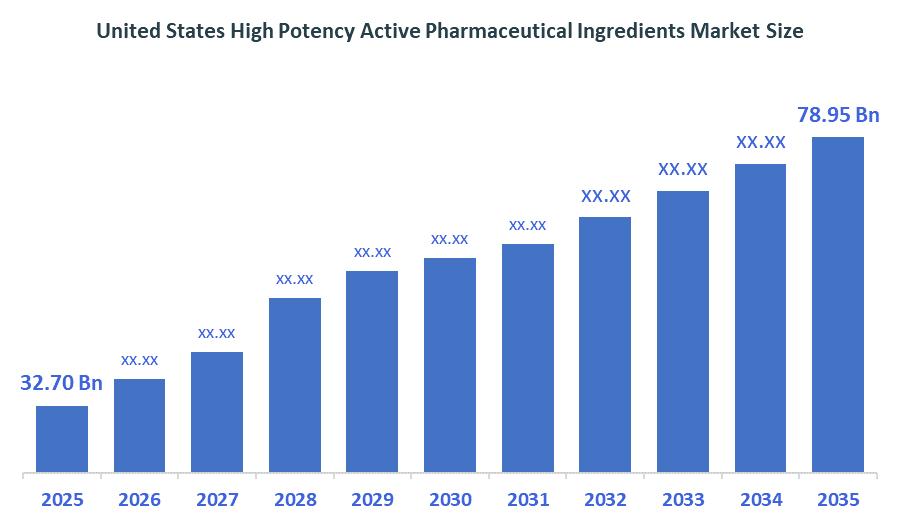
According to Decision Advisors, the United States High Potency Active Pharmaceutical Ingredients Market Size is expected to grow from USD 32.70 Billion in 2025 to USD 78.95 billion by 2035, at a CAGR of 9.21% during the forecast period 2026-2035. The United Kingdom excipients market is projected to grow significantly over the next decade, driven by increasing demand for oncology drugs, targeted therapies, specialized medicines requiring low-dose, high-efficiency, chronic diseases, technological advancements, and an aging population.
Market Overview/Introduction
The United States High Potency Active Pharmaceutical Ingredients (HPAPI) market refers to the industry involved in the development, manufacturing, and commercialization of highly potent drug compounds used in targeted therapies. The handling of these substances requires special procedures because their deadly properties make them essential for use in oncology and chronic disease treatments. The handling of these substances requires special procedures because their deadly properties make them essential for use in oncology and chronic disease treatments. The United States High Potency Active Pharmaceutical Ingredients (HPAPI) market expands because of growing cancer and chronic disease rates, which create a demand for targeted therapies that deliver maximum treatment results. The market expansion receives support from two main factors, which are the increasing demand for precision medicine and the ongoing development of antibody-drug conjugates ADCs together with manufacturing containment solutions. The market keeps expanding because of two factors, which are the rising elderly population and the increasing investments in pharmaceutical research and development.
- The BIOSECURE Act restricted U.S. executive agencies from contracting with biotechnology companies of concern and became law after inclusion in the FY 2026 NDAA, signed on December 18, 2025. It significantly impacted biotech supply chains and enforced compliance through potential loss of federal funding.
- The White House struck tariff and pricing deals with major pharmaceutical firms, linking lower drug prices, including GLP-1 therapies, to tariff relief and new distribution channels. These arrangements reshaped U.S. pricing strategies, improved access, and influenced global pharmaceutical market dynamics.
Notable Insights: -
- The synthetic HPAPI segment dominated the market in 2025 and is projected to grow at a substantial CAGR of approximately 7.9% during the forecast period.
- The oncology segment accounted for the largest share in 2025 and is anticipated to grow at a significant CAGR of approximately 8.5 % during the forecast period.
- The pharmaceutical companies segment dominated the market in 2025 and is projected to grow at a substantial CAGR of approximately 8.2% during the forecast period.
- The compound annual growth rate of the United Kingdom excipients market is 9.21%.
- The market is likely to achieve a valuation of USD 78.95 billion by 2035.
What is the role of technology in grooming the market?
Technology plays a crucial role in shaping the growth of the United States high potency active pharmaceutical ingredients (HPAPI) market by enhancing safety, efficiency, and innovation. Advanced containment systems and automation technologies enable the safe handling of highly potent compounds, reducing occupational hazards and improving production accuracy. Continuous manufacturing and process analytical technologies (PAT) streamline production, ensuring consistent quality and regulatory compliance. Innovations in biotechnology, including antibody-drug conjugates (ADCs) and targeted therapies, are driving demand for HPAPIs. Additionally, digital tools such as artificial intelligence and data analytics support drug discovery, process optimization, and predictive maintenance. Overall, technological advancements accelerate product development timelines, reduce costs, and support the growing demand for precision medicines in oncology and other therapeutic areas.
Market Drivers
The United States High Potency Active Pharmaceutical Ingredients (HPAPI) Market is driven by the growing incidence of cancer, which increases the need for highly effective and targeted therapies. Rising cases of autoimmune diseases, cardiovascular disorders, and other chronic conditions further boost demand for potent medications. The advancement of antibody-drug conjugates (ADCs) and other targeted treatments significantly relies on HPAPIs for precise action on diseased cells. Additionally, continuous innovation in containment systems and manufacturing technologies enhances the safe handling of highly toxic compounds. Moreover, the expanding aging population in the United States contributes to higher demand for advanced and long-term treatment options, supporting overall market growth.
Restrain
The United States high potency active pharmaceutical ingredients (HPAPI) market faces restraints due to high manufacturing and containment costs, stringent regulatory requirements, and complex handling procedures. Limited specialized facilities and skilled workforce shortages further hinder growth. Additionally, safety concerns related to potent compound exposure and lengthy approval timelines may slow market expansion.
Strategies to Implement for Growth of the Market
- Invest in advanced containment and automation technologies to enhance safety, efficiency, and regulatory compliance in HPAPI manufacturing
- Expand contract manufacturing capabilities to meet rising outsourcing demand from pharmaceutical companies
- Strengthen research and development for targeted therapies, including oncology drugs and antibody-drug conjugates (ADCs)
- Form strategic partnerships, mergers, and acquisitions to expand technological expertise and market presence
- Develop highly skilled workforce through specialized training in handling potent compounds
- Adopt continuous manufacturing and process analytical technologies (PAT) for improved product quality and cost efficiency
- Leverage artificial intelligence and data analytics for faster drug discovery and process optimization
- Enhance regulatory compliance strategies to accelerate approvals and market entry
- Increase investment in biologics and personalized medicine to tap into emerging therapeutic trends
- Expand production capacity and upgrade existing facilities to meet growing demand
Market Segmentation
The United States High Potency Active Pharmaceutical Ingredients Market share is classified into type, therapeutic application, and end-user
- The synthetic HPAPI segment dominated the market in 2025 and is projected to grow at a substantial CAGR of approximately 7.9% during the forecast period.
Based on the type, the excipients market is divided into synthetic HPAPI and biotech HPAPI. Among these, the polymers segment dominated the market in 2025 and is projected to grow at a substantial CAGR of approximately 7.9% during the forecast period. The synthetic HPAPI segment is driven by its widespread use in oncology and chronic disease treatments. It offers cost-effective production, scalability, and well-established manufacturing processes. Additionally, increasing demand for targeted therapies and growing pharmaceutical R&D investments further support the segment’s strong growth in the United States market.
- The oncology segment accounted for the largest share in 2025 and is anticipated to grow at a significant CAGR of approximately 8.5 % during the forecast period.
Based on the therapeutic application, the excipients market is divided into oncology, hormonal disorders, glaucoma, cardiovascular diseases, and neurological disorders. Among these, the oncology segment accounted for the largest share in 2025 and is anticipated to grow at a significant CAGR of approximately 8.5 % during the forecast period. The oncology segment leads the market due to the rising prevalence of cancer and increasing demand for targeted therapies. High potency APIs are essential for oncology drugs, particularly in advanced treatments like antibody-drug conjugates, driving strong growth and continued investment in this segment.
- The pharmaceutical companies segment dominated the market in 2025 and is projected to grow at a substantial CAGR of approximately 8.2% during the forecast period.
Based on the end-user, the excipients market is divided into pharmaceutical companies, biotechnology companies, and research & academic institutes. Among these, the pharmaceutical companies segment dominated the market in 2025, and is projected to grow at a substantial CAGR of approximately 8.2% during the forecast period. The pharmaceutical companies segment dominates due to strong in-house manufacturing capabilities, high investment in drug development, and growing demand for targeted therapies. These companies focus on innovation, regulatory compliance, and large-scale production, driving consistent demand for HPAPIs and supporting significant market growth in the United States.
Recent Development
- In October 2025, the future of high-potency APIs highlighted manufacturing challenges, emphasizing that HPAPI production required the highest safety and containment standards. Geopolitical tensions threatened critical supply chains, while single-site European expertise offered reliability for oncology and other high-risk therapeutic areas, ensuring stable and secure production.
- In October 2025, Wilmington PharmaTech aimed to boost U.S. drug ingredient capacity and secured investment from private equity firm Curewell. The funding supported expansion of manufacturing capabilities, strengthened domestic production infrastructure, and enhanced the company’s ability to meet rising demand for pharmaceutical ingredients.
- In September 2025, Nitazenes were reported to be ten times stronger than fentanyl and emerged as a deadly development in the synthetic opioid crisis. Their increasing presence contributed to rising overdose risks and highlighted growing concerns about highly potent illicit substances in the United States.
- In March 2025, Lonza expanded its HPAPI facility in New Hampshire, increasing its production capacity for oncology and cytotoxic drugs. The company also implemented advanced process safety measures to ensure safe handling of highly potent compounds and improve overall manufacturing efficiency.
Competitive Analysis
The report offers the appropriate analysis of the key organisations/companies involved within the United Kingdom excipients market, along with a comparative evaluation primarily based on their product offering, business overviews, geographic presence, enterprise strategies, segment market share, and SWOT analysis. The report also provides an elaborative analysis focusing on the current news and developments of the companies, which includes product development, innovations, joint ventures, partnerships, mergers & acquisitions, strategic alliances, and others. This allows for the evaluation of the overall competition within the market.
Top Key Companies in the United States High Potency Active Pharmaceutical Ingredients Market
- Pfizer Inc.
- BASF SE
- CordenPharma
- CARBOGEN AMCIS AG
- Dr. Reddy’s Laboratories Ltd.
- Others
Key Target Audience
- Market Players
- Investors
- End-users
- Government Authorities
- Consulting and Research Firm
- Venture capitalists
- Value-Added Resellers (VARs)
Market Segment
This study forecasts revenue at the United Kingdom, regional, and country levels from 2020 to 2035. Decision Advisor has segmented the United States high potency active pharmaceutical ingredients market based on the below-mentioned segments
United States High Potency Active Pharmaceutical Ingredients Market, By Type
- Synthetic HPAPI
- Biotech HPAPIs
United States High Potency Active Pharmaceutical Ingredients Market, By Therapeutic Application
- Oncology
- Capsules
- Hormonal Disorders
- Glaucoma
- Cardiovascular Diseases
- Neurological Disorders
United States High Potency Active Pharmaceutical Ingredients Market, By End-User
- Pharmaceutical Companies
- Biotechnology Companies
- Research & Academic Institutes
Frequently Asked Questions (FAQ)
Q. How does outsourcing impact the HPAPI market in the United States?
A. Outsourcing plays a significant role in the HPAPI market by allowing pharmaceutical companies to reduce capital expenditure and focus on core competencies such as drug discovery and marketing. Contract Development and Manufacturing Organizations (CDMOs) provide specialized containment facilities and expertise, enabling efficient and safe production of highly potent compounds. This trend is expected to grow as demand for complex and small-batch drugs increases.
Q. What role do regulatory frameworks play in shaping the HPAPI market?
A. Regulatory frameworks in the United States ensure strict compliance with safety, quality, and environmental standards when handling highly potent compounds. Agencies such as the FDA impose rigorous guidelines on manufacturing practices, containment, and worker safety. While these regulations ensure high-quality drug production, they also increase operational costs and create barriers for new entrants.
Q. How is the shift toward personalized medicine influencing HPAPI demand?
A. The growing adoption of personalized medicine is significantly boosting demand for HPAPIs, as these therapies often require highly targeted and potent compounds. Treatments tailored to individual patient profiles, especially in oncology and rare diseases, rely on precise drug formulations. This trend is encouraging innovation and increasing investment in specialized HPAPI production technologies.
Q. What challenges do supply chains face in the HPAPI market?
A. HPAPI supply chains face challenges such as dependency on specialized raw materials, limited manufacturing facilities, and geopolitical uncertainties. Disruptions can impact the timely availability of critical drug components. Additionally, stringent transportation and storage requirements for potent compounds add complexity, making supply chain resilience a key focus area for market players.
Check Licence
Choose the plan that fits you best: Single User, Multi-User, or Enterprise solutions tailored for your needs.
We Have You Covered
- 24/7 Analyst Support
- Clients Across the Globe
- Tailored Insights
- Technology Tracking
- Competitive Intelligence
- Custom Research
- Syndicated Market Studies
- Market Overview
- Market Segmentation
- Growth Drivers
- Market Opportunities
- Regulatory Insights
- Innovation & Sustainability
Report Details
| Scope | Country |
| Pages | 245 |
| Delivery | PDF & Excel via Email |
| Language | English |
| Release | Apr 2026 |
| Access | Download from this page |