
United States Orphan Drugs Market
 |
Author:
David J
|
Pages:
210
|
Author:
David J
|
Pages:
210
United States Orphan Drugs Market Size, Share, By Drug Type (Biologics, and Non-biologics), By Route of Administration (Oral, Injectable, and Others), and By Distribution Channel (Hospital Pharmacies, Specialty Pharmacies, and Online Pharmacies) Analysis and Forecast 2026 ? 2035
CAGR
12.31%
REVENUE 2025
USD Billion 102.7
FORECAST 2035
USD Billion 327.99
REPORT COVERAGE
Country
Market Snapshot
- United States Orphan Drugs Market size (2025): USD 102.7 Billion
- Projected United States Orphan Drugs Market size (2035): USD 327.99 Billion
- United States Orphan Drugs Market Compound Annual Growth Rate (CAGR): 12.31%
- Base Year: 2025
- Historical Period: 2021–2024
- Forecast Period: 2026–2035
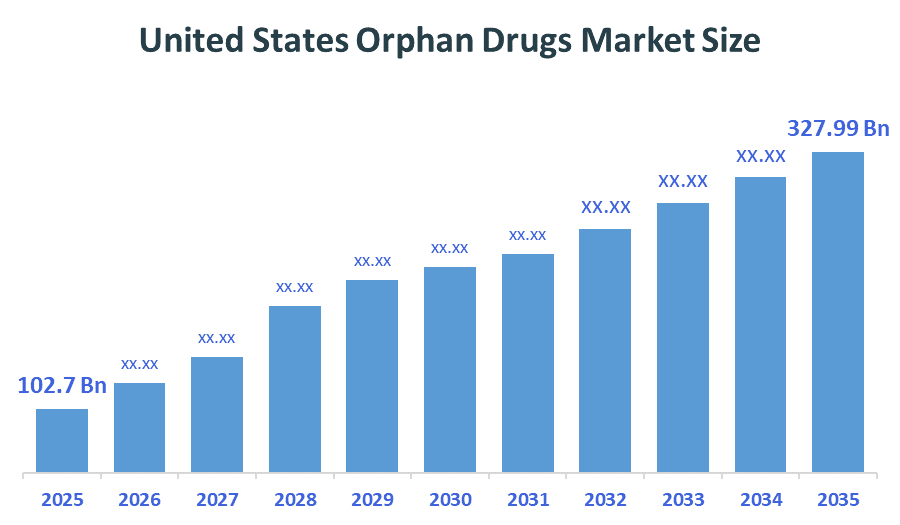
According to Decision Advisors, the United States Orphan Drugs Market size was grown from USD 102.7billion in 2025 to USD 327.99billion by 2035, at a CAGR of 12.31% during the forecast period 2026-2035. The United States hip replacement devices market is projected to grow significantly over the next decade, fueled by the innovative licensing and access pathway (ILAP), the innovative medicines fund, high demand for specialized therapies, accelerated regulatory pathways, rising prevalence and diagnosis rates, increased R&D and strategic focus, and market exclusivity and incentives.
Market Overview/Introduction
The United States Orphan Drugs Market describes the process, which includes developing rare disease medicines with specific production methods through their actual commercial distribution. Orphan drugs are specialized therapies that exist to treat rare diseases that cause life-threatening conditions and permanent disabilities. The market is experiencing consistent growth because people are becoming more aware of rare diseases, genomic research is advancing, and the National Health Service provides strong support to the industry. The upcoming market opportunities will arise from gene therapies, personalized medicine, and AI-based drug discovery solutions. The biotechnology sector experiences growth because of government policies that create faster approval processes and increased funding for research, which allows companies to develop new products while improving patient treatment options.
- The Orphan Drug Act of 1983 is the core U.S. government scheme promoting orphan drug development. It provides incentives such as tax credits for clinical trials, FDA fee waivers, and seven-year market exclusivity after approval. These benefits reduce financial risk and encourage pharmaceutical companies to develop treatments for rare diseases affecting fewer than 200,000 patients.
- The FDA scheme grants “orphan designation” to drugs targeting rare diseases. Once granted, sponsors receive regulatory support, reduced application fees, and eligibility for additional incentives. The program helps streamline drug development pathways and increases commercial viability for therapies that would otherwise lack market attractiveness due to small patient populations.
Notable Insights: -
- The non-biologics segment dominated the market in 2025 and holds the largest market share, accounting for approximately 90% during the forecast period.
- The oral segment dominated the market in 2025 and holds the largest market share, accounting for approximately 65% during the forecast period.
- The hospital pharmacies segment dominated the market in 2025 and holds the largest market share, accounting for approximately 50% during the forecast period.
- The compound annual growth rate of the United States Orphan Drugs Market is 12.31%.
- The market is likely to achieve a valuation of USD 327.99Billion by 2035.
What is the role of technology in grooming the market?
Technology plays a transformative role in advancing the orphan drugs market in the United States by accelerating drug discovery, improving diagnosis, and enhancing patient outcomes. Innovations such as genomics, artificial intelligence, and precision medicine enable early identification of rare diseases and targeted therapy development. Digital health tools and real-world data analytics support clinical trials and post-market surveillance, improving efficiency and reducing costs. Organizations like the National Health Service increasingly use electronic health records and data integration to streamline patient access to specialized treatments. Additionally, advancements in biologics manufacturing and gene therapy technologies are enabling scalable production of complex orphan drugs, fostering innovation and expanding treatment availability across the market.
Market Drivers
The United States orphan drugs market is growing because of things like the Innovative Licensing and Access Pathway. This program helps get treatments to patients faster. The Innovative Medicines Fund is also important. It helps patients get treatments for diseases that do not a lot of proof that they work. More patients are now aware of diseases, and doctors are diagnosing them more often. This means more people are getting the help they need. The pharmaceutical industry is really focused on making medicine and targeted treatments. They are working on things like monoclonal antibodies and gene therapies for the US orphan drugs market. The rules that govern the US orphan drugs market also help companies because they get to be the ones selling a treatment for a while. This makes it worth investing in the US orphan drugs market.
Restrain
The United States orphan drugs market faces restraints due to high treatment costs, strict pricing assessments by the National Institute for Health and Care Excellence, and limited patient populations affecting commercial viability. Additionally, complex regulatory processes and supply chain dependencies can delay product availability and restrict broader patient access.
Study on the Supply, Demand, Distribution, and Market Environment of the United States Orphan Drugs Market
The United States Orphan Drugs Market is characterized by a specialized supply chain driven by advanced biologics manufacturing and limited production volumes. Supply depends on global pharmaceutical leaders and biotech firms, with critical raw materials including active pharmaceutical ingredients (APIs), biologic cell lines, and specialized excipients sourced internationally. Demand is steadily rising due to improved rare disease diagnosis, supported by institutions like the National Health Service, which ensures patient access through reimbursement frameworks. Distribution is highly regulated, involving hospital pharmacies, specialty distributors, and controlled logistics to maintain drug integrity. The market environment is shaped by strong regulatory support, incentives for orphan designation, and pricing scrutiny. Additionally, collaboration between research institutions and pharmaceutical companies enhances innovation, while supply chain disruptions and high manufacturing costs remain key challenges influencing market dynamics.
Price Analysis and Consumer Behaviour Analysis
The pricing of United States orphan drugs is typically high due to limited patient populations, complex R&D processes, and regulatory incentives such as market exclusivity. Prices are often negotiated and reimbursed through the National Health Service, which plays a critical role in cost control and patient access. Consumer behavior is largely influenced by physician recommendations and government reimbursement policies rather than direct purchasing decisions. Patients and caregivers prioritize treatment efficacy, availability, and long-term outcomes over cost. Additionally, increasing awareness of rare diseases and advocacy group support has improved diagnosis rates and demand for innovative therapies, while value-based pricing models are gradually shaping adoption patterns across the market.
Market Segmentation
The United States Orphan Drugs Market share is classified into drug type, application, route of administration, and distribution channel
- The non-biologics segment dominated the market in 2025 and holds the largest market share, accounting for approximately 90% during the forecast period.
Based on the drug type, the orphan drugs market is divided into biologics, and non-biologics. Among these, the non-biologics segment dominated the market in 2025 and holds the largest market share, accounting for approximately 90% during the forecast period. The non-biologics segment is driven by their lower production costs, easier manufacturing processes, and established regulatory pathways. These drugs offer greater affordability and wider accessibility through the National Health Service, making them preferable for treating rare conditions compared to expensive biologics.
- The oral segment dominated the market in 2025 and holds the largest market share, accounting for approximately 65% during the forecast period.
Based on the route of administration, the orphan drugs market is divided into oral, injectable, and others. Among these, the oral segment dominated the market in 2025 and holds the largest market share, accounting for approximately 65% during the forecast period. The oral segment in the U.K. is attributed to its ease of administration, improved patient compliance, and suitability for long-term treatment of rare chronic conditions. Oral drugs reduce hospitalization needs and are cost-effective for the National Health Service, enhancing accessibility and widespread adoption.
- The hospital pharmacies segment dominated the market in 2025 and holds the largest market share, accounting for approximately 50% during the forecast period.
Based on the distribution channel, the orphan drugs market is divided into hospital pharmacies, specialty pharmacies, and online pharmacies. Among these, the hospital pharmacies segment dominated the market in 2025 and holds the largest market share, accounting for approximately 50% during the forecast period. The hospital pharmacies segment in the U.K. is driven by the centralized treatment delivery for rare diseases requiring specialist supervision. The National Health Service primarily distributes high-cost orphan drugs through hospitals, ensuring controlled access, proper administration, and monitoring, which supports higher reliance on hospital-based dispensing channels.
Recent Development
- In August 2025, the U.S. FDA approved Wayrilz (rilzabrutinib) for adults with persistent or chronic immune thrombocytopenia who had insufficient response to prior treatments. The approval was supported by Phase 3 LUNA 3 trial results showing durable platelet improvement. This strengthened the U.S. orphan drugs market for rare hematologic diseases.
- In April 2025, the FDA approved Imaavy (nipocalimab-aahu) for the treatment of generalized myasthenia gravis in patients aged 12 and older. The drug also received fast-track designations for multiple rare autoimmune conditions. This approval strengthened the U.S. orphan drugs market by expanding treatment options for rare immune-mediated diseases.
Competitive Analysis
The report offers the appropriate analysis of the key organisations/companies involved within the United States Orphan Drugs Market, along with a comparative evaluation primarily based on their product offering, business overviews, geographic presence, enterprise strategies, segment market share, and SWOT analysis. The report also provides an elaborative analysis focusing on the current news and developments of the companies, which includes product development, innovations, joint ventures, partnerships, mergers & acquisitions, strategic alliances, and others. This allows for the evaluation of the overall competition within the market.
Top Key Companies in the United States Orphan Drugs Market
- F. Hoffmann-La Roche
- Novartis AG
- AstraZeneca
- Sanofi
- Pfizer Inc.
- Others
Key Target Audience
- Market Players
- Investors
- End-users
- Government Authorities
- Consulting and Research Firm
- Venture capitalists
- Value-Added Resellers (VARs)
Market Se
This study forecasts revenue at the United States, regional, and country levels from 2020 to 2035. Spherical Insights has segmented the United States orphan drugs market based on the below-mentioned
United States Drugs Market, By Drug Type
- Biologics
- Non-biologics
Orphan Drugs Market, By Route of Administration
- Oral
- Injectable
- Others
United States Orphan Drugs Market, By Distribution Channel
- Hospital Pharmacies
- Specialty Pharmacies
- Online Pharmacies
Frequently Asked Questions (FAQ)
Q. Why are orphan drugs more expensive than conventional medicines in the U.S.?
A. Orphan drugs are expensive due to small patient populations, high R&D costs, complex clinical trials, and specialized manufacturing. Limited market size forces companies to recover investments through premium pricing.
Q. How does patient advocacy influence the orphan drugs market in the United States?
A. Patient advocacy groups significantly accelerate drug development by funding research, improving disease awareness, and influencing FDA prioritization. They also help increase clinical trial participation for rare diseases.
Q. What role does precision medicine play in orphan drug development?
A. Precision medicine enables targeted therapies based on genetic profiling, improving treatment effectiveness for rare diseases. It reduces trial-and-error prescribing and supports faster regulatory approval for orphan indications.
Q. Which challenges affect clinical trials for orphan drugs in the U.S.?
A. Key challenges include difficulty recruiting patients due to rare disease prevalence, high trial costs, lack of standardized endpoints, and limited long-term clinical data, which can delay approval timelines.
Check Licence
Choose the plan that fits you best: Single User, Multi-User, or Enterprise solutions tailored for your needs.
We Have You Covered
- 24/7 Analyst Support
- Clients Across the Globe
- Tailored Insights
- Technology Tracking
- Competitive Intelligence
- Custom Research
- Syndicated Market Studies
- Market Overview
- Market Segmentation
- Growth Drivers
- Market Opportunities
- Regulatory Insights
- Innovation & Sustainability
Report Details
| Scope | Country |
| Pages | 210 |
| Delivery | PDF & Excel via Email |
| Language | English |
| Release | May 2026 |
| Access | Download from this page |