
United States Recessed Lighting Market
 |
Author:
Achal E
|
Pages:
210
|
Author:
Achal E
|
Pages:
210
United States Recessed Lighting Market Size, Share, By Product Type (LED Recessed Lighting, Halogen Recessed Lighting, and CFL Recessed Lighting), By Application (Residential, Commercial, and Industrial), and By Installation Type (New Installation and Retrofit Installation), Analysis and Forecast 2026?2035.
CAGR
12.24%
REVENUE 2025
USD Billion 15.4
FORECAST 2035
USD Billion 43.56
REPORT COVERAGE
Country
Market Snapshot
• Market Size (2025): USD 15.40 Billion
• Projected Market Size (2035): USD 43.56 Billion
• Compound Annual Growth Rate (CAGR): 12.24%
• Base Year: 2024
• Historical Period: 2021–2024
• Forecast Period: 2026–2035
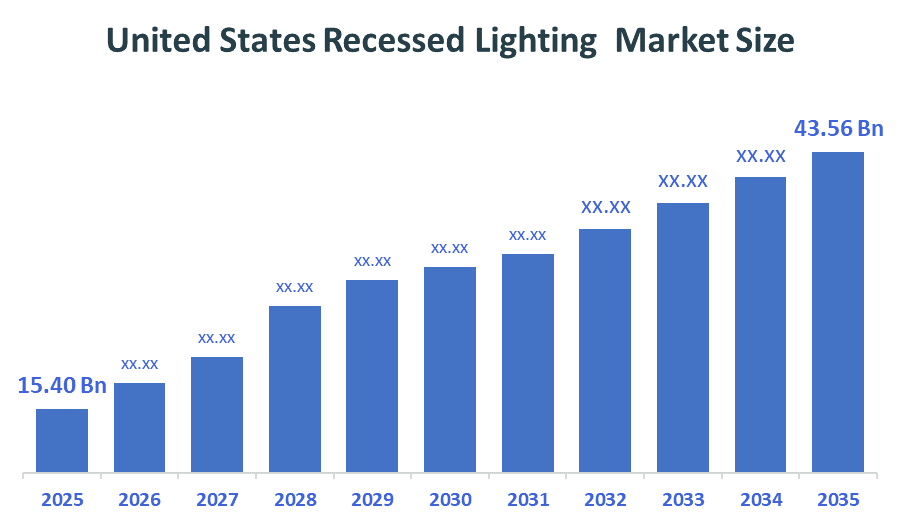
According to Decision Advisors, the United States recessed lighting market size is expected to grow from USD 15.40 billion in 2025 to USD 43.56 billion by 2035, at a CAGR of 12.24% during the forecast period 2026–2035. The US recessed lighting market is projected to expand significantly over the next decade due to the increasing adoption of energy-efficient LED lighting solutions, rising demand for modern interior aesthetics, and the growing integration of smart lighting systems in residential and commercial spaces. Additionally, strong construction activity and renovation trends across the United States are further supporting market growth.
Market Overview/Introduction
The Recessed Lighting Market in the US involves the designing, manufacturing, and installation of light fixtures that are fixed directly into a hollow opening in the ceiling. These light fixtures are commonly known as can lights or downlights. They are highly sought after for their capacity to provide streamlined and unobtrusive light. The product offerings in the recessed lighting market include light sources such as LED lights, halogen lights, and CFL lights. These lights are used to meet the ambient lighting, task lighting, and accent lighting demands in contemporary interior spaces. There has been a clear move towards energy-efficient lights and the use of smart lights. Additionally, ultra-thin canless LED lights are gaining traction due to the ease of installation and the benefits of thermal management. Moreover, the incorporation of IoT technology and smart home systems such as Matter, Alexa, and Google Assistant has changed the dynamics of the way users experience the world. The recessed lighting market in the US has seen the transition from conventional and static lights to Human Centric Lighting (HCL), which adjusts colour temperatures to support circadian rhythms and occupant well-being. Developers and homeowners are increasingly investing in these high-quality, long-lasting systems to improve property value and operational efficiency.
- The US remains a global leader in recessed lighting, driven by a robust construction sector and aggressive energy-efficiency mandates.
- LED technology now accounts for the lion's share of the market, with over 80% adoption in new installations due to its 25-50x longer lifespan compared to traditional bulbs.
- The market is projected to skyrocket from USD 15.40 Billion in 2025 to USD 43.56 Billion by 2035, reflecting a powerful CAGR of 12.24%.
- Roughly 41% of new products now feature advanced controls, including app-based dimming, motion sensing, and automated scheduling.
Notable Insights: -
- The LED Recessed Lighting segment held a dominant position in 2025, capturing approximately 68% of the market share, fuelled by its unmatched energy savings and declining hardware costs.
- The Residential segment leads the market, accounting for over 55% of the US market share in 2025, as homeowners prioritise minimalist design and smart home upgrades.
- The compound annual growth rate CAGR of 12.24% highlights the rapid transition toward sustainable infrastructure across the United States.
- By 2035, the market is expected to reach a valuation of USD 43.56 Billion, supported by the rising trend of Green Buildings and smart city initiatives.
What is the Role of Technology in Grooming the Market?
The major driver for growth in the US recessed lighting market is technology, which is taking the industry into intelligent lighting. Power-over-Ethernet technology and wireless IoT protocols like Zigbee and Bluetooth Mesh have made it easier to implement sophisticated lighting systems in commercial and industrial spaces. In residential spaces, Digital Dimming and Tunable White technology enables users to control the ambiance of a space according to their preference using smartphones. This not only enhances the user experience but also helps in saving energy up to 30% with the help of occupancy sensors, thus making high-tech recessed lighting a cost-effective option.
Market Drivers
The US Recessed Lighting Market is propelled by the surging demand for smart home automation and a nationwide focus on reducing carbon footprints. Stringent building codes and government incentives, such as tax rebates for LED retrofitting, are encouraging both businesses and consumers to upgrade. Furthermore, the rise of minimalist interior design has made recessed fixtures the gold standard for modern architecture. The expansion of the multi-family housing sector and the trend toward wellness-centric office spaces also provide a steady stream of demand for advanced downlighting solutions.
Restraints
Despite the growth, the market faces challenges such as higher initial installation costs for smart-integrated systems compared to standard fixtures. The complexity of retrofitting older buildings with non-standard ceiling heights or insulating materials can also pose a barrier. Additionally, while LED lifespans are long, the rapid pace of technological obsolescence in smart controllers can occasionally deter cost-conscious buyers who fear their systems may become outdated quickly.
Strategies to Implement for Growth of the Market
To maintain momentum, manufacturers are focusing on modular and canless designs that reduce labour costs and installation time. Strategic partnerships with home automation platforms (like Apple HomeKit or Samsung SmartThings) are essential for capturing the tech-savvy consumer base. Companies are also expanding their DTC (Direct-to-Consumer) online channels, utilising AR (Augmented Reality) tools to help customers visualise lighting layouts before purchase. Investing in sustainable, recyclable materials and circular economy initiatives will further strengthen brand positioning in an increasingly eco-conscious US market.
Market Segmentation
The US Recessed Lighting Market is categorised by product type, application, and installation type.
• The LED recessed lighting segment dominated the market in 2025 and is projected to grow at a substantial CAGR of approximately 12.8% during the forecast period.
Based on the product type, the recessed lighting market is divided into LED recessed lighting, halogen recessed lighting, and CFL recessed lighting. The LED recessed lighting segment dominated the market in 2025 and is projected to grow at a substantial CAGR of approximately 12.8% during the forecast period. This is primarily due to its superior energy efficiency, low heat emission, and impressive lifespan of up to 50,000 hours, making it the preferred choice for long-term sustainable lighting. It has a strong demand in both premium and mid-range projects due to its cost-effectiveness over time and high lumen output. The dominance is driven by strict US environmental regulations and a growing consumer preference for smart lighting solutions that offer tunable white light and app-controlled dimming.
• The residential application segment accounted for the largest share in 2025 and is anticipated to grow at a significant CAGR of approximately 12.5% during the forecast period.
Based on the application, the recessed lighting market is divided into residential, commercial, and industrial. The residential application segment accounted for the largest share in 2025 and is anticipated to grow at a significant CAGR of approximately 12.5% during the forecast period. This dominance is attributed to the surge in home remodelling activities and the popularity of modern, open-concept living designs that require unobtrusive, clean lighting. Homeowners prefer recessed lighting for its ability to increase perceived ceiling height and property value. The segment's growth is further bolstered by the rapid adoption of smart-home ecosystems and the rising trend of wellness-centric lighting (circadian lighting) in private households, positioning the residential sector as the primary driver of market volume.
• The new installation segment dominated the market in 2025 and is projected to grow at a substantial CAGR of approximately 12.1% during the forecast period.
Based on the installation type, the recessed lighting market is divided into new installation and retrofit installation. The new installation segment dominated the market in 2025 and is projected to grow at a substantial CAGR of approximately 12.1% during the forecast period. This is primarily due to the robust US construction sector, where recessed lighting is now considered a standard feature in the initial design phase of modern residential and commercial buildings. The ease of integrating advanced wiring and smart controls during the construction phase makes new installations highly efficient. While the retrofit segment is expanding due to energy-efficiency upgrades in older buildings, the sheer volume of new urban developments and smart city initiatives across the United States ensures the continued dominance of the new installation segment.
Recent Developments
- In January 2026 Implementation of AI-integrated lighting sensors in major US commercial hubs, enabling real-time energy optimisation based on foot traffic and natural light harvesting.
- June 2025: A leading US manufacturer launched a new line of Matter-compatible recessed fixtures, allowing for seamless interoperability across different smart home brands.
- October 2024 Major players in the lighting industry announced a partnership to develop Bio-Adaptive LED chips that better mimic natural sunlight to improve workplace productivity.
- March 2024 Introduction of ultra-slim, 1/2-inch-deep recessed lights, eliminating the need for traditional can housings and significantly reducing installation complexity for DIY consumers.
Competitive Analysis
The report offers the appropriate analysis of the key organisations/companies involved within the United States recessed lighting market, along with a comparative evaluation primarily based on their product offering, business overviews, geographic presence, enterprise strategies, segment market share, and SWOT analysis. The report also provides an elaborate analysis focusing on the current news and developments of the companies, which includes product development, innovations, joint ventures, partnerships, mergers & acquisitions, strategic alliances, and others. This allows for the evaluation of the overall competition within the market.
Top Key Companies in the US Recessed Lighting Market
- Acuity Brands, Inc. (Lithonia Lighting / Juno)
- Signify N.V. (Philips Hue / Lightolier)
- HLI Solutions, Inc. (Current Lighting / Hubbell)
- Cree Lighting (A Penguin Solutions Brand)
- Eaton Corporation (HALO)
- WAC Lighting
- Lutron Electronics Co., Inc
- Kichler Lighting LLC
- Others
Key Target Audience
- Building Contractors and Electrical Engineers
- Real Estate Developers and Homebuilders
- Interior Designers and Architects
- Smart Home Integrators and IoT Specialists
- Investors and Private Equity Firms
- Government and Energy Authorities (DOE / EPA)
- Retailers and DIY Homeowners
- Distributors and Suppliers of Electrical Materials
Market Segment
This study forecasts revenue at the United States, regional, and state levels from 2020 to 2035. The report segmented the US Recessed Lighting Market based on the following segments:
United States Recessed Lighting Market, By Product Type
- LED Recessed Lighting
- Halogen Recessed Lighting
- CFL Recessed Lighting
United States Recessed Lighting Market, By Application
- Residential
- Commercial
- Industrial
United States Recessed Lighting Market, By Installation Type
- New Installation
- Retrofit Installation
Frequently Asked Questions (FAQ)
How is the smart home trend driving US recessed lighting?
IoT integration is a major catalyst. Consumers prefer fixtures that sync with ecosystems like Matter and Alexa. This allows for automation and voice control, increasing market value as lighting becomes a tech investment.
Why is the US a leading market for recessed lighting?
The US dominates due to a massive residential construction sector and timber-frame architecture, which makes installation easier. Federal energy mandates like Title 24 also force a quick transition to efficient LED systems.
What are canless LEDs and how do they help growth?
These ultra-thin lights remove the need for bulky metal housings. This innovation cuts installation costs and fits into tight ceiling spaces, significantly boosting demand among DIY homeowners and professional contractors.
What is the role of human-centric lighting in the market?
Consumer preference is shifting toward wellness lighting that mimics natural daylight. Fixtures with tunable white technology adjust colour temperature to support sleep and mood, becoming a premium standard in modern homes and offices.
How do energy regulations impact the 2035 forecast?
DOE standards are phasing out halogen and CFL options. This regulatory pressure ensures the market will be almost entirely LED-based by 2035, maintaining a strong growth rate as national infrastructure modernises for sustainability.
Check Licence
Choose the plan that fits you best: Single User, Multi-User, or Enterprise solutions tailored for your needs.
We Have You Covered
- 24/7 Analyst Support
- Clients Across the Globe
- Tailored Insights
- Technology Tracking
- Competitive Intelligence
- Custom Research
- Syndicated Market Studies
- Market Overview
- Market Segmentation
- Growth Drivers
- Market Opportunities
- Regulatory Insights
- Innovation & Sustainability
Report Details
| Scope | Country |
| Pages | 210 |
| Delivery | PDF & Excel via Email |
| Language | English |
| Release | Apr 2026 |
| Access | Download from this page |