
Global Ureteroscope Market
 |
Author:
Disha B
|
Pages:
210
|
Author:
Disha B
|
Pages:
210
Global Ureteroscope Market Size, share By Product Type (Flexible, Rigid, Semi-Rigid), By Channel Type (Reusable, Disposable), By Application (Urolithiasis, Tumor Management, Ureteral Strictures, Others), By End User (Hospitals, Ambulatory Surgical Centers, Specialty Clinics) and By Region (North America, Europe, Asia-Pacific, Latin America, Middle East & Africa), Analysis and Forecast 2025?2035.
CAGR
5.89%
REVENUE 2025
USD Billion 1.1
FORECAST 2035
USD Billion 1.95
REPORT COVERAGE
Global
Market Snapshot
- Market Size (2025): USD 1.1 billion
- Projected Market Size (2035): USD 1.95 billion
- Compound Annual Growth Rate (CAGR): 5.89%
- Largest Regional Market: North America
- Fastest Growing Region: Europe
- 3rd Largest Region: Asia Pacific
- Base Year: 2025
- Historical Period: 2021–2024
- Forecast Period: 2025–2035
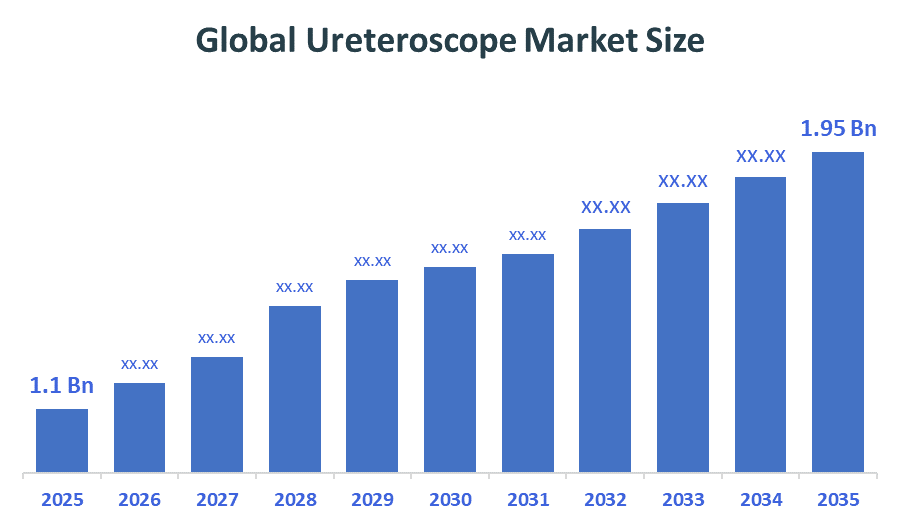
According to Decision Advisors, the global Ureteroscope Market Size is expected to grow from USD 1.1 billion in 2025 to USD 1.95 billion by 2035, at a CAGR of 5.89% during the forecast period 2025-2035. The global Ureteroscope Market is projected to grow significantly over the next decade. The growth is driven by the increasing prevalence of kidney stones, rising adoption of minimally invasive urological procedures, and advancements in endoscopic imaging technologies.
Market Overview/ Introduction
The Global Ureteroscope Market is a rapidly evolving corner of the medical world, dedicated to high-tech tools that help urologists see and treat issues inside the urinary tract without invasive surgery. At its heart, a ureteroscope is a slender, sophisticated camera sometimes rigid, but often flexible enough to navigate the body’s natural curves used to tackle everything from stubborn kidney stones to complex tumors. This growth is being fuelled by a simple reality that is kidney stones are becoming more common globally, and both doctors and patients are trading traditional, painful surgeries for these keyhole or no-cut procedures that offer much faster recovery times. What’s really changing the game right now is the shift toward single-use or disposable scopes. In the past, cleaning and repairing these delicate instruments was a massive, expensive headache for hospitals; today, grabbing a sterile, high-definition scope straight out of a box is becoming the new standard. This shift not only cuts down on the risk of infection but also makes these procedures more accessible in smaller clinics and outpatient centers, rather than just big hospitals. Looking ahead, the biggest opportunities lie in robotic-assisted surgery and AI-enhanced imaging, which promise to make these treatments even more precise. As healthcare expands in regions like Asia-Pacific, we’re seeing a massive push to bring this life-changing technology to millions of new patients, making urological care safer and more efficient than ever before.
- Cook Medical launched the Ascend single-use scope in 2024, aiming to cut surgery setup times to as little as 40 seconds.
- Cook Medical announced a collaboration with Mendaera, Inc., a Silicon Valley-based healthcare technology company. The goal of this collaboration is to create cutting-edge solutions for needle-based interventions in urological procedures
Notable Insights: -
- North America is anticipated to hold approximately 37% share of the Global Ureteroscope Market over the predicted timeframe.
- Europe is expected to grow at a rapid CAGR in the Ureteroscope Market by holding approximately 28% of the share during the forecast period.
- By product type, the flexible ureteroscopes segment dominated the market and holds approximately 57% share in 2025 and is projected to grow at a substantial CAGR during the forecast period.
- By application, the urolithiasis segment dominated the market with a share of approximately 69% in 2025, and is projected to grow at a substantial CAGR during the forecast period.
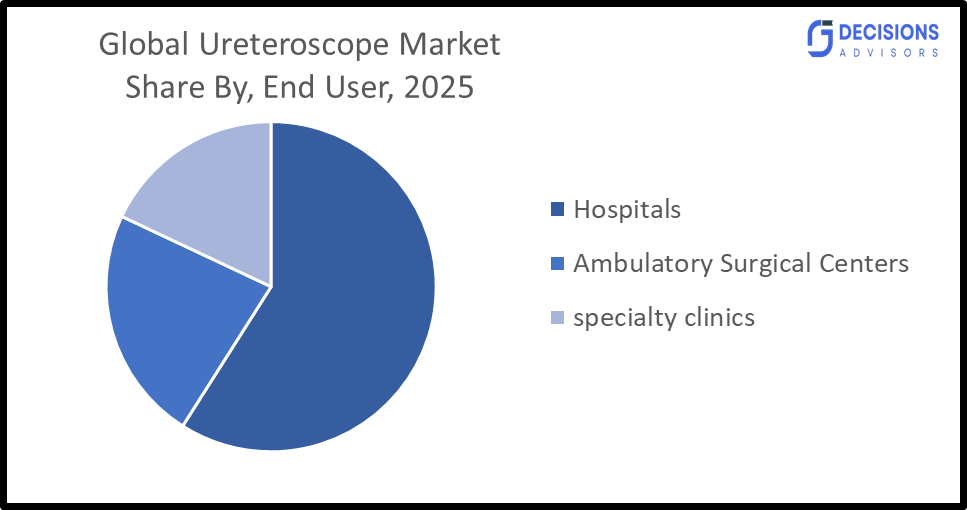
- By end user, the hospitals segment dominated the market and holds approximately 59% share in 2025 and is projected to grow at a substantial CAGR during the forecast period.
- The compound annual growth rate of the global ureteroscope market is 5.89%.
7. The market is likely to achieve a valuation of USD 1.95 billion by 2035.
What is role of technology in grooming the market?
Technology plays a pivotal role in driving growth in the ureteroscope market. Advances in flexible and digital ureteroscopes, including high-resolution imaging, disposable scopes, and powered tissue extraction systems, have improved surgical precision, reduced procedure time, and minimized infection risks. Integration with robotic-assisted platforms and AI-guided diagnostics enhances surgeon efficiency and patient outcomes. Additionally, innovations in miniaturisation, ergonomics, and illumination have expanded procedural capabilities, allowing treatment of complex urological conditions. These technological improvements increase adoption in hospitals and outpatient centers, boost patient confidence in minimally invasive procedures, and ultimately fuel revenue growth and market expansion globally
Market Drivers
The growth of the global ureteroscope market is strongly driven by the rising prevalence of urolithiasis and the increasing demand for minimally invasive treatment options. Globally, approximately 13% of the population is affected by kidney stones, and recurrence rates can reach up to 50% within 5–10 years, creating a continuous and repeat demand for ureteroscopic procedures. This high recurrence directly justifies the sustained procedural volume and long-term market growth. In addition, the growing preference for minimally invasive surgeries is significantly accelerating adoption, as these procedures can reduce hospital stays by 30–50% and enable faster patient recovery, making them both clinically and economically favorable for healthcare providers. Technological advancements further reinforce this growth, with modern digital ureteroscopes and laser lithotripsy systems achieving procedural success rates exceeding 90%, which increases physician confidence and patient acceptance. Moreover, the expansion of healthcare infrastructure and rising healthcare expenditure in emerging economies are improving access to advanced urological care, thereby increasing the number of procedures performed annually. Collectively, these factors, including high disease prevalence, strong recurrence rates, clinical efficiency, and improving accessibility, are creating a robust and sustainable demand environment for ureteroscopes globally.
Restrain
The market faces challenges such as the high cost of advanced ureteroscopes, particularly digital and disposable variants. Limited availability of skilled professionals in developing regions may hinder adoption. Additionally, durability issues with reusable ureteroscopes and the risk of device damage during procedures can impact cost efficiency.
Competitive Analysis:
The report offers the appropriate analysis of the key organizations/companies involved within the ureteroscope market, along with a comparative evaluation primarily based on their product of offering, business overviews, geographic presence, enterprise strategies, segment market share, and SWOT analysis. The report also provides an elaborative analysis focusing on the current news and developments of the companies, which includes product development, innovations, joint ventures, partnerships, mergers & acquisitions, strategic alliances, and others. This allows for the evaluation of the overall competition within the market.
Top Companies in the Global Ureteroscope Market
- Olympus Corporation
- Boston Scientific Corporation
- Karl Storz SE & Co. KG
- Stryker Corporation
- Richard Wolf GmbH
- PENTAX Medical
- Cook Medical
- Coloplast A/S
- Dornier MedTech
- Ambu A/S
Government Initiatives
|
Country |
Key Government Initiatives |
|
India |
The Indian government launched a 500 crore (USD 60 million) scheme in late 2024 specifically to strengthen the medical device industry, providing financial assistance for clinical studies and the domestic production of high-end surgical components. |
|
US |
In the US, the Centers for Medicare & Medicaid Services (CMS) recently upheld a payment increase for outpatient procedures and retained specific reimbursement codes (like C1747) for single-use ureteroscopes. |
|
UK |
Launched by the MHRA in early 2024, this scheme allows manufacturers of medical devices (including ureteroscopes) to leverage existing approvals from trusted regulators like the US FDA or Australia's TGA. This can cut review times down to 60 or 110 days, making the UK an attractive early-launch market. |
Study on the Supply, Demand, Distribution, and Market Environment of the Ureteroscope Market
The global ureteroscope market is witnessing strong demand due to the rising prevalence of kidney stones, increasing adoption of minimally invasive procedures, and technological advancements in digital and disposable devices. Supply is supported by innovative, flexible, rigid, and single-use ureteroscopes, offering high durability and enhanced visualisation. Distribution occurs through hospitals, ambulatory surgical centers, and specialty clinics, often via direct sales and partnerships with medical device distributors. Favorable market conditions, including growing healthcare infrastructure, rising awareness of urological disorders, and supportive government initiatives, are creating a robust environment.
Price Analysis and Consumer Behaviour Analysis
The ureteroscope market is experiencing rising revenue primarily due to increasing prevalence of urological conditions, notably kidney stones and related disorders, which drive procedure volumes globally. Ureteroscopy has become a preferred, minimally invasive treatment, encouraging hospitals and clinics to invest more in advanced scopes. Technological innovations such as flexible, digital, and single?use ureteroscopes with improved imaging and infection control are also pushing adoption rates higher. Additionally, growing healthcare spending, expanding outpatient settings, and broader awareness of patient safety benefits further boost consumer demand and justify continuous revenue growth in this market.
Market Segmentation
The Ureteroscope Market share is classified into product type, channel type, application and end user
- The flexible ureteroscopes segment dominated the market and holds approximately 57% share in 2025 and is projected to grow at a substantial CAGR during the forecast period.
Based on the product type, the ureteroscope market is divided into flexible ureteroscopes, rigid ureteroscopes, and semi-rigid ureteroscopes. Among these, the flexible ureteroscopes segment dominated the market in 2025 and is projected to grow at a substantial CAGR during the forecast period. This supremacy stems from the broad clinical utility of flexible designs in accessing complex renal anatomy, superior imaging with digital and fiber?optic technologies, and higher stone clearance rates in retrograde intrarenal surgery compared with rigid alternatives. Semi?rigid and rigid scopes have more limited use in specific lower?ureter cases; thus, their shares are smaller and grow at a more moderate pace.
- The reusable segment accounted for the largest share in 2025, and is anticipated to grow at a significant CAGR during the forecast period.
Based on the channel type, the ureteroscope market is divided into reusable ureteroscopes and disposable ureteroscopes. Among these, the reusable segment accounted for the largest share in 2025, and is anticipated to grow at a significant CAGR during the forecast period. Driven by long clinical use, multi?procedure lifecycles, and institutional preference for durable, high?spec equipment. Conversely, disposable (single?use) scopes are growing rapidly due to strong demand for infection control, reduced reprocessing burden, and lower risk of cross?contamination especially in ambulatory settings. The shift toward single?use options is accelerating, though reusable models remain the commercial majority as of 2025.
- The urolithiasis segment dominated the market with a share of approximately 69% in 2025, and is projected to grow at a substantial CAGR during the forecast period.
Based on the application, the ureteroscope market is divided into urolithiasis, tumor management, ureteral strictures, hematuria diagnosis, and others. Among these, the hospitals segment dominated the market with a share of approximately 63% in 2025, and is projected to grow at a substantial CAGR during the forecast period. owing to the high and rising global prevalence of kidney stones and the strong clinical preference for ureteroscopic stone management over more invasive procedures. Tumor management (e.g., urothelial carcinoma) and strictures represent important secondary applications, growing steadily as diagnostic and therapeutic endoscopy expands.
- The hospitals segment dominated the market and holds approximately 59% share in 2025 and is projected to grow at a substantial CAGR during the forecast period.
Based on end user, the ureteroscope market is divided into hospitals, ambulatory surgical centers, and specialty clinics. Among those, the hospitals segment dominated the market and holds approximately 59% share in 2025 and is projected to grow at a substantial CAGR during the forecast period, reflecting their advanced surgical infrastructure, greater procedural volumes, and capacity to handle complex urological cases requiring ureteroscopy. Hospitals also lead in procuring premium and reusable devices, including digital flexible scopes integrated with advanced visualization systems. ASCs and specialty clinics are growing faster due to outpatient procedural shifts and increasing adoption of disposable technologies, but hospitals remain the largest revenue contributors globally.
Strategies to Implement for Growth of the Market in Non-Leading Regions
To expand the ureteroscope market in non-leading regions, companies should focus on enhancing healthcare infrastructure by supporting hospitals with advanced surgical suites. Training and awareness programs for surgeons and medical staff can drive the adoption of flexible and digital ureteroscopes. Introducing cost-effective and disposable technologies lowers entry barriers, while public health initiatives raise awareness of urological conditions. Strategic partnerships with local distributors, insurance providers, and healthcare networks ensure wider reach, reliable supply, and reimbursement support. Combined, these measures increase procedure volumes, improve patient outcomes, and establish sustainable market growth in under-penetrated regions.
Regional Segment Analysis of the Ureteroscope Market
- North America (U.S., Canada, Mexico)
- Europe (Germany, France, U.K., Italy, Spain, Rest of Europe)
- Asia-Pacific (China, Japan, India, Rest of APAC)
- South America (Brazil and the Rest of South America)
- The Middle East and Africa (UAE, South Africa, Rest of MEA)
North America is anticipated to hold approximately 37% share of the global Ureteroscope market over the predicted timeframe.
North America is anticipated to hold approximately 37% share of the global Ureteroscope Market over the predicted timeframe. It maintains dominant market leadership due to well?established healthcare infrastructure, high procedural volumes for urological surgeries, and broad adoption of advanced minimally invasive technologies. The United States is the key driver, supported by a high prevalence of kidney stones, strong healthcare expenditure, widespread reimbursement support, and rapid uptake of flexible digital and single?use ureteroscopes by hospitals and ambulatory surgical centers. These factors collectively sustain robust demand and regional market share.
Europe is expected to grow at a rapid CAGR in the ureteroscope market by holding approximately 28% of the share during the forecast period.
Europe is expected to grow at a rapid CAGR in the Ureteroscope Market by holding approximately 28% of the share during the forecast period. Europe’s market is supported by well-established healthcare systems, increasing adoption of advanced surgical technologies, and skilled medical professionals. Key countries such as Germany, France, and the United Kingdom focus on minimally invasive procedures with high standards of safety and efficiency. Ongoing investments in hospital infrastructure, reimbursement support, and demand for advanced ureteroscopic procedures drive steady market growth across the region.
Asia Pacific is the 3rd largest region to grow in the ureteroscope market during the period.
The Asia Pacific region is experiencing rapid growth due to rising healthcare investments, improving hospital infrastructure, and growing awareness of minimally invasive surgeries. Countries like China, India, and Japan are seeing increased patient volumes and higher prevalence of urological disorders. Government initiatives, expansion of private healthcare facilities, adoption of advanced surgical technologies, and medical tourism further contribute to the rising demand and market expansion in the region
Future Market Trends in Global Ureteroscope Market: -
- Growth of Disposable (Single-Use) Ureteroscopes
The increasing adoption of disposable ureteroscopes is one of the most significant trends shaping the market. These devices eliminate the need for sterilization and reduce the risk of cross-contamination, making them highly preferred in modern healthcare settings. Additionally, they ensure consistent performance and reduce maintenance costs associated with reusable devices. This segment is expected to witness the fastest growth due to rising infection control concerns and operational efficiency requirements.
- Advancements in Digital Imaging and Smart Technologies
Technological advancements, particularly in digital imaging, are transforming ureteroscopic procedures. High-definition visualisation, improved fibre optics, and integration with laser lithotripsy systems are enhancing diagnostic accuracy and treatment outcomes. Additionally, emerging innovations such as AI-assisted imaging and pressure-monitoring systems are improving procedural precision and patient safety. Continuous innovation in device design and miniaturisation is expected to further drive market growth.
- Shift Toward Minimally Invasive and Outpatient Procedures
There is a growing shift toward minimally invasive and same-day outpatient procedures, which is significantly influencing the ureteroscope market. Ambulatory surgical centers are gaining traction due to cost-effectiveness, faster recovery times, and reduced hospital stays. Healthcare systems are increasingly promoting outpatient care to reduce overall costs, which is accelerating the adoption of ureteroscopic procedures in non-hospital settings.
Recent Development
- In March 2026, Cook Medical commercially launched two new urology products, the Syfonix suction ureteral access sheath and the 7.5 Fr Ascend single-use flexible ureteroscope, according to the company.
- In September 2025, Dornier MedTech America announced the full U.S. commercial launch of two single-use devices, the Dornier Hoover Flexible and Navigable Suction Ureteral Access Sheath and the Dornier Axis II Slim ureteroscope.
- In July 2024, The U.S. Food and Drug Administration (FDA) had granted 510(k) clearance to Ambu’s ureteroscopy solution, comprising the single?use digital flexible ureteroscope aScope?5?Uretero and the full?HD endoscopy system aBox?2, the company announced in a news release. This regulatory clearance enabled the company to advance its single?use urology portfolio and expand its presence in the U.S. market for ureteroscopy procedures.
- In December?2021, iData Research analysts James?McIntosh and Kamran?Zamanian, PhD, discussed how technological advancements were shaping the European urology device market. They noted that the COVID?19 pandemic had accelerated the industry’s focus on minimally invasive procedures and infection mitigation, which in turn spurred demand for single?use endoscopes, including single?use ureteroscopes, a trend initially led by products like Boston Scientific’s LithoVue.
How is Recent Developments Helping the Market?
Recent developments have significantly boosted the growth of the ureteroscope market by improving clinical outcomes, expanding procedural applications, and increasing accessibility. Technological innovations, such as flexible digital ureteroscopes with high-resolution imaging, enhanced deflection, and ergonomic designs, have increased procedural precision and reduced operating time. The introduction of single-use disposable ureteroscopes supports infection control, lowers reprocessing costs, and facilitates adoption in outpatient and ambulatory settings, as exemplified by FDA-cleared devices like Ambu’s aScope?5 Uretero with aBox?2. Integration with robotic-assisted platforms and AI-enhanced imaging improves navigation in complex cases, while expanding clinical indications in urolithiasis, strictures, and tumor diagnostics broadens the market’s reach. Additionally, supportive policies, such as India’s Ayushman Bharat scheme and initiatives under Make in India, enhance access to advanced devices, and the growth of ambulatory surgical centers further drives demand for efficient ureteroscopy systems. These developments collectively improve safety, effectiveness, and cost-efficiency, fostering broader adoption and market expansion globally.
Market Segment
This study forecasts revenue at global, regional, and country levels from 2020 to 2035. Decision Advisors has segmented the global Ureteroscope Market based on the below-mentioned segments:
Global Ureteroscope Market, By Product Type
- Flexible ureteroscopes
- Rigid ureteroscopes
- Semi-rigid ureteroscopes
Global Ureteroscope Market, By Channel Type
- Reusable ureteroscopes
- Disposable ureteroscopes
Global Ureteroscope Market, By Application
- Urolithiasis
- Tumor management
- Ureteral strictures
- Hematuria diagnosis
- Others
Global Ureteroscope Market, By End User
- Hospitals
- Ambulatory surgical centers
- Specialty clinics
Global Ureteroscope Market, By Regional Analysis
- North America
- US
- Canada
- Mexico
- Europe
- Germany
- UK
- France
- Italy
- Spain
- Russia
- Rest of Europe
- Asia Pacific
- China
- Japan
- India
- South Korea
- Australia
- Rest of Asia Pacific
- South America
- Brazil
- Argentina
- Rest of South America
- Middle East & Africa
- UAE
- Saudi Arabia
- Qatar
- South Africa
- Rest of the Middle East & Africa
Frequently Asked Questions (FAQ)
Q. What is the average lifespan of reusable ureteroscopes?
A. The lifespan of reusable ureteroscopes typically ranges from 20 to 50 procedures, depending on usage, handling, and maintenance practices. Frequent repairs and delicate components can impact their durability and overall cost-effectiveness.
Q. How does reimbursement policy affect the ureteroscope market?
A. Reimbursement policies play a crucial role in market adoption. Favorable reimbursement for minimally invasive urological procedures encourages hospitals to invest in advanced ureteroscopes, while limited or unclear reimbursement can slow adoption, especially in developing regions.
Q. What are the environmental concerns associated with disposable ureteroscopes?
A. While disposable ureteroscopes reduce infection risk, they contribute to medical waste generation. Increasing focus on sustainability is pushing manufacturers to explore eco-friendly materials and recycling programs.
Q. How is training and skill development impacting the adoption of ureteroscopes?
A. The adoption of advanced ureteroscopes depends heavily on the availability of skilled urologists. Training programs, simulation-based learning, and workshops are essential to ensure effective use of modern flexible and digital ureteroscopes.
Check Licence
Choose the plan that fits you best: Single User, Multi-User, or Enterprise solutions tailored for your needs.
We Have You Covered
- 24/7 Analyst Support
- Clients Across the Globe
- Tailored Insights
- Technology Tracking
- Competitive Intelligence
- Custom Research
- Syndicated Market Studies
- Market Overview
- Market Segmentation
- Growth Drivers
- Market Opportunities
- Regulatory Insights
- Innovation & Sustainability
Report Details
| Scope | Global |
| Pages | 210 |
| Delivery | PDF & Excel via Email |
| Language | English |
| Release | Apr 2026 |
| Access | Download from this page |