
Global Vacuum Insulation Panel Market
 |
Author:
Aditya G
|
Pages:
245
|
Author:
Aditya G
|
Pages:
245
Global Vacuum Insulation Panel Market Size, Share, By Type (Flat Panel, Special Shape Panel), By Raw Material (Plastics, Metal), By Core Material (Construction, Fiberglass, and Others), By Application (Construction, Cooling and Freezing Devices, logistics, and Other), and By Region (North America, Europe, Asia-Pacific, Latin America, Middle East, and Africa), Analysis and Forecast 2026-2035
CAGR
4.16%
REVENUE 2025
USD Billion 9.89
FORECAST 2035
USD Billion 14.86
REPORT COVERAGE
Global
Market Snapshot
- Market Size (2025): USD 9.89 Billion
- Projected Market Size (2035): USD 14.86 Billion
- Compound Annual Growth Rate (CAGR): 4.16%
- Largest Regional Market: Asia-Pacific
- Fastest Growing Region: North America
- 3rd Largest Region: Europe
- Base Year: 2025
- Historical Period: 2021–2024
- Forecast Period: 2026–2035
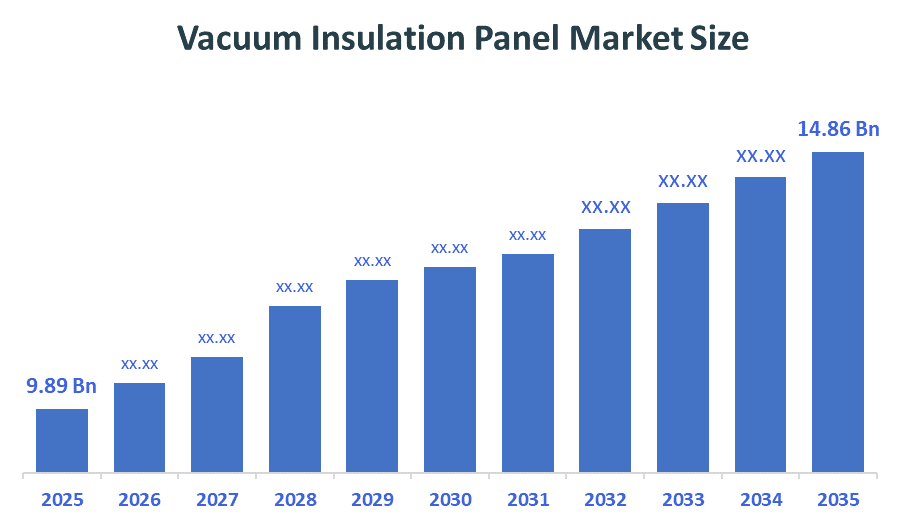
According to Decision Advisors, the Global Vacuum Insulation Panel Market Size is expected to grow from USD 9.89 billion in 2025 to USD 14.86 billion by 2035, at a CAGR of 4.16% during the forecast period 2026-2035. The vacuum Insulation Panel Market driven by increasing demands for energy-efficient construction, stringent building regulations, expanding cold chain logistics, stringent energy efficiency regulations and rapid urbanization and construction growth.
Market Overview/ Introduction
The vacuum insulation panel (VIP) market refers to advanced insulation materials which utilize a vacuum-sealed core method to achieve superior thermal resistance against standard insulation materials. The panels find extensive application in construction refrigeration, cold chain logistics as well as transportation sectors. The Vacuum Insulation Panel market driven by increasing building energy efficiency requirements, strict environmental regulations, the development of cold storage facilities used in food and pharmaceutical industries. The current market trend shows that VIPs find use in environmentally friendly building designs, passive house construction and electric vehicle development. The implementation of nano-porous core materials, new barrier film technology and superior vacuum sealing methods results in increased durability, better insulation performance and extended operational lifetime.
In Europe, the Energy Performance of Buildings Directive (EPBD), specifically amendments like Regulation (EU) 2018/844, encourages high-performance insulation in new and renovated buildings to reduce greenhouse gas emissions.
The VIP market for vacuum insulation panels will experience major expansion due to global energy efficiency and sustainable construction practices and improved cold chain logistics systems gain increasing importance. Green building projects and energy-efficient infrastructure development create business opportunities which enable VIPs to decrease energy usage while providing excellent thermal insulation through their compact design. The pharmaceutical and food cold chain industry is expanding quickly because it needs thermal insulation solutions for vaccines and biologics and perishable products which require temperature control during transportation and storage. Electric vehicles and battery thermal management systems drive essential requirements for insulation products which combine compact design with superior performance capabilities.
- In 2023, the Great British Insulation Scheme (GBIS) is Launched £1 billion UK government initiative designed to enhance home energy efficiency and reduce fuel poverty. By 31 March 2026, it aims to retrofit around 300,000 homes with cavity wall and loft insulation.
- In 2023, Canadian federal and provincial infrastructure programs supporting sustainable construction and energy-efficient community development are driving strong demand for advanced insulating materials, effectively acting as an indirect subsidy and encouraging the wider adoption of high-performance insulation solutions across the country.
Notable Insights: -
- Asia-Pacific holds the largest regional market share in the global Vacuum Insulation Panels Market.
- North America is the fastest growing region in the global Vacuum Insulation Panels Market
- By Type, the flat panel segment held a dominant position 75% in terms of market share in 2025.
- By Raw Material, plastic segment is the dominating accounting for over 63.9% of the global market share in 2025.
- The compound annual growth rate of the global Vacuum Insulation Panels Market is 4.16%.
- The market is likely to achieve a valuation of USD 14.86 billion by 2035.
What is role of technology in grooming the market?
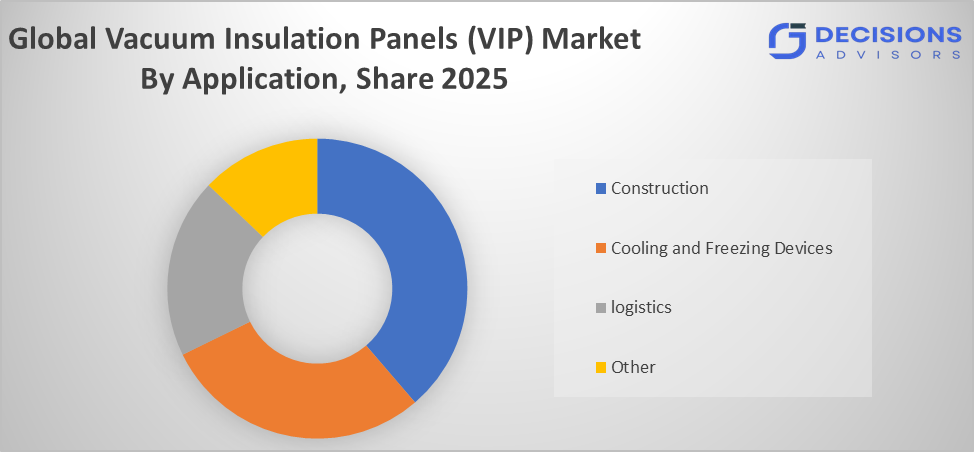
Technology plays a crucial role in development the global vacuum insulation panels market by enhancing thermal efficiency, manufacturing process, and product durability. Advanced materials such as fumed Construction cores and high-performance barrier films significantly enhance insulation performance, enabling VIPs to provide up to 5–10 times better thermal resistance than conventional insulation materials. Automation and vacuum-sealing technologies help to improve product consistency and reduce operational costs. Digital quality-control and monitoring technologies support to improve product testing and lifecycle performance. The construction and building sector represent for over 40% of the market revenue share, driven by demand for energy-efficient insulation solutions.
How is Recent Developments Helping the Market?
Recent technological and product developments are significantly driving growth in the global Vacuum Insulation Panels (VIP) Market. Innovations in core materials, such as fumed Construction and glass fiber, combined with advanced multilayer barrier films, have improved thermal performance by up to 10 times compared to conventional insulation. Companies that make things are starting to use machines that can seal and cut things precisely. This helps them make things faster and reduces the amount of material that gets wasted. It also means that the things they make are more consistent. Manufacturers are also using computers to check the quality of their products. This is done using the internet and special systems that can monitor things. This helps make sure that the products will last a time and work well. the development of thinner and more durable VIPs has expanded their use in energy-efficient buildings, refrigerated transport, and cold-chain logistics, driving higher adoption rates.
Market Drivers
The vacuum insulation panels or VIP market is growing fast. Several things are driving this growth. One major factor is the need for energy efficiency in buildings. This includes residential, commercial, and industrial buildings are encouraging the adoption of VIPs, which provide 5–10 times higher thermal performance compared to conventional insulation materials. The construction and building sector currently contribute over 40% of total global market revenue, supported by stricter building codes and the growing focus on green construction. Building codes are getting tougher. People are building in a more environmentally friendly way, which is helping this area grow. Another key area is cold-chain logistics and refrigerated transport, with the global refrigerated transport market expected to grow at a CAGR of over 6% through 2030, boosting the need for high-performance insulation. In addition, stringent environmental regulations aimed at reducing carbon emissions are encouraging the use of high-performance insulation to lower heating and cooling energy consumption. New technologies are making the materials used in Vacuum Insulation Panels, like kinds of sand and strong plastic work even better and last longer which is making the vacuum insulation panels market expansion.
Restrain
The main restraints on the global Vacuum Insulation Panels (VIP) Market include High manufacturing costs due to advanced materials like fumed Construction cores and multilayer barrier films make VIPs more expensive than conventional insulation. Complex installation, limited end-user awareness, risk of damage, and fluctuating raw material prices further restrict adoption, particularly in retrofitting and developing regions, potentially slowing overall market growth.
Competitive Analysis:
The report offers the appropriate analysis of the key organizations/companies involved within the vacuum insulated panel market, along with a comparative evaluation primarily based on their product of offering, business overviews, geographic presence, enterprise strategies, segment market share, and SWOT analysis. The report also provides an elaborative analysis focusing on the current news and developments of the companies, which includes product development, innovations, joint ventures, partnerships, mergers & acquisitions, strategic alliances, and others. This allows for the evaluation of the overall competition within the market.
Top Companies in Global Vacuum Insulation Panels (VIP) Market
- Panasonic Corporation
- LG Hausys Ltd.
- Va?Q?Tec AG
- Kingspan Group plc
- BASF SE
- Evonik Industries AG
- ThermoCor
- Porextherm Dammstoffe GmbH
- Fujian SuperTech Advanced Material Co., Ltd.
- Knauf Insulation
- Turna Sure Insulation Ltd.
- OCI Company Ltd.
- Microtherm (Promat International)
- Lydall Inc.
- Hanita Coatings (Avery Dennison)
Government Initiatives
|
Country |
Key Government Initiatives |
|
Germany |
In Germany, strict energy performance regulations, including the Energy Saving Ordinance (EnEV) and the European Energy Performance of Buildings Directive (EPBD), promote the use of high-performance insulation like VIPs in both new constructions and building retrofits, enhancing energy efficiency nationwide. |
|
US |
In the United States, federal and state energy efficiency standards and building codes are driving demand for advanced insulation, including VIPs, in both residential and commercial construction. Additionally, government incentives for green building and energy-efficient retrofits further promote the adoption of high-performance insulation solutions. |
|
China |
In China, government investments in green infrastructure and urbanization are driving construction growth, which is boosting the adoption of VIPs for energy-efficient buildings and cold-chain logistics. National targets to reduce building energy consumption further encourage the use of advanced insulation solutions. |
Market Segmentation
The vacuum insulation panels (VIP) market share is classified into type, raw material, and core material.
- The flat panel segment dominated the market in 2025, and is projected to grow at a substantial CAGR of approximately 75% during the forecast period.
Based on the type, the vacuum insulated panel market is divided into flat panel, special shape panel. Among these, the flat panel segment dominated the market in 2025, and is projected to grow at a substantial CAGR of approximately 75% during the forecast period. Flat panels deliver superior thermal efficiency by providing high R-values that significantly reduce heat transfer, making them essential for meeting strict energy-efficiency regulations in residential and commercial buildings while promoting sustainable construction and lowering overall energy consumption.
- The plastic and metal segment accounted for the largest share in 2025, and is anticipated to grow at a significant CAGR of approximately 63.9 % during the forecast period.
Based on the raw material, the vacuum insulated panel market is divided into plastic and metal. Among these, the plastic segment accounted for the largest share in 2025, and is anticipated to grow at a significant CAGR of approximately 63.9% during the forecast period. It is dominating because Plastics offer lightweight and versatile properties, enabling the production of thinner, customizable panels suitable for modern refrigerators and building applications. They support cost-effective manufacturing and serve as a key material in polyurethane (PU) production, commonly used in domestic refrigerators and freezers.
- The construction segment dominated the market in 2025, and is projected to grow at a substantial CAGR approximately 65%during the forecast period.
Based on the application, the vacuum insulated panel market is divided into construction, cooling and freezing devices, logistics, and other. Among these, the construction segment dominated the market in 2025, and is projected to grow at a substantial CAGR approximately 65% during the forecast period. panels provide exceptional versatility, serving diverse sectors like construction, refrigeration, and transportation, while reliably preserving vacuum integrity over time. This ensures consistent insulation performance, energy efficiency, and durability, making them a preferred choice for advanced thermal management applications worldwide.
Strategies to Implement for Growth of the Market in Non-Leading Regions
To drive the growth of vacuum insulation panels (VIP) in emerging markets outside of their core regions (such as LATAM, the Middle East, and Africa) companies will need to actively pursue both targeted expansion/innovation strategies. In particular, companies should establish local production and distribution centers that can help reduce logistics costs and improve product availability. Additionally, working with governments on energy-efficient building codes, green construction initiatives, and cold chain infrastructure development can help stimulate demand for high-performance insulation products like VIPs. Companies should also pursue strategic relationships with local construction firms, appliance manufacturers, and refrigerated warehousing companies to help integrate VIP products into buildings, refrigeration units, and temperature-controlled logistics.
Regional Segment Analysis of the Vacuum Insulated Panel Market
- North America (U.S., Canada, Mexico)
- Europe (Germany, France, U.K., Italy, Spain, Rest of Europe)
- Asia-Pacific (China, Japan, India, Rest of APAC)
- South America (Brazil and the Rest of South America)
- The Middle East and Africa (UAE, South Africa, Rest of MEA)
Asia Pacific is anticipated to hold the largest share of the vacuum insulated panel market over the predicted timeframe. The vacuum insulation panel market will see Asia Pacific region obtaining the largest market share during the forecast period. The region accounted for around 44.8% of the global market revenue in 2023, making it the dominant regional market due to strong industrial and construction activities. The market outlook improves due to government policies support green building initiatives and energy efficiency programs and low-carbon technology development. The Asia Pacific region will maintain its position as the top market for vacuum insulation panels due to its growing industrial sector and increasing investments in infrastructure development and cold-storage facilities.
North America is expected to grow at a rapid CAGR in the vacuum insulated panel market during the forecast period. North America is expected to experience significant growth in its vacuum insulated panel (VIP) market which will continue through the forecast period. The region will experience market growth which will reach a CAGR between 3.8% and 4.5% from 2024 to 2030 because of increasing needs for energy-efficient insulation products. The United States holds nearly 75% of the regional market share because of robust construction activities and enforcement of strict energy efficiency standards for buildings. The expansion of VIP adoption results from increased cold chain logistics and refrigeration system development and appliance production. Market growth in North America receives additional support from government programs which promote green building practices and sustainable infrastructure development.
Europe is the 3rd largest region to grow in the Vacuum Insulated Panel Market during the region. The vacuum insulated panel (VIP) market forecast presents Europe as its third largest region. The region accounts for approximately 24% of the global market share because of strong demand for energy-efficient building materials. Germany the United Kingdom and France contribute to market growth because of their strict energy efficiency regulations and their increasing use of green building technologies. Regional demand increases because of the rising application of VIPs in refrigeration systems and cold-chain logistics and building insulation. European governments implement initiatives to reduce carbon emissions and enhance building energy efficiency which drives continuous growth of the European VIP market.
Future Market Trends in Global Vacuum Insulated Panel Market: -
1.Growing Demand for Energy-Efficient Buildings
The demand for energy-efficient buildings continues to grow. The worldwide effort to decrease energy usage and carbon emissions has led to the widespread use of advanced insulation materials. Vacuum insulated panels provide better thermal insulation than traditional insulation materials, which makes them suitable for buildings that require energy efficiency and for infrastructure development.
2. Expansion of Cold Chain Logistics
The food and pharmaceutical industries need more temperature-controlled storage and transportation solutions, which has increased the demand for VIPs in cold chain logistics and insulated containers.
3. Technological Advancements in VIP Materials
Research and development activities produce technological progress that helps VIP materials develop into better materials. The development of panel durability and manufacturing costs reduction generates commercial benefits, which leads to wider use of the product across different industries.
Recent Development
In April 2025, Kingspan Insulation North America launched OPTIM-R E, an encapsulated vacuum insulation panel for energy-efficient roofing. It features a proprietary protective spray coating that prevents on-site damage while maintaining high thermal performance, making it suitable for both new construction and retrofit roofing projects.
In February 2025, Panasonic Industry launched its next-generation Vacua series vacuum insulation panels (VIPs) at ACREX India 2025, offering ultra-low thermal conductivity and slim designs for HVAC systems, appliances, transport containers, and building insulation.
In January 2025, Evonik announced the closure of two North American silica plants in Waterford, New York, and Havre de Grace, Maryland, with production being relocated to larger hubs to improve efficiency and maintain stable fumed silica supply for industrial applications, including VIP manufacturing.
Market Segment
This study forecasts revenue at global, regional, and country levels from 2020 to 2035. Spherical Insights has segmented the vacuum insulated panel market based on the below-mentioned segments:
Global Vacuum Insulated Panel Market, By Type
- Flat Panel
- Special Shape Panel
Global Vacuum Insulated Panel Market, By Raw material
- Plastics
- Metal
Global Vacuum Insulated Panel Market, By Application
- Construction
- Cooling and Freezing Devices
- Logistics
- Other
Global Vacuum Insulated Panel Market, By Regional Analysis
- North America
- US
- Canada
- Mexico
- Europe
- Germany
- UK
- France
- Italy
- Spain
- Russia
- Rest of Europe
- Asia Pacific
- China
- Japan
- India
- South Korea
- Australia
- Rest of Asia Pacific
- South America
- Brazil
- Argentina
- Rest of South America
- Middle East & Africa
- UAE
- Saudi Arabia
- Qatar
- South Africa
- Rest of the Middle East & Africa
Frequently Asked Questions (FAQ)
Q. How is premiumization influencing growth in the global Vacuum Insulated Panel Market?
A. The Vacuum Insulated Panel market experiences premiumization through its growing demand for insulation products which provide high-performance, ultra-thin and durable insulation capabilities. Advanced VIP products provide superior thermal resistance which extends their operational lifespan, enables compact design to industrial sectors including construction, refrigeration and cold-chain logistics. Companies are developing premium VIP technologies which use advanced silica cores and multi-layer barrier films to improve insulation performance because energy efficiency regulations are becoming more stringent.
Q. Why is the Asia-Pacific region dominating the global Vacuum Insulated Panel Market?
A. The Asia-Pacific region controls the international VIP market because its cities are growing at a fast pace and its countries develop their infrastructure and their manufacturing sectors grow, especially in China, Japan and India. The area experiences development through its extensive construction projects, its increasing need for energy-efficient buildings and its growing cold-chain logistics network. Government policies that support green buildings and energy conservation and sustainable infrastructure development create a basis for the region to maintain its global market leadership.
Q. What role does cocktail culture play in expanding spirits consumption?
A Cold-chain logistics serves as a primary growth engine for the VIP market because it demands advanced insulation technology that can sustain proper temperature control during both storage and transportation processes. VIPs serve multiple applications because they function as insulation materials in refrigerated containers, pharmaceutical transport boxes, vaccine storage systems, and food preservation equipment. The logistics and healthcare industries need their products because the products offer excellent thermal insulation performance while requiring minimal storage space to keep temperature-sensitive items cold.
Q. How are health-conscious trends influencing the spirits industry?
The VIP market experiences strong effects from sustainability and energy-efficiency trends due to governments and industries work to decrease carbon emissions and energy use. Vacuum insulation panels deliver thermal insulation that exceeds conventional materials by 5 to 10 times which enables buildings and refrigeration systems to decrease their energy requirements. The global demand for advanced insulation technologies continues to rise because various initiatives support green buildings and net-zero construction and environmentally friendly materials
- Introduction
- Objectives of the Study
- Market Definition
- Research Scope
- Research Methodology and Assumptions
- Executive Summary
- Premium Insights
- Porter’s Five Forces Analysis
- Value Chain Analysis
- Top Investment Pockets
- Market Attractiveness Analysis By Type
- Market Attractiveness Analysis By Raw Material
- Market Attractiveness Analysis By Core Material
- Market Attractiveness Analysis By Application
- Market Attractiveness Analysis By Region
- Industry Trends
- Market Dynamics
- Market Evaluation
- Drivers
- Increasing global focus on reducing energy consumption and carbon emission
- Restraints
- Increasing need for temperature controlled storage
- Opportunities
- Rapid expansion in the pharmaceuticals and food sector
- Challenges
- Panels are easily damaged on construction sites
- Global Vacuum Insulation Panel Market Analysis and Projection, By Type
- Segment Overview
- Flat Panel
- Special Shape Panel
- Global Vacuum Insulation Panel Market Analysis and Projection, By Raw Material
- Segment Overview
- Plastics
- Metal
- Global Vacuum Insulation Panel Market Analysis and Projection, By Core Material
- Segment Overview
- Construction
- Fiberglass
- Others
- Global Vacuum Insulation Panel Market Analysis and Projection, By Application
- Segment Overview
- Cooling and Freezing Devices
- logistics
- Other
- Global Vacuum Insulation Panel Market Analysis and Projection, By Regional Analysis
- Segment Overview
- North America
- U.S.
- Canada
- Mexico
- Europe
- Germany
- France
- U.K.
- Italy
- Spain
- Asia-Pacific
- Japan
- China
- India
- South America
- Brazil
- Middle East and Africa
- UAE
- South Africa
- Global Vacuum Insulation Panel Market-Competitive Landscape
- Overview
- Market Share of Key Players in the Vacuum Insulation Panel Market
- Global Company Market Share
- North America Company Market Share
- Europe Company Market Share
- APAC Company Market Share
- Competitive Situations and Trends
- Coverage Launches and Developments
- Partnerships, Collaborations, and Agreements
- Mergers & Acquisitions
- Expansions
- Company Profiles
- Panasonic Corporation
- Business Overview
- Company Snapshot
- Company Market Share Analysis
- Company Coverage Portfolio
- Recent Developments
- SWOT Analysis
- LG Hausys Ltd.
- Business Overview
- Company Snapshot
- Company Market Share Analysis
- Company Coverage Portfolio
- Recent Developments
- SWOT Analysis
- Kingspan Group plc
- Business Overview
- Company Snapshot
- Company Market Share Analysis
- Company Coverage Portfolio
- Recent Developments
- SWOT Analysis
- BASF SE
- Business Overview
- Company Snapshot
- Company Market Share Analysis
- Company Coverage Portfolio
- Recent Developments
- SWOT Analysis
- Evonik Industries AG
- Business Overview
- Company Snapshot
- Company Market Share Analysis
- Company Coverage Portfolio
- Recent Developments
- SWOT Analysis
- ThermoCor
- Business Overview
- Company Snapshot
- Company Market Share Analysis
- Company Coverage Portfolio
- Recent Developments
- SWOT Analysis
- Porextherm Dammstoffe GmbH
- Business Overview
- Company Snapshot
- Company Market Share Analysis
- Company Coverage Portfolio
- Recent Developments
- SWOT Analysis
- Fujian SuperTech Advanced Material Co., Ltd.
- Business Overview
- Company Snapshot
- Company Market Share Analysis
- Company Coverage Portfolio
- Recent Developments
- SWOT Analysis
- Knauf Insulation
- Business Overview
- Company Snapshot
- Company Market Share Analysis
- Company Coverage Portfolio
- Recent Developments
- SWOT Analysis
- Turna Sure Insulation Ltd.
- Business Overview
- Company Snapshot
- Company Market Share Analysis
- Company Coverage Portfolio
- Recent Developments
- SWOT Analysis
- OCI Company Ltd.
- Business Overview
- Company Snapshot
- Company Market Share Analysis
- Company Coverage Portfolio
- Recent Developments
- SWOT Analysis
- Microtherm
- Business Overview
- Company Snapshot
- Company Market Share Analysis
- Company Coverage Portfolio
- Recent Developments
- SWOT Analysis
- Lydall Inc.
- Business Overview
- Company Snapshot
- Company Market Share Analysis
- Company Coverage Portfolio
- Recent Developments
- SWOT Analysis
- Hanita Coatings
- Business Overview
- Company Snapshot
- Company Market Share Analysis
- Company Coverage Portfolio
- Recent Developments
- SWOT Analysis
- Panasonic Corporation
List of Table
- Global Vacuum Insulation Panel Market, By Type, 2024-2035(USD Billion)
- Global Flat Panel, Vacuum Insulation Panel Market, By Region, 2024-2035(USD Billion)
- Global Special Shape Panel, Vacuum Insulation Panel Market, By Region, 2024-2035(USD Billion)
- Global Vacuum Insulation Panel Market, By Raw Material, 2024-2035(USD Billion)
- Global Plastics, Vacuum Insulation Panel Market, By Region, 2024-2035(USD Billion)
- Global Metal, Vacuum Insulation Panel Market, By Region, 2024-2035(USD Billion)
- Global Vacuum Insulation Panel Market, By Core Material, 2024-2035(USD Billion)
- Global Construction, Vacuum Insulation Panel Market, By Region, 2024-2035(USD Billion)
- Global Fiberglass, Vacuum Insulation Panel Market, By Region, 2024-2035(USD Billion)
- Global Others, Vacuum Insulation Panel Market, By Region, 2024-2035(USD Billion)
- Global Vacuum Insulation Panel Market, By Application, 2024-2035(USD Billion)
- Global Cooling and Freezing Devices, Vacuum Insulation Panel Market, By Region, 2024-2035(USD Billion)
- Global logistics, Vacuum Insulation Panel Market, By Region, 2024-2035(USD Billion)
- Global Other, Vacuum Insulation Panel Market, By Region, 2024-2035(USD Billion)
- North America Vacuum Insulation Panel Market, By Type, 2024-2035(USD Billion)
- North America Vacuum Insulation Panel Market, By Raw Material, 2024-2035(USD Billion)
- North America Vacuum Insulation Panel Market, By Core Material, 2024-2035(USD Billion)
- North America Vacuum Insulation Panel Market, By Application, 2024-2035(USD Billion)
- U.S. Vacuum Insulation Panel Market, By Type, 2024-2035(USD Billion)
- U.S. Vacuum Insulation Panel Market, By Raw Material, 2024-2035(USD Billion)
- U.S. Vacuum Insulation Panel Market, By Core Material, 2024-2035(USD Billion)
- U.S. Vacuum Insulation Panel Market, By Application, 2024-2035(USD Billion)
- Canada Vacuum Insulation Panel Market, By Type, 2024-2035(USD Billion)
- Canada Vacuum Insulation Panel Market, By Raw Material, 2024-2035(USD Billion)
- Canada Vacuum Insulation Panel Market, By Core Material, 2024-2035(USD Billion)
- Canada Vacuum Insulation Panel Market, By Application, 2024-2035(USD Billion)
- Mexico Vacuum Insulation Panel Market, By Type, 2024-2035(USD Billion)
- Mexico Vacuum Insulation Panel Market, By Raw Material, 2024-2035(USD Billion)
- Mexico Vacuum Insulation Panel Market, By Core Material, 2024-2035(USD Billion)
- Mexico Vacuum Insulation Panel Market, By Application, 2024-2035(USD Billion)
- Europe Vacuum Insulation Panel Market, By Type, 2024-2035(USD Billion)
- Europe Vacuum Insulation Panel Market, By Raw Material, 2024-2035(USD Billion)
- Europe Vacuum Insulation Panel Market, By Core Material, 2024-2035(USD Billion)
- Europe Vacuum Insulation Panel Market, By Application, 2024-2035(USD Billion)
- Germany Vacuum Insulation Panel Market, By Type, 2024-2035(USD Billion)
- Germany Vacuum Insulation Panel Market, By Raw Material, 2024-2035(USD Billion)
- Germany Vacuum Insulation Panel Market, By Core Material, 2024-2035(USD Billion)
- Germany Vacuum Insulation Panel Market, By Application, 2024-2035(USD Billion)
- France Vacuum Insulation Panel Market, By Type, 2024-2035(USD Billion)
- France Vacuum Insulation Panel Market, By Raw Material, 2024-2035(USD Billion)
- France Vacuum Insulation Panel Market, By Core Material, 2024-2035(USD Billion)
- France Vacuum Insulation Panel Market, By Application, 2024-2035(USD Billion)
- U.K. Vacuum Insulation Panel Market, By Type, 2024-2035(USD Billion)
- U.K. Vacuum Insulation Panel Market, By Raw Material, 2024-2035(USD Billion)
- U.K. Vacuum Insulation Panel Market, By Core Material, 2024-2035(USD Billion)
- U.K. Vacuum Insulation Panel Market, By Application, 2024-2035(USD Billion)
- Italy Vacuum Insulation Panel Market, By Type, 2024-2035(USD Billion)
- Italy Vacuum Insulation Panel Market, By Raw Material, 2024-2035(USD Billion)
- Italy Vacuum Insulation Panel Market, By Core Material, 2024-2035(USD Billion)
- Italy Vacuum Insulation Panel Market, By Application, 2024-2035(USD Billion)
- Spain Vacuum Insulation Panel Market, By Type, 2024-2035(USD Billion)
- Spain Vacuum Insulation Panel Market, By Raw Material, 2024-2035(USD Billion)
- Spain Vacuum Insulation Panel Market, By Core Material, 2024-2035(USD Billion)
- Spain Vacuum Insulation Panel Market, By Application, 2024-2035(USD Billion)
- Asia Pacific Vacuum Insulation Panel Market, By Type, 2024-2035(USD Billion)
- Asia Pacific Vacuum Insulation Panel Market, By Raw Material, 2024-2035(USD Billion)
- Asia Pacific Vacuum Insulation Panel Market, By Core Material, 2024-2035(USD Billion)
- Asia Pacific Vacuum Insulation Panel Market, By Application, 2024-2035(USD Billion)
- Japan Vacuum Insulation Panel Market, By Type, 2024-2035(USD Billion)
- Japan Vacuum Insulation Panel Market, By Raw Material, 2024-2035(USD Billion)
- Japan Vacuum Insulation Panel Market, By Core Material, 2024-2035(USD Billion)
- Japan Vacuum Insulation Panel Market, By Application, 2024-2035(USD Billion)
- China Vacuum Insulation Panel Market, By Type, 2024-2035(USD Billion)
- China Vacuum Insulation Panel Market, By Raw Material, 2024-2035(USD Billion)
- China Vacuum Insulation Panel Market, By Core Material, 2024-2035(USD Billion)
- China Vacuum Insulation Panel Market, By Application, 2024-2035(USD Billion)
- India Vacuum Insulation Panel Market, By Type, 2024-2035(USD Billion)
- India Vacuum Insulation Panel Market, By Raw Material, 2024-2035(USD Billion)
- India Vacuum Insulation Panel Market, By Core Material, 2024-2035(USD Billion)
- India Vacuum Insulation Panel Market, By Application, 2024-2035(USD Billion)
- South America Vacuum Insulation Panel Market, By Type, 2024-2035(USD Billion)
- South America Vacuum Insulation Panel Market, By Raw Material, 2024-2035(USD Billion)
- South America Vacuum Insulation Panel Market, By Core Material, 2024-2035(USD Billion)
- South America Vacuum Insulation Panel Market, By Application, 2024-2035(USD Billion)
- Brazil Vacuum Insulation Panel Market, By Type, 2024-2035(USD Billion)
- Brazil Vacuum Insulation Panel Market, By Raw Material, 2024-2035(USD Billion)
- Brazil Vacuum Insulation Panel Market, By Core Material, 2024-2035(USD Billion)
- Brazil Vacuum Insulation Panel Market, By Application, 2024-2035(USD Billion)
- The Middle East and Africa Vacuum Insulation Panel Market, By Type, 2024-2035(USD Billion)
- The Middle East and Africa Vacuum Insulation Panel Market, By Raw Material, 2024-2035(USD Billion)
- The Middle East and Africa Vacuum Insulation Panel Market, By Core Material, 2024-2035(USD Billion)
- The Middle East and Africa Vacuum Insulation Panel Market, By Application, 2024-2035(USD Billion)
- UAE Vacuum Insulation Panel Market, By Type, 2024-2035(USD Billion)
- UAE Vacuum Insulation Panel Market, By Raw Material, 2024-2035(USD Billion)
- UAE Vacuum Insulation Panel Market, By Core Material, 2024-2035(USD Billion)
- UAE Vacuum Insulation Panel Market, By Application, 2024-2035(USD Billion)
- South Africa Vacuum Insulation Panel Market, By Type, 2024-2035(USD Billion)
- South Africa Vacuum Insulation Panel Market, By Raw Material, 2024-2035(USD Billion)
- South Africa Vacuum Insulation Panel Market, By Core Material, 2024-2035(USD Billion)
- South Africa Vacuum Insulation Panel Market, By Application, 2024-2035(USD Billion)
List of Figures
- Global Vacuum Insulation Panel Market Segmentation
- Vacuum Insulation Panel Market: Research Methodology
- Market Size Estimation Methodology: Bottom-Up Approach
- Market Size Estimation Methodology: Top-down Approach
- Data Triangulation
- Porter’s Five Forces Analysis
- Value Chain Analysis
- Top investment pocket in the Vacuum Insulation Panel Market
- Top Winning Strategies, 2024-2035
- Top Winning Strategies, By Development, 2024-2035(%)
- Top Winning Strategies, By Company, 2024-2035
- Moderate Bargaining power of Buyers
- Moderate Bargaining power of Suppliers
- Moderate Bargaining power of New Entrants
- Low threat of Substitution
- High Competitive Rivalry
- Top Player Positioning, 2024
- Market Share Analysis, 2024
- Restraint and Drivers: Vacuum Insulation Panel Market
- Vacuum Insulation Panel Market Segmentation, By Type
- Vacuum Insulation Panel Market For Flat Panel, By Region, 2024-2035 ($ Billion)
- Vacuum Insulation Panel Market For Special Shape Panel, By Region, 2024-2035 ($ Billion)
- Vacuum Insulation Panel Market Segmentation, By Raw Material
- Vacuum Insulation Panel Market For Plastics, By Region, 2024-2035 ($ Billion)
- Vacuum Insulation Panel Market For Metal, By Region, 2024-2035 ($ Billion)
- Vacuum Insulation Panel Market Segmentation, By Core Material
- Vacuum Insulation Panel Market For Construction, By Region, 2024-2035 ($ Billion)
- Vacuum Insulation Panel Market For Fiberglass, By Region, 2024-2035 ($ Billion)
- Vacuum Insulation Panel Market For Others, By Region, 2024-2035 ($ Billion)
- Vacuum Insulation Panel Market Segmentation, By Application
- Vacuum Insulation Panel Market For Cooling and Freezing Devices, By Region, 2024-2035 ($ Billion)
- Vacuum Insulation Panel Market For logistics, By Region, 2024-2035 ($ Billion)
- Vacuum Insulation Panel Market For Other, By Region, 2024-2035 ($ Billion)
- Panasonic Corporation: Net Sales, 2024-2035 ($ Billion)
- Panasonic Corporation: Revenue Share, By Segment, 2024 (%)
- Panasonic Corporation: Revenue Share, By Region, 2024 (%)
- LG Hausys Ltd.: Net Sales, 2024-2035 ($ Billion)
- LG Hausys Ltd.: Revenue Share, By Segment, 2024 (%)
- LG Hausys Ltd.: Revenue Share, By Region, 2024 (%)
- Kingspan Group plc: Net Sales, 2024-2035 ($ Billion)
- Kingspan Group plc: Revenue Share, By Segment, 2024 (%)
- Kingspan Group plc: Revenue Share, By Region, 2024 (%)
- BASF SE: Net Sales, 2024-2035 ($ Billion)
- BASF SE: Revenue Share, By Segment, 2024 (%)
- BASF SE: Revenue Share, By Region, 2024 (%)
- Evonik Industries AG: Net Sales, 2024-2035 ($ Billion)
- Evonik Industries AG: Revenue Share, By Segment, 2024 (%)
- Evonik Industries AG: Revenue Share, By Region, 2024 (%)
- ThermoCor: Net Sales, 2024-2035 ($ Billion)
- ThermoCor: Revenue Share, By Segment, 2024 (%)
- ThermoCor: Revenue Share, By Region, 2024 (%)
- Porextherm Dammstoffe GmbH: Net Sales, 2024-2035 ($ Billion)
- Porextherm Dammstoffe GmbH: Revenue Share, By Segment, 2024 (%)
- Porextherm Dammstoffe GmbH: Revenue Share, By Region, 2024 (%)
- Fujian SuperTech Advanced Material Co., Ltd.: Net Sales, 2024-2035 ($ Billion)
- Fujian SuperTech Advanced Material Co., Ltd.: Revenue Share, By Segment, 2024 (%)
- Fujian SuperTech Advanced Material Co., Ltd.: Revenue Share, By Region, 2024 (%)
- Knauf Insulation.: Net Sales, 2024-2035 ($ Billion)
- Knauf Insulation.: Revenue Share, By Segment, 2024 (%)
- Knauf Insulation.: Revenue Share, By Region, 2024 (%)
- Turna Sure Insulation Ltd.: Net Sales, 2024-2035 ($ Billion)
- Turna Sure Insulation Ltd.: Revenue Share, By Segment, 2024 (%)
- Turna Sure Insulation Ltd.: Revenue Share, By Region, 2024 (%)
- OCI Company Ltd.: Net Sales, 2024-2035 ($ Billion)
- OCI Company Ltd.: Revenue Share, By Segment, 2024 (%)
- OCI Company Ltd.: Revenue Share, By Region, 2024 (%)
- Microtherm: Net Sales, 2024-2035 ($ Billion)
- Microtherm: Revenue Share, By Segment, 2024 (%)
- Microtherm: Revenue Share, By Region, 2024 (%)
- Lydall Inc.: Net Sales, 2024-2035 ($ Billion)
- Lydall Inc.: Revenue Share, By Segment, 2024 (%)
- Lydall Inc.: Revenue Share, By Region, 2024 (%)
- Hanita Coatings: Net Sales, 2024-2035 ($ Billion)
- Hanita Coatings: Revenue Share, By Segment, 2024 (%)
- Hanita Coatings: Revenue Share, By Region, 2024 (%)
Check Licence
Choose the plan that fits you best: Single User, Multi-User, or Enterprise solutions tailored for your needs.
We Have You Covered
- 24/7 Analyst Support
- Clients Across the Globe
- Tailored Insights
- Technology Tracking
- Competitive Intelligence
- Custom Research
- Syndicated Market Studies
- Market Overview
- Market Segmentation
- Growth Drivers
- Market Opportunities
- Regulatory Insights
- Innovation & Sustainability
Report Details
| Scope | Global |
| Pages | 245 |
| Delivery | PDF & Excel via Email |
| Language | English |
| Release | Apr 2026 |
| Access | Download from this page |