
Global Veterinary Antiseptics Market
 |
Author:
Disha B
|
Pages:
240
|
Author:
Disha B
|
Pages:
240
Veterinary Antiseptics Market Size, Share, By Product Type (Iodine-Based Antiseptics, Chlorhexidine, Alcohol-Based Antiseptics, Hydrogen Peroxide, Quaternary Ammonium Compounds, Others), By Animal Type (Companion Animals, Livestock), By Formulation (Liquid, Gel, Spray, Ointment), By Application (Wound Care, Surgical Preparation, Skin Infection Treatment, Teat Disinfection, Others), By Distribution Channel (Veterinary Clinics, Retail Pharmacies, Online Platforms), By Region (North America, Europe, Asia-Pacific, Latin America, Middle East & Africa), Analysis and Forecast 2026-2035.
CAGR
3.19%
REVENUE 2025
USD Million 298.1
FORECAST 2035
USD Million 408.2
REPORT COVERAGE
Global
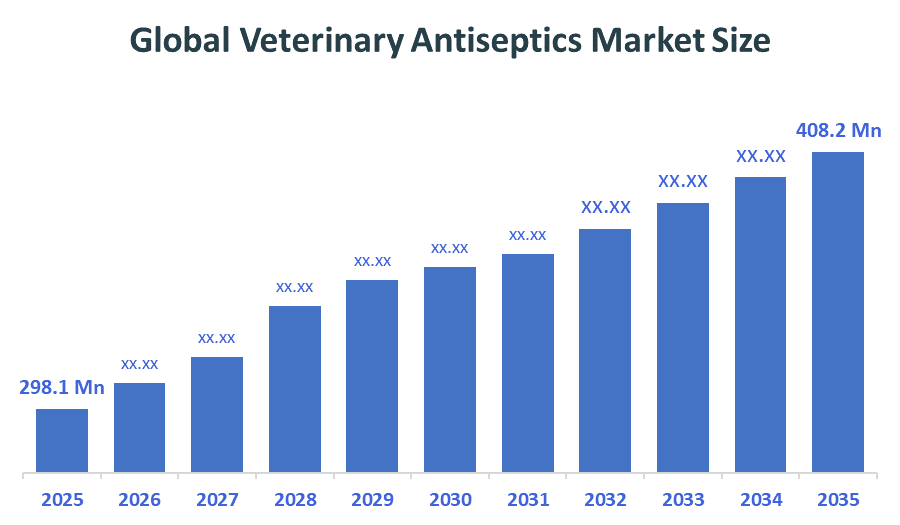
The Global Veterinary Antiseptics Market Size is foreseen to grow from USD 298.1 Million in 2025 and is govern to reach around USD 408.2 Million by 2035. According to Decision Advisors, a detailed research report on the global veterinary antiseptics market is boosted by technological innovations, accounting for nearly up to the 40-42% share of the total share worldwide. Zoetis is the prime player in the market with approximately USD 1.04 Billion in annual turnover and a 30-35% market share, positioning it as the primary driver of the global veterinary antiseptics market.
Market Snapshot
- Global Veterinary Antiseptics Market Size (2025): USD 298.1 Million
- Projected Global Veterinary Antiseptics Market Size (2035): USD 408.2 Million
- Global Veterinary Antiseptics Market Compound Annual Growth Rate (CAGR): 3.19%
- Largest Growing Region: North America
- Fastest Regional Market: Asia Pacific
- 3rd Largest Region: Europe
- Base Year: 2025
- Historical Period: 2021–2024
- Forecast Period: 2026–2035
Market Overview/ Introduction
The veterinary antiseptics market comprises topical formulations such as solutions, creams, and sprays used to inhibit microorganism growth on animal skin and mucous membranes to prevent infections and promote wound healing. Veterinary antiseptics market as the first line of defence in animal healthcare, it’s all the sprays, ointments, and cleansers we use to keep pets and livestock safe from infection. It’s growing fast because more of us are bringing pets into our homes and wanting the best care for them. Beyond just personal pet care, big companies like Zoetis and Neogen are stepping up by developing smarter products, such as eco-friendly sprays and digital tools that help farmers track hygiene. Even governments are pouring efforts, for instance, India has been pushing huge vaccination and sanitation events (like the NADCP) to protect cattle and boost the economy. With this combination of high-tech innovation and a developing affection for animals, the market is on track to hit a large number. It's no longer just about primary cleaning, it’s about a global shift toward keeping our animal companions and our food logistics safer and healthier than ever.
- The Government of India continued the Livestock Health and Disease Control Programme (LHDCP), which emphasised disease prevention, improved veterinary infrastructure, and doorstep services through mobile veterinary units, indirectly boosting the demand for antiseptics in routine animal care and infection control.
- The Punjab government, supported by the Asian Development Bank (ADB), launched a One Health-based program to combat antimicrobial resistance, promoting alternatives such as improved farm hygiene and reduced antibiotic dependency, which increased the relevance of antiseptics in animal health management.
Notable Insights: -
- North America is anticipated to hold approximately 34% share of the Global Veterinary Antiseptics Market over the predicted timeframe.
- Asia Pacific is the fastest-growing region in the Global Veterinary Antiseptics Market during the forecast period, holding approximately 30% share.
- By product type, the chlorhexidine segment dominated the market and holds approximately 30% share in 2025 and is projected to grow at a substantial CAGR during the forecast period.
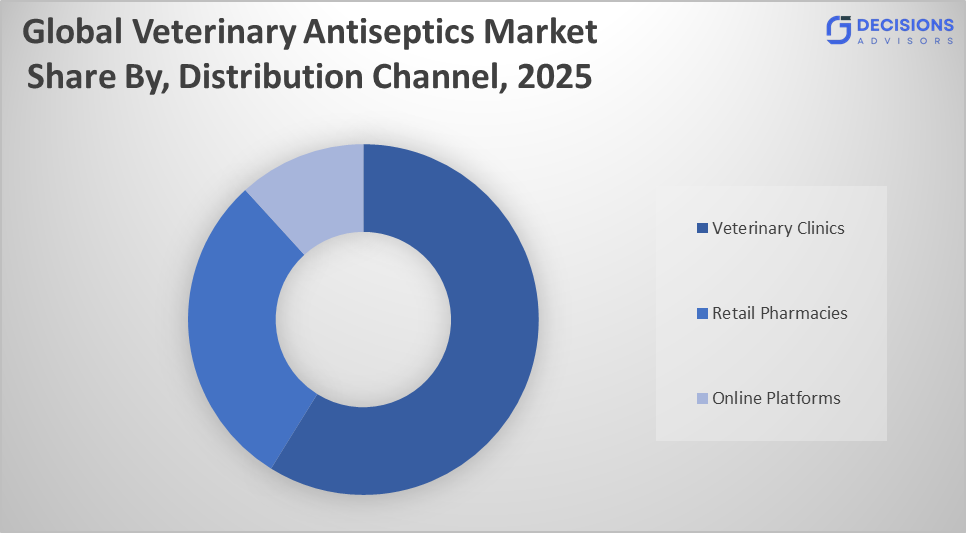
- By distribution channel, the veterinary clinics segment accounted for the largest share of approximately 50% in 2025 and is anticipated to grow at a significant CAGR during the forecast period.
- The compound annual growth rate of the global veterinary antiseptics market is 3.19%.
- The market is likely to achieve a valuation of USD 408.2 Million by 2035.
What is the role of technology in grooming the market?
Technology plays a crucial role in advancing the veterinary antiseptics market by improving product effectiveness, safety, and ease of application. Innovations such as spray-based delivery systems, long-acting antiseptic gels, and nanotechnology formulations enhance penetration and provide sustained antimicrobial action, reducing the risk of infections. Digital veterinary tools and precision livestock farming systems also help monitor animal health and ensure timely antiseptic use. For example, Neogen Corporation has developed advanced disinfectant and antiseptic solutions used in livestock facilities, where automated spraying systems are integrated with farm management software to maintain hygiene and prevent disease outbreaks efficiently.
Market Drivers
The driver of this market is a combination of necessity. For initiators, the way we look at our pets has changed they aren't just animals anymore, they’re family. This pet humanisation means we’re more willing than ever to pour in high-quality treatments to keep them healthy. At the same time, we’re more conscious of infectious diseases and how easily they can spread between animals and humans, making daily disinfection a first priority for everyone, from cat owners to huge-scale farmers. On the agricultural side, as the world’s demand for food grows, farmers are under immense pressure to keep livestock safe and productive, changing to advanced antiseptics to prevent costly outbreaks. On top of that, modern tech is making these products much more user-friendly. We’re seeing everything from natural, non-toxic sprays that are gentler on skin to smart delivery systems that ensure not a single drop is wasted. Essentially, it’s our growing bond with animals combined with better, safer tools that’s fueling this growth.
Restrain
The veterinary antiseptics market faces several restraints, including the high cost of advanced formulations and strict regulatory approval processes, which can delay product launches. Limited awareness among small-scale farmers, particularly in developing regions, also restricts adoption. Additionally, concerns regarding skin irritation, toxicity, and improper usage of certain antiseptics may hinder their widespread use, impacting overall market growth.
Competitive Analysis:
The report offers the appropriate analysis of the key organizations/companies involved within the global veterinary antiseptics market, along with a comparative evaluation primarily based on their product of offering, business overviews, geographic presence, enterprise strategies, segment market share, and SWOT analysis. The report also provides an elaborative analysis focusing on the current news and developments of the companies, which includes product development, innovations, joint ventures, partnerships, mergers & acquisitions, strategic alliances, and others. This allows for the evaluation of the overall competition within the market.
Top Companies in the Global Veterinary Antiseptics Market
- Zoetis Inc.
- Boehringer Ingelheim Animal Health
- Merck Animal Health (Merck & Co., Inc.)
- Elanco Animal Health Inc.
- Virbac S.A.
- Ceva Sante Animale
- Vetoquinol S.A.
- Dechra Pharmaceuticals PLC
- Neogen Corporation
- Bayer Animal Health (now part of Elanco)
Government Initiatives
|
Country |
Key Government Initiatives |
|
China |
China’s Ministry of Agriculture funded the development of three antiseptic manufacturing plants, each with a capacity of over 20 million liters annually, boosting domestic supply and market expansion.
|
|
Germany |
The Government of India strengthened its regulatory framework under the Department of Animal Husbandry and Dairying by implementing policies focused on biosecurity, sanitation, and responsible antimicrobial use, promoting better hygiene practices and increasing the adoption of veterinary antiseptics across livestock farms. |
|
Brazil |
Brazil launched PPP investments to expand veterinary antiseptic access in rural areas, benefiting over 12,000 farms, improving hygiene practices and disease prevention. |
Study on the Supply, Demand, Distribution, and Market Environment of the Global Veterinary Antiseptics Market
The global veterinary antiseptics market operates through a well-structured ecosystem where demand is driven by increasing veterinary procedures, livestock disease prevention, and rising pet ownership. Supply is largely managed by established animal health companies with strong manufacturing and global distribution networks, ensuring consistent availability of antiseptic products through veterinary clinics, pharmacies, and farm suppliers. The market environment is highly regulated to ensure product safety and effectiveness, particularly for food-producing animals. For example, Zoetis Inc. supplies a wide range of veterinary hygiene and antiseptic solutions globally, distributing them through veterinary hospitals and livestock service providers, ensuring timely access to infection control products across both developed and emerging markets.
Price Analysis and Consumer Behaviour Analysis
The price analysis of the veterinary antiseptics market shows moderate volatility, driven by rising raw material costs and premium product pricing, with advanced antiseptic solutions often costing 3-5 times more than basic formulations, limiting adoption in cost-sensitive regions. From a consumer behaviour perspective, the market is highly price-sensitive, especially among small-scale farmers and emerging economies, where affordability influences purchasing decisions. However, demand for high-quality, safe, and effective antiseptics is increasing, as over 68% of animals under veterinary care receive antiseptic treatment during routine or surgical procedures, reflecting a strong willingness to invest in animal health despite cost concerns.
Market Segmentation
The Global Veterinary Antiseptics Market is classified into product type, animal type, formulation, application, and distribution channel.
- The chlorhexidine segment dominated the market and holds approximately 30% share in 2025 and is projected to grow at a substantial CAGR during the forecast period.
Based on the product type, the global veterinary antiseptics market is divided into iodine-based antiseptics, chlorhexidine, alcohol-based antiseptics, hydrogen peroxide, quaternary ammonium compounds, and others. Among these, the chlorhexidine segment dominated the market and holds approximately 30% share in 2025 and is projected to grow at a substantial CAGR during the forecast period. This dominance is attributed to its broad-spectrum antimicrobial activity, low toxicity, and long-lasting effect, making it highly suitable for veterinary use. Chlorhexidine is widely used in wound cleaning, surgical preparation, and skin disinfection across both livestock and companion animals. For instance, Virbac’s chlorhexidine-based antiseptic solutions are commonly used in veterinary clinics for treating skin infections and surgical site disinfection, supporting segment growth.
- The livestock segment accounted for the largest share of approximately 55% in 2025 and is anticipated to grow at a significant CAGR during the forecast period.
Based on the animal type, the global veterinary antiseptics market is divided into companion animals and livestock. Among these, the livestock segment accounted for the largest share of approximately 55% in 2025 and is anticipated to grow at a significant CAGR during the forecast period. This is primarily due to the large-scale farming operations and higher risk of infections in cattle, poultry, and swine, which require regular antiseptic use for disease prevention and hygiene management. Veterinary antiseptics are extensively used in livestock for wound care, teat disinfection, and infection control. For example, dairy farms globally use iodine-based teat disinfectants to prevent mastitis in cows, significantly boosting demand in this segment.
- The liquid segment dominated the market and holds approximately 48% share in 2025 and is projected to grow at a substantial CAGR during the forecast period.
Based on the formulation, the global veterinary antiseptics market is divided into liquid, gel, spray, and ointment. Among these, the liquid segment dominated the market and holds approximately 48% share in 2025 and is projected to grow at a substantial CAGR during the forecast period, owing to its ease of application, quick action, and suitability for large-area disinfection. Liquid antiseptics are widely preferred in veterinary hospitals and farms for cleaning wounds and surgical sites. Additionally, they are cost-effective and easy to store. For instance, povidone-iodine liquid solutions are extensively used by veterinarians for pre-surgical skin preparation and wound irrigation.
- The wound care segment dominated the market and holds approximately 35% share in 2025 and is projected to grow at a substantial CAGR during the forecast period.
Based on the application, the global veterinary antiseptics market is divided into wound care, surgical preparation, skin infection treatment, teat disinfection, and others. Among these, the wound care segment dominated the market and holds approximately 35% share in 2025 and is projected to grow at a substantial CAGR during the forecast period. This dominance is attributed to the high incidence of injuries, cuts, and infections in animals, especially in farm environments. Antiseptics are essential for preventing microbial contamination and promoting faster healing. For example, Zoetis provides antiseptic wound care solutions widely used in veterinary clinics for treating injuries in pets and livestock.
- The veterinary clinics segment accounted for the largest share of approximately 50% in 2025 and is anticipated to grow at a significant CAGR during the forecast period.
Based on the distribution channel, the global veterinary antiseptics market is divided into veterinary clinics, retail pharmacies, and online platforms. Among these, the veterinary clinics segment accounted for the largest share of approximately 50% in 2025 and is anticipated to grow at a significant CAGR during the forecast period. This is primarily due to the high reliance on professional veterinary services for diagnosis, treatment, and surgical procedures, where antiseptics are routinely used. Clinics ensure proper usage and quality assurance of antiseptic products. For instance, veterinary hospitals frequently use Neogen Corporation’s disinfectant and antiseptic solutions during surgeries and routine treatments.
Strategies to Implement for Growth of the Market in Non-Leading Regions
To drive growth in non-leading regions, companies in the veterinary antiseptics market should focus on affordable product offerings, local partnerships, and awareness programs for farmers and pet owners. Expanding distribution through rural veterinary clinics, agri-stores, and mobile veterinary services can improve accessibility in underserved areas. Additionally, educating users about the importance of hygiene and infection prevention in animals can boost adoption rates. For example, companies like Neogen Corporation have strengthened their presence in emerging markets by offering cost-effective disinfectant and antiseptic solutions while collaborating with local distributors to enhance market reach.
Regional Segment Analysis of the Global Veterinary Antiseptics Market
- North America (U.S., Canada, Mexico)
- Europe (Germany, France, U.K., Italy, Spain, Rest of Europe)
- Asia-Pacific (China, Japan, India, Rest of APAC)
- South America (Brazil and the Rest of South America)
- The Middle East and Africa (UAE, South Africa, Rest of MEA)
North America is anticipated to hold approximately 34% share of the global veterinary antiseptics market over the predicted timeframe.
North America is anticipated to hold approximately 34% share of the global veterinary antiseptics market over the predicted timeframe. It maintains a dominant market position due to advanced veterinary healthcare infrastructure, high awareness regarding animal hygiene, and the strong presence of key market players. The United States is the key contributor, supported by increasing pet ownership and large-scale livestock farming. For instance, veterinary clinics and farms in the U.S. widely use chlorhexidine and iodine-based antiseptics for wound care and surgical preparation to prevent infections. Additionally, recent developments such as Zoetis expanding its animal health product portfolio in 2024 and increasing investments in veterinary hygiene solutions are further strengthening the region’s leadership.
Asia Pacific is the fastest-growing region in the Global Veterinary Antiseptics Market during the forecast period, holding approximately 30% share.
Asia Pacific is the fastest-growing region in the global veterinary antiseptics market during the forecast period, holding approximately 30% share. This growth is driven by the rising livestock population, increasing demand for animal-derived food products, and growing awareness of animal health in countries such as China, India, and Vietnam. The region is witnessing strong adoption of veterinary antiseptics to prevent infections and improve farm hygiene. For example, in India and China, iodine-based teat disinfectants and antiseptic sprays are increasingly used in dairy farming to prevent mastitis and improve milk quality. Additionally, government initiatives related to livestock health and expanding veterinary services are accelerating market growth.
Europe is expected to hold approximately 22% share and is the third-largest region in the Global Veterinary Antiseptics Market during the forecast period.
Europe is expected to hold approximately 22% share and is the third-largest region in the global veterinary antiseptics market during the forecast period. The region’s growth is supported by strict animal welfare regulations, strong emphasis on hygiene standards, and high adoption of advanced veterinary care products. Countries such as Germany, France, and the United Kingdom are leading the market due to increasing demand for safe and effective antiseptic solutions. For instance, veterinary practitioners across Europe are increasingly using alcohol-based and chlorhexidine antiseptics for surgical and clinical procedures. Additionally, ongoing research and product innovation by companies like Virbac and Dechra Pharmaceuticals are contributing to market expansion.
Future Market Trends in the Global Veterinary Antiseptics Market:
1. Shift Toward Eco-Friendly & Low-Toxicity Antiseptics
There is a growing trend toward natural, biodegradable, and low-toxicity formulations due to rising concerns about animal safety and environmental impact. Manufacturers are developing milder antiseptics with reduced chemical exposure, especially for companion animals and pet clinics.
2. Innovation in Advanced Formulations & Delivery Formats
The market is witnessing strong innovation in next-generation antiseptic solutions, including sprays, wipes, gels, and water-soluble products that improve ease of use and effectiveness. Technological advancements are also focused on higher efficacy with minimal side effects, boosting adoption in surgeries and wound care.
3. Rising Focus on Biosecurity & Disease Prevention
Increasing cases of zoonotic diseases and livestock infections are driving demand for antiseptics as part of farm-level biosecurity and hygiene protocols. Large-scale farms are adopting automated sanitation systems and routine antiseptic usage, making infection prevention a key growth driver.
Recent Development
- In September 2025, Kersia Group developed and launched smart antiseptic solutions integrated with optimized application technologies, enabling efficient dosage control and improved hygiene management in modern livestock farming systems. This reflects the company’s strategy to enhance biosecurity and farm productivity through innovation.
- In March 2025, Zoetis Inc. launched advanced veterinary antiseptic and disinfectant solutions designed to enhance infection control across veterinary clinics and livestock environments, supporting improved hygiene standards and disease prevention. The company has been actively expanding its innovation pipeline and product portfolio to strengthen animal health solutions globally.
- In September 2024, Zoetis Inc. collaborated with the New Zealand Department of Conservation and Pacificvet to support animal health and biosecurity initiatives, focusing on infection prevention and disease control in wildlife and livestock environments.
- In June 2024, Neogen Corporation introduced a new range of eco-friendly and biodegradable veterinary antiseptics aimed at improving safety and sustainability in animal care, aligning with the company’s focus on advancing animal health and food safety solutions worldwide.
- In June 2024, multiple global players including Zoetis Inc., Neogen Corporation, and Lanxess AG were involved in strategic industry collaborations and partnerships to enhance product development and expand their presence in the growing animal disinfectant and antiseptics market.
Market Segment
This study forecasts revenue at global, regional, and country levels from 2020 to 2035. Decision Advisors has segmented the global veterinary antiseptics market based on the below-mentioned segments:
Global Veterinary Antiseptics Market, By Product Type
- Iodine-Based Antiseptics
- Chlorhexidine
- Alcohol-Based Antiseptics
- Hydrogen Peroxide
- Quaternary Ammonium Compounds
- Others
Global Veterinary Antiseptics Market, By Animal Type
- Companion Animals
- Livestock
Global Veterinary Antiseptics Market, By Formulation
- Liquid
- Gel
- Spray
- Ointment
Global Veterinary Antiseptics Market, By Distribution Channel
- Veterinary Clinics
- Retail Pharmacies
- Online Platforms
Global Veterinary Antiseptics Market, By Regional Analysis
- North America
- US
- Canada
- Mexico
- Europe
- Germany
- UK
- France
- Italy
- Spain
- Russia
- Rest of Europe
- Asia Pacific
- China
- Japan
- India
- South Korea
- Australia
- Rest of Asia Pacific
- South America
- Brazil
- Argentina
- Rest of South America
- Middle East & Africa
- UAE
- Saudi Arabia
- Qatar
- South Africa
- Rest of the Middle East & Africa
Frequently Asked Questions (FAQ)
Q1. What are the key regulatory challenges faced by veterinary antiseptic manufacturers?
A. Regulatory challenges include compliance with varying international standards, product safety testing, residue limits in food-producing animals, and lengthy approval timelines across regions.
Q2. How do veterinary antiseptics impact antimicrobial resistance (AMR)?
A. Proper use of antiseptics can help reduce reliance on antibiotics, thereby indirectly lowering the risk of antimicrobial resistance in both animals and humans.
Q3. What role do veterinary antiseptics play in emergency and field veterinary care?
A. They are essential in emergency situations and remote areas where immediate infection control is needed, especially for treating wounds and preventing contamination in field conditions.
Q4. How is e-commerce influencing the veterinary antiseptics market?
A. Online platforms are improving accessibility of veterinary products, especially in remote areas, and enabling direct-to-consumer sales for pet care antiseptic products.
Q5. What are the storage and handling requirements for veterinary antiseptics?
A. Most antiseptics require controlled storage conditions (cool, dry environments, away from sunlight) to maintain stability and effectiveness over time.
Check Licence
Choose the plan that fits you best: Single User, Multi-User, or Enterprise solutions tailored for your needs.
We Have You Covered
- 24/7 Analyst Support
- Clients Across the Globe
- Tailored Insights
- Technology Tracking
- Competitive Intelligence
- Custom Research
- Syndicated Market Studies
- Market Overview
- Market Segmentation
- Growth Drivers
- Market Opportunities
- Regulatory Insights
- Innovation & Sustainability
Report Details
| Scope | Global |
| Pages | 240 |
| Delivery | PDF & Excel via Email |
| Language | English |
| Release | Apr 2026 |
| Access | Download from this page |