
Global Veterinary Oncology Market
 |
Pages:
240
|
Pages:
240
Veterinary Oncology Market Size, Share, By Product Type (Chemotherapy, Immunotherapy, Targeted Therapy, Radiation Therapy), By Application (Lymphoma, Mast Cell Tumors, Melanoma, Mammary & Squamous Cell Cancer), By End User (Veterinary Hospitals & Clinics, Diagnostic Laboratories, Research Institutes), and By Region (North America, Europe, Asia-Pacific, Latin America, Middle East & Africa), Analysis and Forecast 2025-2035
REPORT COVERAGE
Global
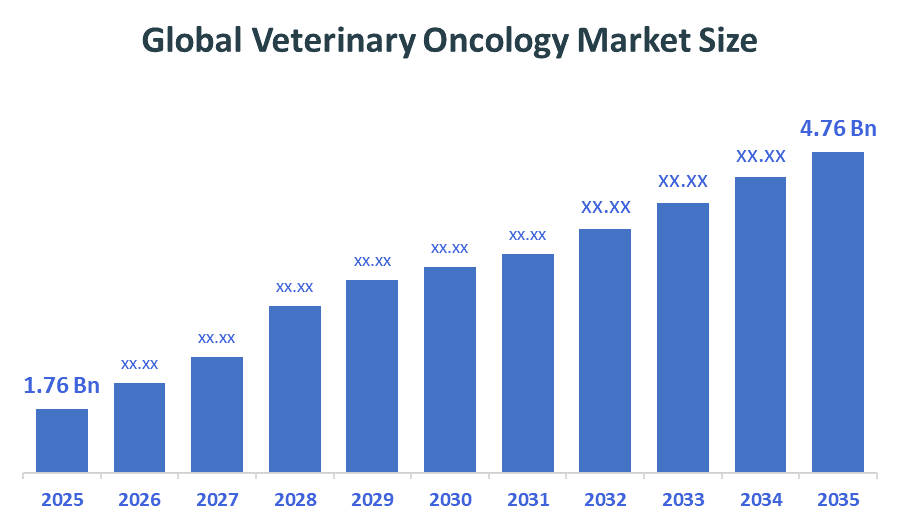
The Global Veterinary Oncology Market Size is foreseen to grow from USD 1.76 Billion in 2025 and is govern to reach around USD 4.76 Billion by 2035. According to Decision Advisors, a detailed research report on the Global Veterinary Oncology Market is boosts by global shift toward sustainability and Green Chemistry, accounting for nearly up to the 38% to 40% share of the total share worldwide. Zoetis is the prime player in the market with approximately $ 6.58 Billion in annual turnover and a 30-40% global market share, positioning it as the primary driver of the Global Veterinary Oncology Market.
Market Snapshot
- Global Veterinary Oncology Market Size (2025): USD 1.76 Billion
- Projected Global Veterinary Oncology Market Size (2035): USD 4.76 Billion
- Global Veterinary Oncology Market Compound Annual Growth Rate (CAGR): 10.46%
- Fastest Regional Market: Asia Pacific
- Largest Growing Region: North America
- 3rd Largest Region: Europe
- Base Year: 2025
- Historical Period: 2021–2024
- Forecast Period: 2026–2035
Market Overview/ Introduction
Veterinary oncology as a high-tech healthcare system for our pets. Just like in human medicine, it focuses on catching and treating cancer in animals mostly the dogs and cats we share our homes with using everything from surgery and chemo to new immune boosting therapies. The massive jump is happening because were treating our pets more like family members than ever before, when a senior dog gets sick (and nearly half of dogs over 10 do), owners are now much more likely to choose advanced care, especially as pet insurance becomes more common. Big names in animal health, like Zoetis and Elanco, are stepping up by creating smarter drugs and easier ways to give chemo at home. Meanwhile, companies like IDEXX are rolling out new tests that can spot diseases like lymphoma earlier than ever. Looking ahead, the real excitement is in smart tech things like AI that can scan X-rays for tiny tumors and blood tests that can detect cancer before a pet even shows symptoms. While North America leads the way for now, the fastest growth is moving toward the Asia-Pacific region, where more families are investing deeply in the long-term health of their furry companions.
Notable Insights: -
- Asia Pacific is the fastest-growing region in the Global Veterinary Oncology Market during the forecast period, holding approximately 30% share.
- North America is anticipated to hold approximately 40% share of the Global Veterinary Oncology Market over the predicted timeframe.
- By product type, the chemotherapy segment dominated the market and holds approximately 45% share in 2025, and is projected to grow at a substantial CAGR during the forecast period.
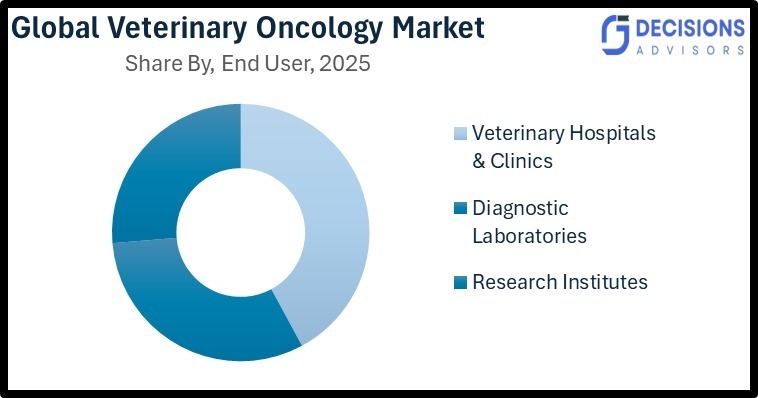
- By end user, the veterinary hospitals & clinics segment dominated the market and holds approximately 50% share in 2025 and is projected to grow at a substantial CAGR during the forecast period.
- The compound annual growth rate of the global veterinary oncology market is 10.46%.
- The market is likely to achieve a valuation of USD 4.76 Billion by 2035.
What is the role of technology in grooming the market?
Technology plays a transformative role in veterinary oncology through innovations such as molecular diagnostics, AI-based imaging, and targeted therapies. Advanced imaging techniques like MRI and CT scans help in early tumor detection, while genomic testing enables personalized treatment plans. Additionally, telemedicine platforms are improving access to oncology specialists, especially in remote areas.
Market Drivers
The real engine behind the boom in pet cancer care is how much our relationship with our pets has changed we don't just see them as animals anymore, they are full-fledged family members. Because of this humanization, many of us are now choosing to fight back against a cancer diagnosis with the same advanced treatments we would want for ourselves, like chemo or radiation. Since nearly half of all dogs over age 10 will face cancer, this shift is huge. It’s also becoming much more affordable thanks to the rise of pet insurance, which takes the sting out of high medical bills. On top of that, big names like Zoetis and Elanco are bringing human-grade science to the vet's office, using everything from AI-powered scans to simple blood tests that can spot tumors early, giving our furry best friends a much better shot at a long, happy life.
Restrain
The market faces challenges such as the high cost of cancer treatments, limited availability of specialized veterinary oncologists, and lack of awareness in developing regions. Furthermore, ethical concerns and regulatory limitations in animal clinical trials may restrict innovation and adoption.
Competitive Analysis:
The report offers the appropriate analysis of the key organizations/companies involved within the global veterinary oncology market, along with a comparative evaluation primarily based on their product of offering, business overviews, geographic presence, enterprise strategies, segment market share, and SWOT analysis. The report also provides an elaborative analysis focusing on the current news and developments of the companies, which includes product development, innovations, joint ventures, partnerships, mergers & acquisitions, strategic alliances, and others. This allows for the evaluation of the overall competition within the market.
Top Companies in the Global Veterinary Oncology Market
- Zoetis Inc.
- Elanco Animal Health
- Boehringer Ingelheim
- PetCure Oncology
- Varian Medical Systems
- Accuray Incorporated
- Virbac
- Merck Animal Health
- Karyopharm Therapeutics Inc.
- Morphogenesis, Inc.
Government Initiatives
|
Country |
Key Government Initiatives |
|
India |
Government and veterinary bodies promote animal healthcare infrastructure, veterinary education, and disease awareness programs, indirectly supporting growth in veterinary oncology services. |
|
Europe |
Government-backed academic collaborations such as Vet-OncoNet support animal cancer registries, research networks, and data-driven oncology insights under a One Health framework.
|
|
US |
The 2026 ASPCA Research Grants program, launched by the American Society for the Prevention of Cruelty to Animals, is a funding initiative based in the United States that supports research aimed at improving animal welfare, including veterinary care access and related health studies. |
Study on the Supply, Demand, Distribution, and Market Environment of the Global Veterinary Oncology Market
The global veterinary oncology market is supported by a growing supply network of pharmaceutical companies, diagnostic laboratories, and specialized veterinary clinics offering advanced cancer treatments. Demand is rising steadily due to increasing pet ownership, higher cancer incidence in companion animals, and greater willingness of pet owners to spend on advanced healthcare. Distribution primarily occurs through veterinary hospitals, specialty oncology centers, and expanding telemedicine platforms that improve access to expert care. The overall market environment is favorable, driven by technological advancements in diagnostics and therapeutics, increasing pet insurance adoption, and supportive animal healthcare initiatives, although challenges such as high treatment costs and limited specialist availability persist.
Price Analysis and Consumer Behaviour Analysis
Price trends in the veterinary oncology market are largely influenced by the type of treatment, technology used, and level of specialization, with costs ranging from moderate diagnostic expenses to high-priced therapies such as chemotherapy, radiation, and targeted treatments. Prices can vary significantly depending on region and facility, often making advanced care expensive. From a consumer behaviour perspective, pet owners are increasingly willing to spend on premium cancer treatments due to strong emotional attachment and the humanization of pets. Additionally, the growing adoption of pet insurance and preference for early diagnosis and advanced care are shaping purchasing decisions, with a noticeable shift toward quality, effectiveness, and long-term health outcomes over cost considerations.
Market Segmentation
The Global Veterinary Oncology Market is classified into product type, application and end user.
- The chemotherapy segment dominated the market and holds approximately 45% share in 2025, and is projected to grow at a substantial CAGR during the forecast period.
Based on the product type, the global veterinary oncology market is divided into chemotherapy, immunotherapy, targeted therapy, and radiation therapy. Among these, the chemotherapy segment dominated the market and holds approximately 45% share in 2025, and is projected to grow at a substantial CAGR during the forecast period. This dominance is attributed to its widespread use as a primary treatment option for various cancers in companion animals, particularly lymphoma and mast cell tumors. Chemotherapy is often preferred due to its relatively established protocols, accessibility, and cost-effectiveness compared to advanced therapies. Additionally, increasing awareness among pet owners and veterinarians regarding early cancer treatment is further driving demand. Recent advancements in drug formulations and supportive care therapies are also improving treatment outcomes and minimizing side effects, thereby boosting segment growth.
- The lymphoma segment accounted for the largest share of approximately 30% in 2025 and is anticipated to grow at a significant CAGR during the forecast period.
Based on the application, the global veterinary oncology market is divided into lymphoma, mast cell tumors, melanoma, and mammary & squamous cell cancer. Among these, the lymphoma segment accounted for the largest share of approximately 30% in 2025 and is anticipated to grow at a significant CAGR during the forecast period. This is primarily due to the high prevalence of lymphoma in dogs and cats, making it one of the most commonly diagnosed cancers in veterinary practice. Additionally, lymphoma is highly responsive to chemotherapy, which further drives its treatment demand. Growing awareness about early diagnosis and the availability of effective treatment protocols are supporting market expansion. Furthermore, advancements in diagnostic technologies and increasing routine health check-ups for pets are significantly boosting the identification and management of lymphoma cases.
- The veterinary hospitals & clinics segment dominated the market and holds approximately 50% share in 2025 and is projected to grow at a substantial CAGR during the forecast period.
Based on end user, the global veterinary oncology market is divided into veterinary hospitals & clinics, diagnostic laboratories, and research institutes. Among these, the veterinary hospitals & clinics segment dominated the market and holds approximately 50% share in 2025 and is projected to grow at a substantial CAGR during the forecast period, owing to their central role in diagnosing and treating animal cancers. These facilities offer comprehensive oncology services, including imaging, chemotherapy, surgery, and follow-up care. The increasing number of specialized veterinary oncology centers and rising pet healthcare expenditure are further supporting segment growth. Additionally, improvements in veterinary infrastructure and the growing availability of skilled professionals are enhancing treatment accessibility. Moreover, the trend of pet humanization and increasing willingness of owners to invest in advanced care are significantly strengthening the dominance of this segment.
Strategies to Implement for Growth of the Market in Non-Leading Regions
Growth in non-leading regions of the veterinary oncology market can be achieved by improving veterinary healthcare infrastructure, increasing awareness about pet cancer diagnosis and treatment, and offering cost-effective therapy options. Companies should focus on partnerships with local veterinary clinics, expansion of tele-oncology services, and training programs for veterinarians to address the shortage of specialists. Additionally, promoting pet insurance adoption and leveraging government support for animal healthcare can enhance accessibility and drive market penetration in emerging regions.
Regional Segment Analysis of the Global Veterinary Oncology Market
- North America (U.S., Canada, Mexico)
- Europe (Germany, France, U.K., Italy, Spain, Rest of Europe)
- Asia-Pacific (China, Japan, India, Rest of APAC)
- South America (Brazil and the Rest of South America)
- The Middle East and Africa (UAE, South Africa, Rest of MEA)
Asia Pacific is the fastest-growing region in the Global Veterinary Oncology Market during the forecast period, holding approximately 30% share.
Asia Pacific is the fastest-growing region in the Global Veterinary Oncology Market during the forecast period, holding approximately 30% share. This growth is driven by rising pet adoption, increasing awareness of animal healthcare, and improving veterinary infrastructure in countries such as China, India, Japan, and South Korea. The region is witnessing a shift toward advanced veterinary treatments, supported by growing disposable incomes and expanding middle-class populations. Additionally, increasing investments in veterinary hospitals and diagnostic facilities, along with government initiatives to strengthen animal healthcare systems, are accelerating market growth. The emergence of local pharmaceutical players and the expansion of international companies are further enhancing accessibility to oncology treatments in the region.
North America is anticipated to hold approximately 40% share of the Global Veterinary Oncology Market over the predicted timeframe.
North America is anticipated to hold approximately 40% share of the Global Veterinary Oncology Market over the predicted timeframe. It maintains a dominant market position due to the presence of advanced veterinary healthcare infrastructure, high pet healthcare expenditure, and widespread availability of specialized oncology services. The United States is the key contributor, supported by strong adoption of pet insurance and increasing demand for advanced cancer therapies such as immunotherapy and targeted treatments. Recent developments, including the expansion of veterinary oncology centers and continuous innovation in diagnostics, are further strengthening the region’s leadership. Moreover, strong awareness among pet owners and a high level of willingness to spend on premium care are driving sustained market growth.
Europe is expected to grow at a rapid CAGR in the Global Veterinary Oncology Market, holding approximately 22% of the share during the forecast period.
Europe is expected to grow at a rapid CAGR in the Global Veterinary Oncology Market, holding approximately 22% of the share during the forecast period. The region’s growth is supported by strong animal welfare regulations, increasing pet ownership, and rising demand for advanced veterinary treatments. Countries such as Germany, the United Kingdom, and France are leading the market due to well-established veterinary services and growing adoption of cancer diagnostics and therapies. Additionally, increasing investments in veterinary research and collaborations between academic institutions and industry players are contributing to innovation in oncology treatments. The growing trend of pet humanization and focus on preventive healthcare are further supporting market expansion across the region.
Future Market Trends in the Global Veterinary Oncology Market: -
1. Rising Adoption of Advanced Therapies
The veterinary oncology market is witnessing a strong shift toward advanced treatment options such as immunotherapy, targeted therapy, and precision medicine. These therapies offer improved effectiveness with fewer side effects compared to traditional chemotherapy. Continuous innovation in biologics and personalised treatment approaches is expected to significantly enhance treatment outcomes and drive market growth.
2. Increasing Pet Humanisation and Healthcare Spending
Pet owners are increasingly treating animals as family members, leading to a higher willingness to invest in premium cancer care. This trend is supported by the growing penetration of pet insurance and rising awareness about early diagnosis and treatment. As a result, demand for specialised oncology services and advanced diagnostics is expected to surge globally.
3. Expansion of Veterinary Oncology Infrastructure in Emerging Markets
Emerging regions such as the Asia-Pacific and Latin America are experiencing rapid growth in veterinary healthcare infrastructure. Investments in veterinary hospitals, diagnostic laboratories, and training programs for professionals are improving access to oncology services. Additionally, the entry of global players and the adoption of telemedicine are further accelerating market expansion in these regions.
Recent Development
- In March 2026, AURA Veterinary announced the launch of a two-year surgical oncology fellowship programme, aimed at providing advanced training in veterinary cancer surgery for qualified surgeons. The programme, scheduled to begin in September 2026, was designed to offer hands-on experience in complex oncology cases within a multidisciplinary clinical setting, helping to enhance expertise and improve cancer care outcomes in veterinary medicine.
- In March 2026, CVS Group launched a vet-to-vet oncology support service, designed to help veterinary professionals manage cancer cases more effectively through access to specialist guidance and collaborative expertise. The service aimed to improve diagnosis, treatment planning, and overall patient outcomes by providing real-time oncology support across veterinary practices.
- In January 2026, HT Vet introduced its VISTA iQ cancer diagnostic service, an advanced AI-powered, non-invasive screening solution designed to detect cancer in dogs at an early stage. The technology enabled veterinary clinics to perform rapid, 40-second scans of lumps and bumps, improving diagnostic efficiency and patient outcomes. Additionally, the service was projected to generate up to $130,000 in annual revenue per clinic, highlighting its dual benefit of enhancing clinical care while supporting business growth in veterinary practices.
- In October 2025, Akston Biosciences launched a clinical trial for a novel canine cancer therapy, developed in partnership with Purdue University’s College of Veterinary Medicine. The study evaluated a first-in-class immuno-enhancing treatment targeting PD-L1 in dogs with solid tumors, aiming to assess its safety, tolerability, and early effectiveness. The therapy, based on the company’s proprietary Fc-fusion protein platform, was designed to stimulate the dog’s immune system to fight cancer while reducing treatment frequency and cost, thereby improving accessibility to advanced veterinary oncology care.
How is Recent Developments Helping the Market?
Recent developments are significantly supporting the growth of the veterinary oncology market by improving treatment effectiveness, expanding access to advanced care, and enhancing early diagnosis. Innovations in targeted therapies, immunotherapy, and advanced diagnostic tools are enabling more precise and efficient cancer management in animals. Additionally, the expansion of veterinary oncology centers and strategic collaborations among companies are increasing the availability of specialized services. These advancements, combined with rising investment in research and growing awareness among pet owners, are making cancer treatments more accessible and improving overall patient outcomes.
Market Segment
This study forecasts revenue at global, regional, and country levels from 2020 to 2035. Decision Advisors has segmented the global veterinary oncology market based on the below-mentioned segments:
Global Veterinary Oncology Market, By Product Type
- Chemotherapy
- Immunotherapy
- Targeted Therapy
- Radiation Therapy
Global Veterinary Oncology Market, By Applications
- Lymphoma
- Mast Cell Tumors
- Melanoma
- Mammary & Squamous Cell Cancer
Global Veterinary Oncology Market, By End User
- Veterinary Hospitals & Clinics
- Diagnostic Laboratories
- Research Institute
Global Veterinary Oncology Market, By Regional Analysis
- North America
- US
- Canada
- Mexico
- Europe
- Germany
- UK
- France
- Italy
- Spain
- Russia
- Rest of Europe
- Asia Pacific
- China
- Japan
- India
- South Korea
- Australia
- Rest of Asia Pacific
- South America
- Brazil
- Argentina
- Rest of South America
- Middle East & Africa
- UAE
- Saudi Arabia
- Qatar
- South Africa
- Rest of the Middle East & Africa
Frequently Asked Questions (FAQ)
Q. What is the average duration of cancer treatment in pets?
A. The duration varies depending on the cancer type and treatment method, but most chemotherapy protocols typically last between 3 and 6 months, while some maintenance therapies may continue longer.
Q. Are there breed-specific risks for cancer in animals?
A. Yes, certain breeds such as Golden Retrievers, Boxers, and German Shepherds have a higher predisposition to specific types of cancers due to genetic factors.
Q. How does diet impact cancer management in pets?
A. Specialised diets rich in proteins, low carbohydrates, and supplemented with omega fatty acids may support overall health and improve treatment outcomes in pets undergoing cancer therapy.
Q. What role do clinical trials play in veterinary oncology?
A. Clinical trials help in developing new cancer treatments and provide access to innovative therapies for pets, contributing to advancements in veterinary medicine.
Q. How can pet owners identify early warning signs of cancer?
A. Early signs include unusual lumps, sudden weight loss, persistent wounds, changes in appetite, and abnormal behaviour, and early veterinary consultation is crucial for timely diagnosis.
Check Licence
Choose the plan that fits you best: Single User, Multi-User, or Enterprise solutions tailored for your needs.
We Have You Covered
- 24/7 Analyst Support
- Clients Across the Globe
- Tailored Insights
- Technology Tracking
- Competitive Intelligence
- Custom Research
- Syndicated Market Studies
- Market Overview
- Market Segmentation
- Growth Drivers
- Market Opportunities
- Regulatory Insights
- Innovation & Sustainability
Report Details
| Scope | Global |
| Pages | 240 |
| Delivery | PDF & Excel via Email |
| Language | English |
| Release | Apr 2026 |
| Access | Download from this page |