
Global Vitamin A Deficiency Market
 |
Pages:
245
|
Pages:
245
Global Vitamin A Deficiency Market Size, Share, By Product Type (Food-Grade Vitamin A, Feed-Grade Vitamin A, and Pharmaceutical-Grade Vitamin A), By Source (Natural and Synthetic), By Application (Animal Feed, Food & Beverages, Dietary Supplements, Pharmaceuticals, and Cosmetics & Personal Care), and By Region (North America, Europe, Asia-Pacific, Latin America, Middle East, and Africa), Analysis and Forecast 2025 ? 2035
REPORT COVERAGE
Global
Market Snapshot
- Market Size (2025): USD 1.38 Billion
- Projected Market Size (2035): USD 2.84 Billion
- Compound Annual Growth Rate (CAGR): 7.48%
- Largest Regional Market: North America
- Fastest Growing Region: Asia Pacific
- 2nd Largest Region: Europe
- Base Year: 2025
- Historical Period: 2021–2024
- Forecast Period: 2025–2035
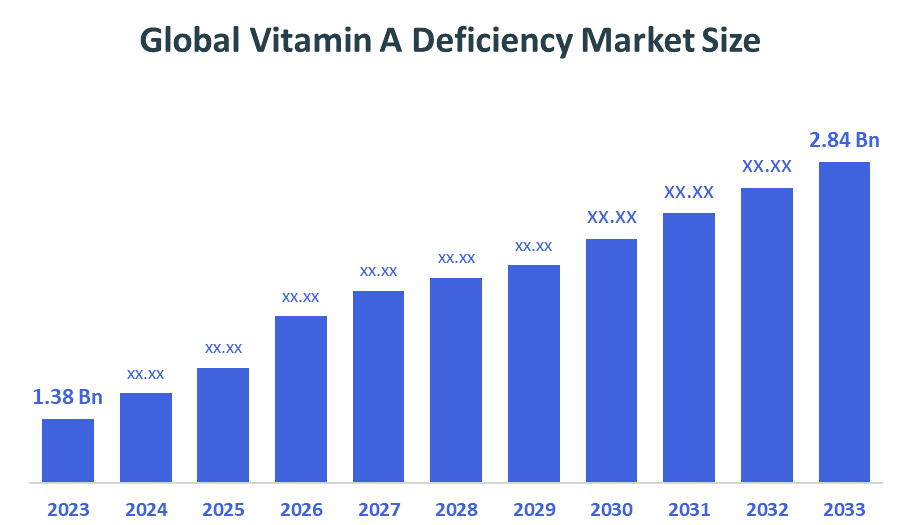
According to Decision Advisors, the Global Vitamin A Deficiency Market Size is expected to grow from USD 1.38 billion in 2025 to USD 2.84 billion by 2035, at a CAGR of 7.48% during the forecast period 2025-2035. The global vitamin A deficiency market is projected to grow significantly over the next decade. The rising awareness of vitamin A health benefits, with increasing vitamin A deficiency rates and expanding government programs for nutritional deficiency treatment, has created this situation.
Market Overview/ Introduction
The vitamin A deficiency (VAD) market refers to the global industry that develops solutions for preventing, diagnosing and treating vitamin A deficiency in people who suffer from this condition. The market encompasses the complete process, which includes manufacturing and distributing Vitamin A supplements, fortified foods, pharmaceutical products and nutritional premixes that help treat night blindness and immunity problems which result from vitamin A deficiency.
The market includes government programs, NGO-led initiatives, and healthcare programs that operate to decrease deficiency rates in high-risk areas of Asia and Sub-Saharan Africa. The company operates through various sectors, which include food and beverage, dietary supplement, animal nutrition and pharmaceutical industries.
The company creates new business prospects through its development of products, which include bioavailable capsules, fortified ready-to-eat foods and micronutrient premixes. New market opportunities emerge through the combination of public and private partnerships, with digital health tracking systems. The growing demand for healthcare services, combined with a shift towards preventive nutrition, creates new business opportunities in emerging markets that remain unexploited.
The World Health Organization reports that 250 million preschool children across the globe suffer from vitamin A deficiency, which creates an urgent requirement for medical treatment. The increasing popularity of preventive healthcare services leads people to use dietary supplements that contain vitamin A for their health improvement.
- An estimated 250 000–500 000 children who are vitamin A-deficient become blind every year, and half of them die within 12 months of losing their sight.
- Vitamin A deficiency is treated with vitamin A palmitate oil at a dosage of 60,000 IU orally for 2 days, then 4,500 IU orally per day.
- The health department announced a vitamin A supplement programme to provide supplements to the target 4.68 lakh children between 9 months and 5 years of age in the district.
Notable Insights: -
- North America holds the largest regional market share, approximately 45% in the global Vitamin A Deficiency market.
- Asia Pacific is the fastest-growing region in the global Vitamin A Deficiency market.
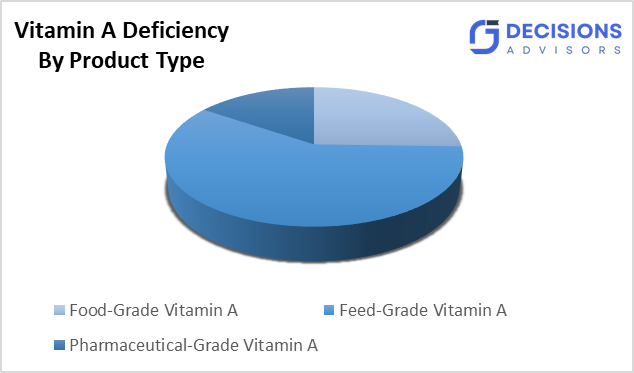
- By product type, the feed-grade vitamin A segment held a dominant position of over 75% in terms of market share in 2025.
- By source, the synthetic segment is the dominating one, accounting for over 70% of the global market share in 2025.
- The compound annual growth rate of the global Vitamin A Deficiency market is 7.48%.
- The market is likely to achieve a valuation of USD 2.84 billion by 2035.
What is the role of technology in grooming the market?
Technology functions as an essential element that transforms the Vitamin A deficiency (VAD) market through its advancements in production, delivery, and monitoring systems. The use of advanced microencapsulation technology enables Vitamin A to maintain its stability for fortified foods that experience heat and light exposure to remain edible for 30 to 50% longer. The system enables tropical regions to receive distribution services that support their entire operation. Governments track deficiency trends through digital health tools and data analytics because these deficiencies affect approximately 190 million children worldwide. Mobile health platforms enable remote areas to achieve coverage improvements that range from 20 to 25%. The manufacturing process benefits from biotechnology, which enables companies to perform cost-effective synthesis operations that lead to production cost reductions of about 15 to 20%. The precision fortification technologies of the system guarantee that staple foods receive their correct nutrient dosages, which leads to improved results and better user adherence. AI-driven supply chains decrease wastage through their system integration, which leads to 10 to 15% waste reduction while delivering reliable product availability. The Vitamin A deficiency market achieves sustainable growth because technology systems improve product availability, decrease pricing and enhance product effectiveness.
Market Drivers
The global vitamin A deficiency market is driven by the world has nearly 190 million preschool children who suffer from high deficiency rates, which mainly occur in low- and middle-income countries. The market requires an ongoing supply of supplements, with fortified products, because of this situation. The market experiences growth because people become more aware of preventive healthcare and because government nutrition programs exist. The introduction of new products acts as an essential factor for the market. The companies launch bioavailable Vitamin A capsules together with fortified beverages and premix solutions, which they designed to be used in mass distribution. The new microencapsulated Vitamin A formulations provide better stability and shelf life, which leads to increased use in extreme weather conditions.
Restrain
The main restraints on the global vitamin A deficiency market include the VAD problem reaches its worst state because of restricted educational opportunities, inadequate sanitary conditions, ineffective food safety systems and weak monitoring systems, which particularly impact children and women who are of reproductive age. The rural population faces two major challenges, which include limited knowledge about their surroundings and power distribution systems, and they cannot access proper healthcare services. The high expenses required for program operations, combined with unpredictable government budget support, create obstacles for program growth.
Competitive Analysis:
The report offers the appropriate analysis of the key organizations/companies involved within the vitamin A deficiency market, along with a comparative evaluation primarily based on their product of offering, business overviews, geographic presence, enterprise strategies, segment market share, and SWOT analysis. The report also provides an elaborative analysis focusing on the current news and developments of the companies, which includes product development, innovations, joint ventures, partnerships, mergers & acquisitions, strategic alliances, and others. This allows for the evaluation of the overall competition within the market.
Top Companies in Global Vitamin A Deficiency Market
- DSM
- BASF
- Zhejiang NHU Co., Ltd.
- Zhejiang Medicine Co., Ltd.
- Adisseo
- Xiamen Kingdomway Group
- Archer Daniels Midland Company
- Divi’s Laboratories
- Nutrilo GmbH
- Vitafor NV
Government Initiatives
|
Country |
Key Government Initiatives |
|
US |
The U.S. Food and Drug Administration and Centers for Disease Control and Prevention support Vitamin A intake through food fortification policies and nutrition programs. While deficiency is low (<1% prevalence), initiatives like WIC (Special Supplemental Nutrition Program) ensure access to fortified foods and supplements for vulnerable populations, indirectly supporting the Vitamin A market. |
|
UK |
The National Health Service promotes Vitamin A through dietary guidelines and supplementation advice, especially for children and pregnant women. Programs encourage consumption of fortified foods (e.g., cereals, dairy). The UK maintains strict regulation on supplement dosage to prevent both deficiency and toxicity, stabilizing market demand. |
|
China |
The National Health Commission of China leads large-scale initiatives targeting micronutrient deficiencies. Programs include vitamin A supplementation campaigns for children in rural areas and mandatory food fortification policies. With deficiency rates previously affecting 10–20% of children in some regions, government action significantly drives market growth |
Market Segmentation
The vitamin A deficiency market share is classified into product type, source and application.
- The feed-grade vitamin A segment dominated the market in 2025, and is projected to grow at a substantial CAGR of approximately 75% during the forecast period.
Based on the product type, the vitamin A deficiency market is divided into food-grade vitamin A, feed-grade vitamin A, and pharmaceutical-grade vitamin A. Among these, the feed-grade vitamin A segment dominated the market in 2025 and is projected to grow at a substantial CAGR of approximately 75% during the forecast period. This dominance is driven by the world requires huge quantities of animal feed to support its extensive livestock production operations. The rising demand for meat, with industrial farming growth, leads to increased global consumption of feed-grade vitamin A which manufacturers produce at low costs.
- The synthetic segment accounted for the largest share in 2025, and is anticipated to grow at a significant CAGR of approximately 70% during the forecast period.
Based on the source, the vitamin A deficiency market is divided into natural and synthetic. Among these, the synthetic segment accounted for the largest share in 2025 and is anticipated to grow at a significant CAGR of approximately 70% during the forecast period. The company maintains its market leadership because it produces cheaper products that maintain consistent quality and operates its manufacturing facilities at a large production capacity. The widespread use of synthetic forms in animal feed and fortified foods creates a higher demand for these products than for their more expensive natural alternatives.
- The animal feed segment dominated the market in 2025, and is projected to grow at a substantial CAGR of approximately 72% during the forecast period.
Based on the application, the vitamin A deficiency market is divided into animal feed, food & beverages, dietary supplements, pharmaceuticals, and cosmetics & personal care. Among these, the animal feed segment dominated the market in 2025 and is projected to grow at a substantial CAGR of approximately 72% during the forecast period. Large-scale livestock production drives this dominance because the industry requires Vitamin A to support animal growth, immune system development, and reproductive functions. The demand for meat has increased worldwide, while industrial farming practices create higher requirements than the needs of human consumption.
Regional Segment Analysis of the Vitamin A Deficiency Market
- North America (U.S., Canada, Mexico)
- Europe (Germany, France, U.K., Italy, Spain, Rest of Europe)
- Asia-Pacific (China, Japan, India, Rest of APAC)
- South America (Brazil and the Rest of South America)
- The Middle East and Africa (UAE, South Africa, Rest of MEA)
North America is anticipated to hold the largest share of the vitamin A deficiency market over the predicted timeframe.
North America is anticipated to hold the largest share of the Vitamin A Deficiency market over the predicted timeframe. This market is accounting about approximately 35% of the total market share. The United States dominates this region because people actively consume dietary supplements while they learn about their nutritional needs. The U.S. Department of Agriculture (USDA) dietary guidelines serve as a governmental initiative that shows people how essential vitamins and minerals function for overall health maintenance. The National Institutes of Health (NIH) reports that about 30% of adults in the United States take vitamin A supplements, which shows that consumers want to use supplements for their nutritional needs. The vitamin A market expands because the region has strong healthcare services, and people focus on preventive healthcare methods. The demand for vitamin A products will grow because consumers now prioritize health and wellness, while educational programs and awareness campaigns continue to operate.
Asia Pacific is expected to grow at a rapid CAGR in the Vitamin A Deficiency market during the forecast period. The Asia Pacific region is projected to be the fastest-growing market for vitamin A deficiency, with a CAGR of 9% during the forecast period. The region accounted for approximately 20% of the global market share in 2024, with India and China leading the way. The high prevalence of vitamin A deficiency in many countries within this region is driving government initiatives to fortify staple foods and promote supplementation. According to the WHO, approximately 50% of preschool children in India are affected by vitamin A deficiency, highlighting the urgent need for interventions. The Asia Pacific region will experience a rising need for vitamin A products because people understand nutritional deficiencies more, government programs develop, the middle class expands, and people spend more money.
Europe is the 2nd largest region to grow in the Vitamin A Deficiency market during the period. The vitamin A deficiency market in Europe experiences substantial growth because people are becoming more health-conscious and governments are implementing programs to combat nutritional deficiencies. The region accounted for approximately 25% of the global market share in 2024, with Germany and the United Kingdom being the leading countries. The European Food Safety Authority (EFSA) has established dietary reference values for vitamin A, which demonstrate the need for people to consume sufficient amounts of the vitamin.
Strategies to Implement for Growth of the Market in Non-Leading Regions
The global Vitamin A deficiency (VAD) market requires targeted strategies from companies and governments to achieve growth in non-leading markets such as Sub-Saharan Africa and South Asia. Developing countries that face VAD problems need to implement large-scale supplementation programs because the condition affects more than half of their population especially their children and pregnant women. The organization can achieve mass coverage expansion through its low-cost dosing solution which costs between $0.2 and $0.5 per dose. The organization should increase its food fortification efforts which involve adding vitamin A to staple foods, because this method requires close to $0.1 per litre to produce more affordable products that can reach more consumers. The organization needs to establish distribution partnerships with NGOs and governments to develop solutions that will help them achieve better coverage results in areas where they currently face implementation challenges. The demand for healthcare services is currently moving toward preventive methods, which include early intervention while people are still healthy. The organization should promote diet diversification through support for local agriculture, which will lead to better access to foods that provide essential nutrients. The organization can achieve sustainable market growth through these strategies which target areas with high disease rates and low-SDI regions facing a permanent global incidence of approximately 44% since 1990.
Future Market Trends in Global Vitamin A Deficiency Market: -
1. Innovation in Product Development
Innovation is a key trend shaping the Vitamin A Deficiency Market. Manufacturers are increasingly focusing on developing new formulations and delivery methods to enhance the bioavailability and effectiveness of vitamin A products. For instance, advancements in encapsulation technology are enabling the development of more stable and effective vitamin A supplements. Moreover, the trend toward personalized nutrition is gaining traction, with companies exploring customized vitamin A supplements tailored to individual health needs.
2. Sustainability and Clean Labeling
Sustainability is becoming a significant consideration for consumers when choosing dietary supplements. The demand for clean-label products, which are free from artificial additives and preservatives, is on the rise. Manufacturers are responding to this trend by sourcing natural and organic ingredients for their vitamin A products. Additionally, companies are adopting sustainable practices in their production processes, such as reducing waste and minimizing environmental impact. This focus on sustainability is expected to resonate with health-conscious consumers and drive brand loyalty in the vitamin A market.
Recent Development
In June 2022, Royal DSM, a global purpose-led science-based company, announced that it had begun customer sampling of the world’s first fully bio-based Vitamin A. It follows pioneering research by the company’s scientists and the development of a proprietary manufacturing process that has been perfected for initial use in environmentally-conscious cosmetics products.
How is Recent Developments Helping the Market?
Recent developments are significantly boosting the Vitamin A deficiency (VAD) market through policy, research, and large-scale programs. In 2025, the WHO launched new guidelines promoting the fortification of edible oils with Vitamin A, strengthening global adoption of cost-effective nutrition strategies. Additionally, recent studies show that food fortification already prevents 7 billion micronutrient deficiency cases annually at just $0.18 per person, highlighting strong scalability and market potential. Government-led campaigns, such as India’s initiative targeting 2.6 crore children, are expanding supplementation coverage and increasing demand. Moreover, integration with immunization programs reduces child mortality by 12–24%, improving adoption rates. These advancements enhance accessibility, affordability, and awareness, accelerating global market growth.
Market Segment
This study forecasts revenue at global, regional, and country levels from 2020 to 2035. Decision Advisors has segmented the vitamin A deficiency market based on the below-mentioned segments:
Global Vitamin A Deficiency Market, By Product Type
- Food-Grade Vitamin A
- Feed-Grade Vitamin A
- Pharmaceutical-Grade Vitamin A
Global Vitamin A Deficiency Market, By Source
- Natural
- Synthetic
Global Vitamin A Deficiency Market, By Application
- Animal Feed
- Food & Beverages
- Dietary Supplements
- Pharmaceuticals
- Cosmetics & Personal Care
Global Vitamin A Deficiency Market, By Regional Analysis
- North America
- US
- Canada
- Mexico
- Europe
- Germany
- UK
- France
- Italy
- Spain
- Russia
- Rest of Europe
- Asia Pacific
- China
- Japan
- India
- South Korea
- Australia
- Rest of Asia Pacific
- South America
- Brazil
- Argentina
- Rest of South America
- Middle East & Africa
- UAE
- Saudi Arabia
- Qatar
- South Africa
- Rest of the Middle East & Africa
Frequently Asked Questions (FAQ)
Q: What role do government initiatives play in the VAD market?
A: Government initiatives are crucial in expanding the VAD market through supplementation programs, food fortification mandates, and awareness campaigns. Large-scale drives target millions of children annually, improving coverage by 20–30%. These policies create consistent demand for Vitamin A products while reducing deficiency-related health risks across developing regions.
Q: How does food fortification impact the market?
A: Food fortification significantly boosts the VAD market by integrating Vitamin A into daily diets via staples like oil, milk, and flour. It is highly cost-effective (around $0.1 per litre), scalable, and sustainable. This approach increases consumption without behavior change, making it a key growth driver in low-income populations.
Q: How do NGOs contribute to the VAD market?
A: NGOs play a major role in funding and implementing supplementation and nutrition programs. They collaborate with governments to reach remote populations, improving program efficiency by up to 25%. Their involvement ensures large-scale distribution, awareness generation, and consistent demand for Vitamin A products in underserved regions
Q: What is the future outlook of the VAD market?
A: The VAD market is expected to grow steadily at a CAGR of 6–7%, driven by innovation, policy support, and rising health awareness. Emerging markets offer strong opportunities due to high deficiency rates. Technological advancements and increased healthcare investments will further enhance accessibility, making the market more sustainable and scalable globally.
Check Licence
Choose the plan that fits you best: Single User, Multi-User, or Enterprise solutions tailored for your needs.
We Have You Covered
- 24/7 Analyst Support
- Clients Across the Globe
- Tailored Insights
- Technology Tracking
- Competitive Intelligence
- Custom Research
- Syndicated Market Studies
- Market Overview
- Market Segmentation
- Growth Drivers
- Market Opportunities
- Regulatory Insights
- Innovation & Sustainability
Report Details
| Scope | Global |
| Pages | 245 |
| Delivery | PDF & Excel via Email |
| Language | English |
| Release | Mar 2026 |
| Access | Download from this page |