
Global Wound Contact Layer Dressing Market
 |
Author:
David J
|
Pages:
220
|
Author:
David J
|
Pages:
220
Global Wound Contact Layer Dressing Market Size, Share, and COVID-19 Impact Analysis, By Product (Antimicrobial, and Non-antimicrobial), By End-use (Hospitals, Outpatients, Home Healthcare, and Research & Manufacturing), and By Region (North America, Europe, Asia-Pacific, Latin America, Middle East, and Africa), Analysis and Forecast 2025-2035
CAGR
13.18%
REVENUE 2024
USD Million 477.45
FORECAST 2035
USD Million 1863.33
REPORT COVERAGE
Global
Global Wound Contact Layer Dressing Market Size Insights Forecasts to 2035
- The Global Wound Contact Layer Dressing Market Size Was Estimated at USD 477.45 million in 2024
- The Market Size is Expected to Grow at a CAGR of around 13.18 % from 2025 to 2035
- The Worldwide Wound Contact Layer Dressing Market Size is Expected to Reach USD 1863.33 million by 2035
- Europe is expected to grow the fastest during the forecast period.
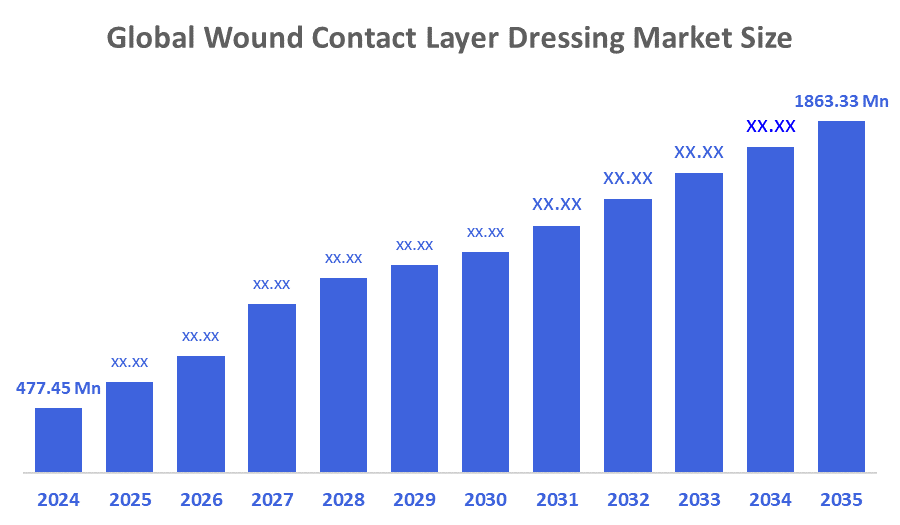
According to a research report published by Decisions Advisors and Consulting, The Global Wound Contact Layer Dressing Market Size Was Worth Around USD 477.45 Million In 2024 And Is Predicted To Grow To Around USD 1863.33 Million By 2035 With A Compound Annual Growth Rate (CAGR) Of 13.18 % From 2025 To 2035. The influencing factors to market growth are increasing incidences of chronic diseases and the resulting wound healing difficulties, and a higher number of accidents that necessitate effective healing methods. This market is set to expand further with the development of composite dressings, the increasing investments in emerging economies, and the rapid technological advancements of wound dressings.
Market Overview
The wound contact layer dressing market includes composite dressings like "aquacel ag+", which was the first to combine a hydrocolloid layer and a silver-infused antimicrobial layer, thus effectively controlling wound exudate and providing antibacterial protection at the same time. The trend of using innovative materials in wound contact layer dressings reflects the market transformation, concentrating on patient benefits through superior healing features and infection prevention. Wound contact layers are used to treat severe wounds like burns, cuts, chronic wounds (e.g., diabetic foot ulcers, pressure ulcers), and leg ulcers. They are separated into antimicrobial and non-antimicrobial types. These thin, non-adherent sheets are used to protect tissue from direct contact with other substances or dressings. They are very important for patients with burns, trauma, or chronic conditions as they help in managing pain, infection, and lessening the use of medicines. Antimicrobial agents are added to advanced wound dressings to combat infection and other problems associated with wounds.
Extensive use of wound contact layer dressings is largely fueled by the growing number of patients with chronic diseases and other factors making it difficult for their bodies to heal wounds. On one hand, chronic wounds (including sores and ulcers) and on the other, postoperative wounds add to the disruption of the healing process. A variety of elements, such as an ageing population, higher rates of traumatic injuries, a surge in the number of surgeries, and the prevalence of conditions like obesity and diabetes, all work together to increase the incidence of chronic wounds.
Report Coverage
This research report categorises the wound contact layer dressing market based on various segments and regions, forecasts revenue growth, and analyzes trends in each submarket. The report analyses the key growth drivers, opportunities, and challenges influencing the wound contact layer dressing market. Recent market developments and competitive strategies, such as expansion, product launch, development, partnership, merger, and acquisition, have been included to draw the competitive landscape in the market. The report strategically identifies and profiles the key market players and analyzes their core competencies in each sub-segment of the wound contact layer dressing market.
Driving Factors
The Global Wound Contact Layer Dressing Market Size is experiencing strong growth due to the increased use of advanced composite dressings that combine silicone, hydrocolloids, and antimicrobial layers to improve healing efficiency and patient comfort. These multifunctional products manage moisture, reduce trauma, and protect against infection while allowing the wound exudate to be passed through to secondary dressings, thus maintaining a clean and moist healing environment. Hospitals and home healthcare providers are increasingly choosing these dressings for their convenience, flexibility, and less frequent changes, with features such as silver ion technology completely changing the norms by combining infection control with gentle adhesion. Moreover, the market is driven by government initiatives and the increasing diabetic population, thus emphasising their essential role in enhancing the patients' quality of life and reducing healthcare costs.
Restraining Factors
Expensive advanced wound dressings, which are mainly a result of the use of specialised materials and smart technologies, are not widely used in healthcare settings that have budget constraints. Full payment and affordability problems hinder patients from getting the necessary treatment, thus the healing process takes longer, and the caregivers are overwhelmed. Manufacturers are figuring out how to combine innovation with cost; however, price remains the biggest obstacle to the overall adoption of the product.
Market Segmentation
The wound contact layer dressing market share is classified into product, and end use.
- The non-antimicrobial segment accounted for the largest market share in 2024 and is projected to grow at a substantial CAGR over the forecast period.
Based on the product, the wound contact layer dressing market is segmented into antimicrobial and non-antimicrobial. Among these, the non-antimicrobial segment accounted for the largest market share in 2024 and is projected to grow at a substantial CAGR over the forecast period. the non antimicrobial segment in the wound contact layer dressing sector held the largest market share. Such dressings are intended to shield the wound, help it heal and keep the right moisture level without the use of agents that directly kill germs. They reduce pain at dressing changes and provide a good healing environment, leading to an overall better experience for the patient.
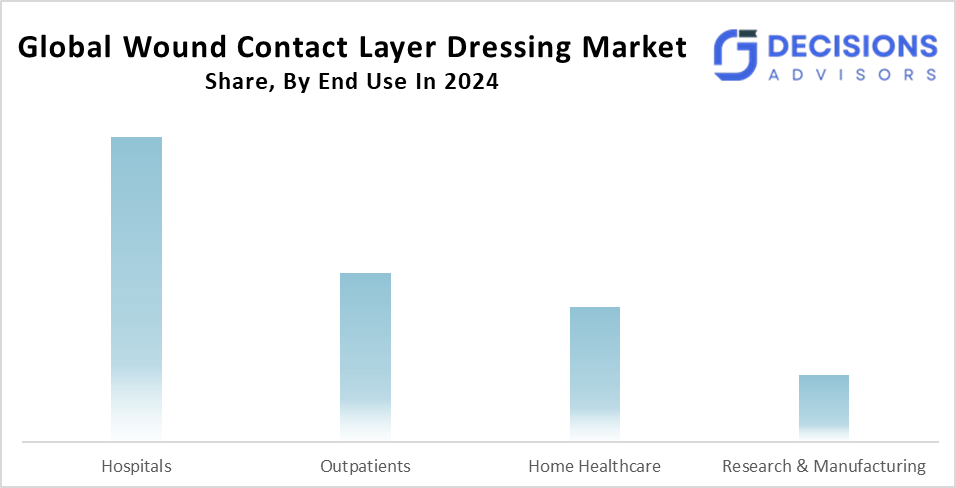
- The hospitals segment accounted for the highest market revenue in 2024 and is anticipated to grow at a significant CAGR during the forecast period.
Based on the end use, the wound contact layer dressing market is divided into hospitals, outpatients, home healthcare, and research & manufacturing. Among these, the hospitals segment accounted for the highest market revenue in 2024 and is anticipated to grow at a significant CAGR during the forecast period. This dominance may be explained by the increasing demand for sophisticated medical facilities, substantial technological advances in the emerging markets, and rising healthcare costs. Wound dressings are one of the tools that hospitals employ to treat the different kinds of wounds, such as surgical wounds, burns, pressure ulcers, and diabetic foot ulcers. Hospital demand for wound dressings has been influenced by the increase in chronic wounds, the upsurge in the number of surgical procedures, and the growth of the elderly population.
Regional Segment Analysis of the Wound Contact Layer Dressing Market
- North America (U.S., Canada, Mexico)
- Europe (Germany, France, U.K., Italy, Spain, Rest of Europe)
- Asia-Pacific (China, Japan, India, Rest of APAC)
- South America (Brazil and the Rest of South America)
- The Middle East and Africa (UAE, South Africa, Rest of MEA)
Asia Pacific is anticipated to hold the largest share of the wound contact layer dressing market over the predicted timeframe.
Asia Pacific is anticipated to hold the largest share of the wound contact layer dressing market over the predicted timeframe. Rapid urbanisation, rising healthcare expenditure, and growing prevalence of lifestyle diseases such as diabetes and obesity are the main factors accounting for this growth. Witnessing a significant growth rate in the healthcare sector, countries like China, Japan, and India are seeing the development of healthcare infrastructure, awareness in wound care, and government initiatives driving the market. Also, through domestic production and the availability of cost-effective products, advanced wound contact dressings are becoming accessible to more people.
Europe is expected to grow at a rapid CAGR in the wound contact layer dressing market during the forecast period. One of the main reasons is a surge in healthcare awareness, an ageing population, and the emphasis on wound management in both hospital and home care settings. Western European countries, notably Germany, France, and the U.K., are at the forefront of utilising advanced dressings as a result of their well-structured healthcare systems. Moreover, tough regulatory rules and a focus on cutting down hospital stays and the related costs are pushing the use of effective, skin-compatible wound contact layer dressings.
Competitive Analysis:
The report offers the appropriate analysis of the key organizations/companies involved within the wound contact layer dressing market, along with a comparative evaluation primarily based on their product offering, business overviews, geographic presence, enterprise strategies, segment market share, and SWOT analysis. The report also provides an elaborative analysis focusing on the current news and developments of the companies, which includes product development, innovations, joint ventures, partnerships, mergers & acquisitions, strategic alliances, and others. This allows for the evaluation of the overall competition within the market.
List of Key Companies
- 3M
- Advanced Medical Solutions Group plc
- Allegro Enterprises, Inc.
- AVERY DENNISON CORPORATION
- Brightwake Ltd
- Cardinal Health
- Convatec Inc.
- Elkem ASA
- Essity Health & Medical
- Hollister Incorporated
- Medline Industries, Inc.
- Molnlycke Health Care AB
- PAUL HARTMANN Limited
- Smith + Nephew
- Others
Key Target Audience
- Market Players
- Investors
- End-users
- Government Authorities
- Consulting and Research Firm
- Venture capitalists
- Value-Added Resellers (VARs)
Market Segment
This study forecasts revenue at global, regional, and country levels from 2020 to 2035. Decisions Advisors has segmented the wound contact layer dressing market based on the below-mentioned segments:
Global Wound Contact Layer Dressing Market, By Product
- Antimicrobial
- Non-antimicrobial
Global Wound Contact Layer Dressing Market, By End Use
- Hospitals
- Outpatients
- Home Healthcare
- Research & Manufacturing
Global Wound Contact Layer Dressing Market, By Regional Analysis
- North America
- US
- Canada
- Mexico
- Europe
- Germany
- UK
- France
- Italy
- Spain
- Russia
- Rest of Europe
- Asia Pacific
- China
- Japan
- India
- South Korea
- Australia
- Rest of Asia Pacific
- South America
- Brazil
- Argentina
- Rest of South America
- Middle East & Africa
- UAE
- Saudi Arabia
- Qatar
- South Africa
- Rest of the Middle East & Africa
Frequently Asked Questions (FAQ)
- What is the current size of the global wound contact layer dressing market?
It was valued at USD 477.45 million in 2024.
- What is the projected market size by 2035?
The market is expected to reach USD 1,863.33 million by 2035.
- What is the forecasted CAGR for 2025-2035?
The market is projected to grow at a CAGR of 13.18% during this period.
- Which product segment held the largest share in 2024?
The non-antimicrobial segment dominated, due to its role in protecting wounds, maintaining moisture, and reducing pain without antimicrobial agents.
- Which end-use segment generated the highest revenue in 2024?
Hospitals led, driven by rising surgeries, chronic wounds, and advanced medical facilities.
- Which region is expected to hold the largest market share?
Asia-Pacific, fueled by urbanisation, healthcare spending, diabetes prevalence, and infrastructure growth in countries like China, Japan, and India.
- Which region will grow the fastest?
Europe, thanks to an ageing population, strong healthcare systems, and a focus on efficient wound management in Germany, France, and the U.K.
- What are the main growth drivers?
Rising chronic diseases (e.g., diabetes), accidents, surgeries, ageing populations, and innovations like antimicrobial composite dressings (e.g., Aquacel Ag+).
Check Licence
Choose the plan that fits you best: Single User, Multi-User, or Enterprise solutions tailored for your needs.
We Have You Covered
- 24/7 Analyst Support
- Clients Across the Globe
- Tailored Insights
- Technology Tracking
- Competitive Intelligence
- Custom Research
- Syndicated Market Studies
- Market Overview
- Market Segmentation
- Growth Drivers
- Market Opportunities
- Regulatory Insights
- Innovation & Sustainability
Report Details
| Scope | Global |
| Pages | 220 |
| Delivery | PDF & Excel via Email |
| Language | English |
| Release | Feb 2026 |
| Access | Download from this page |