
Global Xerostomia Therapeutics Market
 |
Pages:
240
|
Pages:
240
Global Xerostomia Therapeutics Market Size, Share, By Therapeutic Modality (Artificial Saliva and Saliva Substitutes, Salivary Stimulants, Electro-stimulation Devices, and Other) By Product Form (Sprays, Gels, Lozenges and Pastilles, Mouthwashes and Rinses, and Other) By Distribution Channel (Retail Pharmacies, Hospital Pharmacies, and Online Pharmacies) By Region (North America, Europe, Asia-Pacific, Latin America, Middle East, and Africa), Analysis and Forecast 2025-2035
REPORT COVERAGE
Global
Market Snapshot
- Market Size (2025): USD 1.85 Billion
- Projected Market Size (2035): USD 2.83 Billion
- Compound Annual Growth Rate (CAGR): 4.34%
- Largest Regional Market: North America
- Fastest Growing Region: Asia Pacific
- 3rd Largest Region: Europe
- Base Year: 2025
- Historical Period: 2021–2024
- Forecast Period: 2025–2035
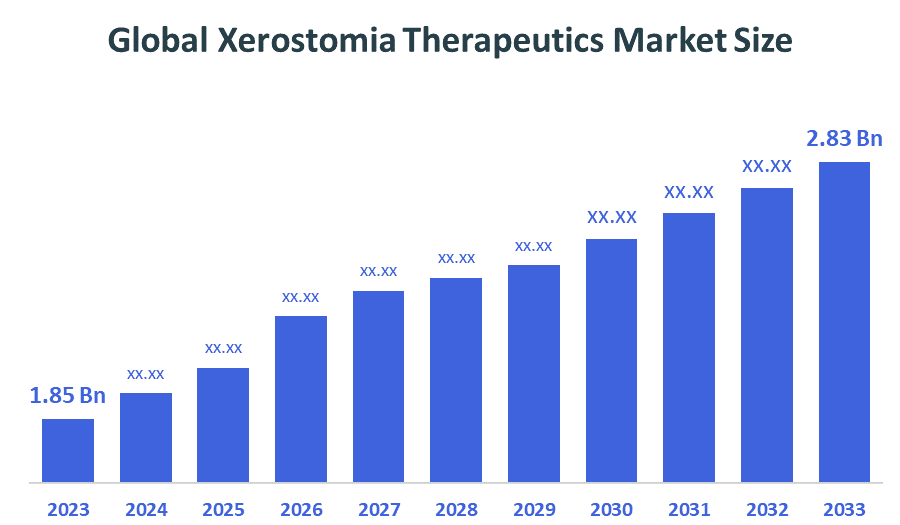
According to Decision Advisors, the Global Xerostomia Therapeutics Market Size is expected to grow from USD 1.85 billion in 2025 to USD 2.83 billion by 2035, at a CAGR of 4.34% during the forecast period 2025-2035. Global xerostomia therapeutics market is driven by rising prevalence of dry mouth from aging populations, medications, and radiotherapy. Growing patient awareness of oral health, demand for effective therapies, and innovations in drug delivery such as gels, sprays, and mucoadhesive films are accelerating adoption. Expansion of digital health platforms and telemedicine further supports personalized treatment and wider patient access globally.
Market Overview/ Introduction
The global xerostomia therapeutics market is a global healthcare industry segment dedicated to the research, development, and commercialization of treatments for chronic dry mouth conditions. It includes prescription drugs, over-the-counter saliva substitutes, mucoadhesive gels, lozenges, oral sprays, and novel delivery systems designed to restore salivary function and improve patient quality of life. Xerostomia, the key condition addressed by this market, is defined as persistent oral dryness caused by reduced salivary secretion. It may result from aging, medication use, radiotherapy, or autoimmune diseases such as Sjögren’s syndrome, leading to difficulty in speaking, swallowing, and maintaining oral hygiene. The market scope covers end-use segments such as dental care, oncology support, geriatric care, and chronic disease management. Leading regions include North America, Europe, and Asia Pacific, with growth driven by technological advancements in AI-based drug development, controlled-release delivery systems, and digital health platforms that enhance patient adherence and treatment outcomes. Future opportunities lie in personalized therapies, combination formulations, smart oral care devices, and expansion into emerging markets. Increased patient awareness, regulatory support for innovative treatments, and telemedicine integration are expected to sustain long-term market growth.
- The World Health Organization launched the Global Oral Health Action Plan (2023–2030) to integrate oral health into national health systems and universal health coverage, strengthening prevention, early diagnosis, and care relevant to xerostomia management.
- World Oral Health Day (20 March) is an annual campaign across 130+ countries raising awareness on oral hygiene, prevention, and conditions contributing to xerostomia symptoms.
- India’s National Oral Health Programme (NOHP) strengthens oral healthcare delivery through community-level dental units, improving prevention, education, and treatment access for conditions like xerostomia and related oral diseases. Operational guidelines under NOHP integrate oral cancer and NCD screening to enhance early detection and preventive services.
- Australia’s Public Dental Services, funded through state and federal collaboration under the National Oral Health Plan, provide adults and children with preventive and restorative care, supporting the management of oral diseases including dry mouth conditions.
- The United Kingdom’s NHS Dental Services offers comprehensive preventive and emergency dental care, expanding population access to oral health services and creating an enabling environment for managing xerostomia and other oral health issues.
Notable Insights: -
- North America holds the largest regional market share, approximately 41.32% in the global xerostomia therapeutics market in 2025.
- Asia-Pacific is the fastest growing region, accounting for approximately 25% of the global xerostomia therapeutics market in 2025.
- Europe is the 3rd largest region, accounting for approximately 27.12% of the global xerostomia therapeutics market in 2025.
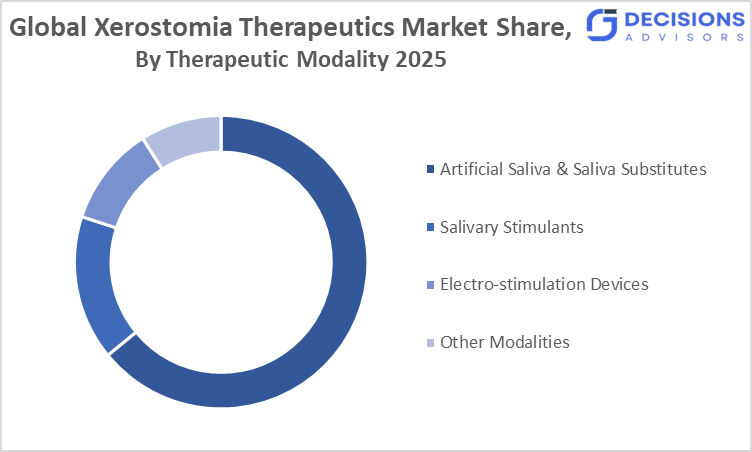
- By therapeutic modality, the artificial saliva and saliva substitutes segment held a dominant position with approximately 64.16% in terms of market share in 2025.
- By product form, the sprays segment is the dominating, accounting for approximately 48.34% of the global market share in 2025.
- By distribution channel, the hospital pharmacies segment is the dominating, accounting for approximately 44.23% of the global market share in 2025.
- The compound annual growth rate of the global xerostomia therapeutics market is 4.34%.
- The market is likely to achieve a valuation of USD 2.83 billion by 2035.
What is role of technology in grooming the market?
Technology is transforming the global xerostomia therapeutics market by improving drug development and delivery. Advanced AI models enable precision formulation, predicting patient responses and optimizing efficacy. Automation and IoT streamline manufacturing processes, enhancing production consistency and reducing operational costs. Digital health platforms facilitate teleconsultations, remote monitoring, and adherence tracking, expanding patient access. Wearable devices and smart oral care tools provide real-time feedback on salivary function. Furthermore, data analytics allow better patient profiling and outcome tracking, enabling personalized therapies. Emerging delivery technologies, such as mucoadhesive films and controlled-release systems, are improving treatment efficiency, patient compliance, and overall therapeutic impact across the market.
How is Recent Developments Helping the Market?
Recent developments in the global xerostomia therapeutics market include innovative drug formulations, advanced delivery systems, and novel clinical trials targeting chronic dry mouth conditions. Companies are introducing mucoadhesive gels, lozenges, and sustained-release oral sprays to improve patient comfort and efficacy. Increased adoption of combination therapies addressing underlying causes, such as Sjögren’s syndrome or medication-induced xerostomia, is supporting market growth. Digital platforms now enable remote patient monitoring and telehealth consultations, enhancing treatment adherence. Awareness campaigns by healthcare providers are educating patients on early intervention and preventive care. Regulatory approvals for new products and increasing investments in R&D are accelerating market expansion globally.
Market Drivers
The global xerostomia therapeutics market is driven by rising prevalence of dry mouth due to aging populations, increasing use of medications such as antihypertensives, antidepressants, and radiotherapy for head and neck cancers. Growing patient awareness of oral health and the impact of xerostomia on quality of life is fueling demand for effective treatments. Innovations in drug delivery, including mucoadhesive films, sprays, and gels, improve therapeutic outcomes and patient compliance. The expansion of digital health and telemedicine allows wider patient access and personalized treatment plans. Increasing clinical research targeting chronic conditions like Sjögren’s syndrome is boosting product pipelines. Rising healthcare expenditure, coupled with regulatory support for innovative therapies, is further accelerating global market growth.
Restrain
Market growth is limited by high treatment costs, stringent regulatory approvals, and variable insurance coverage across regions. Side effects of some therapeutics, limited patient awareness in emerging markets, and availability of alternative remedies restrict adoption. Supply chain constraints for specialized formulations and dependency on healthcare provider prescriptions also pose challenges for widespread market penetration.
Competitive Analysis:
The report offers the appropriate analysis of the key organizations/companies involved within the global xerostomia therapeutics market, along with a comparative evaluation primarily based on their product of offering, business overviews, geographic presence, enterprise strategies, segment market share, and SWOT analysis. The report also provides an elaborative analysis focusing on the current news and developments of the companies, which includes product development, innovations, joint ventures, partnerships, mergers & acquisitions, strategic alliances, and others. This allows for the evaluation of the overall competition within the market.
Top Companies in Global Xerostomia Therapeutics Market
- GlaxoSmithKline plc
- Colgate?Palmolive Company
- Church & Dwight Co., Inc.
- Hikma Pharmaceuticals PLC
- Sun Pharmaceutical Industries Ltd.
- Lupin Pharmaceuticals, Inc.
- Parnell Pharmaceuticals Inc.
- Pendopharm
- Pfizer Inc.
- Acacia Pharma Group Plc
Government Initiatives
|
Country |
Key Government Initiatives |
|
Australia |
The National oral health plan focuses on improving public oral health services, preventive care, and restorative dentistry, enhancing management of oral diseases including dry mouth conditions. |
|
Canada |
The Canadian dental care plan provides government-backed dental insurance for uninsured Canadians, expanding access to oral health services relevant to dry mouth therapy and preventive oral care. |
|
India |
Government of India scheme launched under the National Health Mission to strengthen oral healthcare delivery by establishing dental units at various community levels, supporting prevention, education, and treatment services for oral diseases. This infrastructure enhances access to care for conditions like xerostomia and related oral health issues. |
Market Segmentation
The global xerostomia therapeutics market share is classified into therapeutic modality, product form, and distribution channel.
- Based on therapeutic modality, the artificial saliva and saliva substitutes segment dominated the market in 2025 and is projected to grow at a substantial CAGR of approximately 64.16% during the forecast period.
Based on therapeutic modality, the global xerostomia therapeutics market is divided into artificial saliva and saliva substitutes, salivary stimulants, electro-stimulation devices, and other modalities. Among these, the artificial saliva and saliva substitutes segment dominated the market in 2025, holding approximately 64.16% of the market share, and is projected to grow at a substantial CAGR during the forecast period. This dominance is driven by the widespread clinical adoption of saliva substitutes as the standard first-line treatment, their enhanced mucoadhesive formulations for longer relief, and strong preference in hospital and home care settings for patients experiencing chronic dry mouth due to medication or radiation therapy. The segment’s consistent innovation in flavor, texture, and preservative-free options further strengthens patient adherence.
- Based on product form, the sprays segment dominated the market in 2025 and is projected to grow at a substantial CAGR of approximately 48.34% during the forecast period.
Based on product form, the global xerostomia therapeutics market is divided into sprays, gels, lozenges and pastilles, mouthwashes and rinses, and other product forms. Among these, the sprays segment dominated the market in 2025, holding approximately 48.34% of the market share, and is projected to grow at a substantial CAGR during the forecast period. This dominance is due to patient preference for portable, immediate-relief formulations, which allow targeted application and convenience for daily use at home, work, or travel. The segment is further supported by innovations in spray mechanisms and long-acting, preservative-free formulas, which improve comfort and usability specifically for xerostomia patients.
- Based on distribution channel, the hospital pharmacies segment accounted for the largest share in 2025 and is anticipated to grow at a significant CAGR of approximately 44.23% during the forecast period.
Based on distribution channel, the global xerostomia therapeutics market is divided into retail pharmacies, hospital pharmacies, and online pharmacies. Among these, the hospital pharmacies segment accounted for the largest share in 2025, holding approximately 44.23% of the market share, and is anticipated to grow at a significant CAGR during the forecast period. This dominance is driven by direct distribution to patients receiving institutional care, including oncology and transplant centers where xerostomia is severe. Hospital pharmacies also benefit from bulk procurement, clinician recommendations, and insurance coverage, making them the preferred channel for prescription-strength and specialized formulations. Meanwhile, online pharmacies are the fastest-growing channel, fueled by rising telehealth integration, subscription-based delivery, and discreet access for chronic xerostomia patients, particularly in home care and remote regions.
What is the Reason of the Region Dominance?
The dominance of certain regions in the global Xerostomia Therapeutics market is primarily driven by high prevalence of dry mouth conditions, increasing incidence of medication- and radiation-induced xerostomia, and advanced healthcare infrastructure. Asia-Pacific leads the market due to large patient populations in China and India, where oncology treatments and chronic disease management generate substantial demand for saliva substitutes, stimulants, gels, and lozenges. Rapid urbanization, expansion of dental and oncology specialty clinics, growing insurance coverage, and government healthcare programs further enhance accessibility. Additionally, strong domestic manufacturing capabilities and the introduction of innovative and premium xerostomia therapies support the region’s leadership.
Strategies to Implement for Growth of the Market in Non-Leading Regions
Growth in non-leading regions, such as Latin America, the Middle East, and Africa, can be supported through targeted product innovation, affordable localized formulations, and expanded distribution networks. Companies can introduce region-specific sprays, gels, and lozenges that meet patient preferences for taste, ease of use, and convenience. Expanding retail pharmacies, hospital networks, and online channels will improve patient access. Partnerships with dental and oncology clinics can increase awareness and adoption. Marketing campaigns highlighting quality-of-life improvements, clinical efficacy, and convenience of therapies can attract patients and healthcare providers. Investment in local manufacturing and sustainable production technologies will reduce costs and strengthen supply chains in emerging markets.
Regional Segment Analysis of the Xerostomia Therapeutics Market
- North America (U.S., Canada, Mexico)
- Europe (Germany, France, U.K., Italy, Spain, Rest of Europe)
- Asia-Pacific (China, Japan, India, Rest of APAC)
- South America (Brazil and the Rest of South America)
- The Middle East and Africa (UAE, South Africa, Rest of MEA)
North America is anticipated to hold the largest share of the global xerostomia therapeutics market over the predicted timeframe. North America is anticipated to hold the largest share of the global xerostomia therapeutics market over the predicted timeframe. This market is accounting about approximately 41.32% of the total market share, and the dominance of this market is driven by the high prevalence of xerostomia among elderly patients taking multiple medications and cancer patients undergoing radiotherapy, the widespread use of prescription salivary stimulants and electro-stimulation devices in hospitals and dental clinics, and the strong insurance coverage enabling access to clinically validated therapies. The United States contributes the majority of regional revenue, driven by the high adoption of home-use sprays and gels for patient convenience.
Asia-Pacific is expected to grow at a rapid CAGR in the global xerostomia therapeutics market during the forecast period. Asia-Pacific is expected to grow at a rapid CAGR of approximately 22.67% in the global Xerostomia Therapeutics market during the forecast period. It is the fastest-growing region because of the rising number of radiation-induced xerostomia cases and polypharmacy patients in China and India, the increasing over-the-counter adoption of artificial saliva, sprays, and mucoadhesive gels for home care, and the expansion of specialty dental clinics and hospital oral care programs improving patient access. Urban populations with rising disposable incomes are increasingly choosing premium, clinically proven therapeutic products, which accelerates growth.
Europe is the 3rd largest region to grow in the global xerostomia therapeutics market during the forecast period. Europe is the 3rd largest region to grow at a rapid CAGR of approximately 27.12% in the global xerostomia therapeutics market during the forecast period. It is because of the high number of geriatric patients with chronic xerostomia linked to long-term medication use, the strong adoption of saliva substitutes, gels, and sprays in hospitals and long-term care facilities, and the regulatory frameworks and reimbursement policies encouraging premium, clinically validated products. Countries such as Germany, France, and the UK contribute significantly, and the patient preference for evidence-based therapies supports steady high-value sales, even if volume growth is moderate.
Future Market Trends in Global Xerostomia Therapeutics Market: -
- Home-care mucoadhesive gels and sprays
Patients are increasingly adopting long-acting gels and sprays to manage chronic xerostomia at home. Manufacturers are enhancing lubrication, polymer-based adhesion, and flavor, improving compliance and convenience, particularly in Asia-Pacific and North America, where urban populations drive rapid consumer uptake.
- Prescription stimulants and electro-stimulation devices in clinics
Hospitals and dental clinics are expanding use of cholinergic stimulants and portable electro-stimulation devices for medication- and radiation-induced xerostomia, supported by insurance reimbursement and clinical validation. Adoption is strongest in North America and Europe, boosting therapy penetration and prescription volumes.
- Online pharmacy and e-commerce expansion
Patients increasingly access artificial saliva, gels, sprays, and lozenges via online pharmacies, enabling direct-to-home delivery. This trend is strongest in Asia-Pacific and North America, where digital literacy and urbanization allow manufacturers to reach patients beyond traditional hospital or retail networks.
Recent Development
- In November 2025, Aquoral partnered with Dentulu to expand delivery of advanced xerostomia therapies through a telehealth network, improving patient access to saliva substitutes, gels, sprays, and lozenges via direct-to-home services, reflecting the growing role of digital distribution in the market.
- In March 2025, researchers in Australia introduced a citrus-oil-based mouthwash that significantly alleviated dry mouth symptoms in cancer patients undergoing radiation therapy, highlighting formulation innovation focused on enhanced therapeutic efficacy and patient comfort within the evolving xerostomia therapeutics market.
- In March 2025, Ribox Therapeutics administered the first patient in a Phase I/IIa clinical trial of RXRG001, a circular RNA therapy for radiation-induced xerostomia, marking a pioneering advancement in biologic interventions and showcasing the potential for next-generation therapeutic approaches.
- In February 2025, Saliwell showcased three new electro-stimulation device innovations for treating radiation-induced xerostomia at an international oral health forum, emphasizing technological advancement and diversification of treatment modalities in the global xerostomia therapeutics market.
Market Segment
This study forecasts revenue at global, regional, and country levels from 2020 to 2035. Decision Advisor has segmented the global xerostomia therapeutics market based on the below-mentioned segments:
Global Xerostomia Therapeutics Market, By Therapeutic Modality
- Artificial Saliva and Saliva Substitutes
- Salivary Stimulants
- Electro-stimulation Devices
- Other
Global Xerostomia Therapeutics Market, By Product Form
- Sprays
- Gels
- Lozenges and Pastilles
- Mouthwashes and Rinses
- Other
Global Xerostomia Therapeutics Market, By Distribution Channel
- Retail Pharmacies
- Hospital Pharmacies
- Online Pharmacies
Global Xerostomia Therapeutics Market, By Regional Analysis
- North America
- US
- Canada
- Mexico
- Europe
- Germany
- UK
- France
- Italy
- Spain
- Russia
- Rest of Europe
- Asia Pacific
- China
- Japan
- India
- South Korea
- Australia
- Rest of Asia Pacific
- South America
- Brazil
- Argentina
- Rest of South America
- Middle East & Africa
- UAE
- Saudi Arabia
- Qatar
- South Africa
- Rest of the Middle East & Africa
Frequently Asked Questions (FAQ)
Q: What regulatory challenges could new xerostomia products face globally?
A: Regulatory challenges may include differing approval timelines for oral therapeutics, varying safety and efficacy requirements across countries, and compliance with evolving digital health integration standards.
Q: How might climate or environmental factors impact xerostomia therapeutics production?
A: Extreme temperatures, water scarcity, or supply chain disruptions in raw material sourcing could affect manufacturing consistency and cost structures for xerostomia products.
Q: Which partnerships could accelerate market entry for new players?
A: Collaborations with local healthcare providers, dental chains, and logistics companies can speed distribution, improve patient awareness, and establish trust in new geographic markets.
Q: What role could AI-driven predictive analytics play beyond formulation?
A: AI could optimize inventory management, forecast regional demand, personalize patient adherence programs, and help companies reduce waste while aligning production with patient needs.
Check Licence
Choose the plan that fits you best: Single User, Multi-User, or Enterprise solutions tailored for your needs.
We Have You Covered
- 24/7 Analyst Support
- Clients Across the Globe
- Tailored Insights
- Technology Tracking
- Competitive Intelligence
- Custom Research
- Syndicated Market Studies
- Market Overview
- Market Segmentation
- Growth Drivers
- Market Opportunities
- Regulatory Insights
- Innovation & Sustainability
Report Details
| Scope | Global |
| Pages | 240 |
| Delivery | PDF & Excel via Email |
| Language | English |
| Release | Apr 2026 |
| Access | Download from this page |