
United Kingdom Iron Deficiency Anemia Therapeutics Market
 |
Author:
Disha B
|
Pages:
240
|
Author:
Disha B
|
Pages:
240
United Kingdom Iron Deficiency Anemia Therapeutics Market Size, Share, By Therapy Type (Oral Iron Therapy, Parenteral (Intravenous) Iron Therapy, Red Blood Cell Transfusion), By Age Group (Adults, Pediatric, Geriatric), By Application (Chronic Kidney Disease, Oncology, Gynecology & Obstetrics, Gastrointestinal Disorders), and By End-User (Hospitals, Clinics, Orthopedic Clinics, Home Healthcare) Analysis and Forecast 2026-2035
CAGR
7.83%
REVENUE 2025
USD Million 140.8
FORECAST 2035
USD Million 299.3
REPORT COVERAGE
country
Market Snapshot
- Market Size (2025): USD 140.8Million
- Projected Market Size (2035): USD 299.3Million
- Compound Annual Growth Rate (CAGR): 7.83%
- Base Year: 2025
- Historical Period: 2021–2024
- Forecast Period: 2026–2035
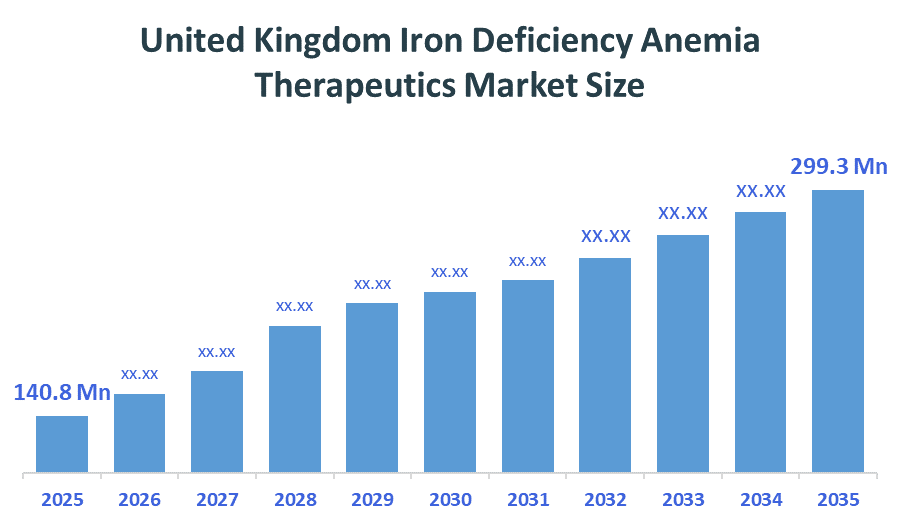
According to Decision Advisors, the United Kingdom Iron Deficiency Anemia Therapeutics Market Size was grown from USD 140.8million in 2025 to USD 299.3million by 2035, at a CAGR of 7.83% during the forecast period 2026-2035. The United Kingdom hip replacement devices market is projected to grow significantly over the next decade, fuelled by an aging population, high pregnancy-related anemia rates, the NHS’s emphasis on affordable, accessible treatments, rising prevalence of chronic diseases, and maternal and pediatric care.
Market Overview/Introduction
The United Kingdom iron deficiency anemia therapeutics market refers to the segment of the healthcare industry that develops, produces, and distributes treatments for iron deficiency anemia through oral iron supplements and intravenous iron therapies and related medications. The market experiences growth because more people develop anemia from the rising number of cases that affect elderly people and their chronic conditions, and pregnant women who develop anemia. The combination of higher awareness, better diagnostic methods and healthcare policies creates an increased demand for services. The market expands because of both improved IV iron formulations and patient adherence to treatment requirements. The market will grow through developments of safer therapies, which government screening programs will implement together with new drug delivery technologies, which will enhance treatment results and extend market access.
- A major industry-shaping acquisition involved CSL Limited acquiring Vifor Pharma for approximately USD 11.7 billion. This deal strengthened CSL’s position in iron deficiency and nephrology-focused therapies and expanded its presence across Europe, including the United Kingdom market.
- Akebia Therapeutics entered into a revised licensing agreement with CSL Vifor to develop and commercialize therapies targeting anemia associated with chronic kidney disease (CKD). Such collaborations enhanced pipeline strength and accelerated regulatory approvals and market entry in regions like the UK.
Notable Insights: -
- The parenteral (intravenous) iron therapy segment dominated the market in 2025 and holds the largest market share, accounting for approximately 49.9% during the forecast period.
- The adults segment dominated the market in 2025 and holds the largest market share, accounting for approximately 55% during the forecast period.
- The chronic kidney disease segment dominated the market in 2025 and holds the largest market share, accounting for approximately 41% during the forecast period.
- The hospitals segment dominated the market in 2025 and holds the largest market share, accounting for approximately 54.9% during the forecast period.
- The compound annual growth rate of the United Kingdom Iron Deficiency Anemia Therapeutics Market is 7.83%.
- The market is likely to achieve a valuation of USD 299.3million by 2035.
What is the role of technology in grooming the market?
Technology plays a crucial role in advancing the United Kingdom Iron Deficiency Anemia therapeutics market by enhancing early diagnosis, treatment precision, and patient outcomes. Innovations such as AI-driven diagnostic tools and advanced blood analyzers enable faster and more accurate detection of anemia. Digital health platforms and telemedicine improve patient monitoring and adherence to iron therapies. Additionally, novel drug delivery systems, including intravenous iron formulations, increase treatment efficiency and reduce side effects. Electronic health records streamline data management and support personalized treatment plans. Research technologies, including genomics and biomarker analysis, are accelerating the development of targeted therapies. Overall, technological integration is improving healthcare accessibility, optimizing clinical decisions.
Market Drivers
The United Kingdom market for iron deficiency anemia therapeutics operates through multiple essential driving forces. Anemia rates increase because the elderly population grows, which often brings chronic kidney disease (CKD) and inflammatory bowel disease (IBD) conditions. The combination of high pregnancy anemia rates and increased child healthcare emphasis drives greater iron supplement demand. The market demonstrates expansion because hospitals demonstrate growing adoption of intravenous (IV) iron therapies, which deliver faster and better results than oral treatments. The National Health Service achieves dual benefits through its cost-efficient care approach and expanded screening programs because they improve treatment access while promoting early diagnosis.
Restrain
The United Kingdom Iron Deficiency Anemia therapeutics market faces restraints due to high treatment costs, limited awareness, and delayed diagnosis among patients. Side effects associated with iron therapies and strict regulatory requirements further hinder adoption. Additionally, disparities in healthcare access and patient non-compliance with long-term treatment reduce overall market growth potential.
Study on the Supply, Demand, Distribution, and Market Environment of the United Kingdom Iron Deficiency Anemia Therapeutics Market
The United Kingdom Iron Deficiency Anemia therapeutics market reflects a balanced interplay of supply, demand, and distribution supported by a structured healthcare system. Demand is driven by rising anemia prevalence, aging populations, and increased screening programs. Supply is maintained by pharmaceutical companies producing oral and intravenous iron therapies, though it can be influenced by regulatory approvals and production costs. Distribution channels, including hospitals, retail pharmacies, and online platforms, ensure wide accessibility of treatments. The market environment benefits from government healthcare support and reimbursement policies. Raw materials such as iron salts (ferrous sulfate, ferric carboxymaltose) and excipients are essential, with sourcing, quality control, and pricing impacting overall manufacturing and supply chain stability.
Price Analysis and Consumer Behaviour Analysis
Price analysis in the United Kingdom Iron Deficiency Anemia therapeutics market shows variability based on formulation, with intravenous therapies generally costing more than oral supplements due to administration complexity and hospital settings. Government pricing regulations and reimbursement policies help control costs and improve affordability. Consumer behavior is influenced by physician recommendations, awareness levels, and preference for effective, fast-acting treatments. Patients increasingly favor convenient dosage forms and therapies with minimal side effects, improving adherence. Additionally, rising health consciousness and early diagnosis trends are encouraging timely treatment adoption. However, cost sensitivity among certain patient groups and reliance on public healthcare systems continue to shape purchasing decisions and overall market demand patterns.
Market Segmentation
The United Kingdom Iron Deficiency Anemia Therapeutics Market share is classified into therapy type, age group, application, and end-user
- The parenteral (intravenous) iron therapy segment dominated the market in 2025 and holds the largest market share, accounting for approximately 49.9% during the forecast period.
Based on the therapy type, the iron deficiency anemia therapeutics market is divided into oral iron therapy, parenteral (intravenous) iron therapy, and red blood cell transfusion. Among these,the parenteral (intravenous) iron therapy segment dominated the market in 2025 and holds the largest market share, accounting for approximately 49.9% during the forecast period. The parenteral (intravenous) iron therapy segment is driven by rapid efficacy, higher absorption, and suitability for severe anemia cases. Increased hospital-based treatments, rising chronic disease prevalence, and preference for faster recovery further drive its widespread adoption.
- The adults segment dominated the market in 2025 and holds the largest market share, accounting for approximately 55% during the forecast period.
Based on the age group, the iron deficiency anemia therapeutics market is divided into adults, pediatric, and geriatric. Among these, the adults segment dominated the market in 2025 and holds the largest market share, accounting for approximately 55% during the forecast period. The adults segment in the U.K is driven by high demand for oral solid dosage forms due to higher prevalence linked to chronic diseases, pregnancy, and lifestyle factors. Increased awareness, routine screenings, and greater healthcare access among adults further contribute to higher diagnosis rates and treatment adoption.
- The chronic kidney disease segment dominated the market in 2025 and holds the largest market share, accounting for approximately 41% during the forecast period.
Based on the application, the iron deficiency anemia therapeutics market is divided into chronic kidney disease, oncology, gynecology & obstetrics, and gastrointestinal disorders. Among these, the chronic kidney disease segment dominated the market in 2025 and holds the largest market share, accounting for approximately 41% during the forecast period. The chronic kidney disease segment in the U.K. is driven by the high incidence of anemia among CKD patients. Frequent need for iron supplementation, especially intravenous therapy during dialysis, and strong clinical guidelines drive consistent treatment demand and segment growth.
- The hospitals segment dominated the market in 2025 and holds the largest market share accounting for approximately 54.9% during the forecast period.
Based on the end-user, the iron deficiency anemia therapeutics market is divided into hospitals, clinics, orthopedic clinics, and home healthcare. Among these, the hospitals segment dominated the market in 2025 and holds the largest market share accounting for approximately 54.9% during the forecast period. The hospitals segment in the U.K is driven by higher patient inflow, availability of advanced diagnostic facilities, and administration of intravenous iron therapies. Strong healthcare infrastructure and specialist care further drive hospital-based treatment preference and market share.
Recent Development
- In March 2026, Shield Therapeutics, the UK-based maker of Feraccru/Accrufer, shifted its strategy toward aggressive commercial partnerships to expand its footprint. While not a recent merger, it focused on licensing deals to position its ferric maltol product as a primary alternative to IV iron in the UK.
- In October 2025, The most significant update to UK Clinical Trials Regulations in 20 years came into force, accelerating approval processes for innovative iron deficiency anemia therapies. It streamlined MHRA review timelines and reduced administrative burdens, enabling faster clinical development, improved research efficiency, and quicker patient access to advanced treatments.
Competitive Analysis
The report offers the appropriate analysis of the key organisations/companies involved within the United Kingdom Iron Deficiency Anemia Therapeutics Market, along with a comparative evaluation primarily based on their product offering, business overviews, geographic presence, enterprise strategies, segment market share, and SWOT analysis. The report also provides an elaborative analysis focusing on the current news and developments of the companies, which includes product development, innovations, joint ventures, partnerships, mergers & acquisitions, strategic alliances, and others. This allows for the evaluation of the overall competition within the market.
Top Key Companies in the United Kingdom Iron Deficiency Anemia Therapeutics Market
- CSL Vifor
- Sanofi
- Pharmacosmos
- Akebia Therapeutics
- Shield Therapeutics
- Others
Key Target Audience
- Market Players
- Investors
- End-users
- Government Authorities
- Consulting and Research Firm
- Venture capitalists
- Value-Added Resellers (VARs)
Market Segment
This study forecasts revenue at the United Kingdom, regional, and country levels from 2020 to 2035. Spherical Insights has segmented the United Kingdom hip replacement devices market based on the below-mentioned segments
United Kingdom Iron Deficiency Anemia Therapeutics Market, By Therapy Type
- Oral Iron Therapy
- Parenteral (Intravenous) Iron Therapy
- Red Blood Cell Transfusion
United Kingdom Iron Deficiency Anemia Therapeutics Market, By Age Group
- Adults
- Pediatric
- Geriatric
United Kingdom Iron Deficiency Anemia Therapeutics Market, By Application
- Chronic Kidney Disease
- Oncology
- Gynecology & Obstetrics
- Gastrointestinal Disorders
United Kingdom Iron Deficiency Anemia Therapeutics Market, By End-User
- Hospitals
- Clinics
- Home Healthcare
Frequently Asked Questions (FAQ)
Q. How does government healthcare policy influence the iron deficiency anemia therapeutics market in the UK?
A. Government healthcare policies, particularly through the NHS, play a vital role by ensuring affordable access to anemia treatments. Reimbursement frameworks, standardized treatment guidelines, and national screening programs encourage early diagnosis and consistent therapy adoption, ultimately supporting steady market growth.
Q. What challenges do manufacturers face in the UK iron deficiency anemia therapeutics market?
A. Manufacturers encounter challenges such as strict regulatory approvals, pricing pressures from government bodies, and the need to maintain consistent supply chains. Additionally, competition among key players and the demand for cost-effective yet efficient therapies add complexity to market operations.
Q. How is patient awareness impacting treatment adoption in the UK?
A Increasing awareness about anemia symptoms and its health implications is encouraging patients to seek timely medical advice. Public health campaigns and routine health check-ups are improving diagnosis rates, leading to higher adoption of both oral and intravenous iron treatments.
Q. What role do distribution channels play in market expansion?
A. Efficient distribution channels, including hospitals, pharmacies, and online platforms, ensure the widespread availability of anemia therapeutics. Improved logistics and digital healthcare services enhance patient access, particularly in remote areas, thereby contributing to overall market expansion.
Check Licence
Choose the plan that fits you best: Single User, Multi-User, or Enterprise solutions tailored for your needs.
We Have You Covered
- 24/7 Analyst Support
- Clients Across the Globe
- Tailored Insights
- Technology Tracking
- Competitive Intelligence
- Custom Research
- Syndicated Market Studies
- Market Overview
- Market Segmentation
- Growth Drivers
- Market Opportunities
- Regulatory Insights
- Innovation & Sustainability
Report Details
| Scope | country |
| Pages | 240 |
| Delivery | PDF & Excel via Email |
| Language | English |
| Release | Apr 2026 |
| Access | Download from this page |