
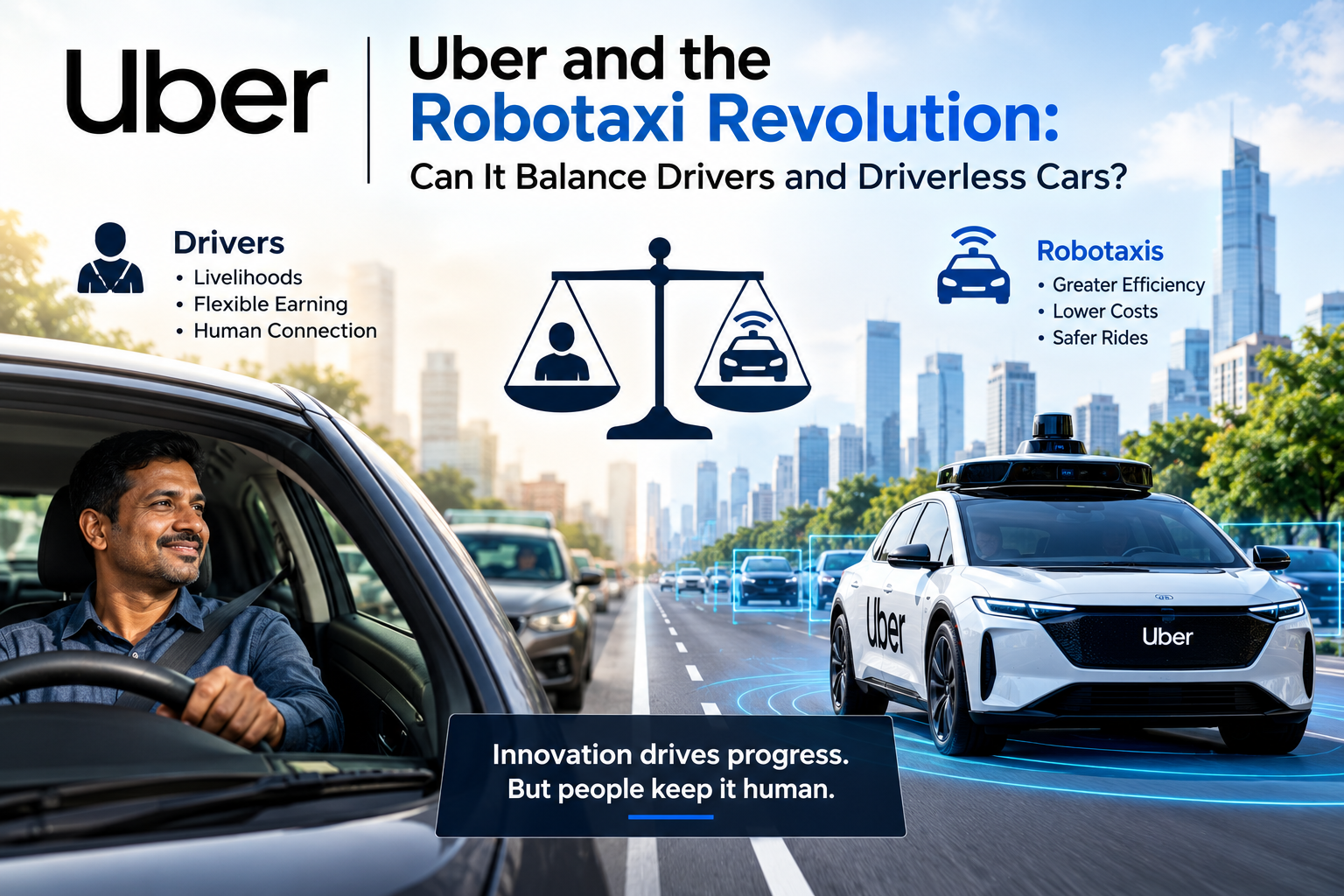
The rise of robotaxis is forcing Uber to rethink the future of ride-hailing. As self-driving technology moves closer to mainstream use, the company faces an unusual challenge: the same technology that could create new opportunities for Uber could also disrupt the driver-based business that made it a global transportation giant.
SPECIAL REPORT: Robotaxis Force Uber to Redefine the Future of Ride-Hailing
GLOBAL TRANSPORT DESK — The rapid acceleration of autonomous vehicle (AV) technology and robotaxi networks is compelling Uber to re-evaluate its core business model. As self-driving fleets transition from pilot projects to mainstream urban mobility solutions, the ride-hailing pioneer faces a strategic paradox: the same technology that opens massive new growth opportunities also threatens to disrupt the driver-based network that built its global market dominance.
For years, Uber’s network effects relied on a simple premise: more human drivers meant faster pickups, attracting more riders, which in turn brought more drivers to the platform. However, autonomous fleets operated by players like Waymo and Zeekr are changing this dynamic by eliminating the need for a human driver behind the wheel.
Competitive Dynamics: Human Drivers vs. Autonomous Fleets
| Operating Factor | Traditional Human-Driver Network | Autonomous Robotaxi Fleets |
| Operational Scalability | Dependent on individual driver availability, incentives, and shift patterns. | Scaled through capital fleet investments, centralized depots, and software scheduling. |
| Cost Structure | High variable cost per mile (driver earnings/commissions taking ~70–80% of fare). | High upfront capital expenditure with lower variable operating costs over time. |
| Service Adaptability | Flexible in severe weather, complex city layouts, and personalized customer assistance. | High efficiency on structured urban routes; constrained by edge cases and regulatory geofencing. |
| Market Risk for Uber | Subject to labor supply shortages and evolving independent-contractor regulations. | Risk of disintermediation if AV developers launch independent customer-facing ride apps. |
Hybrid Mobility & Platform Integration Model
                  ┌──────────────────────────────────────────────┐
                  │       Uber Orchestration Engine              │
                  └──────────────────────┬───────────────────────┘
                                         │
        ┌────────────────────────────────┴────────────────────────────────┐
        │                                                                 │
┌───────▼────────┐                                               ┌────────▼────────┐
│ Human-Operated │                                               │ Autonomous      │
│ Drivers        │  ◄──────────── Hybrid Matching ─────────────► │ Robotaxi Fleets │
│ (Assistance,   │                Algorithms                     │ (High-Density   │
│ Edge Cases)    │                                               │ Core Routes)    │
└────────────────┘                                               └─────────────────┘
-
Intelligent Demand Dispatch: Uber’s marketplace algorithm routes rides to either an autonomous vehicle or a human driver based on weather, route complexity, passenger preferences, and fleet availability.
-
Specialized Human Services: Human drivers handle rides requiring personal physical assistance, complex luggage handling, or navigation through difficult transit environments.
-
High-Density AV Deployment: Autonomous vehicles handle predictable, high-volume urban point-to-point transfers to lower costs and maximize asset utilization.
-
Platform Retention Layer: By keeping both supply types on a single app interface, Uber protects its relationship with riders while preventing rival AV platforms from capturing market share.
Core Strategic & Regulatory Drivers
-
The Strategic Hybrid Bet: Rather than choosing between human drivers and self-driving cars, Uber is positioning itself as a universal aggregator—integrating robotaxis into its existing marketplace alongside human partners.
-
Regulatory Fragmentation: Robotaxi commercialization is proceeding at vastly different speeds globally. While US markets have seen aggressive competitive expansion, international markets like the UK require specialized commercial approvals, forcing Uber to tailor its strategy region by region.
-
Impact on the Driver Workforce: While full autonomy will not happen overnight, the growth of robotaxis could reduce demand for human drivers in predictable core areas, making a gradual transition essential for preserving driver earnings and community trust.
-
Capital Protection vs. Tech Risk: Partnering with or integrating autonomous fleets allows Uber to leverage self-driving efficiency without absorbing all the capital risks and operational hurdles of vehicle fleet ownership.
Market Outlook
The future of urban transportation is unlikely to be fully driverless or fully human-operated in the near term. Instead, a hybrid mobility ecosystem will define the industry. Uber’s ultimate success will depend on its ability to evolve from a driver-matching service into an intelligent fleet-orchestration network—balancing technological efficiency, regulatory compliance, and fair labor practices as the robotaxi revolution unfolds.