
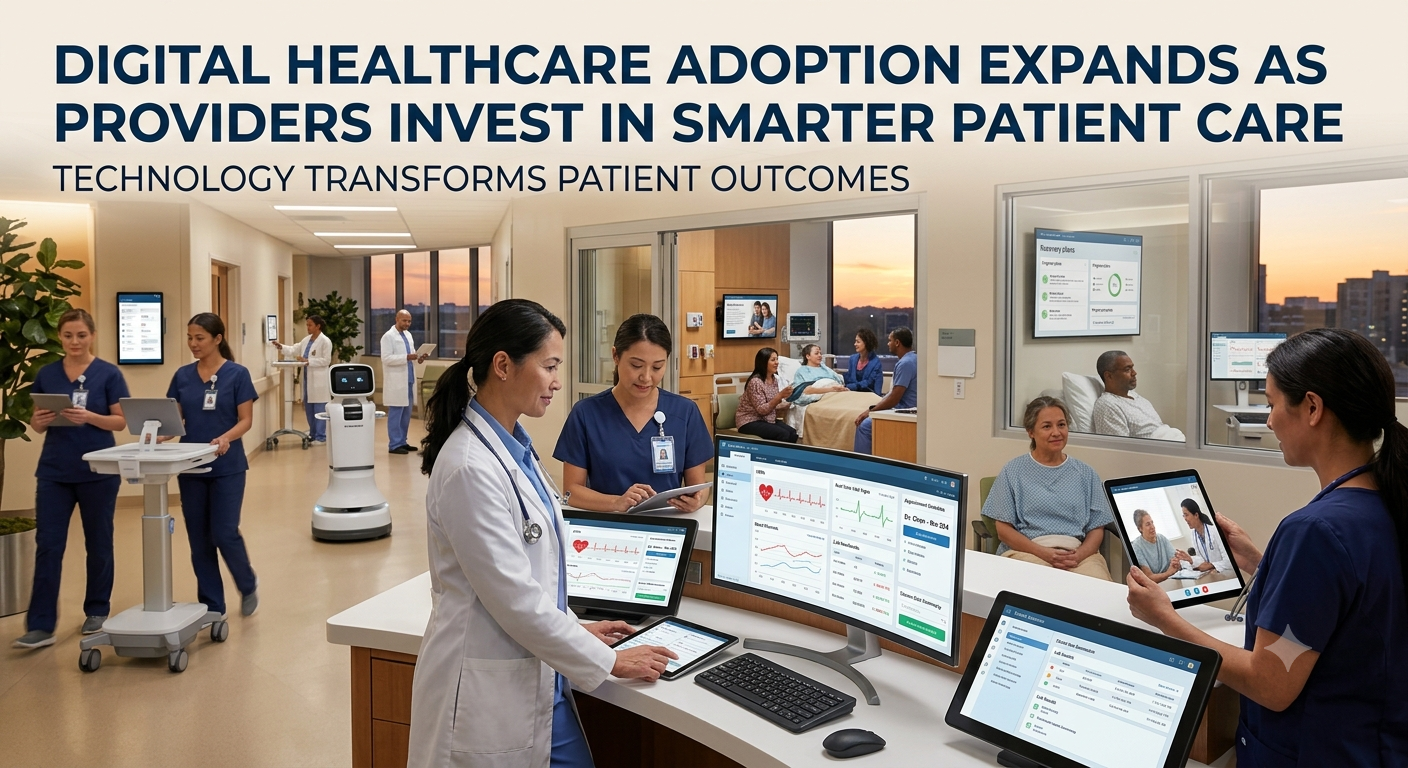
Healthcare providers are increasing investments in digital technologies as they seek to improve patient care, streamline operations and expand access to medical services. Telehealth, remote monitoring, artificial intelligence and healthcare analytics are becoming increasingly important components of modern healthcare delivery.
HEALTHCARE REPORT: Digital Transformation Accelerates to Drive Patient-Centric & Tech-Enabled Care
GLOBAL HEALTH DESK — Healthcare organizations worldwide are rapidly expanding their digital transformation initiatives as technology becomes central to modern medical management, clinical decision-making, and long-term care delivery.
Driven by growing patient data volumes, rising operational costs, and the need for accessible remote services, healthcare providers are shifting away from legacy, paper-based systems to build interconnected, tech-enabled digital health ecosystems.
Key Pillars of Digital Healthcare Transformation
| Operational Pillar | Primary Focus Areas & Technologies | Key Strategic Benefits |
| Virtual Care & Remote Health | Telehealth platforms, Remote Patient Monitoring (RPM), mobile health apps, and digital therapeutics. | Extends access beyond traditional facilities, improves chronic condition tracking, and offers seamless virtual consultations. |
| Artificial Intelligence & Analytics | AI-based decision support, machine learning models, predictive diagnostic tools, and big data analytics. | Assists clinicians in analyzing complex datasets, identifying subtle patterns, and accelerating accurate diagnoses. |
| Cybersecurity & Data Privacy | HIPAA/GDPR compliance, end-to-end encryption, zero-trust cloud infrastructure, and robust EHR data protection. | Safeguards sensitive patient records against data breaches while building trust in digital health services. |
| Workforce Enablement & Skills | Cross-functional training, digital literacy programs, and interdisciplinary clinical-IT collaboration. | Empowers healthcare staff to utilize emerging digital tools effectively while maintaining human-centered patient care. |
Digital Healthcare Delivery Architecture
                  ┌──────────────────────────────────────────────┐
                  │          Connected Health Ecosystem          │
                  └──────────────────────┬───────────────────────┘
                                         │
        ┌────────────────────────────────┼────────────────────────────────┐
        │                                │                                │
┌───────▼────────┐              ┌────────▼───────┐               ┌────────▼────────┐
│ Virtual Entry  │              │ AI & Predictive│               │ Secure Cloud &  │
│ Telehealth &   │  ──────────► │ Decision       │  ──────────►  │ Data Governance │
│ RPM Systems    │              │ Support Engines│               │ Cyber Protection│
└────────────────┘              └────────────────┘               └─────────────────┘
-
Virtual Access Layer: Telehealth applications and wearable remote monitors gather continuous health metrics, bringing routine care directly to patients anywhere.
-
Clinical Intelligence Layer: Advanced AI engines analyze aggregated patient metrics, providing real-time data insights to aid medical professionals in treatment planning.
-
Data Security & Privacy Layer: Robust cloud encryption, strict access governance, and regulatory compliance protocols protect patient confidentiality at every touchpoint.
-
Care Delivery Layer: Informed clinical staff leverage integrated health insights to deliver personalized, proactive, and efficient patient interventions.
Core Drivers Reshaping Global Healthcare
-
Expanded Service Access: Telehealth and remote patient monitoring eliminate geographical barriers, enabling patients to engage with specialists and manage chronic health conditions conveniently from home.
-
Clinical Decision Support: AI-driven platforms act as powerful aids for medical staff, streamlining the review of massive datasets, reducing diagnostic errors, and speeding up clinical workflows.
-
Data Security Prioritization: As the volume of digital health information grows, healthcare leaders are making heavy investments in cybersecurity infrastructure and responsible data management practices.
-
Human-Centered Workforce Development: Organizations are prioritizing workforce training programs to ensure medical professionals can seamlessly adapt to advanced software without losing personal, empathetic touch in patient care.
Industry Outlook
The continued integration of virtual care platforms, artificial intelligence, robust cybersecurity, and workforce digital training will redefine future healthcare delivery—creating an ecosystem that is significantly more personalized, efficient, secure, and accessible to populations globally.