
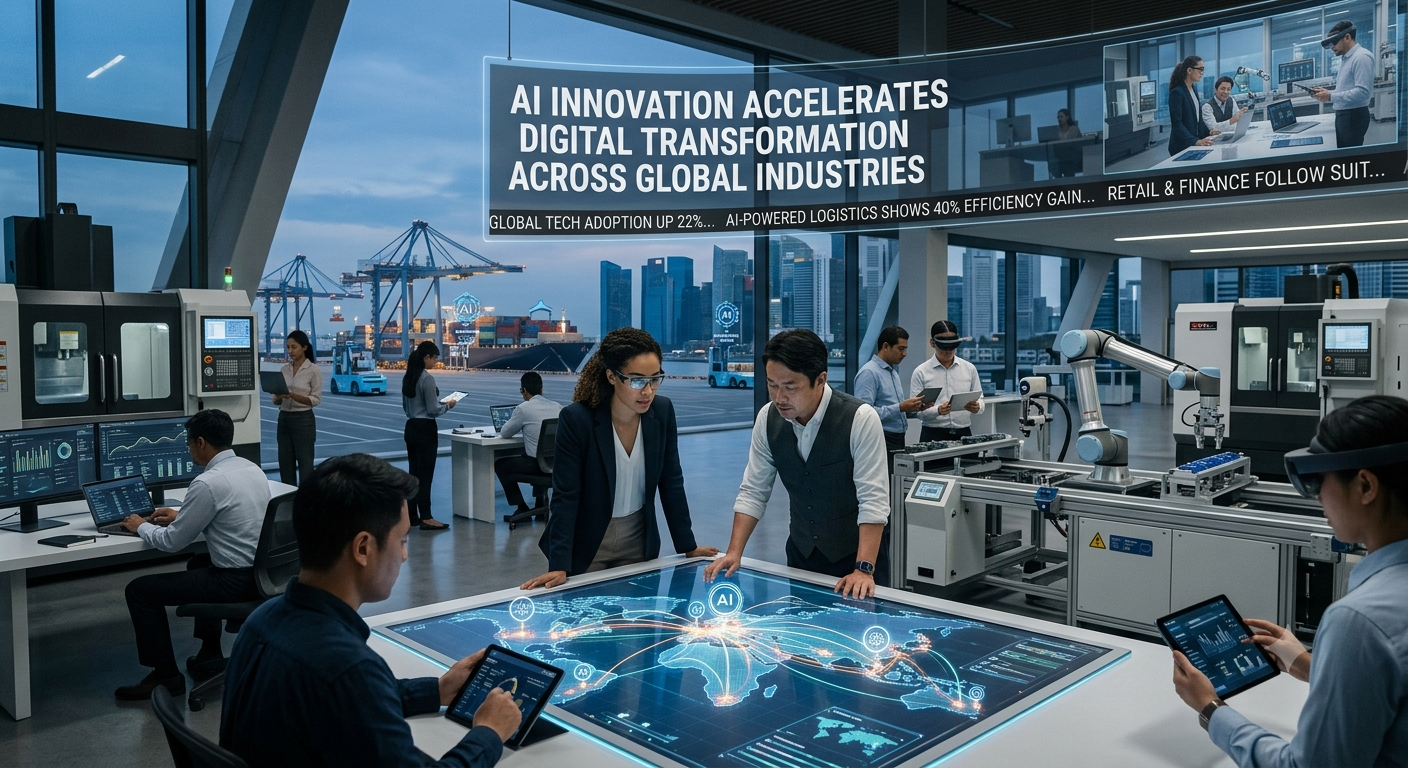
Artificial intelligence is accelerating digital transformation across industries as businesses increasingly adopt AI-powered tools for automation, analytics, customer engagement and decision-making. Organizations are focusing on responsible implementation, workforce development and scalable technology infrastructure to capture long-term value from AI.
GLOBAL TECH REPORT: Artificial Intelligence Moves to the Core of Enterprise Digital Transformation
GLOBAL TECH DESK — Artificial intelligence (AI) has transitioned from an experimental innovation into the central driver of global enterprise digital transformation strategies across primary market sectors.
As organizations navigate competitive landscapes, businesses are rapidly deploying AI-powered platforms to drive operational efficiency, deliver hyper-personalized customer experiences, and institutionalize data-driven decision-making.
Industry Deployment & Enterprise Impact
| Industry Sector | AI Applications & Key Technologies | Operational Outcomes |
| Financial Services | Algorithmic fraud detection, automated credit risk assessment, and generative compliance reporting. | Reduces financial transaction risk, speeds up underwriting, and automates regulatory reporting. |
| Healthcare & Life Sciences | AI-assisted medical imaging diagnostics, predictive clinical insights, and automated patient triage systems. | Enhances diagnostic accuracy, optimizes hospital bed capacity, and speeds up drug discovery workflows. |
| Manufacturing & Logistics | Industrial IoT predictive maintenance, supply chain route optimization, and smart factory robotics. | Minimizes unplanned machinery downtime, balances inventory, and boosts assembly line throughput. |
| Retail & E-Commerce | Hyper-personalized recommendation engines, dynamic pricing algorithms, and automated customer service agents. | Elevates customer engagement, improves conversion rates, and reduces support resolution times. |
Enterprise AI Adoption & Governance Architecture
                  ┌──────────────────────────────────────────────┐
                  │          AI Enterprise Integration           │
                  └──────────────────────┬───────────────────────┘
                                         │
        ┌────────────────────────────────┼────────────────────────────────┐
        │                                │                                │
┌───────▼────────┐              ┌────────▼───────┐               ┌────────▼────────┐
│ Modern Data    │              │ Responsible AI │               │ Workforce &     │
│ Infrastructure │  ──────────► │ Governance     │  ──────────►  │ Human-AI        │
│ & Cyber Stack  │              │ Frameworks     │               │ Collaboration   │
└────────────────┘              └────────────────┘               └─────────────────┘
-
Foundational Data Layer: Scalable cloud architectures, clean unified data pipelines, and zero-trust cybersecurity frameworks necessary to feed high-performance AI models safely.
-
Governance & Ethics Layer: Responsible AI frameworks enforcing model transparency, data privacy, bias mitigation, and strict regulatory compliance.
-
Operationalization Layer: Deploying generative models, predictive analytics engines, and intelligent automation across departmental workflows.
-
Human Collaboration Layer: Workforce upskilling programs enabling employees to collaborate effectively alongside AI systems and drive measurable ROI.
Key Pillars for Successful AI Transformation
-
Data Readiness & Infrastructure: Deploying AI requires modernizing core data pipelines and storage architectures to ensure real-time data accessibility, clean formatting, and high system availability.
-
Cybersecurity & Digital Trust: Protecting proprietary data and customer privacy demands embedding zero-trust security controls, continuous model monitoring, and strict data governance.
-
Responsible AI & Governance: Organizations are prioritizing explainable AI models, establishing strict ethical guidelines, and ensuring accountability to maintain customer and stakeholder trust.
-
Workforce Enablement & Upskilling: Industry leaders emphasize that technology alone is insufficient; training workforce talent to work seamlessly alongside AI tools is crucial for long-term organizational value.
Strategic Outlook
As adoption matures, artificial intelligence will continue to reshape fundamental business models, workplace processes, and competitive market positioning across global industries—redefining how value is created and delivered in the modern digital economy.