
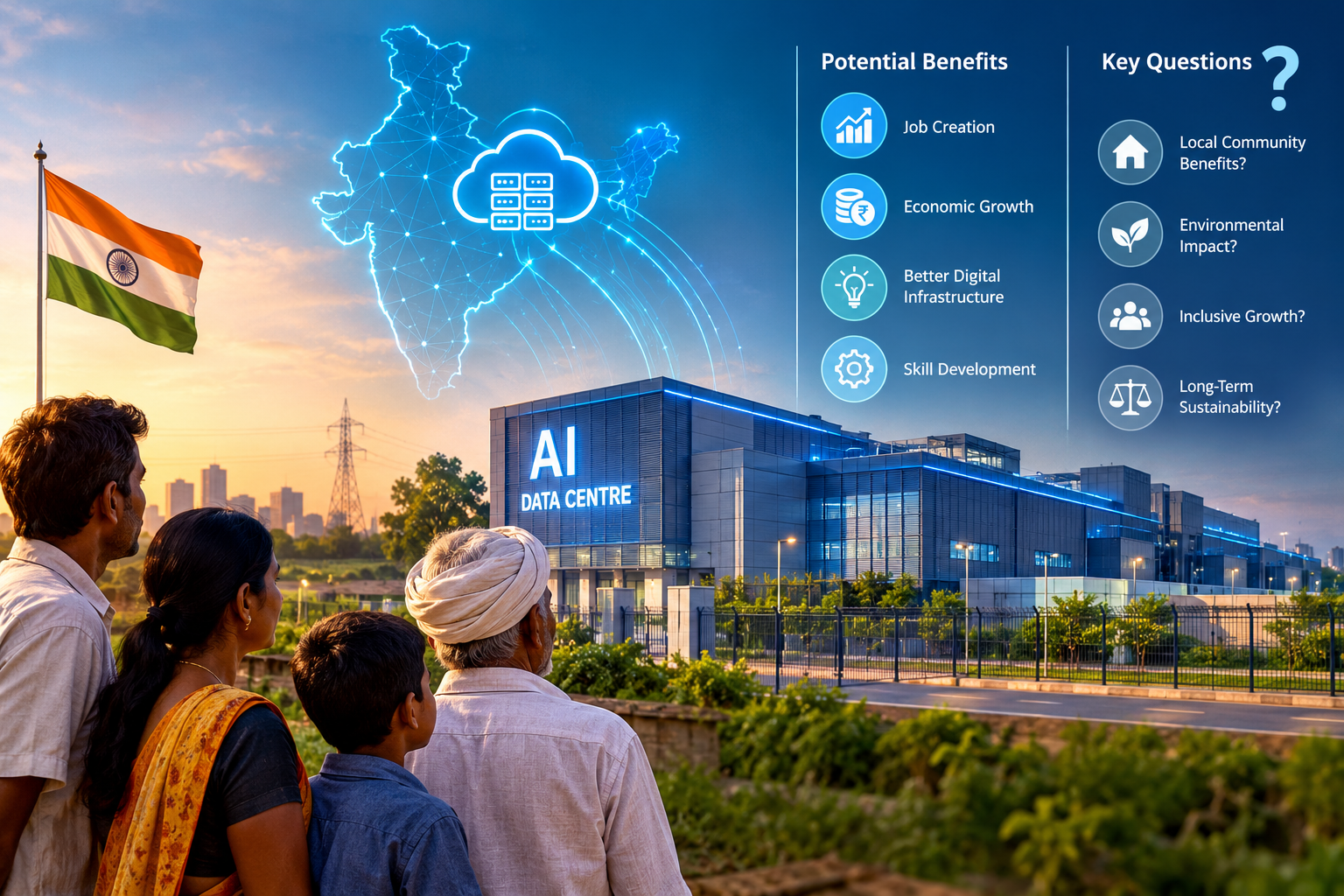
India is rapidly positioning itself as a major destination for artificial intelligence infrastructure, with large technology companies investing billions of dollars in data centres. But as these facilities expand, a difficult question is gaining attention:
SPECIAL REPORT: The Hidden Cost of India’s AI Infrastructure Boom
NEW DELHI — As India positions itself as a global hub for artificial intelligence, global tech conglomerates and domestic infrastructure developers are investing tens of billions of dollars into hyperscale data centres. However, this rapid buildout has ignited a national debate: What should local communities receive in return for hosting infrastructure that consumes vast amounts of land, power, and water?
As state governments compete aggressively through tax exemptions, subsidized power tariffs, and fast-tracked land allotments, critics warn that without long-term benefit-sharing mechanisms, the social and environmental burdens will fall disproportionately on local residents while economic returns flow primarily to global shareholders.
Google-Adani AI Hub Case Study: Andhra Pradesh (Visakhapatnam)
| Infrastructure Metric | Project Scale & Incentives | Local Impact & Resource Concerns |
| Capital & Land Footprint | $15 Billion (₹1.26 Lakh Cr) investment; ~601 acres allocated across Vizag & Anakapalli. | ~200 acres belonged to Dalit farmers and cash-crop cultivators dependent on land for generations. |
| State Incentive Package | ~$2.6 Billion (₹22,002 Cr) in incentives; 25% land discount, 15-year power/stamp duty exemptions. | Questions surrounding net public value generated versus heavily subsidized state resources. |
| Power Demand & Grid Load | ~2,068 MW baseline load; backed by renewable PPAs (e.g., Khavda solar/wind park in Gujarat). | Massively concentrates clean energy procurement among tech giants while straining regional transmission. |
| Water & Local Ecology | ~808 Kilolitres/day water requirement; located near Mudasarlova reservoir catchment. | High risk to groundwater levels and regional drinking water security in drought-sensitive zones. |
| Employment Reality | ~2,415 direct operational/construction jobs projected in official filings. | Headline political promises of "2 Lakh jobs" contrast sharply with low permanent local staffing needs. |
Strategic Framework: Corporate Value vs. Community Benefit Sharing
                  ┌──────────────────────────────────────────────┐
                  │          AI Infrastructure Hub               │
                  │   (Subsidized Power, Water & Land Access)    │
                  └──────────────────────┬───────────────────────┘
                                         │
        ┌────────────────────────────────┴────────────────────────────────┐
        │                                                                 │
┌───────▼────────┐                                               ┌────────▼────────┐
│ Traditional    │                                               │ Sustainable     │
│ CSR Model      │  ◄──────────── Policy Shift ────────────────► │ Benefit Sharing │
│ (One-time,     │               Framework                       │ (Continuous ROI,│
│ Tree Planting) │                                               │ Local Equity)   │
└────────────────┘                                               └─────────────────┘
-
Resource Extraction Phase: Data centres consume long-term local land, power, and water to power high-throughput AI workloads.
-
Traditional Corporate CSR: Limited to non-binding, one-off community programs (e.g., local parks, intermittent tree planting) that fail to offset structural resource drain.
-
Legally Binding CBAs (Community Benefit Agreements): Pre-project contracts stipulating local hiring guarantees, skill development, and dedicated municipal infrastructure funding.
-
Dynamic Benefit-Sharing Models: Long-term financial yields tied to computing output, power usage, and facility scale—returning a direct share of AI value to host communities.
Core Challenges Facing India's AI Infrastructure Policy
-
The Reality of AI Employment: Unlike manufacturing hubs, hyper-automated AI data centres generate relatively few direct, permanent operational jobs once construction concludes.
-
National Compute Sovereignty: Physical infrastructure hosted on domestic soil by foreign-owned tech entities does not automatically grant local control over core AI technology, models, or supply chains.
-
Strained Resource Allocations: Industrial power tariff subsidies and high daily water consumption create friction in coastal and agrarian districts facing existing water stress.
-
Clean Energy Concentration: Top cloud providers account for nearly half of global corporate renewable energy Power Purchase Agreements (PPAs), potentially outbidding domestic public utility access.
Policy Outlook
To ensure India's transition to an AI infrastructure leader yields broad-based prosperity, policymakers must move beyond standard corporate tax breaks. Implementing Community Benefit Agreements (CBAs), hardware-based compute verification, and continuous revenue-sharing models will be vital to aligning tech investment with long-term social equity and environmental sustainability.